Those storms of life forged an extraordinary man in the South Pacific: André Đặng Văn Nha.

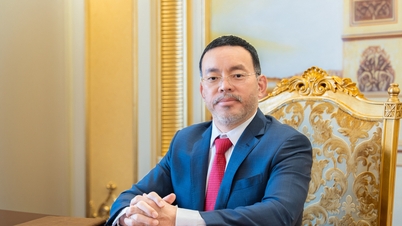
Mr. André Đặng Văn Nha
Photo: Archival material
Many film studios and major newspapers around the world have wanted to approach and make films about the life of André Đặng Văn Nha (André Đặng), because he revived the nickel mining industry in New Caledonia from the brink of bankruptcy to a leading global position, becoming a billionaire, an influential figure, and respected by the indigenous Kanak people. However, he always refused, simply because: "I don't like to raise my voice." Therefore, his name rarely appears, especially in the media. But he always shows special favor to the press from Vietnam, simply because: "You are Vietnamese."
Lacking resources on all sides.
In New Caledonia, André Đặng Văn Nha belonged to the second generation of the Chân Đăng people (Vietnamese who registered as laborers for the French in the 1930s). He was born on July 27, 1936, right in the Koniambo mine area, in northern New Caledonia. The childhood of the Chân Đăng children at that time was one of extreme poverty and deprivation, and André Đặng was no exception. Then tragedy struck; his father, Đặng Văn Nhã, died in an accident while working as a laborer in Koniambo. Soon after, the Koniambo mine closed, and his mother packed her bags and took her young children to Chagrin, where she became a laborer – a sad coincidence. The name Chagrin also means "sad," "sad mine," referring to the laborers who left their homeland.

André Đặng Văn Nha and his wife, Bùi Thị Én, are also a symbol of love in the island nation of New Caledonia.
Photo: Archival material
To save her son from a life of forced labor, Mrs. Nguyen Thi Binh, André Đặng's mother, suppressed her grief and gave him to a well-off family in the provincial capital of Nouméa to be adopted, hoping he would have the opportunity to receive an education and become successful. Recalling that time, he confided: "Leaving my mother was the greatest suffering of my life. Even now, that pain is indescribable."
André Đặng shared his life story, from walking 5 kilometers to school barefoot every day, tucking his sandals under his arm to wash them before going to school because he was afraid they would wear out quickly and he wouldn't have money to buy new ones. He also recounted how, every day at 2 AM, he and his two siblings would go into the forest with their mother to a pond where wild water spinach grew – a spot he discovered thanks to a bird guiding him – to harvest it and sell it at the early morning market to earn money for his education until he finished high school. Finally, he spoke of his time in France, studying day and night, and working as a dishwasher in two different places to send money back to his wife.
He then returned to New Caledonia to start his own business, finding a golden opportunity in the car distribution industry, capturing 25% of the sales market in New Caledonia. Just as he had amassed his dream fortune, he was misunderstood, attacked, his home and property vandalized and burned, forcing his entire family to live in exile in Australia in 1984…
All those ups and downs, whenever recalled, are clearly visible in his eyes—sometimes serious, sometimes sharp, steely, resolute, and unyielding, like the spirit of a warrior, a military general preparing for battle, never wavering in the face of life's storms.

André Đặng returned to the land where his father used to work as a laborer, a land that now belongs to him.
Photo: Archival material
But when he spoke of his mother, his eyes became filled with sadness and reddened. Recalling the day we went to the archives together to access old documents related to his mother, holding papers, contracts, and payroll records of Mrs. Nguyen Thi Binh, a laborer from A649 – a Chan Dang woman who was assigned a number when she went to work as a laborer and was called by that number instead of her name – he said: "I loved my mother very much. When she left the Chagrin mine and returned to the province, I asked my adoptive parents to let me go back to live with her. It was my mother who instilled in me the spirit of enduring hardship and the desire for success."

It's moving to see the image of my mother with her weathered face, bearing the hardship and toil of a laborer.
Photo: Archival material
Fearless
Driven by a desire for success, and following André Đặng's example, one must be fearless, dare to look directly at their dreams and pursue great things, fight for what is right, focus on sustainable development, and persistently serve legitimate ambitions. In 1990, he returned to New Caledonia from Australia. The French then sold the old nickel mine to the indigenous Kanak people, with reserves of 350,000 tons, which would be depleted within a year of extraction. André Đặng gained the trust of the islanders and was invited to lead the dying mining company (SMSP), which was on the verge of closure.
Miraculously, in just two years, SMSP not only survived but also acquired a new mine for $10 million, and in another five years became the world's leading exporter of nickel ore. In less than two decades leading SMSP, André Đặng created a miracle, raising the company's valuation from approximately $10 million to over $700 million.

Le Nickel Company's nickel smelter in Nouméa, dating back to 1880.
Photo: Archival material
For André Đặng, business and profit are not his biggest concerns. What he sees as more far-sighted is strategic planning and planning aimed at social welfare, economic development, legitimate wealth creation, and realizing his dream of self-employment.

The "paradise" region of Nouméa - the capital of New Caledonia today.
Photo: Archival material
During a visit to the tomb of Mr. Dang Van Nha in Voh, he had a helicopter take us over the mining areas where the Chan Dang people used to work. He told us, "The resource here is nickel; you just need to dig it up to find it. The total population in the north is about 40,000 people. If there's a lack of jobs, they'll migrate to Nouméa province. Lack of work easily leads to insecurity and disorder, affecting the Vietnamese community. I'm building a nickel smelter in Koniambo, creating jobs and stability. People here can work peacefully, and that's also the peace for the Vietnamese community. I want to build peace for future generations."

Voh Cemetery, the resting place of many Vietnamese expatriates, including André Đặng's father.
Photo: Archival material

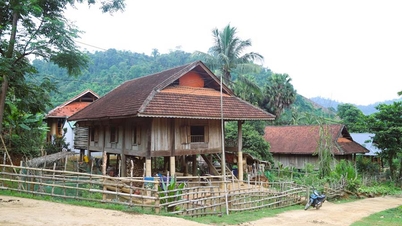
These houses were formerly the residences of Vietnamese laborers in New Caledonia.
Photo: Archival material
Mentioning André Đặng Văn Nha sparks curiosity about his vast fortune. The nickel plant project in Koniambo alone, upon completion, is estimated to be worth over $10 billion USD. Partners, politicians, historians, and journalists alike know of André Đặng as a mysterious and secretive figure, and understand that his wealth far exceeds market valuations. From humble beginnings, starting from nothing, he has risen to a throne of his own making, fulfilling his dream of escaping a life of manual labor to become a mine owner, earning the world's admiration.

The Chan Dang village in Tiébaghi had about 1,500 inhabitants in the 1940s.
Photo: Archival material
Born and raised in the island nation of New Caledonia, André Đặng Văn Nha has always shared his inspiring story: "I am Vietnamese, and I must live a useful life, not inferior to anyone; that's what a heroic race should be like."
Source: https://thanhnien.vn/tu-doi-chan-tran-den-de-che-niken-ti-do-185250827233123808.htm
















































































Comment (0)