Focus on the grassroots
The first year of implementing the two-tiered government model, eliminating the intermediate district level, placed immense pressure on the entire province's civil servants. The workload shifted to the grassroots level increased significantly, requiring strict deadlines, while the legal framework was at times not fully developed to keep pace with reality. However, looking back over the past year, the stability and growth momentum of the localities have demonstrated the adaptability and high political determination of the entire system.
 |
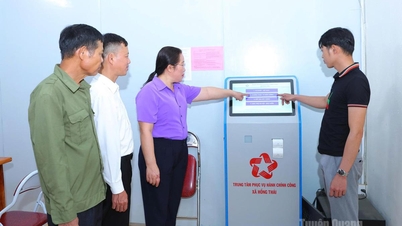
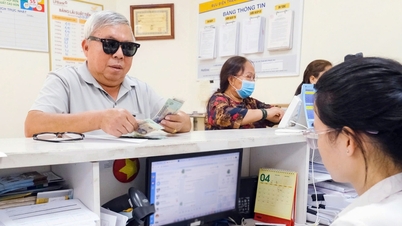
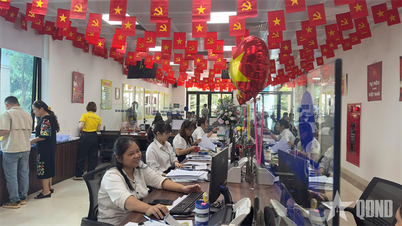
| Officials in Hong Thai commune guide residents on how to obtain a queue number automatically when coming to handle administrative procedures. |
Following the restructuring, agencies and units quickly resumed orderly operations; decentralization and delegation of power continued to be promoted; administrative reform and digital transformation saw many positive changes; and local governance capacity was gradually improved.
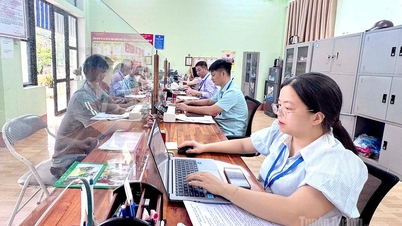
The process of receiving and handling administrative procedures has remained stable, with a large volume of applications but generally ensuring smooth operation. At the provincial level, over 84,300 applications have been received and processed, and nearly 61,000 have been resolved, with over 96% of applications resolved ahead of schedule.
In particular, despite the large workload and high demands, the entire province has maintained political stability, national defense, security, and social order; socio -economic development continues to be on track; people's lives are basically stable; and the trust of cadres, Party members, and the people in the Party's policies continues to be consolidated and strengthened.
Minh Xuan Ward was established by merging six commune-level administrative units and a portion of the area of neighboring communes. The ward currently covers an area of 34.9 km2, with a population of 72,000 people and 103 residential groups.
Comrade Pham Quoc Chuong, Deputy Secretary of the Party Committee and Chairman of the People's Committee of Minh Xuan Ward, shared: “Immediately after its establishment, the Ward Party Committee identified the top priority as maintaining unity and cohesion; stabilizing the mindset of cadres and the people so that the apparatus could operate smoothly from the beginning. We focused on reviewing and assigning cadres to positions that matched their job requirements; strengthening the assignment of tasks according to the principle of clear responsibilities, clear tasks, clear accountability, clear results, and clear timelines.”
That decisive action has yielded positive results. By 2025, the socio-economic situation of the ward is developing stably: budget revenue reached over 134% of the projected target; industrial and construction production value reached 105%; and nearly 700,000 tourists were attracted. In particular, administrative reform became a highlight, with the ward receiving over 2,300 administrative procedure applications, the online application rate reaching over 81%, and the rate of timely and accurate resolution exceeding 99%.
The "bottlenecks"
Besides the positive aspects, the practical experience of one year of operation at the local level has revealed fundamental shortcomings and obstacles that require prompt and comprehensive solutions from the central to local levels. At the conference reviewing one year of operation, Comrade Pham Van Tu, Secretary of the Party Committee and Chairman of the People's Council of Meo Vac commune, frankly pointed out three major groups of limitations:
Regarding organizational structure, the merger of some public service units has not been entirely practical. The establishment of the Public Service Center with a maximum staff of 17 people has not been fully effective due to a lack of specialized expertise among its personnel. The model of the Regional Land Registration Office forces citizens to travel long distances, creating difficulties in transactions. The operation of the Regional Health Centers has many outdated aspects. Furthermore, the Party organization between the commune government and the vertical agencies located in the area (schools, banks, state-owned enterprises under the management of the provincial department) lacks synchronization, hindering the comprehensive leadership of the grassroots Party committee.
Regarding the quality of the workforce, the capacity of officials varies unevenly across localities and sectors. Currently, commune-level officials mainly specialize in agriculture, forestry, and social work; there is a severe shortage of civil servants with expertise in information technology, finance, transportation, and construction. The overwhelming workload has led to a fear of work and a lack of confidence in providing advice among some officials. In many places, leaders have to "do" the work of civil servants to ensure deadlines are met. Teamwork skills and problem-solving abilities in new environments remain weak points for grassroots officials.
Regarding institutions and decentralization, some tasks delegated from the central and provincial levels to the commune level are not yet adequately handled due to a lack of specialized personnel (such as presiding over the acceptance and final settlement of construction investment projects; assessing food safety for collective kitchens with fewer than 200 people; assessing land acquisition plans, etc.). Conversely, there are tasks that the commune level is capable of handling but the decentralization is not thorough, and the procedures remain cumbersome, for example, the regulation requiring the Chairman of the Commune People's Committee to sign birth and death certificates instead of delegating this to the relevant specialized department.
Tuyen Quang province has recorded 46,198 people in actual employment (8,973 civil servants, 37,225 public employees), with a shortage of 5,209 staff positions. Of these, 2,985 are short of civil servants and 2,224 are short of public employees receiving salaries from the state budget. The shortage pressure is evident in both the Party, mass organizations, and government at all levels.
To address this issue, the province has identified key solutions: continuing to improve the operational mechanism of the two-tiered government system; proactively reviewing and proposing to the Central Government amendments to inadequate regulations. Simultaneously, it will decisively reorganize and streamline the administrative apparatus in accordance with Resolution 105/NQ-CP, completing the approval of job positions and appointing additional Vice Chairmen of People's Committees at all levels according to the new regulations.


From July 2025 to the present, Tuyen Quang has seriously and decisively implemented the policy of appointing non-local officials and has become one of the first provinces in the country to achieve this goal in key, confidential provincial-level agencies, as well as 100% of key positions at the commune level (Secretary, Chairman of the People's Committee, Head of the Inspection Committee).
The province has deployed 123 provincial-level officials and civil servants to assume leadership and management positions at the commune level. This includes one Chief Inspector appointed as the Party Secretary of the commune; four heads of departments appointed as Standing Deputy Secretaries; six as Chairmen of the Commune People's Committees; 12 as Vice-Chairmen of the Commune People's Committees; and 100 as leaders of specialized agencies. Simultaneously, the province transferred 185 officials and civil servants from areas with surplus personnel to areas with shortages at the commune level.
 |
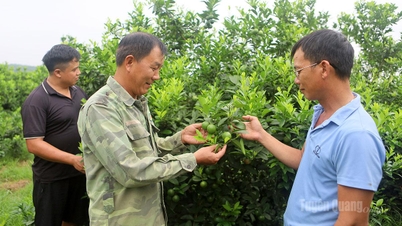
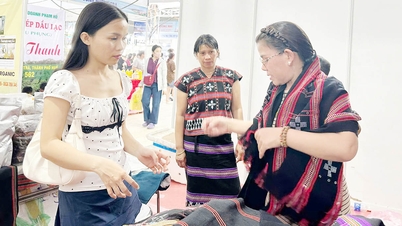
| Leaders of Phu Luong commune inspect economic development models in the locality. |
The strategic vision of the new province
Recognizing the difficulties of the two-tiered government model, the Standing Committee of the Tuyen Quang Provincial Party Committee has clearly identified key solutions for the 2026-2030 period. Regarding personnel, the province will promote the recruitment and training of commune-level officials linked to specific job positions; and will propose to the Central Government to allocate personnel quotas appropriate to the characteristics of mountainous, border, and ethnic minority areas, instead of applying the current general quotas. Regarding decentralization, the province will review each group of tasks; anything exceeding the capacity of the commune level will be adjusted or receive technical support from the provincial level. Regarding digital transformation, the province prioritizes 100% coverage of villages and hamlets; and promotes the "Digital Literacy Movement"...
In line with current key tasks, implementing Government Decree No. 185/2026/ND-CP and Conclusion No. 210-KL/TW of the 13th Central Committee of the Communist Party of Vietnam, Tuyen Quang has significantly reduced the number of villages and residential areas from 3,802 to 1,802 units (a reduction of 2,000 units).
To achieve broad consensus, Party committees from the provincial to the grassroots level flexibly applied the art of "skillful mass mobilization." Working groups directly visited each locality, listened to concerns, and clearly explained the benefits and future development prospects when expanding the village and hamlet areas. The people's unanimous support helped the merger process proceed smoothly, without creating hotspots, opening up opportunities for concentrated economic development and synchronized infrastructure investment for new rural areas.
Speaking at the conference reviewing one year of implementing the reorganization of administrative units at all levels and the operation of local governments at two levels, Comrade Hau A Lenh, Member of the Central Committee of the Communist Party of Vietnam and Secretary of the Tuyen Quang Provincial Party Committee, acknowledged the proactive and adaptable spirit of the political system, while also outlining the tasks that need to be done immediately in the coming period. The province will continue to thoroughly implement the documents of the Central Government and the Government; urgently review and adjust inadequacies in the organizational structure to ensure it is streamlined, effective, and efficient. Focus on improving the quality of grassroots officials through training and practical skills development; promote thorough decentralization coupled with increased accountability of leaders; resolutely overcome the situation of shirking responsibility or leaders doing the work of their staff. At the same time, promote administrative procedure reform associated with synchronous digital transformation from the province to the commune level; focus on investing in upgrading digital infrastructure and equipment for remote and disadvantaged communes. Effectively implement the adjusted Tuyen Quang Provincial Planning for the period 2021-2030, with a vision to 2050; link economic development with social welfare and sustainable poverty reduction. Complete the arrangement and stabilization of villages and residential areas after mergers; strengthen inspection and supervision; resolve complaints and denunciations definitively at the grassroots level; resolutely combat corruption and waste.
One year of operating the two-tiered government model in Tuyen Quang has been a challenging journey, but it has also affirmed the resilience and innovative thinking of this northern mountainous province. The initial results, along with the frank assessment and correction of bottlenecks in personnel and institutions, provide a solid foundation for Tuyen Quang to operate its administrative apparatus more effectively, better serve the people, and promote comprehensive development in the new phase.
Text and photos: Ly Thu
Decisive restructuring of the staff of officials and civil servants.
 |
| Comrade Vu Ngoc Khanh Deputy Director of the Department of Internal Affairs |
After a year of implementing the two-tiered local government model, we have achieved many positive results. For example, the time taken to process administrative procedures has been significantly shortened, and bottlenecks in authority have been largely resolved. However, alongside these positive results, there are still some mechanical shortcomings; coordination and interoperability between a few merged units are sometimes not truly smooth or effective. Therefore, in the coming period, the Department of Internal Affairs will continue to advise the Provincial People's Committee to focus on key tasks to optimize the administrative apparatus.
First, we will conduct a thorough review of the functions and tasks of each agency and unit after a year of operation to make significant adjustments and resolutely address any overlapping or overlooked tasks, ensuring the smooth operation of the system in accordance with the principle of "clear responsibilities, clear tasks, clear effectiveness." Simultaneously, the restructuring of the staff and civil servants, linked to job positions, will be implemented decisively; not only reducing the number of departments but focusing on improving internal quality, transferring and reassigning personnel according to their abilities and strengths, while resolutely streamlining personnel who do not meet requirements to make way for younger, more qualified personnel. Alongside this, the province will accelerate digital transformation and process reform to use technology as a powerful tool to support the two-tiered model, aiming to digitize interconnected processes to control progress and accurately measure the work performance of each individual and unit.
Close to the people, serving the people.
 |
| Comrade Dinh Thi Thu Ha Deputy Secretary of the Party Committee of Minh Xuan Ward |
After a year of operating the two-tiered local government model, the Party Committee and government of Minh Xuan ward have stabilized their operations, shifting their mindset from a management-oriented administration to a service-oriented administration, aiming to be close to the people, understand their needs, and serve them. The methods of leadership and management have been reformed to be clear in terms of tasks, timelines, responsibilities, and results, linking the responsibility of the head of the ward to the effectiveness of task implementation. From the date of merger to April 2026, the ward received 23,078 applications, with an online rate of 81.82%. The rate of application resolution reached 99.54%, and the number of applications resolved ahead of schedule reached 98.85%, saving time and costs in handling administrative procedures. In the coming period, the Party Committee of Minh Xuan ward will continue to promote the spirit of unity and innovation, accelerate administrative reform, improve leadership, guidance, and management capacity, and utilize resources from the consensus and trust of the people to build Minh Xuan ward into a civilized, modern, and sustainably developed ward, worthy of being the central ward of the province.



Overcoming pressure to operate efficiently
 |
| Comrade Nong Van Hung Head of the Economic Department of Bang Lang Commune |
In the early stages of implementing the two-tiered local government model, the Economic Department faced immense pressure due to the increased workload and the shortage of specialized staff. Besides its state management functions, the department was also assigned by the commune People's Committee to act as the investor for construction projects, but lacked the necessary conditions to establish a Project Management Board. Furthermore, overlapping guidance documents from various departments and agencies sometimes caused confusion during implementation, leading to staff frequently working overtime, including weekends, to ensure deadlines were met.
I personally worked with the staff to overcome difficulties and encouraged them to complete their tasks. Despite the many pressures, the department always received timely guidance from relevant departments and agencies, as well as the attention and support from the Party Committee, People's Council, and People's Committee of the commune. After a year, the system of documents was standardized, and the staff proactively researched and advised, contributing to improving the effectiveness of the assigned tasks.
Convenient for the people
 |
| Ms. Tuong Thi Hanh Dan Khao village, Luc Hanh commune |
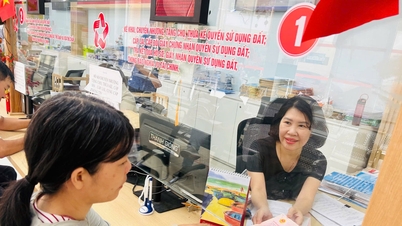
“I’ve noticed many changes in administrative procedures after a year of implementing the two-tiered local government system. Previously, for many things related to land-related paperwork, I had to travel to the district, a long distance, and sometimes I’d wait almost a whole day. Now, at the commune’s Public Administrative Service Center, I receive guidance from the staff. They explain the necessary documents and how to fill out the forms step-by-step. For elderly people or those unfamiliar with smartphones, the staff also assist with online public services, so I no longer feel overwhelmed. I find the processing of applications faster and I don’t have to travel back and forth as often. What I hope is that in the future, procedures will be further simplified so that everyone, especially those in remote areas, can easily access these services.”
Source: https://baotuyenquang.com.vn/thoi-su-chinh-polit/tin-tuc/202607/tu-doi-moi-den-hieu-qua-van-hanh-70e47f6/