The choppy waves made most of us "new recruits" dizzy, but the two veterans, Tran Van Lien and Khong Duy Dinh, remained completely unfazed. These two former naval commandos of the Truong Sa Islands, now in their seventies, were still enthusiastically at the forefront of the delegation visiting the islands.
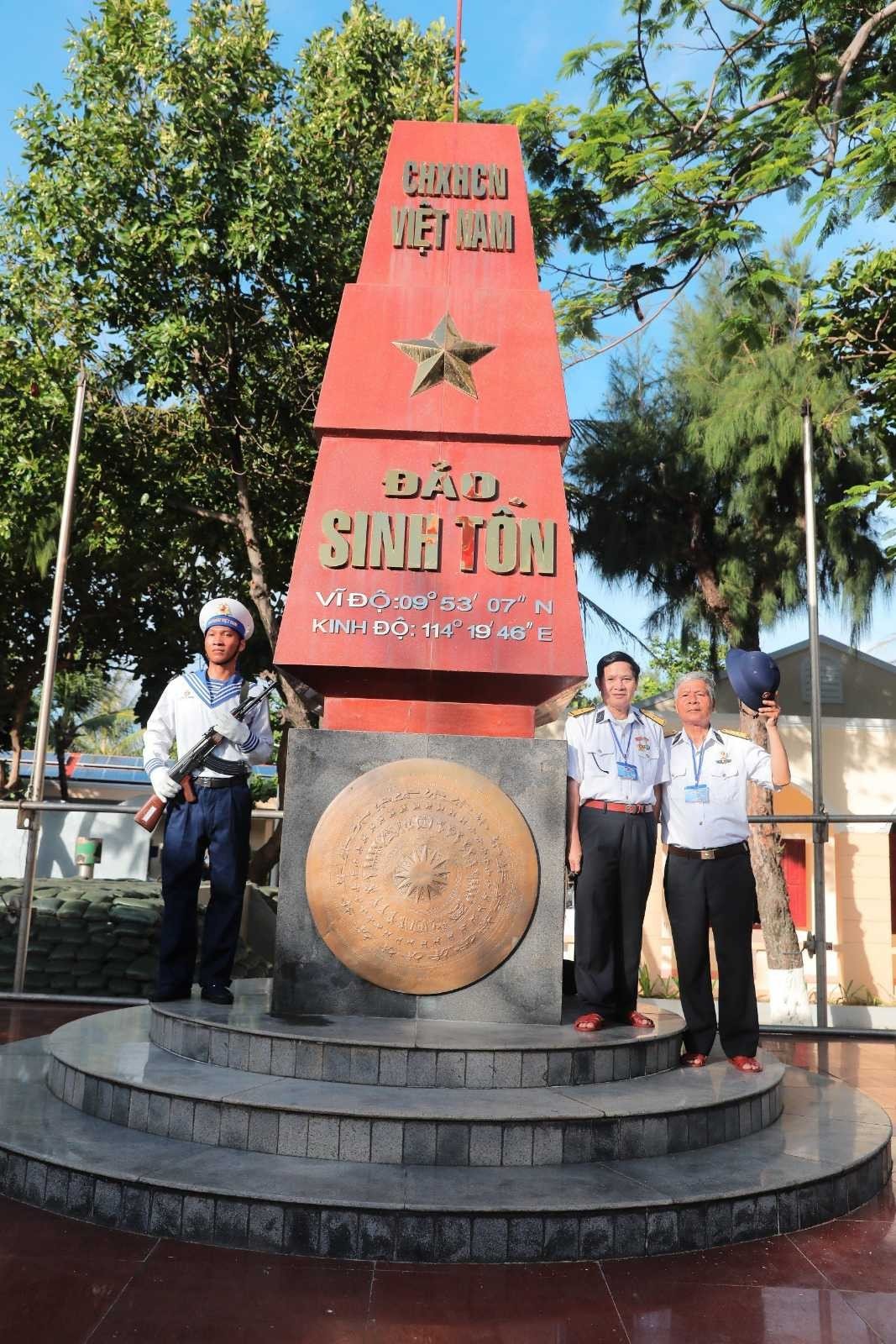 |
| Former naval commandos Tran Van Lien and Khong Duy Dinh pose for a commemorative photo at Sinh Ton Island. (Photo: Nguyen Tan Tuan) |
In the early days on the ship, before I was overwhelmed by seasickness, I noticed two elderly delegates who were always together, chatting happily, and I guessed they knew each other. And I was right. Later, when I set foot on Song Tu Tay Island and was officially introduced, I realized how fortunate I was to be on the same trip to the Truong Sa archipelago with these two veterans. They were not only soldiers who bravely defended the island in the past, but also naval commandos who could "swim like dolphins and dive like otters"...
Slow motion footage
Just like on the mainland, the island has inhabitants, children, a temple, a school, and a hospital. Aside from the arduous sea journey to the island, life here is similar to the mainland, perhaps with fewer people or on a smaller scale. While touring, our group stopped to chat with a group of children, the offspring of soldiers and civilians on the island. Upon learning that there were two former naval commandos, two boys named Bac and Long (students from Song Tu Tay Primary School) excitedly asked the two men to tell them stories about their time fighting on the island.
So, under the cool shade of the flowering trees, we journeyed back in time with two veterans to those heroic and tragic days. Mr. Lien recounted: “Back then, our 126th Naval Special Forces Unit overcame the dense encirclement and blockade of the modern US-puppet navy, relying on the people, infiltrating deep into the ports, using small, elite units, and employing high-powered weapons to strike hard and decisively. In seven years of fighting on the Cua Viet - Dong Ha battlefield, the Naval Special Forces fought over 300 battles, sinking or severely damaging 336 combat boats and ships, destroying many war vehicles, and eliminating many enemy troops.”
"Contributing alongside forces across the Southern battlefield to sink and damage 7,473 ships, destroy hundreds of bridges, culverts, and ports, kill thousands of enemy soldiers, destroy tens of thousands of tons of weapons, ammunition, and war materials, and together with the people and army of the South, defeat the invading American forces...", Mr. Lien's voice was steady, like a living historical account.
“During the Spring Offensive and Uprising of 1975, culminating in the historic Ho Chi Minh Campaign, the Vietnam People's Navy coordinated operations and combat on the sea front, especially coordinating with a unit of the 5th Military Region troops in a swift, bold, secret, and proactive liberation of five islands in the Spratly Archipelago, contributing to the complete and great victory of the nation. On April 11, 1975, our forces secretly departed from Da Nang and chose Song Tu Tay Island as the first island to capture. On April 14, Song Tu Tay Island was liberated. On April 25, we completely liberated Son Ca Island. On April 27, we took control of Nam Yet Island. On April 28, we completely took control of Sinh Ton Island. On April 29, the Vietnam People's Army, including the C75 unit comprising forces from the 126th Special Forces Regiment, the 471st Naval Special Forces Battalion, and the Battalion…” "Four of them, including Uncle Khong Van Dinh here, completely controlled the Spratly Islands." "Specifically, would you like to hear how Uncle Dinh and his friends secretly landed in the Spratly Islands?"
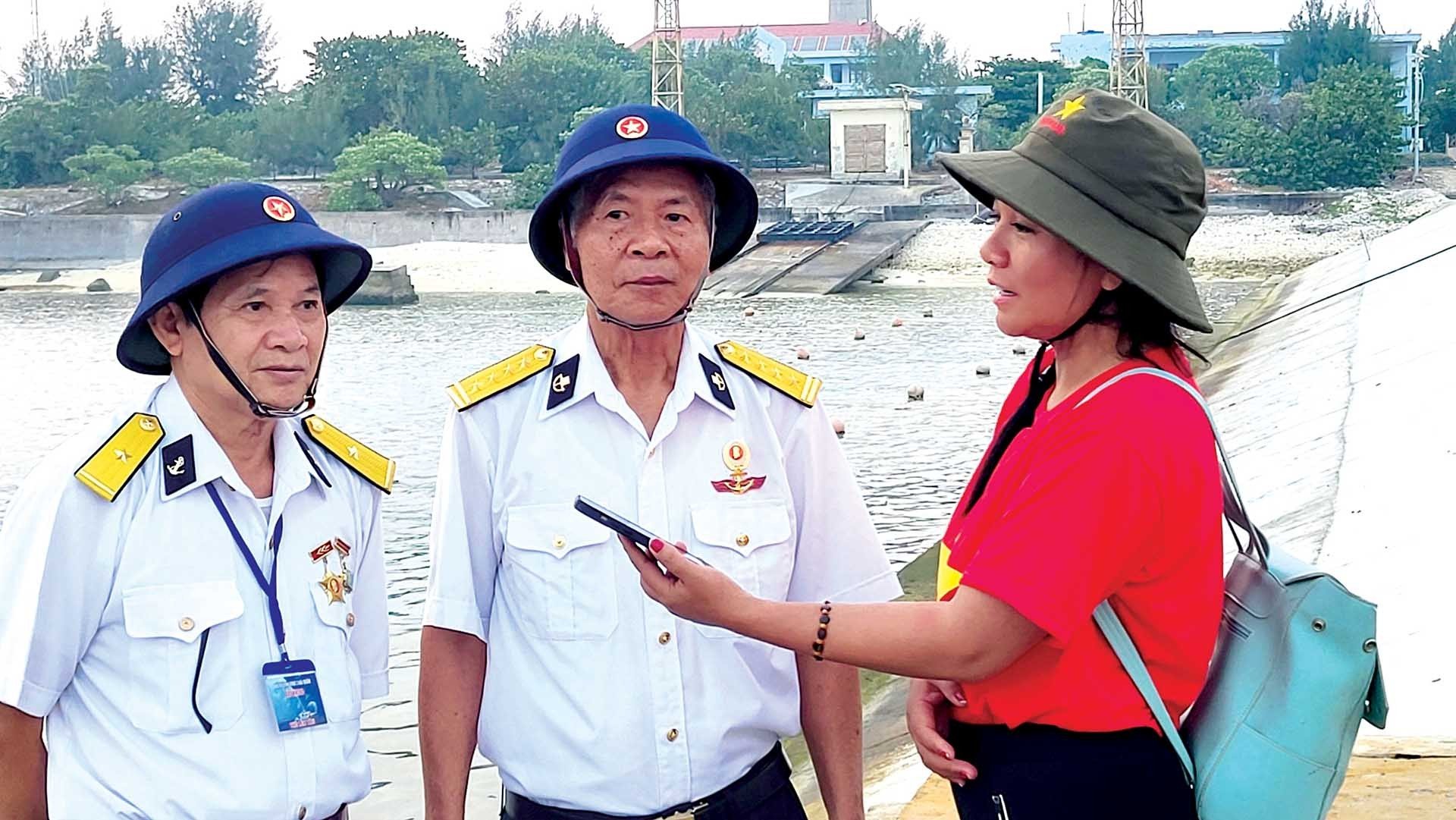 |
| Former naval commandos Tran Van Lien and Khong Duy Dinh give an interview to TG&VN on Song Tu Tay Island, Truong Sa Archipelago. (Photo: Nguyen Thi Hai Van) |
Immediately, all eyes turned to former naval commando Khong Duy Dinh. Mr. Dinh smiled kindly and began to recount: “At 7 pm on April 11, 1974, we set off on a small fishing boat to create a diversion. At that time, enemy ships were patrolling the sea, and our ships were full of nets. We each carried a backpack and lay down in the hold. The ship drifted aimlessly for about a week before reaching the island. Looking through binoculars, we saw the island dimly. We got into rubber boats and silently approached the shore in the dark night, waiting for the signal to attack. Caught by surprise, the soldiers on the island put up weak resistance and surrendered. We suffered no casualties, only a few minor injuries. It was a light battle! After that, we occupied the entire Son Ca Island. It wasn't until two days later that we saw foreign ships lurking outside, but we had already raised our flag to assert our sovereignty .”


Hard work pays off.
In the breezy Trường Sa sun, the two former soldiers were sometimes with the children, and sometimes chatting with the soldiers standing guard at the far end of the island. I approached Mr. Liên and jokingly said, "You're so healthy, I can't keep up with you."
He shared: "My good health is thanks to the training I underwent as a naval commando. Training was very arduous back then. Regular soldiers only trained for 3-4 months, but naval commandos had to train for 10 months to a year. A company (around 50-100 people) would only select about 10 people for the task of attacking bridges and ships. The selection process for naval commandos was arguably only slightly less rigorous than that for commandos on unmarked ships. This isn't a comparison between different branches of the military, but rather to illustrate how difficult it is to train and develop a true naval commando soldier to fight the enemy."
For example, during training, soldiers have to swim 30 km (using the front-row swimming technique). Swimming in the sea allows them to utilize the waves and wind to propel them from one island to another; if swimming in a river, it's about 10 km, which is standing water (without propulsion). Training in Cat Hai often involves swimming from Cat Hai to Hon Dau, or from Cat Hai to Do Son, or from Cat Hai to buoy number 0... It takes rigorous training to succeed!
Mr. Dinh further shared: “In the winter, the weather in the North gets as cold as 5°C; to train our physical fitness, we were woken up in the middle of the night and made to sit by the well, wearing only underwear. Then someone would scoop up a bucket of water and let it drip from above our heads, one by one. When the water ran out, we were allowed to go inside.” Mr. Lien emphasized: “Even more important was training our spirit, camaraderie, and readiness to sacrifice ourselves to save our comrades.”
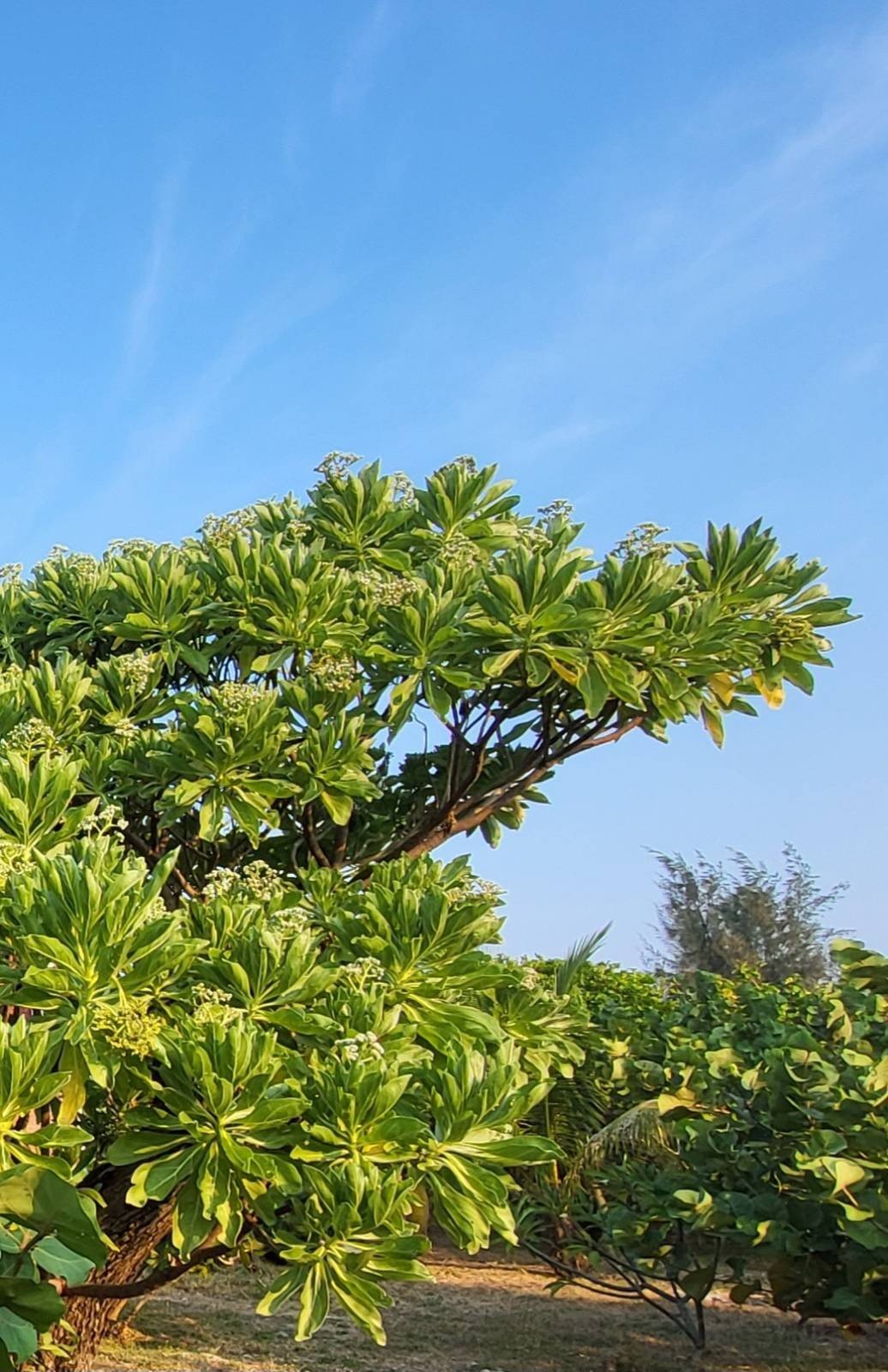 |
| The Barringtonia tree blooms against the blue sky at Song Tu Tay Island, Truong Sa Archipelago. (Photo: Minh Hoa) |
Competing to make sacrifices
With a choked sob, Mr. Lien recalled: "I'm alive today thanks to my comrade, Hoang Cao Bien, from Thai Binh, in the Battle of Thuy Tu Bridge. Bien and I won several battles together. Then, during the Battle of Thuy Tu Bridge, something happened."
“The explosive charge usually has two detonators. We had approached the bridge, but for some reason, the timed detonator wasn't working. As the team leader, I signaled to immediately remove the detonator, but Bien gestured to me that, as the team leader, I had to go back and report to the battalion. At that moment, we were underwater, unable to argue, and the enemy was on shore. I dived away from the bridge's foundation, and Bien immediately pulled the pin. He gave me a chance to live and sacrificed himself,” he recounted.
“The reality is that in fierce battles, many unforeseen situations occurred. The two martyrs, Tiến Lợi and Anh Xuân, were spotted by the enemy when they approached the bridge. Anh Xuân immediately detonated the explosives, collapsing the bridge. Both men perished. Back then, we were very brave. We crossed over to Sơn Trà with only explosives to attack ships and some roasted rice. If the opportunity wasn't right, we'd stay there for 5-7 days, nibbling on roasted rice to sustain ourselves. We'd return when we managed to sink a ship,” Mr. Liên recalled.

The ship's whistle blared, signaling it was time to return. We bid farewell to Song Tu Tay and set off for the submerged island of Da Thi. The sea was a deep blue in the evening, breezy and windy. I was speechless as I watched my two old friends arm in arm during this memorable sea voyage.
I recalled Mr. Lien's words: "I hope I have enough health to participate in more trips, not only to find my fallen comrades but also those who are still alive. Going to Truong Sa and seeing my children and grandchildren always holding their weapons firmly, protecting the Fatherland, makes me very proud. I hope that today's and future generations will always share the same will to protect our homeland's seas and islands; every inch of land that our ancestors shed blood to protect must not be lost."
----------------------------
Final installment: Maritime rescue, a mission in peacetime.
Source: https://baoquocte.vn/truong-sa-trong-toi-tu-hao-dac-cong-nuoc-truong-sa-ky-ii-270802.html