

Donating "prime land" to pave the way for spring.
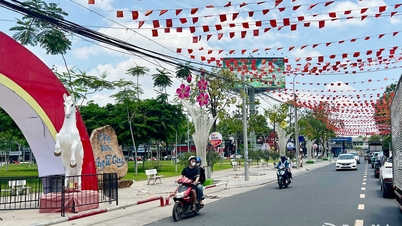
This year, spring seems to have arrived earlier on Nguyen Cong Tru Street, Block 8, Bai Chay Ward. The newly completed road has opened up a new living space filled with a vibrant atmosphere in the days leading up to Tet (Lunar New Year). Along both sides of the street, residents are busily sweeping their yards, repainting fences, and tidying up their gates. Bright red national flags and dazzling decorative lights stand out in the spring sunshine, making the entire street seem to have donned a fresh, lively new coat.
This nearly 1km long road has been a part of the residential area for almost three decades. Invested in since the 1990s, Nguyen Cong Tru Street was once only 3 to 5 meters wide, with a peeling concrete surface and an outdated drainage system. Over 300 households living along the route are still accustomed to having to inch their way through each other during rush hour. The greatest hope of the residents here is to have a wider, more modern road, befitting the rapid urbanization of Bai Chay ward.

The long-held dream of the people has come true this spring, as Nguyen Cong Tru Street has been comprehensively and systematically renovated and upgraded. The road surface has been paved with asphalt; the rainwater and wastewater drainage systems have been fully improved; areas with elevation differences have been reinforced with retaining walls to prevent landslides; the electricity and water infrastructure has been neatly and uniformly upgraded; and the traffic safety system has been perfected. Behind the new, modern appearance of the street lies a story of consensus and sharing, as residents voluntarily donated every inch of their valuable land to expand the common space for the benefit of the community.
Ms. Nguyen Thi Hoa's house, located in Group 6, Ward 8, is situated right on Nguyen Cong Tru Street. During the road renovation and expansion project, her family was one of the pioneering households to donate land, dismantle their fence, and proactively hand over the land. Sharing her decision, Ms. Hoa said: “My family has six children, both sons and daughters, who are all Party members, so I always felt I had to be a role model and take the lead. When the local authorities implemented land clearance, I voluntarily donated land and dismantled my structure first so that others could follow suit. The road is wider, making travel more convenient, and the neighborhood has become more spacious and civilized. The ultimate benefit is not only for the community but also for my family.”

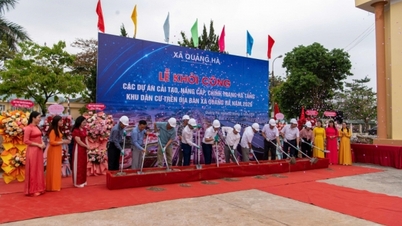
Not only Mrs. Hoa's family, but along Nguyen Cong Tru Street, more than 60 households voluntarily donated land and relocated their structures to hand over the site, with a total estimated value of over 22 billion VND. This consensus and joint effort created favorable conditions for the project to be implemented smoothly, completed on schedule, and put into use before the Lunar New Year, meeting the expectations of the people.
The movement of donating land for road construction is not only present on Nguyen Cong Tru Street but has also spread strongly to many residential areas in the province. In Ha Phong 3 area, Ha Tu ward, which for many years suffered from localized flooding every rainy season, there has been a noticeable change, bringing a more spacious and safer living space, rekindling new hope and expectations for the people. This Tet holiday, the road connecting Group 25 to Group 28 has been comprehensively upgraded, replacing the narrow, muddy road of the past. The asphalt concrete road is over 600m long, with a widened cross-section, along with a well-invested system of sidewalks, drainage, lighting, and greenery. Not only does it improve traffic, but the project also fundamentally addresses the long-standing flooding and environmental pollution problems.

To achieve this new look, 17 households in Ha Phong 3 area voluntarily donated nearly 200m² of land. Despite varying degrees of impact, most households agreed, understanding that the common good is also the long-term benefit for each family. As shared by Mr. Cao Dang Dung, from group 28, Ha Phong 3 area: "Initially, everyone had concerns about moving the fence and shrinking their living space, but once they understood the long-term benefits, the residents were all willing to work together for the community."
From Nguyen Cong Tru to Ha Phong 3, and in other residential areas, the spirit of being willing to "take a step back" for the common good has been spreading. The donated land not only expands roads but also creates civilized and safe living spaces, giving rise to a unique springtime atmosphere: a spring of sharing, consensus, and community responsibility.
Cities "sprout" from the hearts of the people.
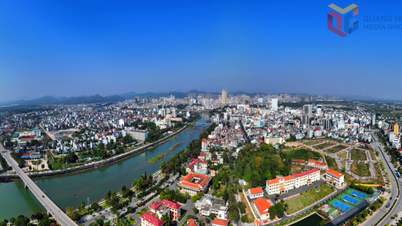
In 2025, the Quang Ninh Provincial Party Committee adopted a policy on upgrading and improving urban infrastructure and existing residential areas; the Provincial People's Council issued a policy allocating significant resources to implement this policy. Following the directives of the Provincial Party Committee and the Provincial People's Council, the Provincial People's Committee issued Plan No. 272/KH-UBND dated October 21, 2025, on improving urban quality, aiming to realize the goal of building civilized, modern urban areas and residential areas with synchronized technical infrastructure, towards the goal of making Quang Ninh a centrally-governed city.

A distinctive feature of the province's policy is its people-centered approach, placing the people at the center and as the main actors in the development process. Instead of relying solely on budget investment, the province clearly defines that public consensus is a crucial "soft resource" that determines the success and sustainability of each project. Based on this orientation, the process of mobilizing people to donate land for road construction is not one-sided or coercive, but rather carried out through transparency in planning, persuasive methods, and ongoing support throughout the implementation process.
“When we received information about the project, the Party branch and neighborhood committee determined that we had to make the people understand that this was a common road, serving their lives. We provided specific information on the relevant details and discussed them openly with the residents. Party members and officials in the neighborhood also set an example by being the first to donate land. When they saw the clear benefits and the exemplary actions, the people voluntarily followed suit,” shared Mr. Phung Ngoc Viet, Secretary of the Party Branch and Head of Neighborhood 8, Bai Chay Ward.
According to Mr. Tran Manh Hung, Chairman of the People's Committee of Bai Chay Ward, the spirit of "putting the people at the center" is not just a policy but is concretized through clear and responsible actions throughout the implementation process. "Right from the planning and investment plan stages, the ward publicly discloses the scope of impact and the implementation roadmap so that people understand it clearly. During the implementation process, the government closely coordinates with the neighborhood, directly engaging in dialogue with each affected household to promptly address any concerns or difficulties. For households that donated land, we directed support in fully restoring the technical infrastructure, renovating gates and fences to ensure stable living conditions for the people," Mr. Hung said.

This consistent, people-centered approach has created widespread consensus throughout the province. From central urban areas to mountainous and border communities, the movement of donating land for road construction has spread, becoming a beautiful aspect of building civilized and modern cities. Thousands of households in the province have voluntarily donated hundreds of square meters of residential and garden land; dismantled fences, gates, and auxiliary structures to simultaneously implement numerous transportation, drainage, and urban development projects, creating a vibrant "flow" of social consensus.
And from these "private plots of land" donated today, Quang Ninh is sowing "seasons of shared benefit" so that the city not only grows in scale but also becomes richer in quality of life and depth of community culture.
Source: https://baoquangninh.vn/tu-manh-dat-rieng-no-hoa-loi-ich-chung-3391573.html































































Comment (0)