

Nam Phương, the last empress in Vietnamese history, was a student at the Notre Dame girls' school in Paris, France. In 1935, she assisted the Notre Dame sisters in establishing the first Catholic school for girls in Vietnam: the Couvent des Oiseaux, belonging to the Notre Dame du Langbian order. Initially a kindergarten, it later became a boarding school for grades 1 to 12, offering a bilingual French-Vietnamese program. The facilities were spacious, with classrooms up to 75 square meters and a medical room capable of examining up to 50 children at a time. It was also the first girls' secondary school to teach the French curriculum in Indochina at that time. According to writer Nguyen Vinh Nguyen, "this was once one of the famous nurseries for the French lineage in Da Lat before 1954." In the 1970s, the school had up to 760 students, taught by renowned professors and the Notre Dame sisters.
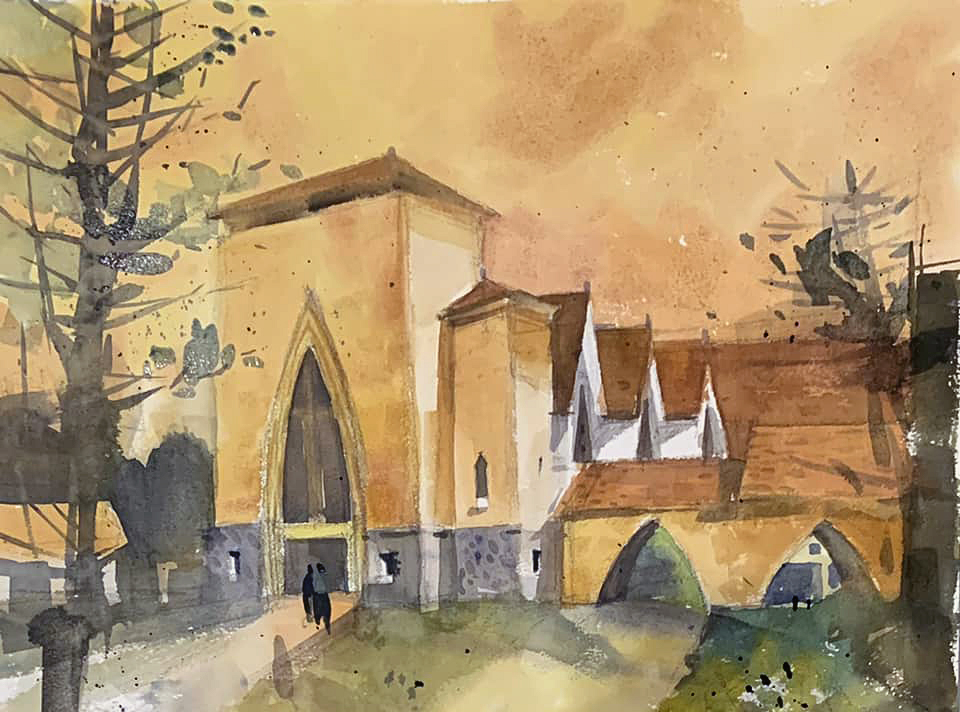
Sketches by architect Nguyen Khanh Vu
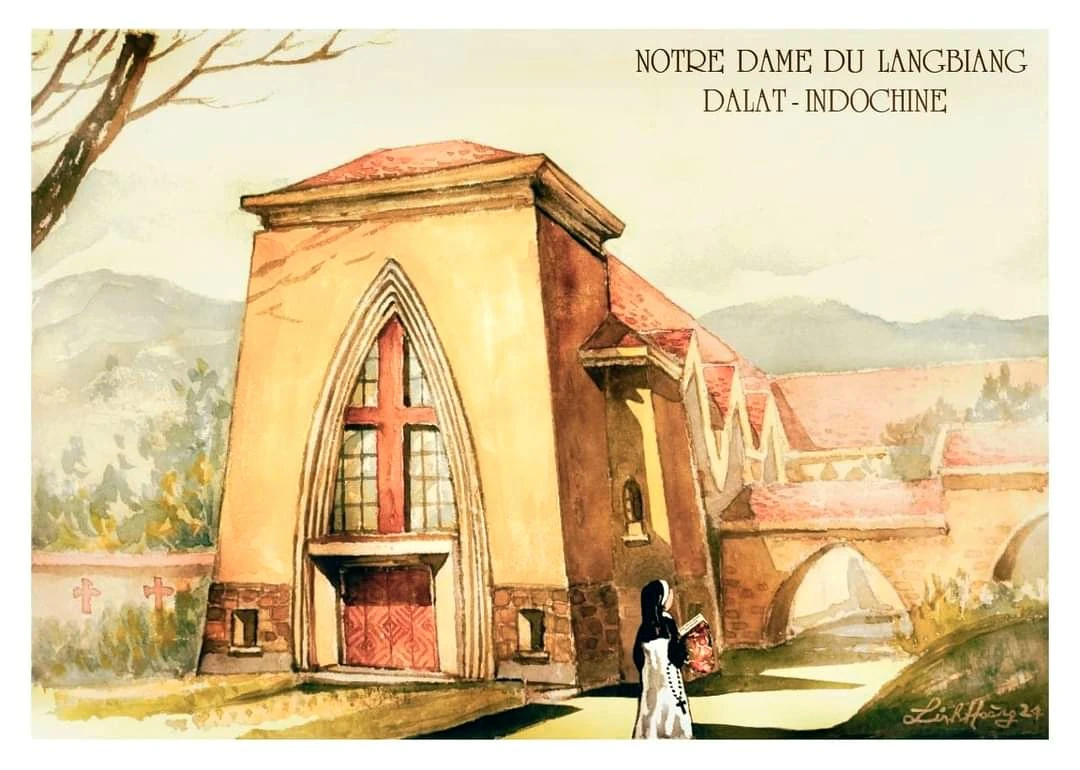
Sketches by architect Linh Hoang
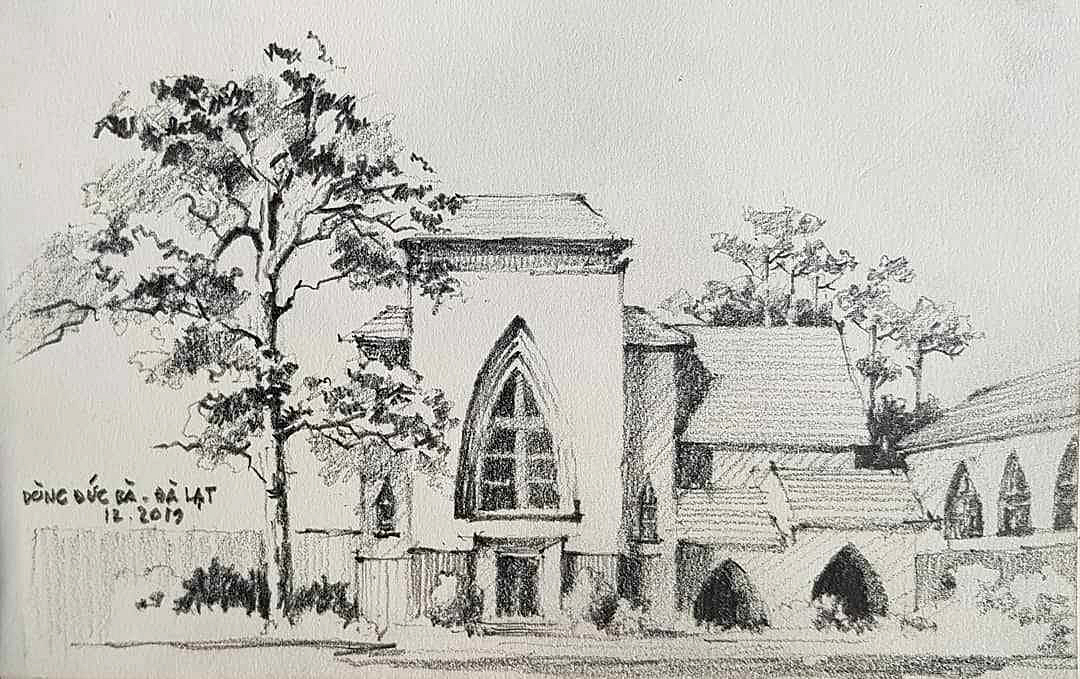
Sketches by Lam Yen
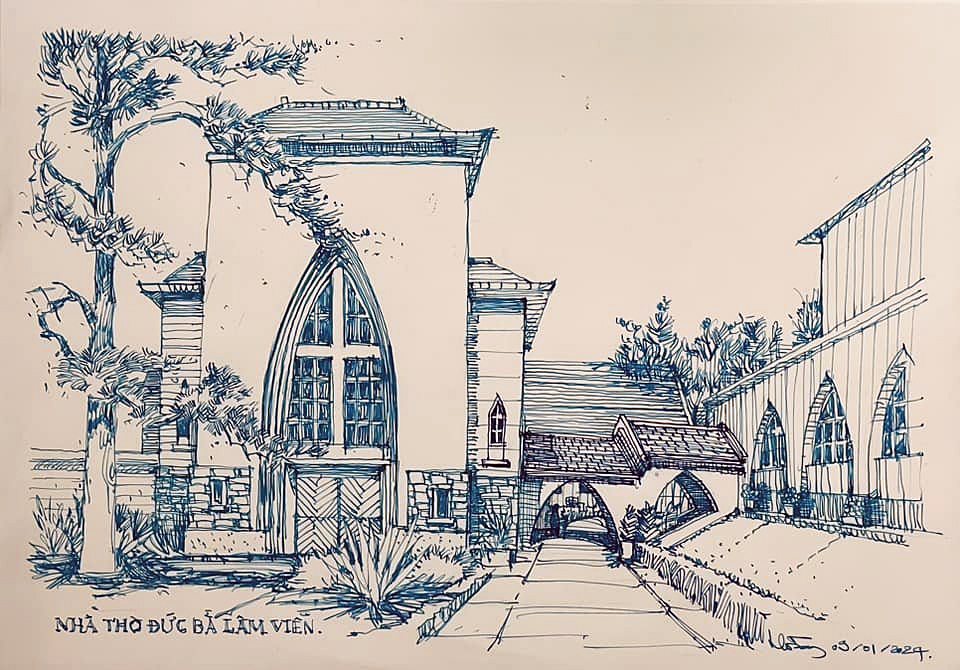
Sketch by architect Tran Xuan Hong
In 1975, the school was dissolved. In 1988, it became the Lam Dong Ethnic Boarding High School, with the chapel and convent still belonging to the Our Lady of Lam Vien convent. The school and convent are connected by a stone-paved walkway.
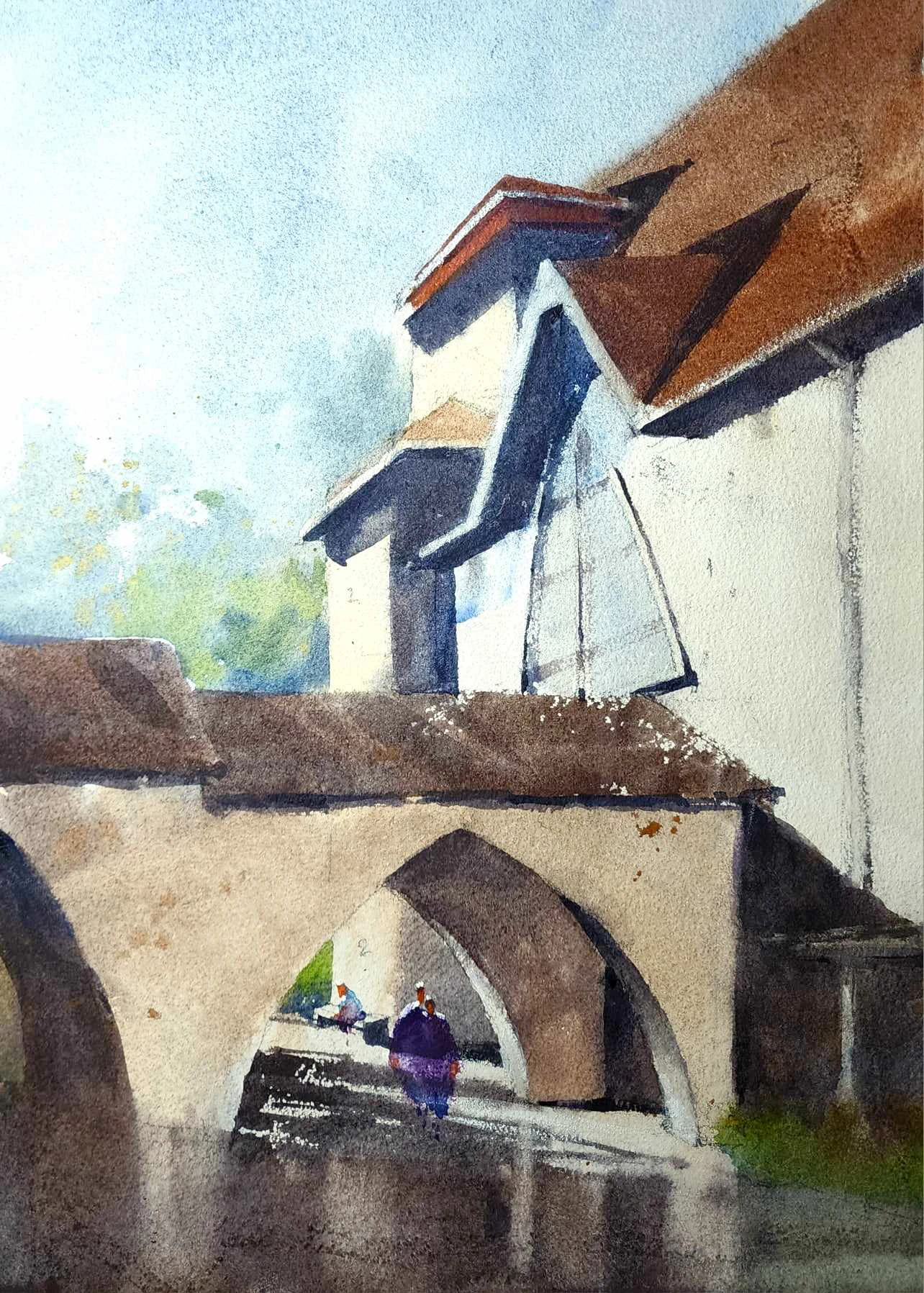
The ogival vault (pointed dome) is characteristic of the Gothic architectural style - sketch by Lam Yen.
The monastery features Gothic architecture with stained-glass windows and characteristic ogival arches in the windows, corridors, walkways, and main facade. The walls are clad in a combination of stone and textured concrete. The roofs are covered with terracotta tiles and have a steep slope.
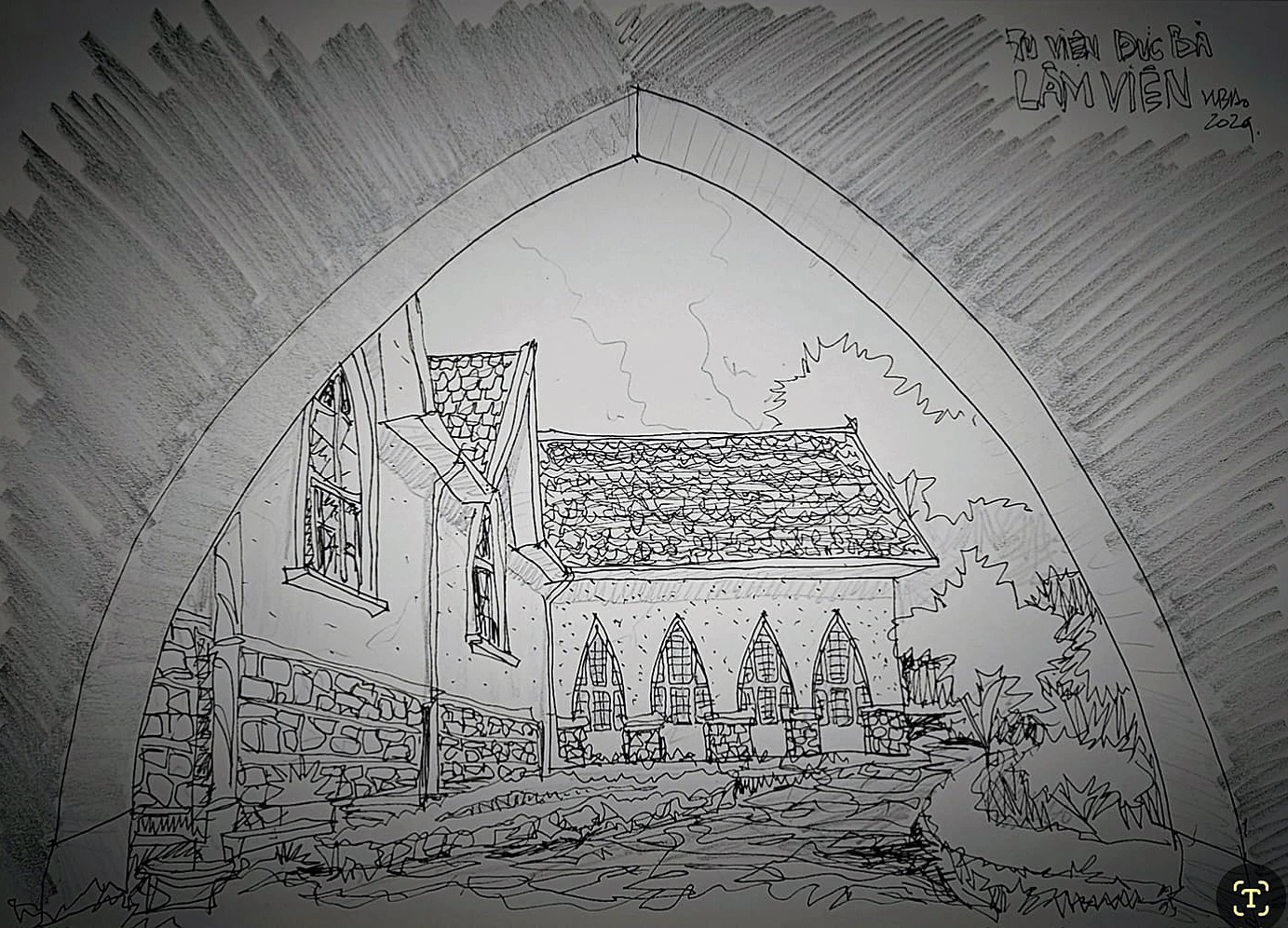
Sketch by architect Bui Hoang Bao
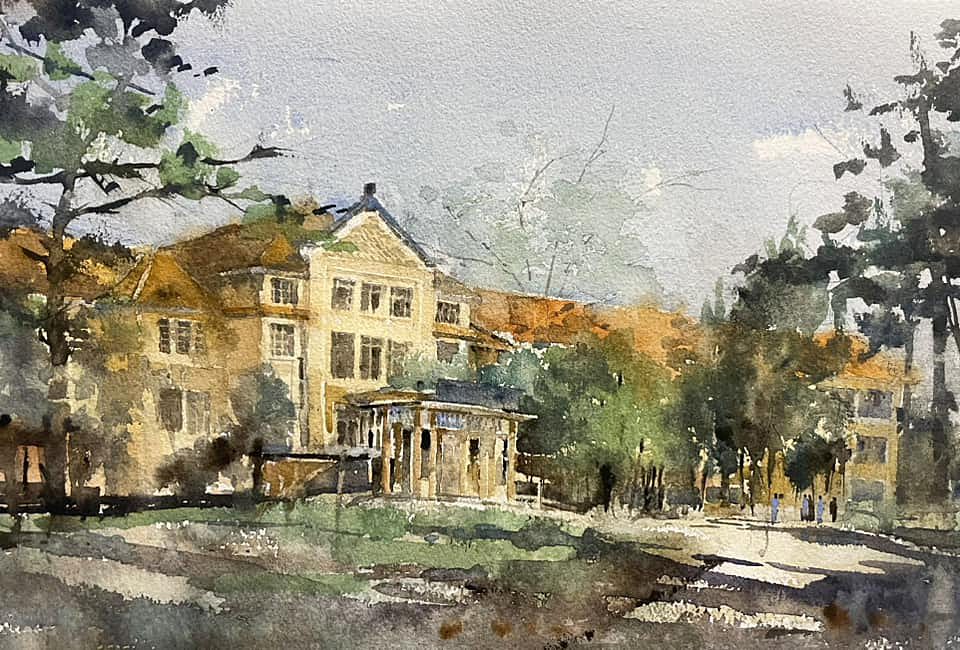
The Lam Vien Monastery and the Lam Dong Ethnic Boarding School are both located within the former grounds of the Lam Vien Girls' School - a sketch by architect Dang Phuoc Tue.
Currently, the National Archives Center IV still preserves the blueprints and many valuable documents related to these constructions.
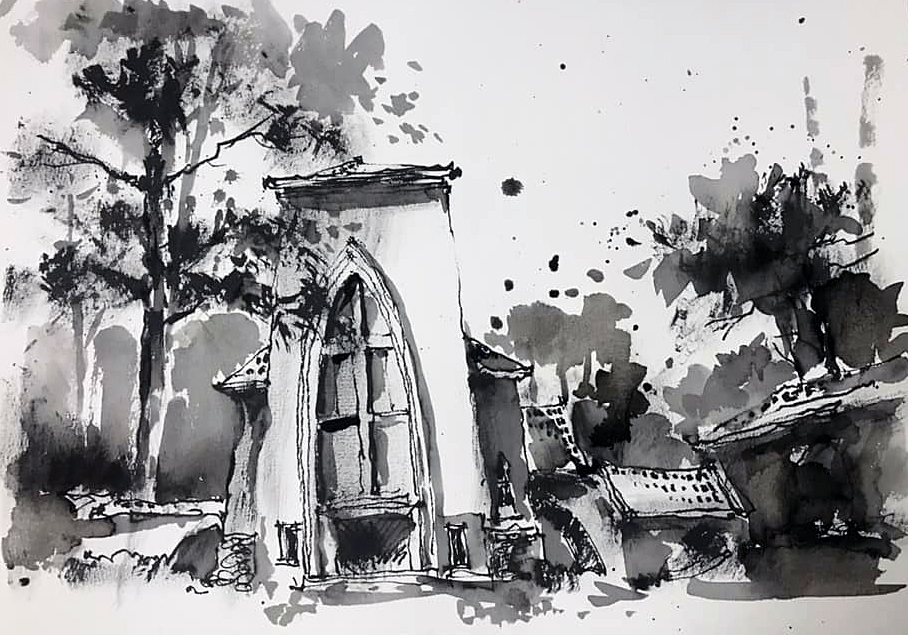
Sketch by architect Phan Đình Trung
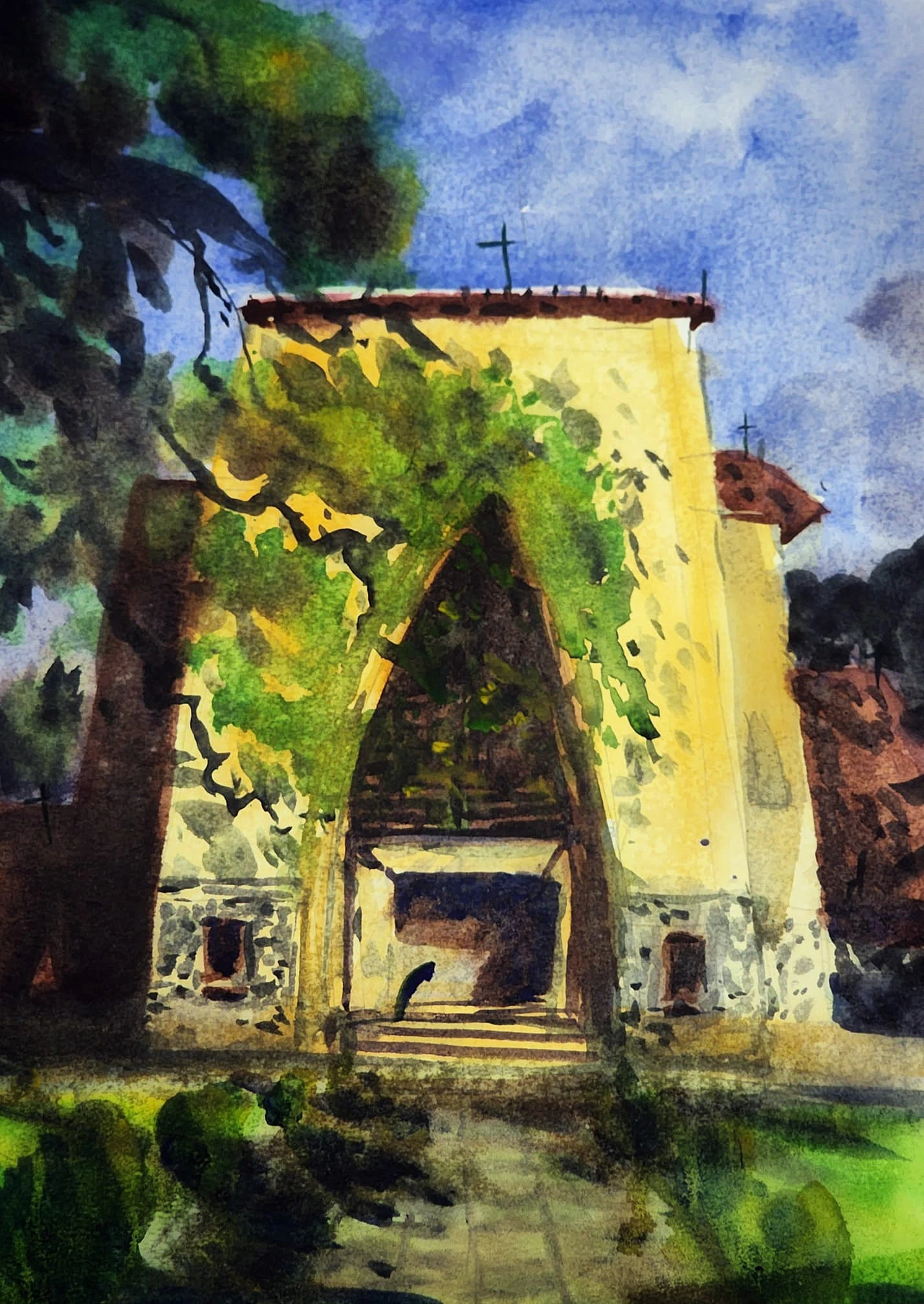
Sketch by architect Phung The Huy
Source link


![OCOP during Tet season: [Part 1] Ba Den custard apples in their 'golden season'](/_next/image?url=https%3A%2F%2Fvphoto.vietnam.vn%2Fthumb%2F402x226%2Fvietnam%2Fresource%2FIMAGE%2F2026%2F01%2F26%2F1769417540049_03-174213_554-154843.jpeg&w=3840&q=75)





Comment (0)