Editor's Note : The capsizing of the Green Bay 58 QN-7105 boat carrying 49 tourists in Ha Long Bay ( Quang Ninh province) on July 19th shocked public opinion. In an instant, 36 people perished, and 3 are missing. To raise awareness about waterway and road accidents during the rainy season, a team of reporters from SGGP newspaper revisited the docks and routes that are known as traffic "black spots" to document solutions to ensure the safety of people and property.
Rescue equipment needs to be more modern.
At the Ninh Kieu pier, there are still small boats carrying individual tourists (3-4 people per boat). These boats are regulated to carry fewer than 4 passengers. Three young people rented a boat to go to the floating market, and the middle-aged woman who owned the boat carefully gave them life jackets to wear. The boat started its engine and sped off towards the Cai Rang floating market, but this "female boat driver" was not wearing a life jacket.
Can Tho City currently has 662 inland waterway terminals. According to Mr. Nguyen Dang Khoa, Deputy Director of the Department of Construction of Can Tho City, tourist boats with more than 30 people operating at Ninh Kieu tourist terminal are issued license plates by the department. To be issued a license plate, the boat must meet the necessary conditions such as: inspection certificate, equipped with life jackets, fire extinguishers, medical kit, walkie-talkie, and the operator must have a certificate for serving tourist boats.
Regarding some small boat owners carrying tourists (3-4 people/boat) who have not complied with the requirement to wear life jackets when visiting Cai Rang floating market and some eco-tourism destinations, the Department will closely coordinate with the Department of Culture, Sports and Tourism of Can Tho City to strengthen inspections and remind those operating tourist transport services to comply with regulations on waterway safety. Boat owners must equip their vessels with life jackets, flotation devices, and rescue equipment.

In the Phu Quoc Special Economic Zone, An Giang province, there are over 80 large-capacity boats serving to transport tourists to and from the island; and more than 70 motorboats operating as passenger transport vehicles… However, most of these vessels do not have proper docks or berths. Visiting the embankment area of Bach Dang Park (formerly Duong Dong ward) on a day in late July 2025, we saw several boats picking up and dropping off tourists, even though this was not a designated dock.
"Every few days, boats pick up and drop off tourists along the embankment. Some boats carry Western tourists but don't provide life jackets, which is very dangerous. This situation has existed for many years, but we rarely see authorities inspecting, reminding, or taking action," said Mr. Thanh, a resident near Bach Dang Park.
At the southernmost tip of Vietnam, at the Cua Lon River ferry terminal (connecting Tan An and Nam Can communes in Ca Mau province), almost no passengers boarding or disembarking the ferry wear life jackets. This situation is similar at many other ferry terminals across the river in Ca Mau province. When asked why they don't wear life jackets, Mr. Le Minh Tan (a passenger from Nam Can commune, Ca Mau province) said: "It's inconvenient because the time spent on the ferry is short!"
According to Mr. Vu Khang Cuong, Head of the Department of Ship and Crew Registration (Vietnam Maritime Administration), there is a large number of tourist ships operating along the coast in Vietnam. However, according to current regulations, these ships are not required to be equipped with advanced signaling devices or rescue navigation systems. Small tourist ships operating near the shore are mainly equipped with only VHF radios, flares, horns, and basic life-saving equipment. These devices have many limitations in emergencies, as crew members may not have time to send signals. In extreme weather conditions, rescue agencies may have difficulty locating the distressed ship.
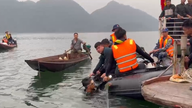


Mr. Vu Khang Cuong suggested that, following the incident involving the Green Bay 58 tourist boat, management agencies and relevant authorities should review the standards and regulations regarding safety equipment on ships and tourist boats, including stricter and more specific regulations on cases where it is mandatory to equip them with more modern emergency signaling devices.
Explaining why the Green Bay 58 ship sank at 1:30 PM but rescue efforts only began about two hours later, Mr. Vu Manh Long, Director of the Inland Waterway Port Authority and Inland Waterway Vessel Registration Authority of Quang Ninh province (Quang Ninh Provincial Department of Construction), said that currently, tourist ships operating in Ha Long Bay are still managed by the port authority using GPS positioning systems and Zalo groups.
However, the GPS navigation system still relies on the telephone network to function, so in low-lying or sheltered areas of the bay where the telecommunications network does not fully cover the area, there may be instances of GPS signal loss, preventing distress signals from being sent.
Maritime warning and rescue ecosystem
Regarding the procedures for warning and guiding ships in handling unusual weather phenomena, according to Mr. Bui Hong Minh, Deputy Director of the Quang Ninh Department of Construction, upon receiving information about thunderstorms and adverse weather, captains will immediately receive the information, then deploy to bring the ship to a safe shelter and guide passengers on board to proactively handle any incidents.
"We will review the procedures to provide more specific guidance for each situation, helping captains to be more proactive and avoid confusion when encountering problems," said Mr. Bui Hong Minh.

Meanwhile, Mr. Pham Ha, Chairman of Lux Group, a luxury cruise operator (in bays such as Ha Long, Lan Ha, and Nha Trang), frankly pointed out a serious loophole: When an incident occurs, who is responsible for reporting it? Who is in charge of the rescue operation? In an emergency situation, without a consistent coordination mechanism, the involvement of many parties without consensus will only delay the crucial time for saving lives.
According to Mr. Pham Ha, the maritime industry, especially waterway tourism, is decades behind the aviation industry in the application of technology. While aircraft are monitored every second from "air traffic control stations," many cruise ships still operate independently.
In fact, current AIS and GPS positioning technology fully allows for the establishment of a centralized operating system, where all vessels operate as "green dots" on a large screen. If a vessel is in distress, the system will automatically issue an alert and activate rescue procedures: speedboats, medical equipment, and even helicopters can be deployed within 5 minutes.
The problem lies not in technical capabilities, but in management thinking and the delay in application. While Industry 4.0 is developing rapidly, weather forecasts for coastal areas are still broadcast at fixed times, and the content does not differentiate between geographical regions and types of vessels.



Mr. Pham Ha argued that it is time for a true "meteorological warning ecosystem," not just forecast bulletins, but a customized warning network tailored to the specific needs of each vessel: from wooden fishing boats to 5-star steel-hulled yachts. Each type of vessel has different risk levels and requires specific warning thresholds. Relevant ministries and agencies need to develop specific criteria based on length, tonnage, material, and function of the vessel to serve as a basis for granting operating permits according to sea areas and weather conditions. This is a transparent and effective management approach, aimed at protecting lives and the reputation of the marine tourism industry.
Safety measures at sea
The Ministry of Agriculture and Environment has just issued guidelines on safety skills for vessels during navigation, operation, and anchorage during storms, as well as escape skills in case of a sinking ship. Accordingly, in the event of a sinking ship, the following underwater survival skills can be applied: exhaling and diving underwater, crouching to gain momentum and then surfacing to take a breath; or kicking straight, bending the chest, and inhaling deeply in rhythm to stay afloat; or turning around, inhaling deeply through the mouth and exhaling slowly to maintain breathing rhythm and stay calm.
According to Mr. Pham Duc Luan, Director of the Department of Dike Management and Disaster Prevention, in the East Sea, ships need to pay special attention to two main dangerous periods: the typhoon season (from June to November) and the Northeast monsoon (from October to March of the following year). Therefore, before setting sail, it is necessary to closely monitor marine weather forecasts, equip vessels with adequate navigation and life-saving equipment, and ensure uninterrupted communication with the mainland.
Source: https://www.sggp.org.vn/tu-vu-lat-tau-vinh-xanh-58-post805325.html