

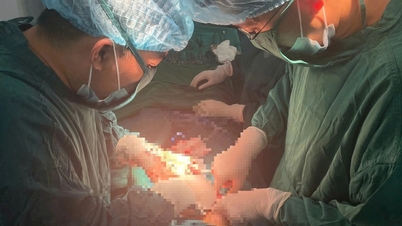
According to Dr. Hoang Thi Anh Tuyet, Deputy Head of the Obstetrics and Gynecology Department at Phuong Nam Hospital (a member of Phuong Chau Healthcare Group), vaginal delivery after a cesarean section allows women who have previously undergone a cesarean section to attempt labor and give birth naturally. This is a safe option, widely applied worldwide and in many large obstetrics and gynecology hospitals in Vietnam if the pregnant woman has appropriate indications. The goal of vaginal delivery after a cesarean section is to reduce the risk of surgical complications, shorten recovery time, and preserve the uterus.
However, pregnant women should not attempt vaginal delivery if they have risk factors such as a vertical or unknown type of incision in the uterus, a history of uterine rupture, two or more previous cesarean sections, an absolute indication for cesarean section in this pregnancy (such as central placenta previa, abnormal presentation, narrow pelvis, etc.), a pregnancy interval of less than 18 months, or lack the capacity for monitoring and emergency surgery when needed.
A scoring system is used to determine whether a vaginal delivery is possible after a cesarean section.
To predict the likelihood of success, doctors use the Flamm score, which assesses factors such as maternal age, history of vaginal delivery, reason for previous cesarean section, and degree of effacement and cervical dilation at admission.
A score of 5 or higher indicates a high chance of a successful vaginal delivery, while a score below 3 usually recommends a second cesarean section. Vaginal delivery after a cesarean section should only be performed in a medical facility with adequate continuous labor monitoring equipment and a surgical, anesthesia, and resuscitation team ready to intervene within 30 minutes if complications arise. The attending physician needs to be experienced, and the pregnant woman must understand the benefits and risks.
Compared to a second cesarean section, vaginal delivery allows for faster recovery, less postpartum pain, reduced risk of blood loss, infection, damage to adjacent organs, and complications in subsequent pregnancies; it also helps the fetus adapt more easily after birth. However, this method still carries the risk of rupture or breakage of the old surgical scar (0.5-1%) and may require emergency surgery if labor does not progress. Therefore, close monitoring and timely intervention are crucial factors in ensuring the safety of both mother and baby.

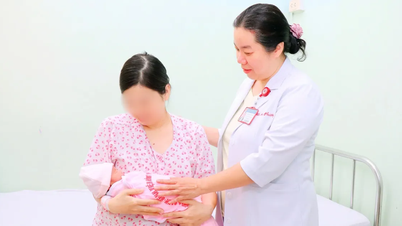
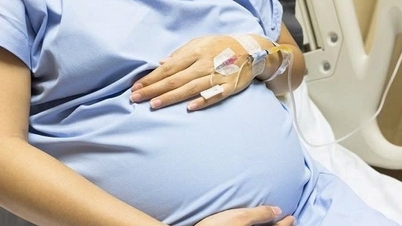
Pregnant women who have had one cesarean section can still be considered for a vaginal delivery if there are no contraindications.
PHOTO: PC
Pregnant women who have had one previous cesarean section can be considered for a vaginal delivery attempt if there are no contraindications, a sufficiently high Flamm score, and appropriate medical monitoring. The final decision will be based on the results of clinical examination, ultrasound assessment of the previous surgical scar, cervical examination, and expert consultation among doctors.
During the consultation, the doctor will thoroughly explain the benefits and risks to the pregnant woman and her family, thereby helping them make the safest and most appropriate choice. For cases where a cesarean section was performed approximately 3 years ago and there are no other contraindications, the pregnant woman should visit a maternity hospital capable of performing a vaginal delivery after a cesarean section for a specific assessment using the Flamm score.
An important note is that the vaginal delivery attempt should only be performed in a medical facility with adequate monitoring and emergency management equipment. Under no circumstances should you attempt to transfer to another hospital once labor has progressed, in order to avoid the risk of dangerous complications for both mother and child.

Source: https://thanhnien.vn/tung-sinh-mo-co-the-sinh-thuong-khong-185251107000541858.htm




![[Photo] General Secretary and President To Lam meets with National Assembly delegates from ethnic minorities.](https://vphoto.vietnam.vn/thumb/1200x675/vietnam/resource/IMAGE/2026/04/20/1776696701056_a1-bnd-8331-3342-jpg.webp)
![[Image] National Assembly discusses the implementation of the socio-economic development plan.](https://vphoto.vietnam.vn/thumb/1200x675/vietnam/resource/IMAGE/2026/04/20/1776696707422_ndo_br_img-20260420-185419-jpg.webp)





















































































Comment (0)