


 |
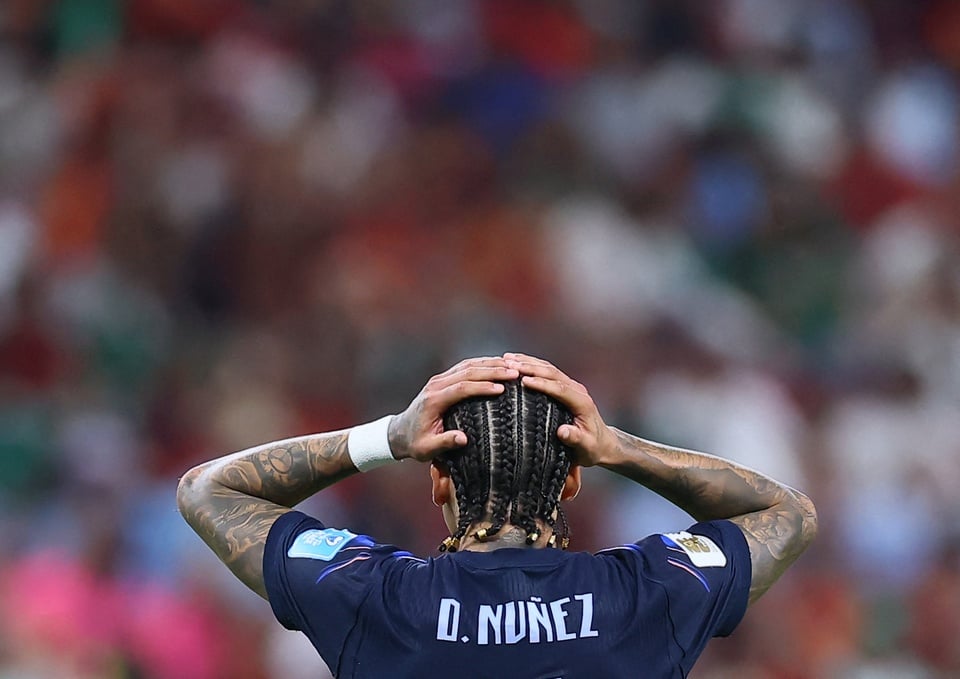
Uruguay concluded their 2026 World Cup campaign with a 0-1 defeat against Spain . |
Uruguay entered the match against Spain on the morning of June 27th with a lot on their plate. It wasn't just the pressure to win to keep their hopes of progressing alive. There was also the heavy atmosphere following reports of disagreements between coach Marcelo Bielsa and a group of key players.
Cracks appear before the life-or-death battle.
Sergio Rochet, Manuel Ugarte, Rodrigo Bentancur, and Federico Valverde reportedly requested a private conversation with coach Bielsa before the match. The discussion went beyond training. The group expressed dissatisfaction with the intensity of the preparation, concerns about injury risks, and a desire for Uruguay to adopt a more cautious approach against Spain: playing deep, maintaining a low defensive line, and waiting for opportunities to counter-attack.
That was a reasonable request given that the opponent was Spain, a team that always knew how to stifle the game with their ball control. But for Bielsa, whose name is synonymous with high-intensity, pressing football and an uncompromising style, that proposal almost touched upon the very foundations of his philosophy.
A team can argue about tactics. That's normal. But when that argument happens right before a crucial match, it reflects a bigger problem: Uruguay is no longer on the same page.
Bielsa reportedly called a team meeting. The discussion lasted 48 minutes, with reprimands and a rehash of previous incidents involving Luis Suarez and Nahitan Nandez. He also defended his stance on playing a "symmetrical" game against Spain, rather than completely retreating into a defensive formation.
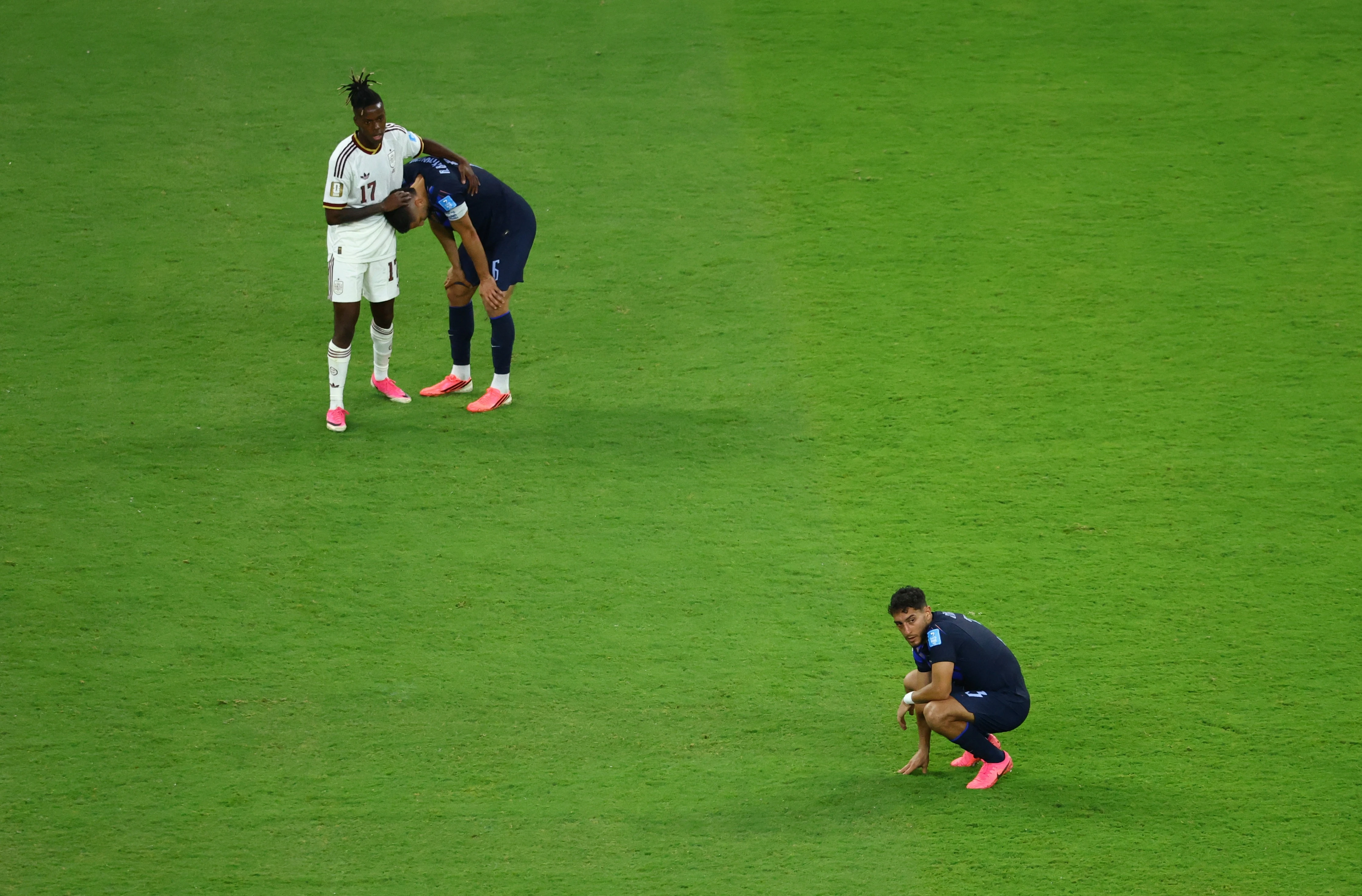 |
Those details, when considered alongside the subsequent outcome, only served to highlight Uruguay's defeat. The loss to Spain wasn't simply a defeat in terms of the scoreline. It was the end of a team that went into the decisive match with its unity already fractured.

In top-level football, especially at the World Cup , the difference between life and death sometimes lies in a single moment. To overcome that moment, a team needs composure and unity. Uruguay lacked both.
Uruguay's self-inflicted mistakes brought it down.
The goal conceded against Spain came from a mistake by Fernando Muslera. In a match where Uruguay had little room to maneuver, that error became a fatal blow. Spain didn't need a big win. They just needed to capitalize on the moment their opponents opened up for themselves.
It's worth noting that this isn't the first time Uruguay has made a mistake. Previously, in the draw against Cape Verde, the Uruguayan defense also made errors. When a defensive error occurs, it might be an accident. But when similar mistakes are repeated in crucial matches, it's no longer a coincidence.
Uruguay's elimination wasn't solely due to Muslera's mistakes. The goalkeeper's error was the clearest illustration of a system that had lost its solidity.
From the draw against Cape Verde to the defeat against Spain, Uruguay has repeatedly paid the price for moments of lack of concentration in the back line. For a team known for its tenacity, resilience, and pragmatism, this is unacceptable.
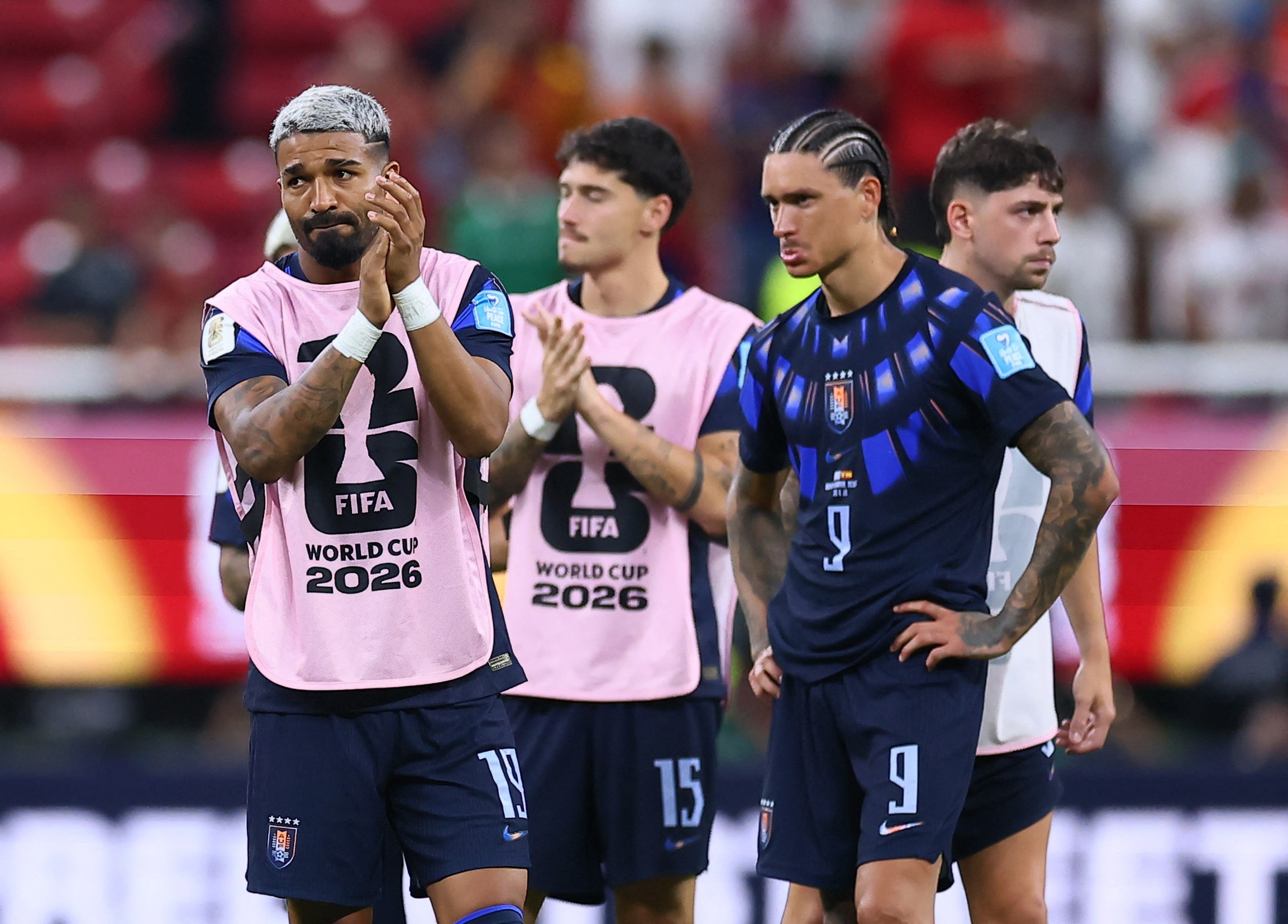 |
Uruguay squandered their chance to advance after a series of defensive errors. |
Uruguay's tragedy lies in the fact that they don't lack good players. Valverde, Ugarte, Bentancur, and others are of sufficient quality to help the team compete for a place in the next round. They also don't lack a coach with personality and tactical flair.
However, individual quality cannot mask a disorganized team. A coach's philosophy cannot function smoothly if players begin to doubt the game plan.
Uruguay's encounter with Spain resembled a team caught between two choices. On one side was the instinct for survival: retreating, defending, counter-attacking, and minimizing risk. On the other was Bielsa's belief: playing directly, maintaining intensity, and not changing their approach simply because the opponent was strong. When these two paths didn't intersect, Uruguay lost the most important thing in a do-or-die match: clarity.



Therefore, the 0-1 defeat didn't give the feeling that Uruguay was crushed by Spain. It felt more like self-destruction.
Spain did their part: control the game, wait for opportunities, and punish mistakes. Uruguay did the rest: they entered the match feeling unstable, then shattered their own hopes with individual errors.
The World Cup doesn't give teams much time to recover. A disastrous draw, a defensive error, a crisis of confidence—all of these combined lead to an early exit. Uruguay understands this in the most bitter way.
They were eliminated in the group stage not just because they lost to Spain. They were eliminated because they were no longer the coolest, most solid, and most unified version of themselves.
Source: https://znews.vn/tuyen-uruguay-tu-huy-post1663596.html



![[Photo] "Hanoi Lotus Festival" honors the lotus flower that has been associated with Vietnam for thousands of years.](https://vphoto.vietnam.vn/thumb/1200x675/vietnam/resource/IMAGE/2026/06/27/1782516943048_sen-ha-noi-2026-minh-duy-1-jpg.webp)