

Reporter: Currently, the tax sector is accelerating the application of AI to control electronic invoices and manage risks. In your opinion, how effective has this been?
MISA General Director Le Hong Quang: When AI is applied to management, the benefits are certainly enormous, especially in the field of risk management. In reality, millions of invoices are issued annually by businesses and households. If controlled manually, detecting violations and fraud would take a lot of time and easily miss anomalies. Meanwhile, AI helps solve this problem effectively.
AI systems can automatically analyze invoice data in real time, identify suspicious points, and detect signs of fraud such as: businesses with low revenue issuing a large number of high-value invoices; invoices issued by businesses with a history of tax violations; businesses with unusual transactions in terms of timing, frequency, and invoice value, etc.
Previously, tax officials had to manually check and cross-reference each data point to detect irregularities. But with AI, the system can filter millions of invoices in just seconds, enabling tax authorities to issue timely warnings and take appropriate inspection measures. This not only helps prevent invoice fraud from the outset but also contributes to reducing state budget losses and creating a more transparent business environment.
Furthermore, AI can also support taxpayers, helping them file and fulfill their tax obligations more conveniently. AI-powered virtual assistant tools can guide tax filing, automatically answer tax policy questions, and help businesses comply with regulations more easily without having to wait for responses from tax officials.
|
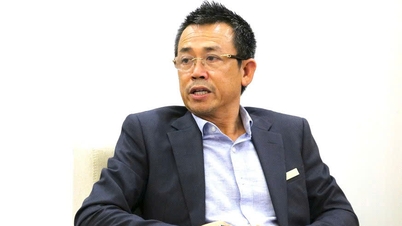
Mr. Le Hong Quang, General Director of MISA Joint Stock Company . |

Reporter: What conditions are necessary for AI to be most effective in tax administration, sir?
MISA CEO Le Hong Quang: For AI to truly become an effective tool in tax management, we need to focus on three key factors:
Firstly, it's crucial to improve the digital data infrastructure. AI only works effectively when there is a complete, accurate, and interconnected data system across tax authorities, customs, banks, and other relevant agencies. Currently, the tax sector has an electronic invoice system, but further expansion of connectivity and data synchronization is needed so that AI can better analyze and identify risks.
Secondly, there needs to be a suitable investment mechanism. AI is not a technology that can be deployed in isolation; it requires a long-term investment strategy. Some AI tools can be used for free, but for specialized applications such as tax risk analysis and fraud detection, investing in modern AI systems is essential.
Currently, many countries have integrated AI into their national tax systems to control invoices, forecast revenue, and monitor compliance. Vietnam is also moving in this direction, and fortunately, Resolution No. 57-NQ/TW, dated December 22, 2024, of the Politburo on breakthroughs in the development of science, technology, innovation, and national digital transformation has created favorable conditions for the digital transformation process and the application of AI in state management. The important issue is to develop a roadmap for AI deployment that is appropriate to Vietnam's budget and the specific characteristics of its tax management.
Thirdly, regarding the human factor, it is necessary to strengthen training and improve the capacity of tax officials. AI can replace some repetitive tasks, but humans still play a crucial role in analyzing, making decisions, and controlling AI. Therefore, tax officials need to be trained to use AI effectively, know how to exploit data, and collaborate with AI to optimize management processes.
Reporter: There is concern that AI could diminish the role of humans in the tax industry. What are your views on this issue?
MISA General Director Le Hong Quang: Currently, ministries and agencies are implementing streamlining according to Resolution No. 18-NQ/TW of the 12th Central Committee on continuing to innovate and streamline the organizational structure of the political system for efficient and effective operation, leading to changes in the scale of operations from the central ministries and agencies to the local management apparatus. In the context of a limited number of civil servants but an increasing workload, digital transformation and the application of AI are becoming even more important.
It's true that AI can replace humans in some repetitive, manual jobs. But that doesn't mean AI will cause people to lose their jobs. Instead, AI helps humans focus on more important tasks.
In the finance sector, the first priority is to have AI tools to support civil servants in their specific tasks. Currently, with the development of technology, we have talked a lot about AI assistants. If each civil servant had a specialized AI assistant to help them perform their work, productivity and work quality would double.
For example, instead of manually checking each invoice, tax officials can use AI to detect risks, then focus on in-depth analysis and make decisions on how to handle them. Thus, AI does not replace but supports tax officials in working more efficiently.
Furthermore, AI opens up many new career opportunities. As technology develops, the tax sector will need data experts, AI engineers, risk analysts, and more. These jobs will not only improve labor productivity but also add value to the finance and tax sector.
However, AI investment should be tailored to the application level. Some applications are free, while others require paid investment and larger budgets. For government agencies, AI investment will need appropriate budgets to address major industry challenges.
In fact, in the era of global digitalization, science, technology, and innovation are not only the driving force but also the key to Vietnam's development. Resolution No. 57-NQ/TW of the Politburo clearly affirms that science, technology, innovation, and digital transformation are "top priority breakthroughs" in the country's new growth model. This is a crucial foundation, creating favorable conditions for state agencies to apply AI to digital transformation, especially in sectors such as finance, taxation, and budget management.
And of course, tax professionals should prepare themselves by acquiring knowledge, skills, and especially learning how to master AI. Only by mastering AI can we create a significant advantage, improve work efficiency, and avoid being left behind by this technological wave.
Reporter: Thank you very much, sir!
Source: https://nhandan.vn/ung-dung-ai-trong-quan-ly-thue-va-kiem-soat-rui-ro-post864975.html

![[Photo] Prime Minister Pham Minh Chinh presides over a meeting on private sector economic development.](/_next/image?url=https%3A%2F%2Fvphoto.vietnam.vn%2Fthumb%2F1200x675%2Fvietnam%2Fresource%2FIMAGE%2F2025%2F12%2F20%2F1766237501876_thiet-ke-chua-co-ten-40-png.webp&w=3840&q=75)
































































































Comment (0)