Practical requirements
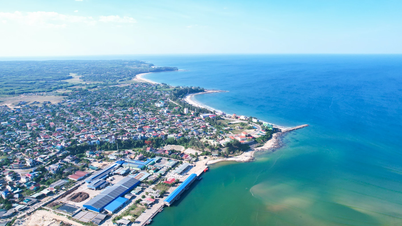
With a natural area of 41.35 km² and a population of over 84,000 people, Dong Hoi ward has become the ward with the largest population and area in the entire province. Currently, the ward has 70 residential areas formed over various historical periods, with uneven population sizes among them; many residential areas have fewer households than the prescribed standard, which is no longer suitable for the rate of urbanization and management requirements.
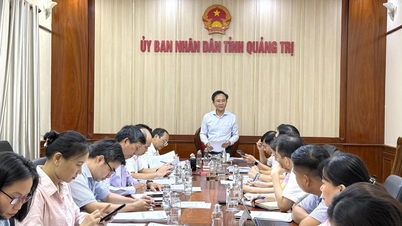
According to Hoang Ngoc Dan, Chairman of the People's Committee of Dong Hoi Ward, while the two-tiered local government model requires improved efficiency in state management at the grassroots level, accelerated digital transformation, streamlined apparatus, reduced intermediate layers, and improved quality of part-time workers in residential areas; maintaining a large number of small-scale residential areas leads to the dispersion of resources, difficulties in management, operation, and task implementation, while also increasing the number of part-time workers, increasing budget expenditure pressure, and is not in line with the current requirements for streamlining the apparatus.
Therefore, reorganizing the TDP system towards a more streamlined approach is appropriate, ensuring it aligns with the requirements of modern urban management, enhances the effectiveness of self-governance in residential communities, and meets the development needs of the locality in the new phase.
 |
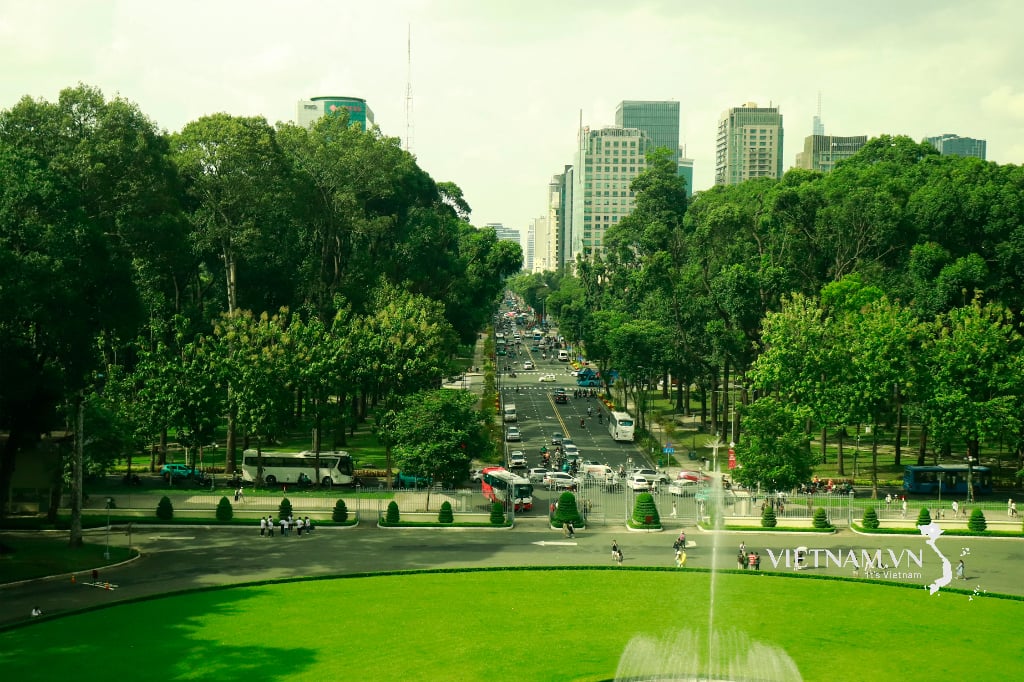
| From 70 residential areas, Dong Hoi ward has been reorganized into 25 residential areas - Photo: H.Tr |
In accordance with Directive No. 21/CT-TTg of the Prime Minister , Decree No. 185/2026/ND-CP of the Government, and other provincial directives on the rearrangement and reorganization of villages, hamlets, and residential areas, Dong Hoi ward has conducted a review of the current situation. The review revealed that, out of a total of 70 residential areas, only 10 meet the standard of having 450 or more households, accounting for 14.28%; 60 residential areas do not meet the standard, accounting for 85.72%; and there are significant disparities in size between residential areas.



On the other hand, many residential areas have a low number of households but still have to maintain a full complement of part-time community workers and organize community activities as prescribed. This increases the number of management points, disperses resources, generates operational costs, and fails to meet the requirements for streamlining the organizational structure of the political system at the grassroots level.
Meeting development requirements
Based on research into the current population situation, natural conditions, historical characteristics, cultural traditions, customs, and community relationships, rearranging and reorganizing residential areas to reduce the number of administrative units and form residential areas of appropriate size, ensuring compliance with the standards stipulated in Government Decree No. 185/2026/ND-CP, is necessary and feasible.
Accordingly, from the existing 70 residential areas, Dong Hoi will be reorganized into 25 residential areas; ensuring that the new residential areas have adjacent geographical locations and appropriate sizes as prescribed; facilitating state management, community activities, and meeting the urban development requirements of Dong Hoi ward today.
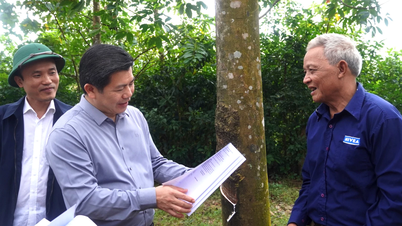
According to residents, consolidating residential areas will prevent public resources from being fragmented and scattered. “Instead of investing in small amounts in many old, dilapidated community cultural centers, the locality can concentrate funds on building or upgrading larger, more modern, and multi-functional community cultural centers and sports facilities. Urban residents will have spacious, modern shared spaces for cultural activities and sports, better meeting their needs for entertainment and health training,” said Mr. Dang Van Tao (from Duc Mon residential area).
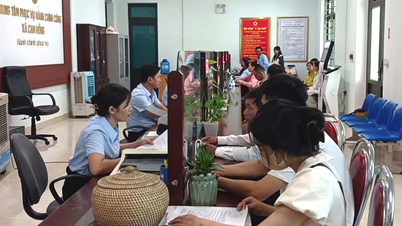
Meanwhile, Mr. Bui Thanh Pho, head of the Diem Hai residential group, shared that streamlining the grassroots administrative apparatus will reduce the number of non-specialized officials, focusing on selecting truly capable, enthusiastic, and responsible individuals to handle the work. Residents will receive more professional, faster, and more efficient support in resolving administrative procedures and paperwork in their residential areas.



“Although the initial phase of the merger may cause some confusion for residents regarding changes in the names of residential areas or updating information on documents, in the long run, this step will help the people of Dong Hoi ward benefit from a streamlined urban management environment, synchronized infrastructure, and better quality public services. The new residential areas will have a more uniform population size and area, making it easier for the ward government to implement policies and plans for infrastructure development and social welfare; and at the same time, it is consistent with the scale and nature of Dong Hoi ward as the provincial capital,” affirmed Hoang Ngoc Dan, Chairman of the People's Committee of Dong Hoi ward.
Huong Tra
Source: https://baoquangtri.vn/chinh-tri/202606/vai-role-tu-quan-cua-cong-dong-dan-cu-33d4004/