When pressure pushes back to the base
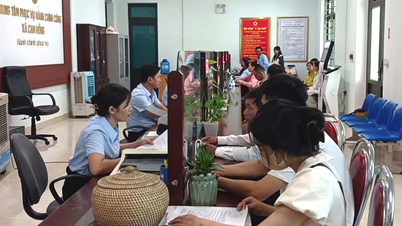
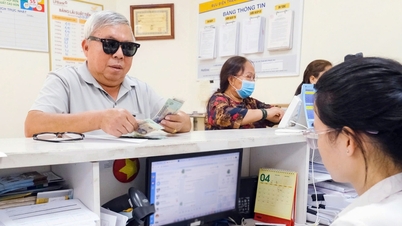
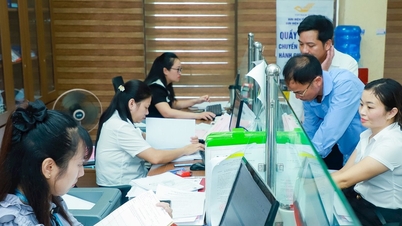
Every morning, Ms. Le Thi Nhung, an officer at the Trieu Phong Commune Public Administrative Service Center, begins her work by simultaneously handling numerous administrative procedures. From being an officer in charge of one field, she now receives files under the management of eight different ministries and agencies, while also monitoring eight information portals to ensure no citizen's file is overlooked.
Not only did the workload increase, but she and her colleagues also had to take on many tasks they had never handled before. Therefore, in addition to the time spent processing documents, she had to constantly self-study and attend training courses to update her knowledge.
Despite this, Ms. Nhung and her colleagues have continuously strived to provide excellent service to citizens and businesses when they come to transact business. "Although the pressure is great, we always put the satisfaction of the people first, ensuring that documents are processed according to regulations, on time, and accurately," Ms. Nhung shared.
In Nam Hai Lang commune, the pressure is even more evident when one specialized department has to handle multiple areas that previously belonged to various departments at the district level.
 |
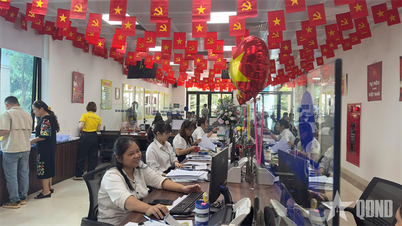
| Following the implementation of the two-tiered local government model, the workload at the commune level has increased - Photo: NB |
According to Mr. Truong Van Hoai, Head of the Economic Department of the People's Committee of Nam Hai Lang Commune, after the reorganization, the Economic Department has become the central point of consultation for many fields, such as finance, planning, construction, industry and trade, agriculture, natural resources and environment... "Each field only has one officer in charge. The large volume of documents, the wide geographical area, and the many new tasks mean that we often have to work overtime and on holidays to ensure the progress of work," Mr. Hoai added.
In Cam Hong commune, Mr. Tran Nhu Linh, a specialist in the Economic Department, stated that the unit has 8 staff members but must advise on over 300 tasks and handle 93 tasks according to the specialized decentralization. Notably, in areas such as livestock and veterinary medicine, there are no staff members with the appropriate training, yet they still have to fully perform state management functions. This places immense pressure on the staff directly carrying out the tasks.



 |
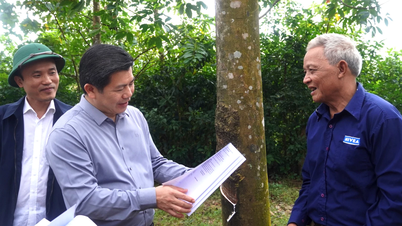
| Mr. Tran Nhu Linh, a specialist in the Economic Department of the Cam Hong Commune People's Committee, overcomes difficulties to meet job requirements in the new context - Photo: NB |
In reality, the current gap does not lie in the sense of responsibility of the staff. What is lacking is time to adapt, and a sufficient number of highly specialized personnel to meet the new requirements of the restructured system.
Synchronizing solutions to fill the workforce gap.
Despite the difficulties, the most noticeable aspect in the localities is the proactive spirit of grassroots officials in overcoming challenges. Without waiting for formal training courses, many officials have formed online groups on social media to exchange professional knowledge, update new documents every evening, share forms, and work together to resolve arising issues. Information technology is also being utilized to improve the efficiency of management, administration, and daily work processing.
According to Ms. Thai Thi Thanh Huyen, Acting Director of the Public Administrative Service Center of Huong Hiep Commune, in addition to strengthening the application of technology, the locality regularly exchanges expertise with provincial departments and agencies, proactively seeks opinions on complex areas, and promotes collective coordination mechanisms in handling important issues. This is a solution to help minimize errors during the current transitional period.
Given the current staffing levels, the Chairman of the People's Committee of Trieu Phong commune, Dang Sy Dung, believes that each official has to handle over 30 tasks, creating immense pressure. If the difficulties regarding human resources and expertise are not addressed soon, the risk of backlogs and negative impacts on the quality of service to the people is unavoidable. The locality has strengthened internal unity, actively studied new regulations to provide advice, and implemented policies correctly, completely, accurately, and promptly. In addition, it has intensified training, retraining, and professional development for the commune's officials and civil servants to ensure they perform their duties effectively.
 |
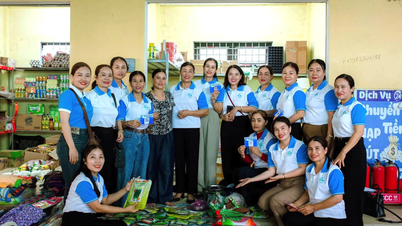
| Commune-level officials are strengthening their professional skills to handle applications for citizens - Photo: NB |
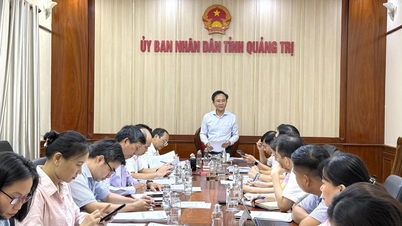
According to Mr. Phan Ngoc Lam, Deputy Director of the Department of Internal Affairs, after more than a year of implementation, the two-tiered local government model has created many positive changes in streamlining the apparatus, promoting decentralization and delegation of power, and bringing many administrative procedures closer to the people. However, along with the achievements, the workload at the commune level has also increased significantly as many tasks previously under the authority of the district level have been transferred to the grassroots level.
Mr. Phan Ngoc Lam emphasized that this is an objective reality in the initial stage of implementing the decentralization and delegation of power policy. Transferring many tasks to the commune level helps people have procedures resolved locally, reducing travel time and costs. However, for this policy to be effective, it is necessary to continue overcoming difficulties in human resources, information technology infrastructure, and improving the professional capacity of grassroots officials.



In the coming period, the province will continue to prioritize supplementing human resources for areas under high pressure, such as land, construction, justice, digital transformation, and public administration. At the same time, it will continue to reform administrative procedures, improve work processes, and use citizen satisfaction as a measure of the effectiveness of the government apparatus.
Implementing a two-tiered local government model is a crucial innovation aimed at improving the effectiveness and efficiency of state management and better serving the people. For the new system to operate smoothly, along with the efforts of each official, comprehensive solutions regarding human resources, training, and support mechanisms from higher levels are essential. Once the human resource gap is filled, local governments will have better conditions to operate effectively and better meet the expectations of citizens and businesses in this new development phase.
Yuan Bao
Source: https://baoquangtri.vn/chinh-polit/202607/go-kho-nguon-nhan-luc-o-co-so-8993e66/