

From the message of General Secretary and President To Lam on combating waste to the request of Prime Minister Le Minh Hung on saving on recurrent expenditures, a consistent spirit can be seen: If we want the country to prosper, we must first value every penny of the budget, every hour of labor, and every opportunity for development for the people and businesses.
For many years, when we talked about saving money, we often thought about reducing expenses, limiting purchases, cutting back on conferences and seminars, and avoiding ostentation and formality. These things are true, but not enough. In a nation entering a new era of development, saving money needs to be understood more broadly: it is a cultural norm, a management method, and a soft resource for development.
Saving is not just about spending less, but about using resources more effectively. It's not just about cutting back on unnecessary things, but about freeing up resources for what's truly essential. It's not just about preserving the budget, but also about protecting people's time, businesses' costs, public trust, and the nation's opportunities.
From that perspective, the abolition of 890 business conditions has significance beyond a mere administrative decision. It represents a shift in governance thinking: the State not only sets regulations but also boldly reviews and removes outdated barriers; it not only demands faster societal progress but also streamlines its own system, making it more efficient and better serving the public.
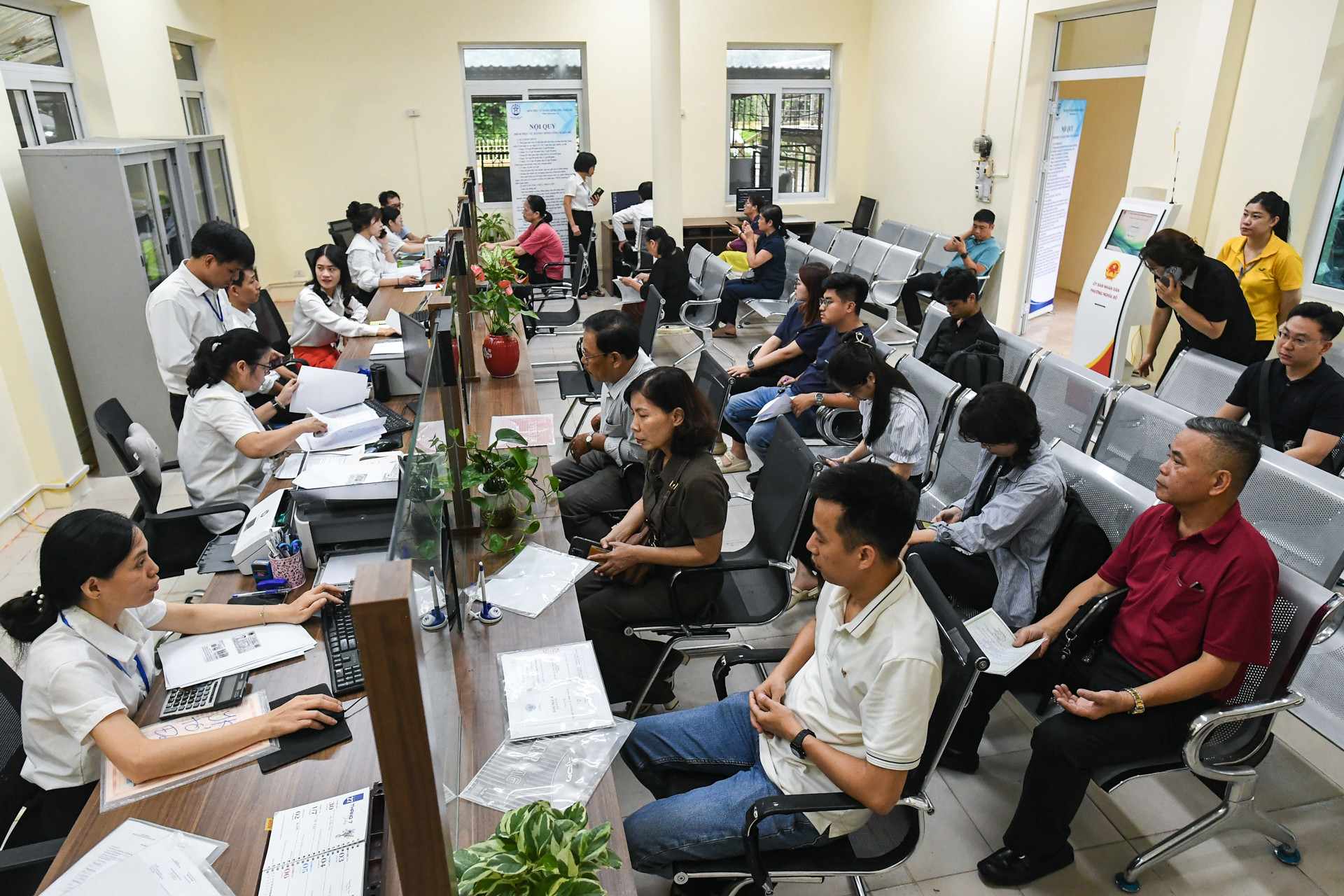
According to published information, eight government resolutions have comprehensively amended and supplemented 163 legal documents, including two government resolutions, 155 decrees, and six decisions of the Prime Minister ; along with the abolition, decentralization, and simplification of hundreds of administrative procedures. Behind these figures are millions of hours of waiting time that could be shortened, many compliance costs that could be reduced, and more space for investment, startup, and innovation ideas to be formed and developed.
Waste in development isn't just about wasting money. There's a more subtle, less visible form of waste, but it's a huge obstacle: the waste of social time. A procedure that takes a few extra days, multiplied across thousands of businesses, becomes an enormous expense. Unnecessary business conditions can slow down a project, discourage an investor, and cause a loss of market opportunity. Cumbersome administrative processes can tire citizens, drain businesses, distract officials, and keep social resources tied up in paperwork instead of being used for production, innovation, and job creation.
Therefore, streamlining procedures and abolishing business conditions is a form of combating waste at the institutional level. If saving in public spending helps the budget have more resources for development investment, then saving in procedures helps the economy gain more speed, businesses gain more confidence, and people have more convenience.
A state that knows how to save money is not just one that knows how to reduce spending, but also one that knows how to avoid causing society unnecessary expense. A thrifty administration is not just one that spends less, but one that allows citizens and businesses to spend less time creating more value.
In his article "Combating Waste," General Secretary and President To Lam emphasized the need to build a culture of preventing and combating waste; making the practice of saving and combating waste "conscious," "voluntary," and "everyday necessities like food, water, and clothing."
That way of framing the issue is very profound, because saving only truly comes alive when it is no longer a fleeting movement, no longer a slogan hung on the wall, but becomes a habit of behavior, a standard of action, and a self-responsibility of each agency, each official, each enterprise, and each citizen.
A culture of frugality begins with the understanding that all national resources are precious. The state budget is the sweat, effort, trust, and contributions of the people. People's time is also a resource. Business opportunities are also a resource. Land, public assets, natural resources, heritage, talent, data, and national prestige are all resources. If we only save money while wasting time; only reduce procurement while allowing procedures to drag on; only cut conferences while delaying projects; only call for fighting waste without amending regulations that cause bottlenecks, then frugality cannot yet become a culture of development.
Along with procedural reforms, the demand for saving on recurrent expenditures is also being strongly emphasized. Prime Minister Le Minh Hung requested a reduction of at least 10% in recurrent expenditures in 2026, equivalent to approximately 170-180 trillion VND, to allocate more resources to priority tasks; he also stressed the importance of saving energy, electricity, and petroleum products with specific quantitative targets. This is not only a budget management directive but also a message about financial discipline and public service culture.
It's important to note that saving money doesn't mean restricting development. Saving money isn't about not spending at all, but about spending more wisely; it's not about reducing investment, but about investing more effectively; it's not about making the system unsuitable for operation, but about eliminating spending that doesn't create public value. A shortened meeting that leads to a decision is saving money. A digitized procedure that saves citizens from multiple trips is saving money. A well-prepared project with timely disbursement and effective results is saving money. Abolishing an outdated business regulation is also saving money. A clearly designed, feasible policy with low compliance costs is saving money.
In the cultural sphere, this spirit is even more significant. We talk a lot about cultural development, the cultural industry, and national soft power, and that's absolutely true. But investment in culture must go hand in hand with a culture of frugality. Frugality is not about reducing spending on culture, nor about impoverishing the people's spiritual lives, but about combating waste in cultural development: combating institutions that are built but rarely used; combating ostentatious festivals lacking depth; combating costly events that leave no lasting value; combating scattered, unfocused investments; combating the deterioration of heritage before hastily attempting repairs; and combating the lack of an environment for creative talent to flourish.
A museum must have a public audience. A theater must be lit up. A library must have readers. A cultural center must become a living space for the community. Every dollar of the budget allocated to culture must be transformed into spiritual values, identity, creativity, national pride, and soft power. That is true frugality: not spending less at all costs, but making each expenditure create more value for people and society.
Broadly speaking, a culture of frugality must become a way of life for the entire society. In the public sector, this means financial discipline, procedural reform, digital transformation, efficient use of public assets, and accountability of leaders. In businesses, it means modern management, resource optimization, technological innovation, and reducing waste of materials, energy, and time. In families, it means a simple lifestyle, responsible consumption, and avoiding ostentation and formality. In schools, it means educating the younger generation to value labor, resources, the environment, knowledge, and every learning opportunity.
A nation striving for progress cannot allow its resources to be bogged down in bureaucratic procedures. An economy aiming for breakthroughs cannot allow businesses to waste excessive time due to outdated regulations. A government apparatus striving for better service cannot allow administrative energy to be wasted on mere formalities. A society seeking sustainable development cannot tolerate waste, whether it be money, time, land, talent, heritage, or trust.
The abolition of 890 business conditions, the reduction of hundreds of administrative procedures, and the requirement to save at least 10% of recurrent expenditures, if implemented consistently, will not only create material resources but also a very valuable soft resource: trust. People will believe that the system is moving to better serve the public. Businesses will believe that the business environment is becoming more open. Officials will believe that reform is an irreversible necessity. Society will believe that every penny of budget, every minute of time, every opportunity for development is being valued more.
The culture of frugality, therefore, is not a story of stinginess, but a story of intellectual development. It is not about narrowing aspirations, but about creating a more solid foundation for aspirations. It is not about cutting back motivation, but about removing obstacles. When frugality becomes a culture, combating waste becomes a discipline, and institutional reform becomes a regular action, the country will have more strength to move faster, further, and more sustainably on the path to prosperous, civilized, and happy development.
Source: https://vietnamnet.vn/van-hoa-tiet-kiem-trong-quan-tri-quoc-gia-2512158.html























































































Comment (0)