


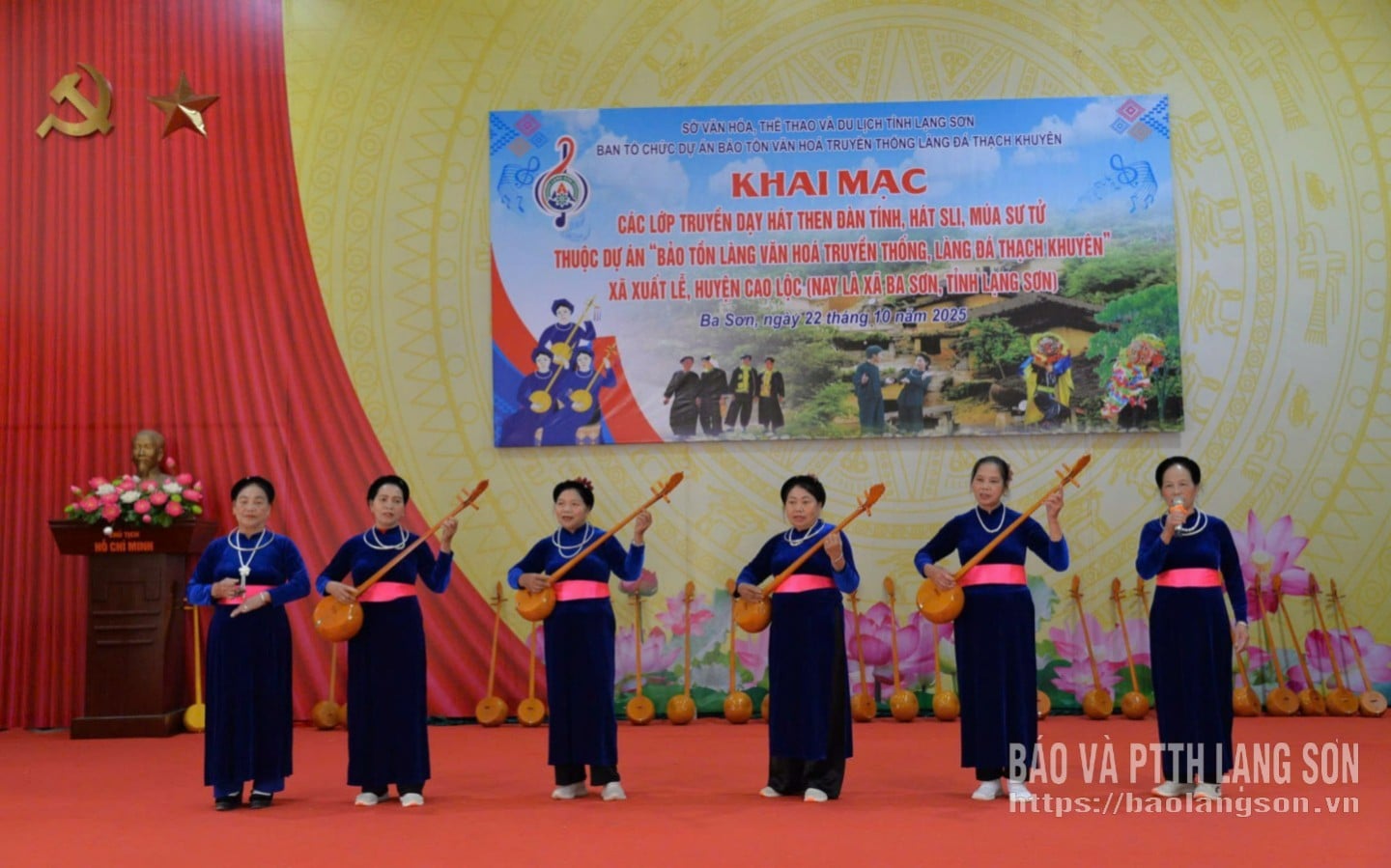
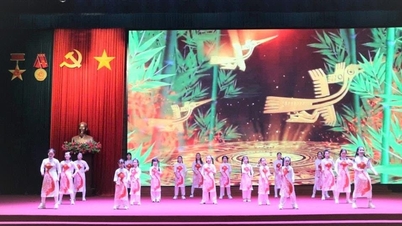
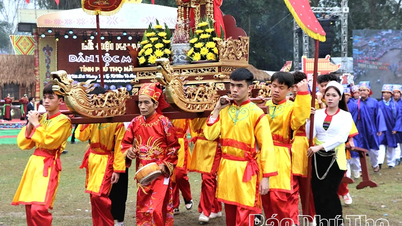
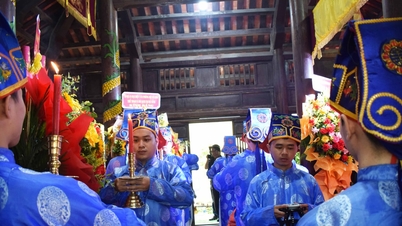
Lang Son, a borderland at the northernmost point of Vietnam, is a place where the cultural values of the Nung, Tay, Kinh, Dao, Hoa, Mong, and San Chay ethnic communities converge and shine. The melodies of then, sli, and luon; traditional festivals; the architecture of communal houses, temples, and pagodas; traditional crafts; folk knowledge; and long-standing customs have created a unique identity for Lang Son.
Key milestones
The year 2025 marked many significant milestones for the province, especially in the cultural field. Never before has the name Lang Son in general, and its cultural heritage in particular, been mentioned so frequently at international events as in the past year. The most memorable milestone was in April 2025, when the Lang Son Geopark was officially recognized as a UNESCO Global Geopark, bringing the total number of global geoparks in the UNESCO Global Geopark Network to 229 in 50 countries. The park covers an area of over 4,800 km² with 38 typical heritage sites of geology, geomorphology, archaeology, and culture, reflecting the 500 million-year evolutionary journey of the Earth through its system of limestone mountains, ancient fossils, magnificent caves, and valuable archaeological sites. This place is also a vibrant cultural space, preserving many beautiful traditional features of the ethnic groups of Lang Son such as: Then singing, Tinh lute playing, Long Tong festival, Mother Goddess worship...
Ms. Pham Thi Huong, Head of the Lang Son Geopark Management Department, Center for Investment, Trade and Tourism Promotion, emphasized: Being recognized by UNESCO has opened opportunities for Lang Son to develop geotourism, ecotourism, and community tourism in a sustainable direction, promoting the image of this border region rich in cultural identity to domestic and international friends. The UNESCO Global Geopark Lang Son possesses unique, typical, and outstanding values that can make an important contribution to the conservation and promotion program of the global geopark system.
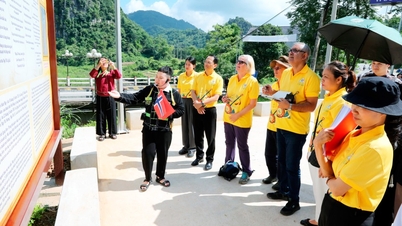
By October 2025, the name Lang Son will once again be proudly mentioned in Huzhou City, Zhejiang Province, China. Out of more than 270 entries from 65 countries, Quynh Son Community Tourism Village (Bac Son Commune, Lang Son Province) has been recognized by the United Nations Tourism Organization (UN Tourism) as one of the best community tourism villages. Quynh Son is the province's first community tourism village, established and operating for nearly 15 years. The village's uniqueness lies in the fact that all residents share the surname Duong, and all the stilt houses face the same direction (south). The village is located within the Bac Son Uprising National Special Historical Site and the UNESCO Global Geopark of Lang Son, boasting beautiful natural landscapes and a rich ethnic culture intertwined with a glorious history.
Mr. Phuong Anh Tu, Vice Chairman of the People's Committee of Bac Son commune and Head of the Management Board of Quynh Son Community Tourism Village, said: Quynh Son Community Tourism Village currently has 9 homestays with many attractive experiential services such as: bonfires, making cakes, enjoying local specialties and cultural exchanges with traditional Then singing, Vi singing, and Tan Dan dancing... Many tourists are impressed by being able to immerse themselves in daily life and participate in unique local tourism routes.
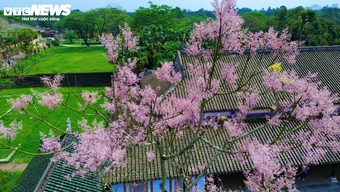
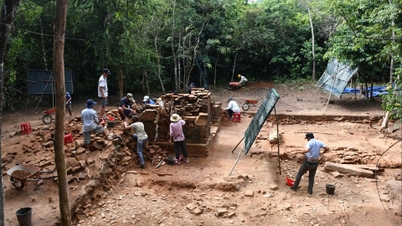
2025 also marks the year when two prominent historical sites in Lang Son are recognized as national-level historical relics by the Ministry of Culture, Sports and Tourism: the Nguom Sau Cave archaeological site in Bang Mac commune; and the Dong Dang Fortress historical site in Dong Dang commune. These relics possess immense historical value, reflecting the formation and development of the land as well as the struggle to protect the sovereignty of the people of Lang Son. In addition, many historical sites have received investment for restoration and upgrading through social mobilization, meeting the religious, sightseeing, and worship needs of the people and tourists from near and far. For example, the provincial-level relic of Mo village communal house in Chi Lang commune received over 6.8 billion VND in restoration funds; and the provincial-level relic of King Le's Temple in Tam Thanh ward received approximately 4 billion VND in restoration funds.
Seize new opportunities to thrive.
Along with the rest of the country, Lang Son province has gradually stabilized its two-tiered local government system. The province currently has 420 historical sites, of which 145 are classified, including 2 special national historical sites, 33 national historical sites, and 110 provincial-level historical sites. Following the reorganization, the expanded geographical and cultural space provides favorable conditions for Lang Son to implement solutions for cultural preservation and promotion.
Mr. Nguyen Dang An, Director of the Department of Culture, Sports and Tourism, stated: "Culture is the soul of the nation. If properly promoted, it can become a soft power, transforming heritage into an endogenous resource and sustainable tourism development. Therefore, based on the achievements in 2025, we have determined that in 2026 and subsequent years, we will focus on three pillars: perfecting the legal framework to enhance the effectiveness of state management; optimizing social resources to promote strong socialization; and integrating and strengthening digital transformation to create a unified digital cultural space, helping Lang Son's cultural heritage reach further in the digital age. This is a long-term strategy, ensuring that Lang Son not only preserves its past but also builds its future from its unique cultural values."
One of the issues currently being vigorously implemented is digital transformation, and the Culture, Sports and Tourism sector is no exception. Accordingly, in 2025, the sector focused on promoting digital transformation in cultural heritage management and tourism development, in accordance with the directives of the central and provincial governments. Key projects such as "Developing software for managing cultural heritage in Lang Son province" and "Building and developing a smart tourism system in Lang Son province giai đoạn 2022 – 2026" are being implemented simultaneously. Specific activities include: deploying a smart tourism portal and application (attracting over 5.1 million visits); developing automated tour guides (360-degree technology) and 3D digitization (virtual reality) for 30 tourist destinations; building an integrated tourism data warehouse; and installing QR code scanning models at destinations. This has initially helped build a unified digital database system on heritage (currently, the provincial museum stores approximately 60 films and over 2,000 documentary photos; the software system has digitized 1,390 sets of documents with 137,052 pages), effectively serving the work of archiving, managing, and promoting heritage, linked to sustainable tourism development.
Ms. Trinh Thi Kim Hanh, a tourist from Hai Phong, said: “Visiting Lang Son during Tet (Lunar New Year), I found the experience very different. The fact that historical sites have QR codes allowed me to find historical information immediately, which was very convenient. I also participated in the “Exploring the Upper Mountains” tour and found it a great way to gain a deeper understanding of the culture and beliefs of the people of Lang Son. The combination of spirituality, nature, and technology made the trip much more meaningful.”
These outstanding achievements not only acknowledge the concerted efforts of all levels, sectors, and the community, but also clearly affirm the image and cultural identity of Lang Son on the national and international map. This is a solid foundation, opening up opportunities for Lang Son culture to continue to flourish and keep pace with the development of the country.
Source: https://baolangson.vn/van-hoa-xu-lang-vung-buoc-vao-xuan-5066862.html
![[Photo] Prime Minister Pham Minh Chinh receives the Chinese Ambassador to Vietnam](https://vphoto.vietnam.vn/thumb/1200x675/vietnam/resource/IMAGE/2026/04/05/1775397481797_ndo_br_dsc-5512-jpg.webp)






















































Comment (0)