

Comrade Nguyen Xuan Thang, Member of the Political Bureau, Chairman of the Central Theoretical Council, and Director of the Ho Chi Minh National Political Academy, attended and chaired the workshop; also present were Central Committee members: Le Quoc Minh, Editor-in-Chief of Nhan Dan Newspaper, Deputy Head of the Central Propaganda and Mass Mobilization Department, and President of the Vietnam Journalists Association ; Pham Tat Thang, Deputy Head of the Central Propaganda and Mass Mobilization Department; Hoang Trung Dung, Editor-in-Chief of the Communist Magazine; and Le Hai Binh, Alternate Member of the Central Committee, Permanent Deputy Minister of Culture, Sports and Tourism.
The seminar was also attended by representatives from the Central Committee of the Lao People's Revolutionary Party's Foreign Affairs Department; researchers from Taiwan (China); current and former leaders of central committees, ministries, and agencies; leaders of the Central Theoretical Council; leaders of the Ho Chi Minh National Political Academy; more than 150 Vietnamese scientists and artists living and working in Vietnam and abroad; and international scholars.
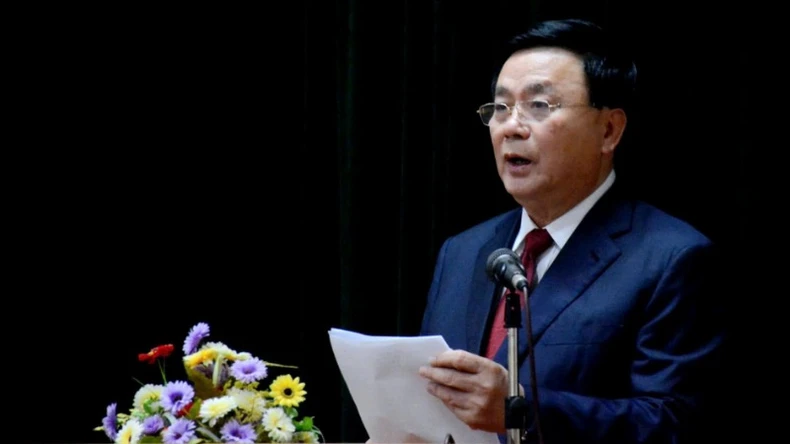 |
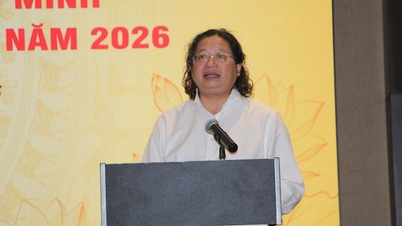
Comrade Nguyen Xuan Thang, Member of the Political Bureau, Chairman of the Central Theoretical Council, and Director of the Ho Chi Minh National Academy of Politics, delivered a speech at the seminar. |
The conference was held both in-person and online (with scientists from abroad). Sixty papers from researchers in Vietnam and 14 countries and territories worldwide were compiled in the conference proceedings, some of which were presented in person at the conference.
The discussions affirmed the policies and guidelines of the Communist Party of Vietnam and the Vietnamese State on national reconciliation, harmony, national reunification, and national unity; considering overseas Vietnamese as an inseparable part of the Vietnamese national community; and considering the literature and art of overseas Vietnamese as an inseparable part of Vietnamese literature and art. All for the goal of a prosperous people, a strong nation, democracy, justice, and civilization.
In his guiding remarks, Comrade Nguyen Xuan Thang emphasized: In contemporary Vietnamese literature and art, there is a crucial component: the rich and distinctive literary and artistic activities of our overseas compatriots, nearly 6 million of whom live far from their homeland but always look towards their country. This is a "cultural window," opening up to the world a profound insight into the identity, soul, intellect, and aspirations of the Vietnamese people.
Vietnamese artists and writers abroad are "cultural ambassadors," "torchbearers" who preserve the national cultural identity within our overseas communities; at the same time, they are a pioneering force in strengthening people-to-people exchanges, building understanding and goodwill between Vietnam and other countries.
Through literature, music, painting, film, and many other art forms, the image of a beautiful, traditional, innovative, dynamic, creative, and humane Vietnam is vividly presented to friends around the world; becoming an effective bridge to promote integration, enhance national "soft" strength, and affirm our country's position and prestige in the international arena.
Looking back over the past half-century, in the historical flow of Vietnamese literature and art, we have witnessed the ups and downs, the different transformations in the literary and artistic activities of our overseas compatriots.
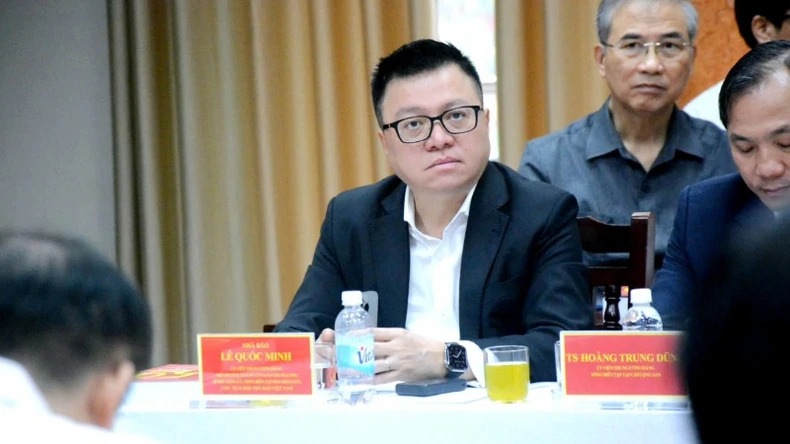 |
Comrade Le Quoc Minh, Editor-in-Chief of Nhan Dan Newspaper, Deputy Head of the Central Propaganda and Mass Mobilization Department, and President of the Vietnam Journalists Association. |
Comrade Nguyen Xuan Thang analyzed and emphasized the important contents of the resolutions of the Communist Party of Vietnam regarding our compatriots abroad, such as Resolution 08-NQ/TW, dated November 29, 1993, of the Politburo: "Vietnamese people abroad are an inseparable part of the Vietnamese national community"; Resolution 36-NQ/TW, dated March 26, 2024, of the Politburo: "Eliminate feelings of inferiority, prejudice, and discrimination due to the past or class background; build a spirit of openness, respect, understanding, mutual trust, and working together towards the future"; Resolution of the 12th National Congress of the Party: "Taking the goal of building a peaceful, independent, unified Vietnam with territorial integrity, 'a prosperous people, a strong nation, and a just and civilized society' as a common ground, respecting differences that do not contradict the common interests of the nation; upholding the national spirit, patriotic traditions, humanity, and tolerance to unite all Vietnamese people at home and abroad."
Vietnamese artists and writers abroad are "cultural ambassadors" and "torchbearers" who preserve the national cultural identity within our overseas communities; they are also pioneers in strengthening people-to-people exchanges and fostering understanding and goodwill between Vietnam and other countries.
Comrade Nguyen Xuan Thang, Member of the Political Bureau, Chairman of the Central Theoretical Council, and Director of the Ho Chi Minh National Academy of Politics.
Comrade Nguyen Xuan Thang offered the following suggestion: To further promote the development and maximize the significant contributions of Vietnamese literature and art abroad, I propose that we pay close attention to implementing several directional solutions, such as: creating a favorable and open environment to encourage overseas Vietnamese artists to create art that is connected to their national roots; focusing on recognizing and honoring Vietnamese artists abroad. The recognition and commendation of the contributions of artists should be carried out regularly and in depth; implementing practical mechanisms and policies to support Vietnamese artists abroad in line with the breakthroughs in the Party's new resolutions, such as Resolution 57-NQ/TW on breakthroughs in the development of science, technology, innovation, and national digital transformation; Resolution 59-NQ/TW on international integration in the new situation; and strengthening cooperation between domestic and overseas literary and artistic communities.
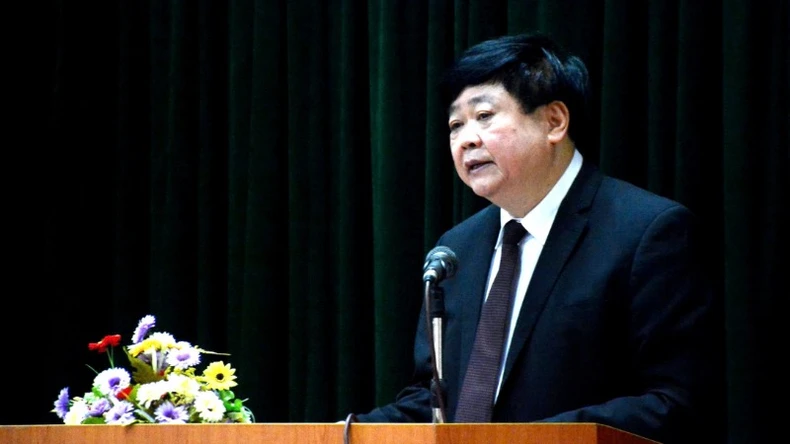 |
Associate Professor, Dr. Nguyen The Ky, Vice Chairman of the Central Theoretical Council, presented the introductory report. |
In his introductory report to the conference, Associate Professor, Dr. Nguyen The Ky, Vice Chairman of the Central Theoretical Council, pointed out that: Before 1945, the number of Vietnamese people living and working abroad was not large, and among them, the number of Vietnamese and people of Vietnamese origin participating in literary and artistic creation abroad was small.
In the modern and contemporary periods, there were artistic creations by King Hàm Nghi, who was exiled to a distant land; and prominent revolutionaries and cultural figures such as Phan Bội Châu, Phan Châu Trinh, Nguyễn Ái Quốc, Lê Văn Miến, Lê Thành Khôi, Phạm Văn Ký, Trần Văn Khê, Trương Trọng Thi, Lê Bá Đảng…
From 1945-1954, the number of Vietnamese intellectuals and artists living and working abroad gradually increased; from the 1960s onwards, the increase was significant, mainly concentrated in the former Soviet Union and Eastern European countries. After 1975, their main areas of activity were the United States, France, Canada, Australia, Cambodia, Laos, China, Japan, South Korea, and some countries in Southeast Asia and Northeast Asia... Their works also became more diverse, varied, and colorful.
Conversely, some Vietnamese or Vietnamese-origin scientists and artists also return to Vietnam to work, attend conferences, participate in artistic exchanges, and live permanently in their homeland.
Despite living far from their homeland, and despite being second, third, or fourth generation, the majority of Vietnamese people living abroad, including intellectuals and artists, carry within them Vietnamese blood, Vietnamese culture, and Vietnamese spirit, always yearning for their homeland. Their audience is not limited to the Vietnamese community but extends to many parts of the world.
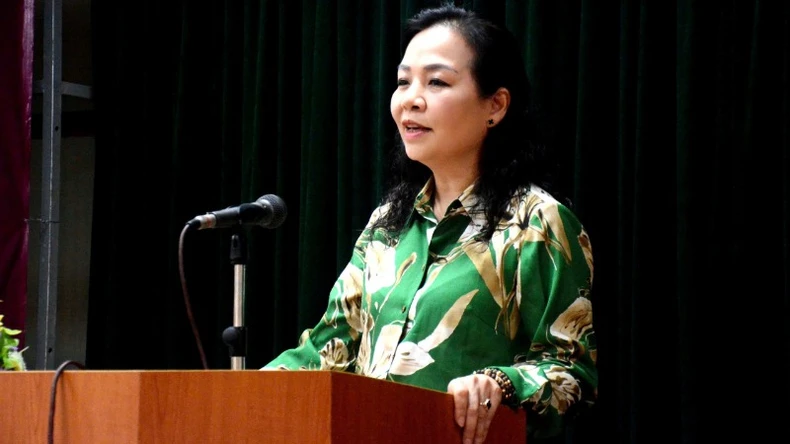 |
Dr. Ngo Phuong Lan, President of the Vietnam Film Development Promotion Association, presented a paper at the conference. |
In terms of inspiration, themes, and creative topics, many Vietnamese artists and writers abroad view artistic creation as a personal release amidst the joys and sorrows, memories and forgetfulness, happiness and suffering they encounter. However, the longer they live abroad, the more intense their longing for their homeland becomes, often poignant; the inspiration for harmony and reconciliation is genuine and heartfelt for most; many remain deeply connected to their roots, Vietnamese culture, and the Vietnamese language; they ponder the fate of the nation and its people, especially in light of the changes and upheavals of contemporary life; they are concerned and joyful about the profound and significant changes in their homeland; and they are proud to be Vietnamese, of the Vietnamese nation, and of their Vietnamese origins.
Exchange, promotion, and cooperation activities between literary and artistic associations and organizations in Vietnam and Vietnamese artists and writers abroad have been strengthened, yielding very encouraging results. Many famous Vietnamese artists and writers abroad, after many years away from their homeland, have expressed a desire to return, such as Professor Tran Van Khe and sculptor Diem Phung Thi…
Besides the commendable efforts and achievements mentioned, the process of returning to the homeland and roots; the efforts to reconcile, harmonize, close the past, and look towards the future among a segment of Vietnamese artists and writers abroad and at home still face some barriers and obstacles; there is a psychological distance due to feelings of inferiority; long-standing differences in viewpoints; and the influence of some deceptive and provocative propaganda. Some individuals hold extremist, even hostile, views...
The delegates attending the workshop focused on exchanging and discussing the current state of Vietnamese literature and art abroad, examining the development of literature and art through various historical periods, especially from 1975 to the present; identifying the group of writers and artists; delving into each type of literature and art; areas of residence and artistic activity; themes, content, and creative methods; theoretical, critical, and translation activities; and pointing out the advantages, results, limitations, and shortcomings, as well as the reasons for these limitations and shortcomings.
The presentations offered suggestions and recommendations to the leaders of the Vietnamese Party and State, as well as to the leaders of the host countries, to encourage and facilitate the development of Vietnamese literature and art abroad; and to address some difficulties and obstacles in order to create better development in the coming years.
The discussions affirmed the policies and guidelines of the Communist Party of Vietnam and the Vietnamese State on national reconciliation, harmony, national reunification, and national unity; considering overseas Vietnamese as an inseparable part of the Vietnamese national community; and considering the literature and art of overseas Vietnamese as an inseparable part of Vietnamese literature and art. All for the goal of a prosperous people, a strong nation, democracy, justice, and civilization.
The seminar also focused on analyzing the current state of Vietnamese literature and art abroad, examining its development through various historical periods, especially from 1975 to the present; identifying the group of writers and artists; delving into each type of literature and art; areas of residence and artistic activity; themes, content, and creative methods; theoretical, critical, and translation activities; and pointing out the advantages, results, limitations, shortcomings, and causes.
Furthermore, researchers analyze and evaluate the process of harmonization, reconciliation, unification, transformation, and development of Vietnamese literature and art, in which the literature and art of Vietnamese people abroad is an important organic part; the connection, interaction, and mutual support between domestic literature and art and the literature and art of our compatriots abroad.
The challenges arising in the process of harmonization, exchange, connection, cooperation, and joint development in the context of globalization and the rapidly developing Fourth Industrial Revolution are intertwined with both opportunities and challenges.
Experts have also made suggestions and recommendations to the leaders of the Vietnamese Party and State, as well as to the leaders of the host countries, to encourage and facilitate the development of Vietnamese literature and art abroad; and to address some difficulties, obstacles, and "bottlenecks" in order to create better development in the coming years.
In his concluding remarks at the conference, Professor, Dr. Ta Ngoc Tan, former member of the Central Committee of the Party, and Permanent Vice Chairman of the Central Theoretical Council, thanked the leaders, scientists, artists, and international scholars for bringing a vibrant academic atmosphere, a spirit of camaraderie and cooperation to the conference, and especially for the many frank, passionate, responsible, and humane presentations and exchanges.
By organizing national and international-level scientific conferences, the Central Theoretical Council hopes to mobilize the intellect, responsibility, and contributions of writers, researchers, theorists, critics, and translators of literature and art to provide a stronger theoretical and practical basis, contributing to clarifying some important issues concerning literature and art in general, and the literature and art of our compatriots abroad in particular. This will then advise the Party and State on the development and implementation of policies for the development of literature and art; and lead to more correct and timely decisions to develop the national culture and arts, as well as those of our compatriots living far from the homeland.
The opinions and suggestions of scientists and artists will be received by the Central Theoretical Council, which will advise the Party, the State, and relevant ministries, departments, agencies, and units in building and implementing policies for the development of literature and art; and will contribute to more correct and timely decisions to develop the national culture and arts, as well as those of our compatriots living abroad, making them increasingly rich and distinctive.
Source: https://nhandan.vn/van-hoc-gop-phan-tich-cuc-trong-hoa-hop-hoa-giai-dan-toc-post875776.html
![[Photo] Prime Minister Pham Minh Chinh presides over a meeting on private sector economic development.](/_next/image?url=https%3A%2F%2Fvphoto.vietnam.vn%2Fthumb%2F1200x675%2Fvietnam%2Fresource%2FIMAGE%2F2025%2F12%2F20%2F1766237501876_thiet-ke-chua-co-ten-40-png.webp&w=3840&q=75)
![[Photo] Prime Minister Pham Minh Chinh presides over the conference announcing the establishment of the International Finance Centre in Vietnam.](/_next/image?url=https%3A%2F%2Fvphoto.vietnam.vn%2Fthumb%2F1200x675%2Fvietnam%2Fresource%2FIMAGE%2F2025%2F12%2F21%2F1766309817714_ndo_br_dsc-3400-jpg.webp&w=3840&q=75)














































Comment (0)