

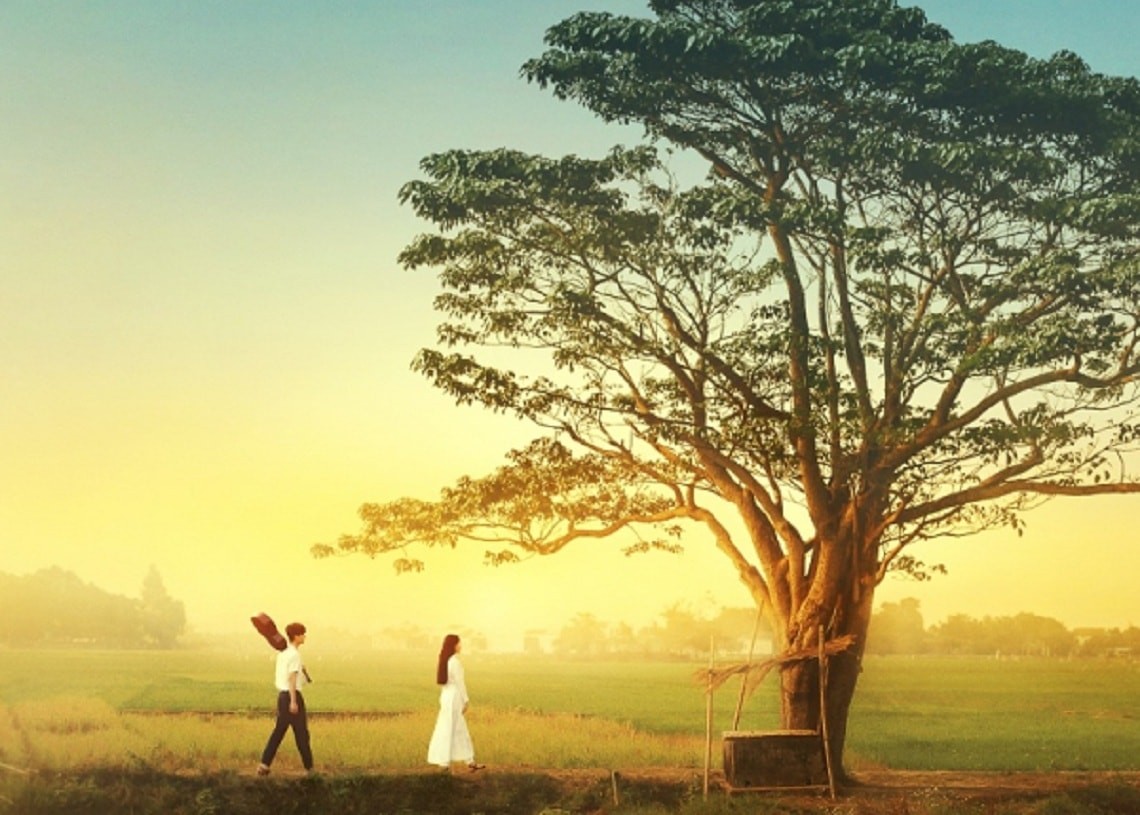
Travel guide
Many experts have stated that literature is not only the art of language but also an effective channel for cultural and tourism communication. Places mentioned in literary works can become attractive destinations thanks to their emotional impact, cultural depth, and accompanying stories. Therefore, literature has the power to inspire readers to "pack their bags and go" to experience firsthand what has been suggested in the pages of a book.
Works like "Blue Eyes" and "Dream Island" by writer Nguyen Nhat Anh not only tell gentle and profound stories but are also connected to dreamlike, beautiful lands... In particular, through these stories, tourists can touch upon the depth of culture, psychology, and regional identity - something that no ordinary travel guide can fully convey.
Reading "Mist and Smoke of My Homeland" by Nguyen Ngoc Tu evokes images of the Southwestern region of Vietnam through its rich imagery and the simple yet profound essence of the Mekong Delta. The work inspires exploration of the waterways and the warm-hearted people, making it suitable for community and ecotourism.
Many poets have vividly depicted the beauty of each region, arousing in people a longing to set foot there, explore, and experience it. For example, in the poem "Returning to the Xòe Dance" by poet Khúc Hồng Thiện, through each tender word, he recreates the vibrant and joyful atmosphere of the Xòe dance – a unique cultural feature of the Thái ethnic community in the mountains of Northwest Vietnam.
Besides that, countless other poems have also contributed to opening up new territories and illuminating tourism potential through the emotionally rich perspective of artists.
As someone who has traveled extensively and written extensively about various localities, writer Nguyen Van Hoc believes that literature is an effective way to promote the image of these places. If literary works related to specific locations are adapted and retold, unique cultural tourism products can be created, attracting both domestic and international tourists.
Regarding the potential for promoting tourism through literary works, Mr. Pham Hai Quynh, Director of the Asian Tourism Development Institute, stated that literature is one of the most powerful ways to convey emotions and cultural values. For example, tours following the journeys of characters in famous novels or poems allow tourists not only to visit but also to experience culture and history in a deeper way.
When tourists read and experience literary works, they form a connection with that place. “Literature conveys the values, philosophies, and distinctive lifestyles of the Vietnamese people. This helps tourists better understand the culture, people, and history of Vietnam. Therefore, adapting and retelling literary works associated with specific locations is a promising direction that needs to be explored more strongly in the future,” Mr. Quynh said.
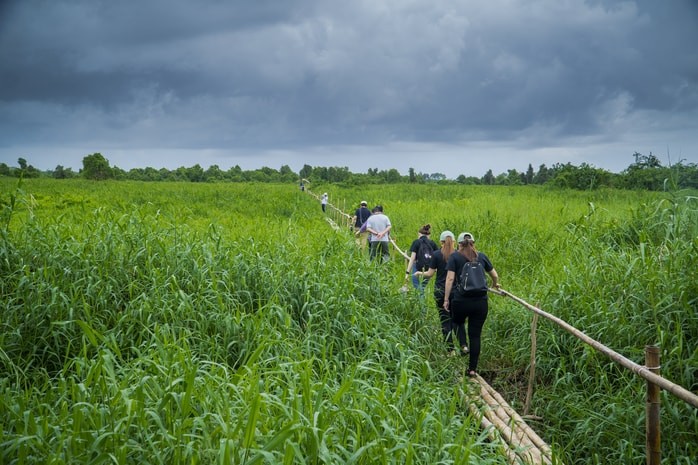
To give literature another life
It can be said that if each piece of writing is nurtured with love and empathy for the land, its history, and its landscape, it in itself becomes a captivating and sincere invitation to travel.
Sharing his thoughts on this, writer Phụng Thiên said that literature doesn't promote itself through mass media, but rather chooses a quiet yet profound way of promotion. Local spaces, customs, culture, and language are recreated through each work. As a result, these regions come alive in the reader's mind, arousing curiosity, affection, and a desire to visit and experience them firsthand.
Pham Hai Quynh, on the other hand, believes that by integrating literary elements into tourism promotion activities, we not only provide tourists with enjoyable experiences but also transmit the rich cultural values of Vietnam.
According to Mr. Quynh, for literature to become part of a modern tourism communication strategy, especially to attract young people, we need to use social media and online platforms to share literary works associated with tourist destinations through articles, short videos, and engaging images. We should create livestreams or podcasts about famous literary stories that have taken place or are currently taking place at tourist destinations. We should also organize literary tours, which include visits to the landmarks mentioned in famous works.
In addition, encourage authors to write about their travel experiences and promote them through media channels. Publish travel books related to literature, providing tourists with insights into local culture and history. Organize literary festivals at tourist destinations, combined with activities for interaction and sharing between authors and tourists. Create diverse activities such as readings, literary workshops, or discussions about literary works at famous destinations.
According to writer Nguyen Van Hoc, for literature – especially works with cultural depth – to become part of a modern tourism communication strategy, aiming to attract tourists, the work must first be good, evoking the stature and cultural depth of Vietnam in general, and of each region and place in particular. This lies in the talent of the writer. The writer, the creator, must love Vietnamese culture and love the regions in order to be able to bring the image and beauty of the landmarks and places into their works.
Next, we need the discerning eyes of filmmakers and screenwriters. They are the bridge that allows literary works to live another life: film. Furthermore, localities need to develop strategies to invite and attract filmmakers to shoot films, creating large, professional film studios. It can be said that the journey from literary works to stories of preserving and spreading cultural values and developing tourism is a process that requires the efforts of many people, at many levels and in many sectors.
Source: https://baolaocai.vn/van-hoc-quang-ba-du-lich-post400255.html
![[Photo] General Secretary To Lam receives President of the European Council Antonio Costa](/_next/image?url=https%3A%2F%2Fvphoto.vietnam.vn%2Fthumb%2F1200x675%2Fvietnam%2Fresource%2FIMAGE%2F2026%2F01%2F29%2F1769697816651_a1-bnd-5216-9741-jpg.webp&w=3840&q=75)


![OCOP during Tet season: [Part 3] Ultra-thin rice paper takes off.](/_next/image?url=https%3A%2F%2Fvphoto.vietnam.vn%2Fthumb%2F402x226%2Fvietnam%2Fresource%2FIMAGE%2F2026%2F01%2F28%2F1769562783429_004-194121_651-081010.jpeg&w=3840&q=75)


![OCOP during Tet season: [Part 2] Hoa Thanh incense village glows red.](/_next/image?url=https%3A%2F%2Fvphoto.vietnam.vn%2Fthumb%2F402x226%2Fvietnam%2Fresource%2FIMAGE%2F2026%2F01%2F27%2F1769480573807_505139049_683408031333867_2820052735775418136_n-180643_808-092229.jpeg&w=3840&q=75)
![OCOP during Tet season: [Part 1] Ba Den custard apples in their 'golden season'](/_next/image?url=https%3A%2F%2Fvphoto.vietnam.vn%2Fthumb%2F402x226%2Fvietnam%2Fresource%2FIMAGE%2F2026%2F01%2F26%2F1769417540049_03-174213_554-154843.jpeg&w=3840&q=75)




Comment (0)