

 |
| The commitments to action from all parties have made VBF 2025 one of the most successful business forums since its inception. |
Commitment to action
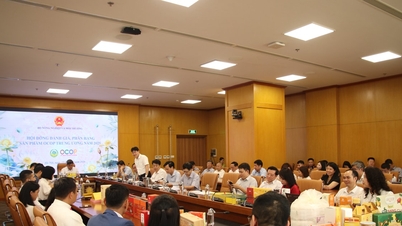
"Commitment" was perhaps one of the most frequently mentioned phrases at the VBF 2025 recently held in Hanoi . This phrase was even mentioned before the VBF began, reflecting the expectations of the VBF co-chairs regarding a shift in the dialogue mechanism: that VBF 2025 would no longer be a forum where the business community only comes to propose or suggest, but rather to "commit to action."
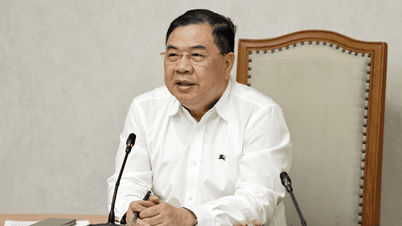
"This is also an opportunity for the business community to advise the Government on solutions to achieve the goal of green and sustainable economic development, and to make commitments, plans, and roadmaps demonstrating their responsibility in implementing the green transformation," said Minister of Finance Nguyen Van Thang in his opening remarks.
In his closing remarks, the Minister also expressed his hope that investors and foreign direct investment (FDI) enterprises would demonstrate their commitment to the Government through "concrete plans and actions," proactively applying science and technology and innovation, investing in R&D, and collaborating with the domestic business community to jointly build a comprehensive green economy , aiming to achieve a harmonious balance between economic growth, social security, and environmental protection.
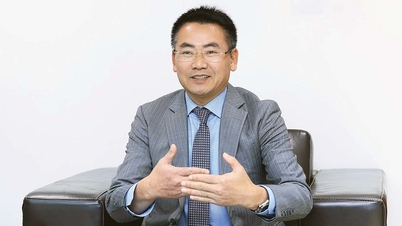
In response to these expectations, the business community and investors have made commitments to work alongside the Government. “We are strongly committed to working alongside the Government, contributing our intellect and initiatives to support the Vietnamese Government in achieving the country’s development goals, especially in digital transformation and green transformation,” said Mr. Nguyen Michael Vu, Co-Chairman of the VBF Alliance.
Above all, it was the commitment from Prime Minister Pham Minh Chinh. At the Forum, many suggestions and proposals from the business community and investors were put forward, and the Prime Minister emphasized that Vietnam is always open, receptive, and ready for frank dialogue, seeking solutions and removing difficulties and obstacles to promote rapid and sustainable economic development, with the core solution being green transformation and digital transformation, with the spirit of "nothing is impossible".
The Prime Minister also emphasized the spirit of "three together" with the business community and investors. These are: listening and understanding together; sharing vision and aspirations together; and achieving mutual success and development, with harmonious benefits and shared risks. The head of government directed ministries, sectors, and localities to carefully study and review the opinions, issues, and specific questions raised by businesses and investors in order to promptly resolve and address them within their authority; and to immediately report any issues beyond their authority.
The commitments to action from all parties, for the sustainable development of Vietnam's economy in the future, have made VBF 2025 one of the most successful business forums since its inception in 1997.
Realizing the double-digit growth plan.
The target of double-digit growth in the coming period, starting at 10% in 2026, is no longer an "aspiration," but has become a "plan." This plan is built on the foundation of an economy that achieved a growth rate of 7.85% in the first nine months and is expected to reach over 8% this year. And most importantly, it is based on the resilience of the Vietnamese economy to external shocks, as stated by Prime Minister Pham Minh Chinh.
 The selection of the theme "Businesses accompanying the Government in green transformation in the digital age" for this year's Forum demonstrates the Government's strong determination to attract high-quality investment and promote sustainable growth; it also affirms the important role of the business community in the green transformation process, based on the principles of inclusive development, equality, harmonious interests, and ensuring that no one is left behind.
- Minister of Finance Nguyen Van Thang
What the head of government can proudly say to the business community is that, despite the general difficulties, Vietnam has maintained one of the highest growth rates in the world. Specifically, in the five years from 2021 to 2025 (excluding 2021, which saw low growth due to the pandemic, reaching only 2.55%), the average growth rate for the remaining four years was 7.2%, exceeding the target of 6.5-7%.
But it's not just about high growth, the Prime Minister affirmed that alongside double-digit growth, Vietnam must develop green and achieve sustainable growth. "No country or economy can achieve rapid and sustainable growth by clinging to old ways of thinking, relying solely on traditional growth drivers; transforming, seeking, and creating new growth drivers is an objective and inevitable trend in today's world," the Prime Minister emphasized.
According to the Prime Minister, promoting the development of the green economy and the digital economy is an objective requirement, a strategic choice, and a top priority for Vietnam.
"Green growth has become an inevitable trend and a goal that every country is striving for," Minister Nguyen Van Thang also stated.
While acknowledging Vietnam's impressive achievements and agreeing with its strategic directions, including double-digit growth and green, sustainable development, Thomas Jacobs, Acting Director for East Asia and the Pacific at the International Finance Corporation (IFC), stated that sustainable growth "is not an easy path."
“We need to invest more in people, the environment, infrastructure, policies…,” said Thomas Jacobs, highlighting the “bottlenecks” Vietnam is facing, such as delays in clean energy production, a shortage of skilled workers, and limitations in investment in R&D activities.
And the best approach is to invest in these bottlenecks. To invest, resources are necessary, and private resources, both domestic and foreign, are key. According to Thomas Jacobs, to achieve this, policies must be transparent and stable, and the investment and business environment must be favorable, allowing businesses to confidently expand their operations.
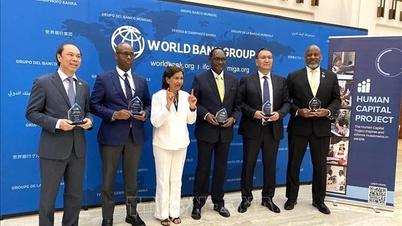
Sharing a similar view, Mariam Sherman, Country Director of the World Bank in Vietnam, Cambodia, and Laos, emphasized that Vietnam must invest in its people; address bottlenecks in technology investment and innovation to escape the "outsourcing" trap and improve productivity; bridge the gap between FDI enterprises and domestic enterprises, promoting linkages and shifting from simply assembling products to designing and manufacturing; and promote private investment…
Affirming her commitment to supporting Vietnam in attracting investment for development, Ms. Mariam Sherman stated that building investor confidence is crucial. "Confidence will come from predictable, stable, and transparent policies," Ms. Mariam Sherman asserted.
The key is to mobilize resources from the private sector.
A key point that has been affirmed for all development plans of the Vietnamese economy, including green growth, the digital-green dual transformation, etc., is that, in addition to public resources, private investment resources must be mobilized.
Minister of Finance Nguyen Van Thang himself affirmed that the history of national development shows that no nation has ever become powerful without a strong business community. That is why the Minister wants to see a commitment to action from the business community.
The question is, how can we attract private sector investment and how can we get the business community to commit to action? There are many issues that the business community and investors expect the Vietnamese government to address and reform.
“Vietnam’s economic success story is truly impressive, and the next chapter will depend on the depth and speed of reforms,” said Mark Gillin, President of the American Chamber of Commerce in Vietnam (Amcham), proposing a series of reforms to “unlock” the development of the private sector through the removal of non-tariff barriers, ensuring smooth and transparent policy implementation from the central to local levels, and guaranteeing governance consistency nationwide.
“Support packages such as tax deferrals, fee reductions, and infrastructure improvements have helped Vietnam become an attractive investment destination. In the future, priority should be placed on modernizing the tax system to conform to international standards, while ensuring simplicity, transparency, and predictability. Investor confidence will be strengthened if tax policies are implemented stably and consistently in the long term,” an Amcham representative stated.
Similarly, the Korean Chamber of Commerce in Vietnam proposed reforms related to difficulties in export logistics, considering extending the operating time for businesses investing in industrial parks, and ensuring that amendments to the High-Tech Law do not diminish the investment incentive of FDI enterprises…
Meanwhile, Bruno Jaspaer, President of the European Chamber of Commerce in Vietnam (EuroCham), expressed his belief that every investor's first experience in Vietnam should be truly smooth and positive. This is also why EuroCham has introduced the "Battles to Win - Strategic Priorities" to help Vietnam enhance its competitiveness, attract FDI, and improve its investment and business environment.
According to Bruno Jaspaer, seemingly "administrative" procedures such as visas, work permits, or entry procedures are actually Vietnam's first handshake with investors. If that handshake is firm and friendly, investors will not only bring capital, but also trust, human resources, and technology.
These are the first reforms proposed by EuroCham. In addition, there are issues related to customs procedures, land use rights, construction permits, intellectual property protection, and the issuance of national green building standards, mandatory sustainability standards, and incentive mechanisms, as well as amendments to the Pharmaceutical Law to accelerate access to advanced medicines…
"We are not here to criticize, but to stand with Vietnam," said Bruno Jaspaer, explaining that EuroCham's policy recommendations are aimed at jointly leading sustainable growth for Vietnam and the region.
"Standing on the same side as Vietnam" is a very meaningful commitment in a context where Vietnam desperately needs the cooperation, investment resources, and experience of the business community and investors both domestically and internationally.
Source: https://baodautu.vn/vbf-2025-cam-ket-hanh-dong-d432399.html






































































Comment (0)