

 |
In the crisp early winter weather, with sunlight stretching far into the distance towards the Tam Dao mountains, we strolled leisurely through the orchards laden with flowers and fruits in Quan Chu town (Dai Tu district), feeling as if we had wandered into a fairyland. Immersed in the fresh, fragrant air, we listened to the heartfelt and warm stories of the locals about this land with great development potential...
 |
 |
The town of Quân Chu has long been considered the fruit basket of Đại Từ district. Many people call Quân Chu the "orchard region" or "land of sweet fruits," because stretching along the foot of the Tam Đảo mountain range are vast, overlapping orchards of fruit trees. The people of Quân Chu are mainly from the lowlands, originally from Hưng Yên , who came here to clear land and establish the village since 1970.
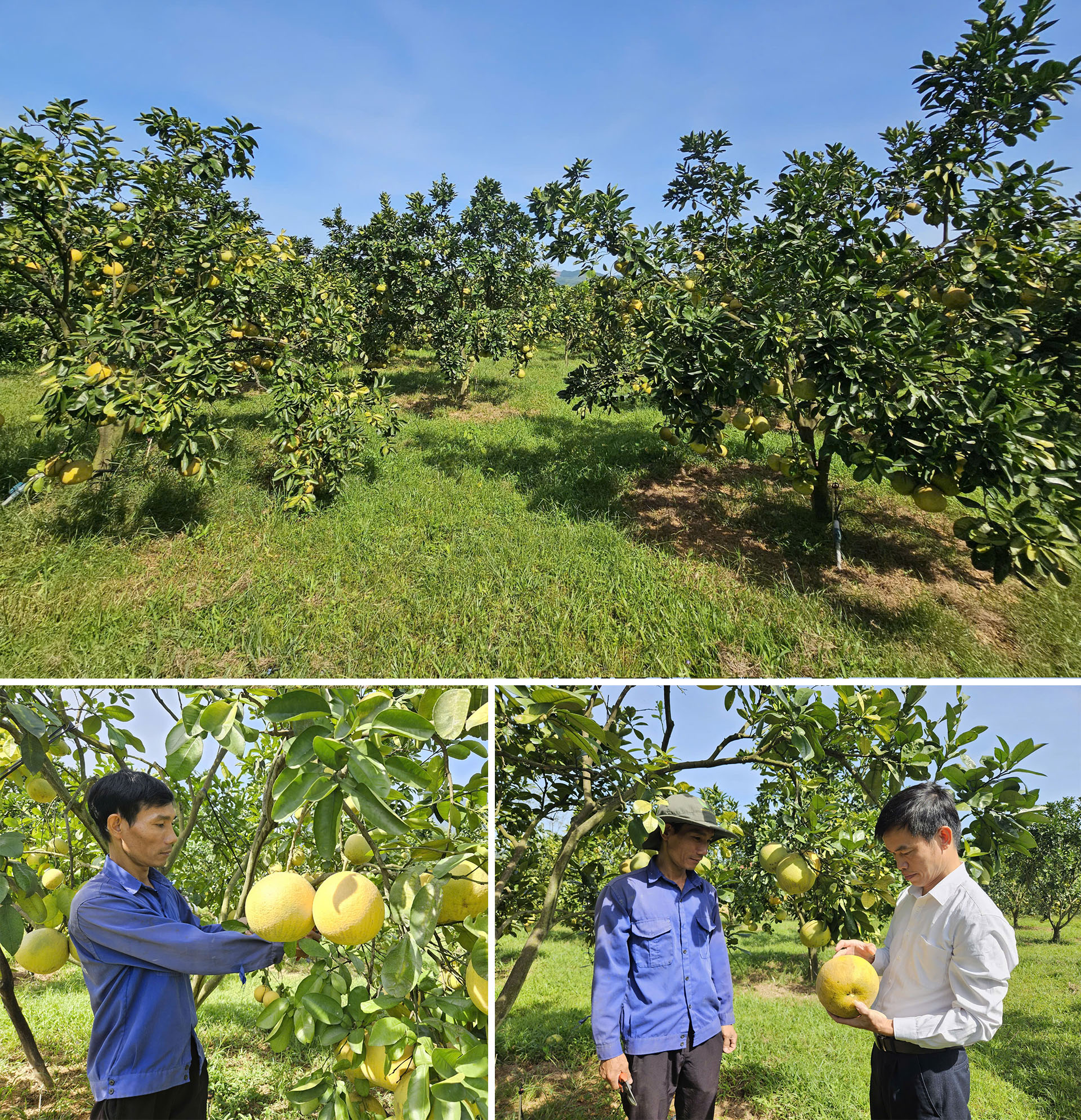 |
They brought with them resilience, hard work, and quick thinking to develop fruit trees, transforming the once dense, wild mountainous region into the fruit-growing land we see today.
Welcoming us at the "capital" of banana cultivation was Mr. Nguyen Xuan Huynh, Director of the Green Agricultural and Forestry Cooperative in Tan Tien residential area. He said: Although the Cooperative suffered losses this year due to many banana trees bearing fruit being broken and knocked down by Typhoon Yagi , bananas are currently being offered record high prices by traders.
 |
From the banana plantation of the Green Agricultural and Forestry Cooperative, we drove down the foot of the Tam Dao mountain range to the hamlets of Tan Lap, Chiem 1, Chiem 2, Doc Vu... Passing through lush orchards laden with fruit, we saw that not only in Tan Tien, but also in the residential areas of Quan Chu's concentrated fruit-growing region, the Red Cavendish banana variety is the most widely grown by the locals.
We recall a conversation at the commune's People's Committee with the Chairman, Mr. Duong Van Hinh, who shared: Bananas are currently a stable source of income for local people. The market for this fruit is wide open, especially when harvested and sold during the Lunar New Year, which brings in high and stable value. On average, 1 hectare of bananas yields over 40 tons of fruit per year, selling for about 400 million VND.
 |
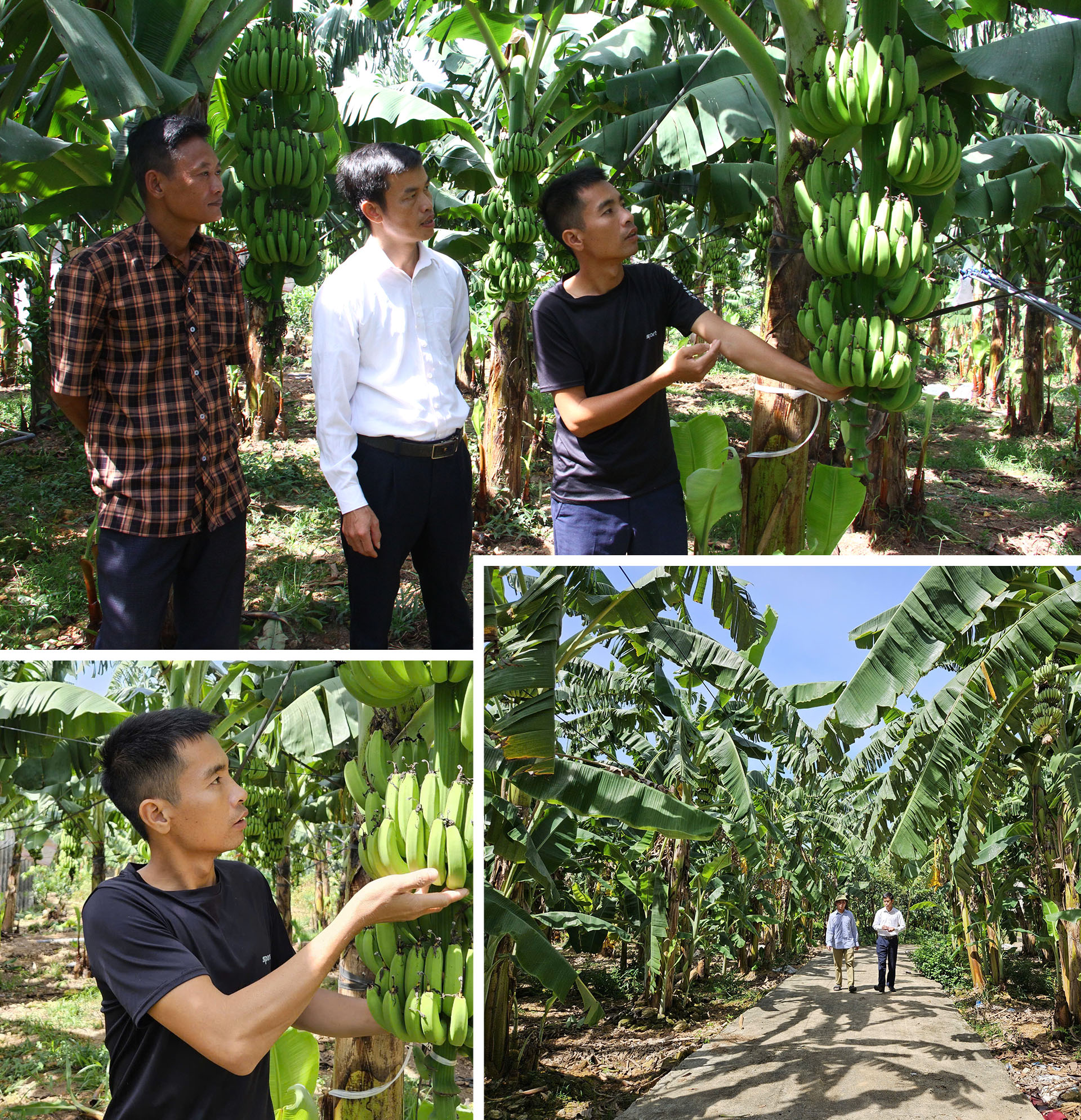 |
| Bananas are currently the main crop of Quan Chu. |
To make the right investment choices for economically valuable crops, and to avoid the uncertainty of the cycle of bumper harvests followed by price drops, or being caught up in the planting and then cutting down cycle like in some other localities, the people of Quan Chu have also experienced the ups and downs of many fruit seasons and gained valuable experience.
 |
Mr. Nguyen Thanh Tung, from Tan Lap residential area, said: "In the past, when people here first started planting fruit trees, they followed the trend of planting lychee trees, then switched to apricot, plum, and longan trees. Around after 2000, most of the fruit tree area here was longan. During the longan harvest season, trucks from all over flocked to buy the fruit. Some households earned hundreds of millions of dong, enough money to build big houses and buy nice cars."
 |
However, from 2010 onwards, the people suffered greatly due to three consecutive years of lychee crop failure. Undeterred, the farmers proactively converted many lychee orchards to banana plantations. The characteristic of banana trees is that they can only be grown for a maximum of three consecutive years on the same plot of land before needing to be converted to another crop. Therefore, after the banana cultivation period ended, the farmers switched to growing guava, pomelo, and other similar crops.
Through these transitions, people have gained valuable experience in selecting crops that anticipate market demands, applying science and technology to production, and researching and understanding the market, investing in planting fruit trees that are easy to sell and bring high economic value.
 |
 |
As one of the 10 communes and towns in the buffer zone of Tam Dao National Forest, Quan Chu is blessed with many beautiful landscapes. Following Provincial Road 261, we ventured deep into the Tam Dao mountain range, and the Truc Lam Tay Truc Zen Monastery gradually emerged from the thin mist. The monastery is situated on the high mountainside, nestled against the mountain, flanked by the Ba Go and Chom Vung mountain ranges, curving like arms embracing the entire monastery complex.
 |
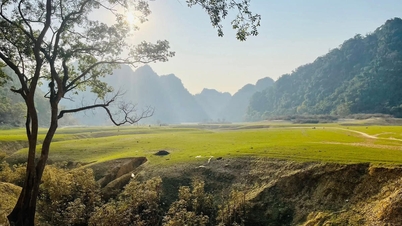
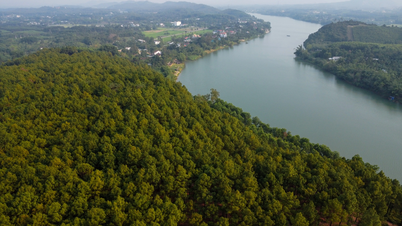
At the foot of these two mountain ranges are the Black Stone and White Stone streams, flowing from the heart of the mountains. Their water remains crystal clear year-round, trickling day and night along the foothills, then merging to form the Stone Gate stream, which flows throughout the town, winding through tea and fruit orchards, providing a vital water source to nourish the crops.
The Zen monastery complex in Quan Chu town currently has two very significant historical sites: Thien Tay Truc Pagoda, built five centuries ago, and Lan Than – the founding place of the Cao Son guerrilla team (Pham Hong Thai Liberation Army platoon). As one of the earliest origins of Vietnamese Buddhism, this place, along with Truc Lam Tay Thien Zen Monastery, provided systematic Buddhist training.
 |
Truc Lam Tay Truc Monastery is a highlight of spiritual tourism in the villages surrounding Tam Dao. Standing at Tay Truc Pagoda, one can only see endless mountain ranges nestled together, covered in a lush green, dotted with fluffy white clouds drifting gently by, creating a scene that is both majestic, vast, and tranquil, like a celestial paradise.
 |
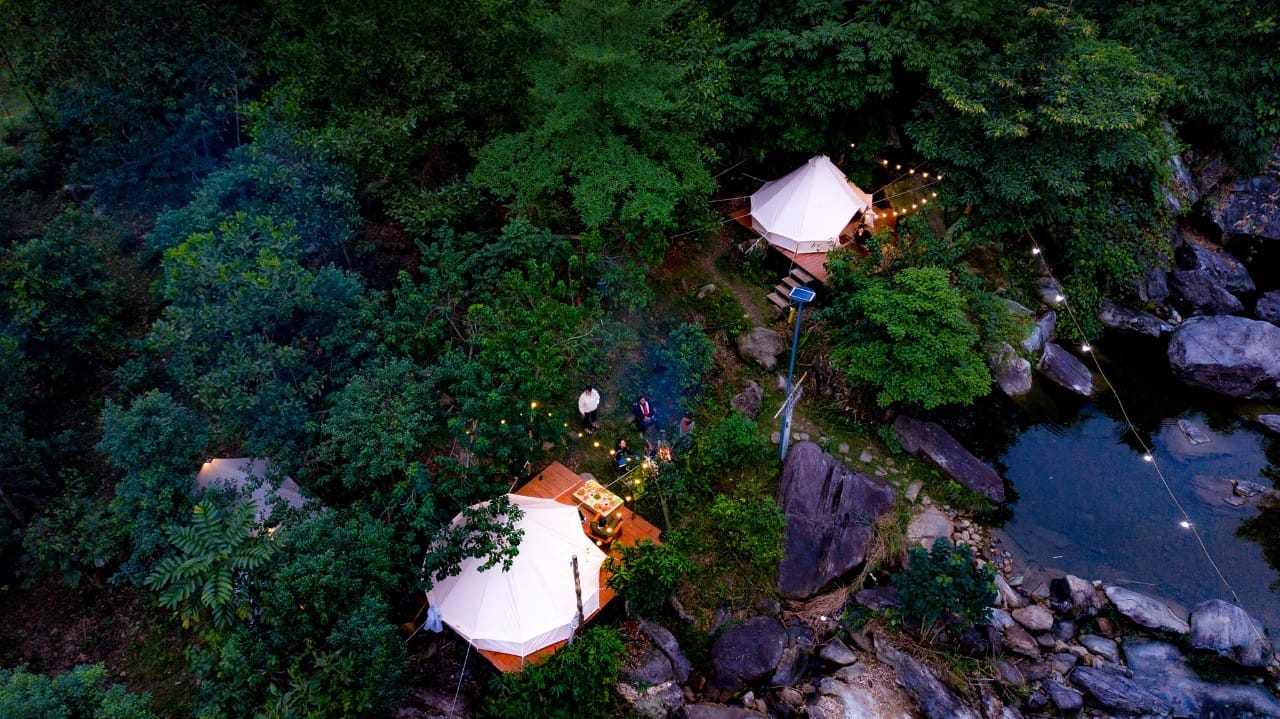
Not far from there, Dat Ngao Waterfall – one of the famous scenic spots of Dai Tu district – is a striking feature amidst the vast green landscape. With its clear, cool water flowing from the heart of Tam Dao mountain, it meets large rocks hanging on the cliff face and cascades down, creating a white waterfall against the backdrop of the majestic green forest.
 |
This scenic spot has retained its pristine, natural beauty, creating a pure and refreshing atmosphere. On hot summer days, tourists from all over flock here to admire the beautiful mountains and sky, breathe in the fresh air, immerse themselves in nature, listen to the sound of waterfalls, the rustling of the wind through the forest leaves, and the chirping of birds, creating a joyful symphony of the mountains and forests.
 |
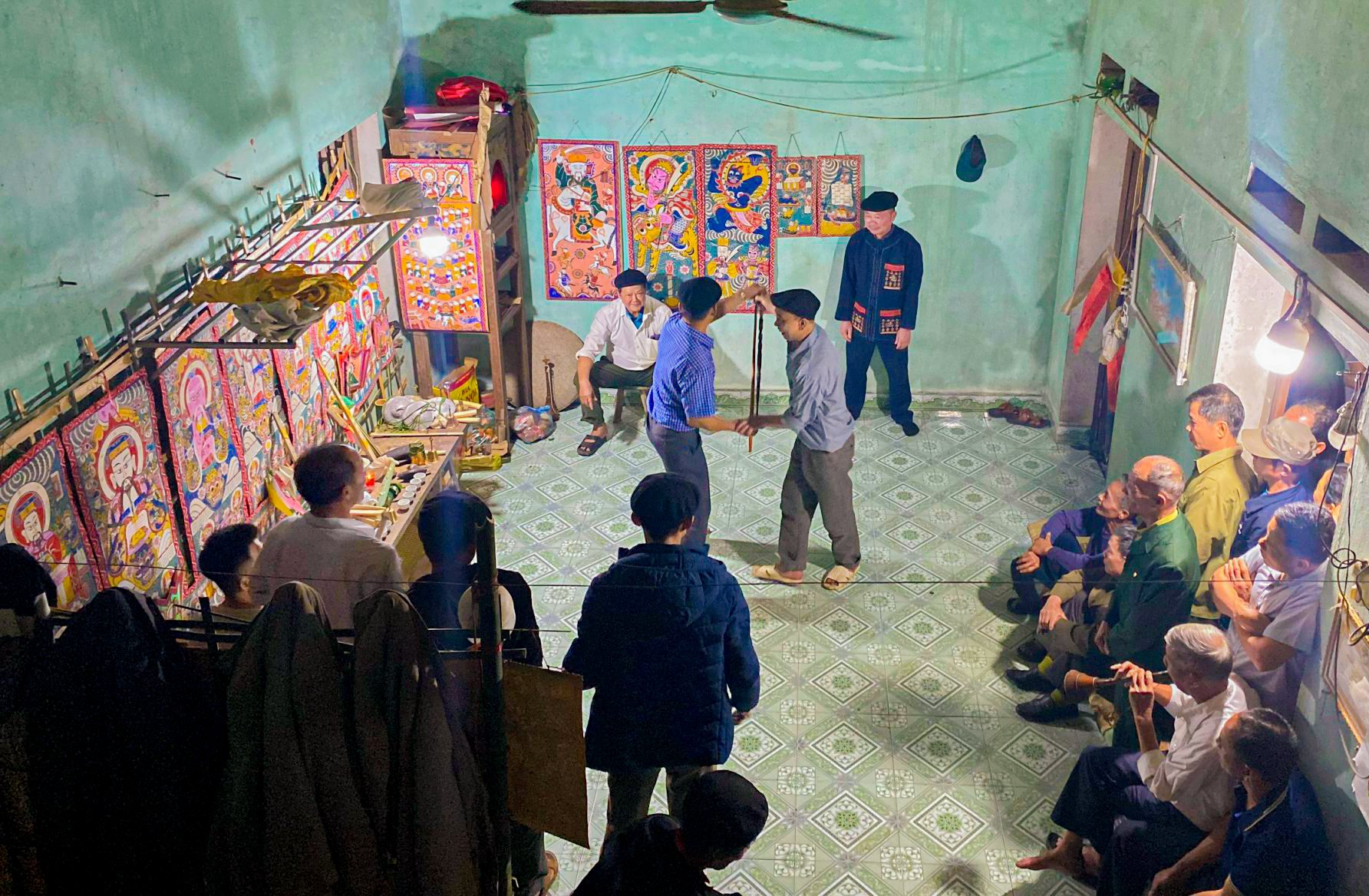
Along with its picturesque scenery, Quan Chu is also home to a large population of the Dao Quan Chet ethnic minority, who still preserve many unique cultural features reflected in their clothing, rituals such as the New Year's dance, traditional herbal remedies, and cuisine.
In recent years, the people of Quan Chu have learned to connect their strengths to create unique tourism products. These include spiritual tourism, mountain climbing experiences, waterfall bathing, camping, tea picking, harvesting seasonal fruits, participating in cultural and artistic activities with the Dao people, and enjoying traditional tea and cuisine.
 |
 |
Some farmers have proactively and boldly invested in building agricultural economic development models combined with experiential tourism by renovating their family farms and creating beautiful landscapes to attract tourists.
Based on the local situation, Quan Chu has also developed a tourism development plan, contributing to the promotion of agricultural products and the development of the local economy, while preserving, transmitting, and promoting the unique traditional cultural features of the Dao Quan Chet people here.
 |
 |
We've been to Quan Chu many times, but each time we visit, we're amazed by the rapid changes in this area. After more than a year since the administrative boundaries were merged (from the old Quan Chu commune and town into Quan Chu town), this place is undergoing rapid development.
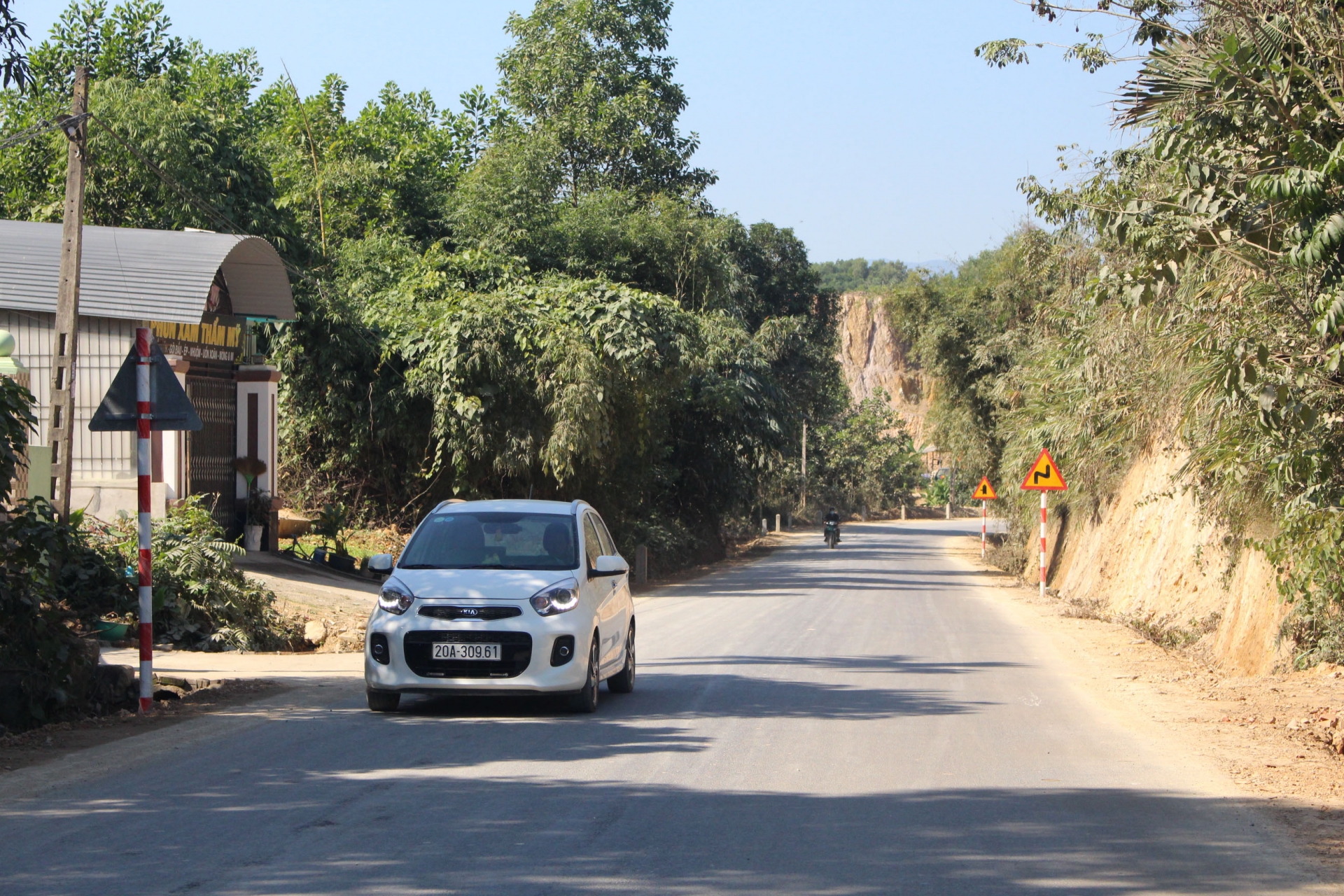
On this return visit, we saw many newly built and well-equipped infrastructure projects, including electricity, roads, schools, and cultural centers. In particular, Provincial Road 261 has been widened and paved smoothly. The regional connecting road linking the provinces of Bac Giang, Thai Nguyen, and Vinh Phuc, running through Quan Chu for over 2km, is gradually being completed, promising to connect Quan Chu with neighboring provinces.
 |
 |
With its topography featuring towering mountains on one side, gently sloping hills on the other, and clear, cool streams on the other, coupled with its advantageous transportation links, Quan Chu has favorable conditions for developing urban spaces, encompassing both enclosed and open areas, and creating distinctive spatial features.
 |
 |
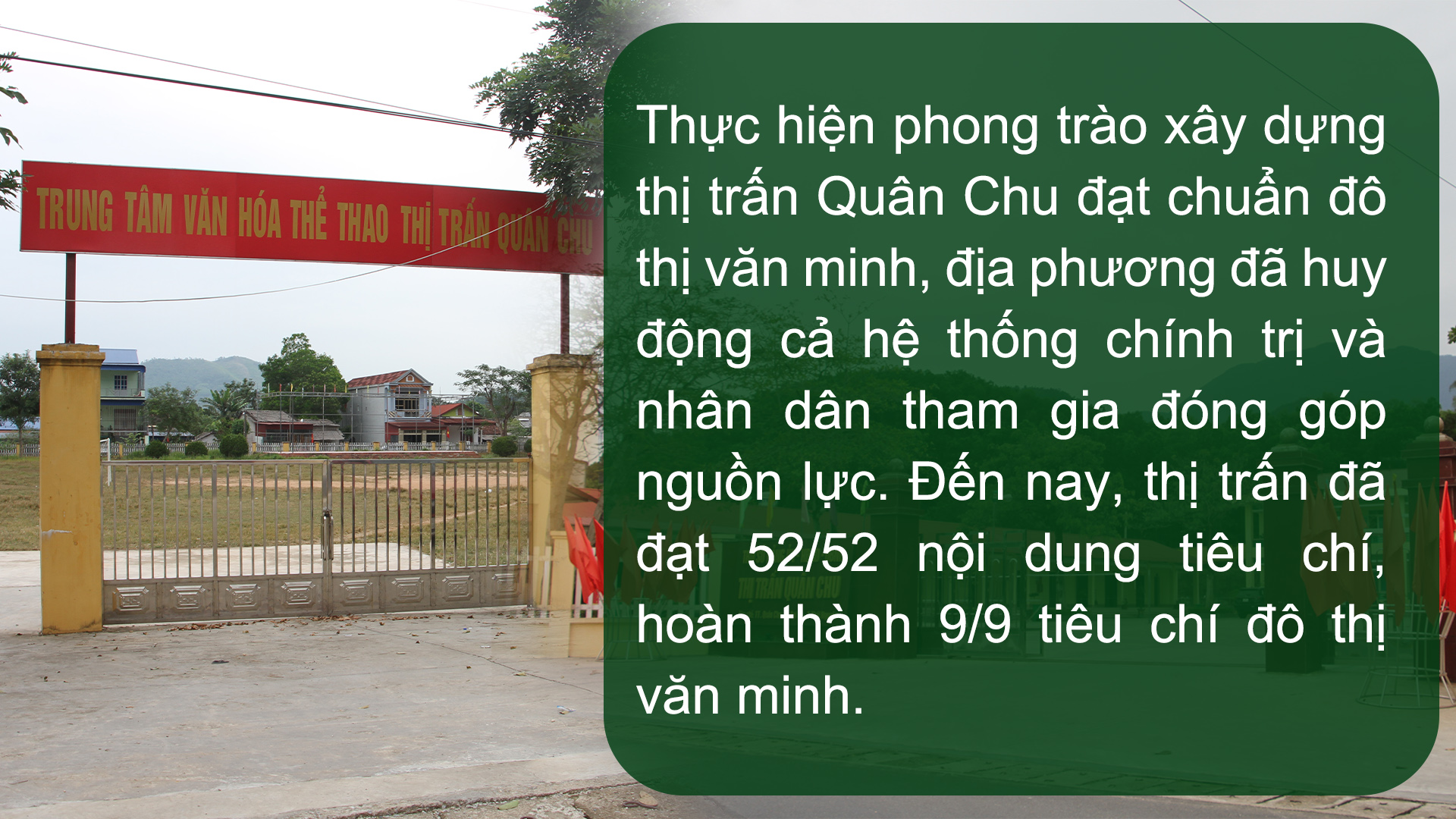
After more than a year since the administrative boundary merger, Quan Chu today is undergoing a strong transformation, becoming a civilized, bright, green, clean, and beautiful urban area, striving towards modernity. The town covers an area of over 53 square kilometers, with over 2,200 households divided into 19 residential groups, and 8 ethnic groups: Kinh, Tay, Nung, San Chay, Dao, San Diu, Hoa, and Ngai.
 |
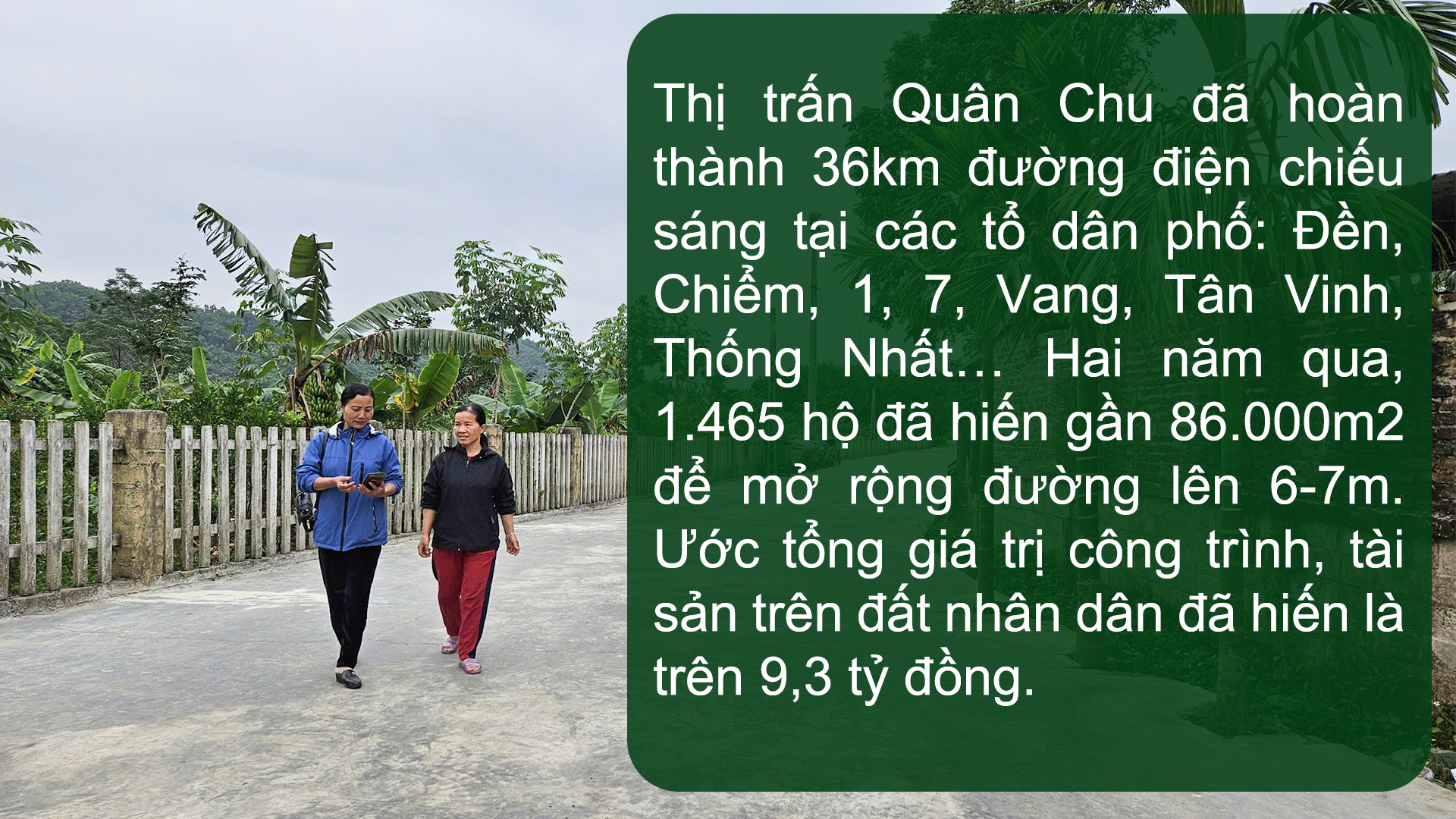
In order to develop Quan Chu town into a driving force for socio-economic development in the southern part of Dai Tu district, the locality has actively mobilized resources along with state investment to gradually improve the local transportation system, creating a foundation for economic and tourism development.
This is a road connecting the center of Dai Tu district with the communes of Binh Thuan, Luc Ba, Ky Phu, Van Yen, Cat Ne, Quan Chu, Quan Chu town and Pho Yen city, with a length of 5.6 km through the town area, which has been paved with asphalt. The main town road connecting the town's administrative center with neighboring communes and residential areas, with a total length of nearly 30 km, has also been concreted.
 |
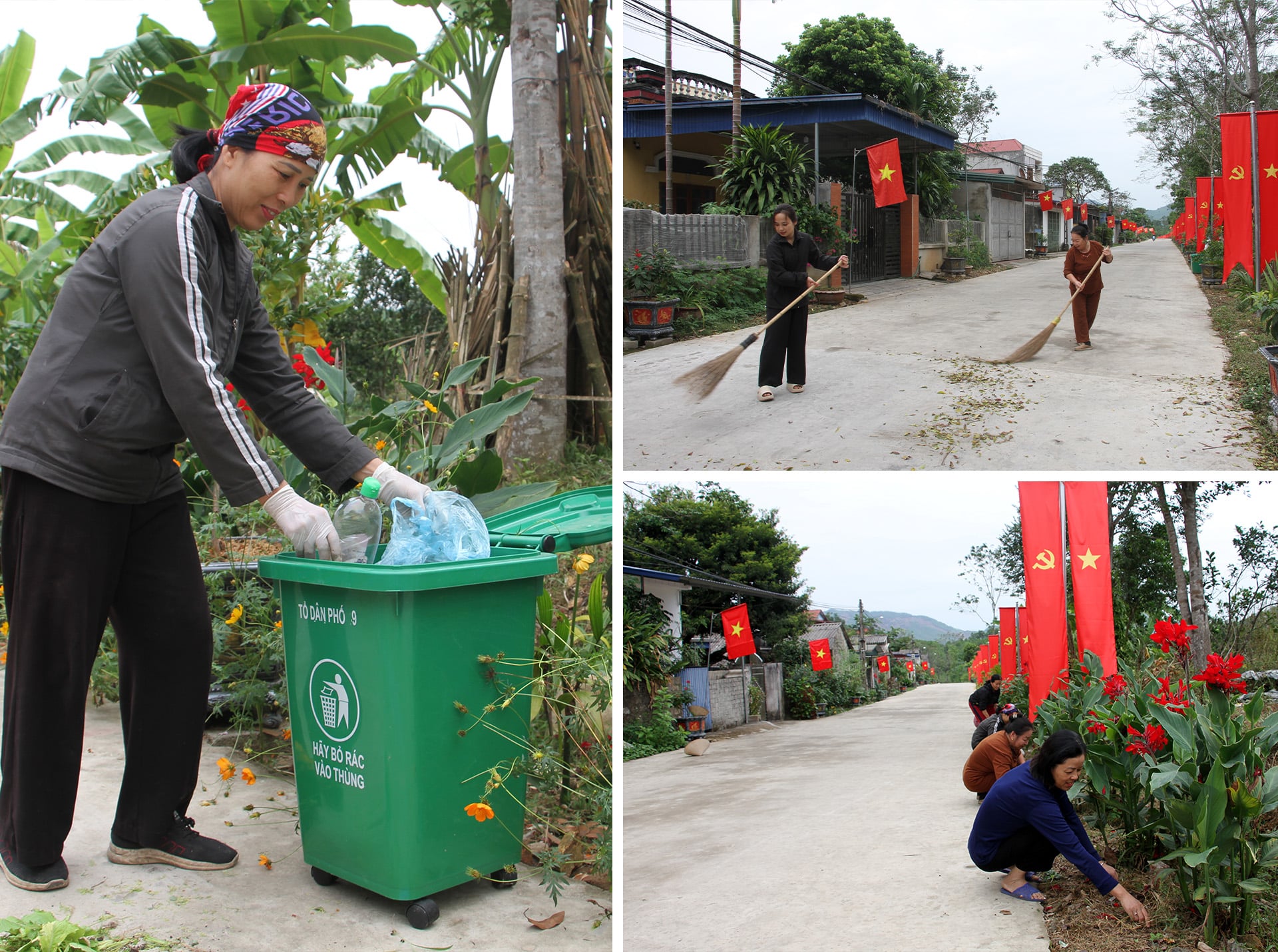
100% of the main roads in the residential areas (nearly 17km) have been paved with asphalt or concrete. During a tour of the residential areas, we observed that the alleyways were also basically concreted, beautifully planted with flowers and trees, and had designated waste collection points...
 |
The achievements of Quan Chu are the result of unity, consensus, the involvement of the entire political system, and the active support of the people. This will certainly be the foundation for Quan Chu to "take off" and strive to become a ward by 2025.
 |
Source: https://baothainguyen.vn/multimedia/emagazine/202412/ve-mien-dat-hua-quan-chu-2630a19/
![[Image] Close-up view of the 10-lane road connecting to Long Thanh Airport](https://vphoto.vietnam.vn/thumb/1200x675/vietnam/resource/IMAGE/2026/04/04/1775291871988_ndo_br_1-resize-5690-jpg.webp)































































Comment (0)