

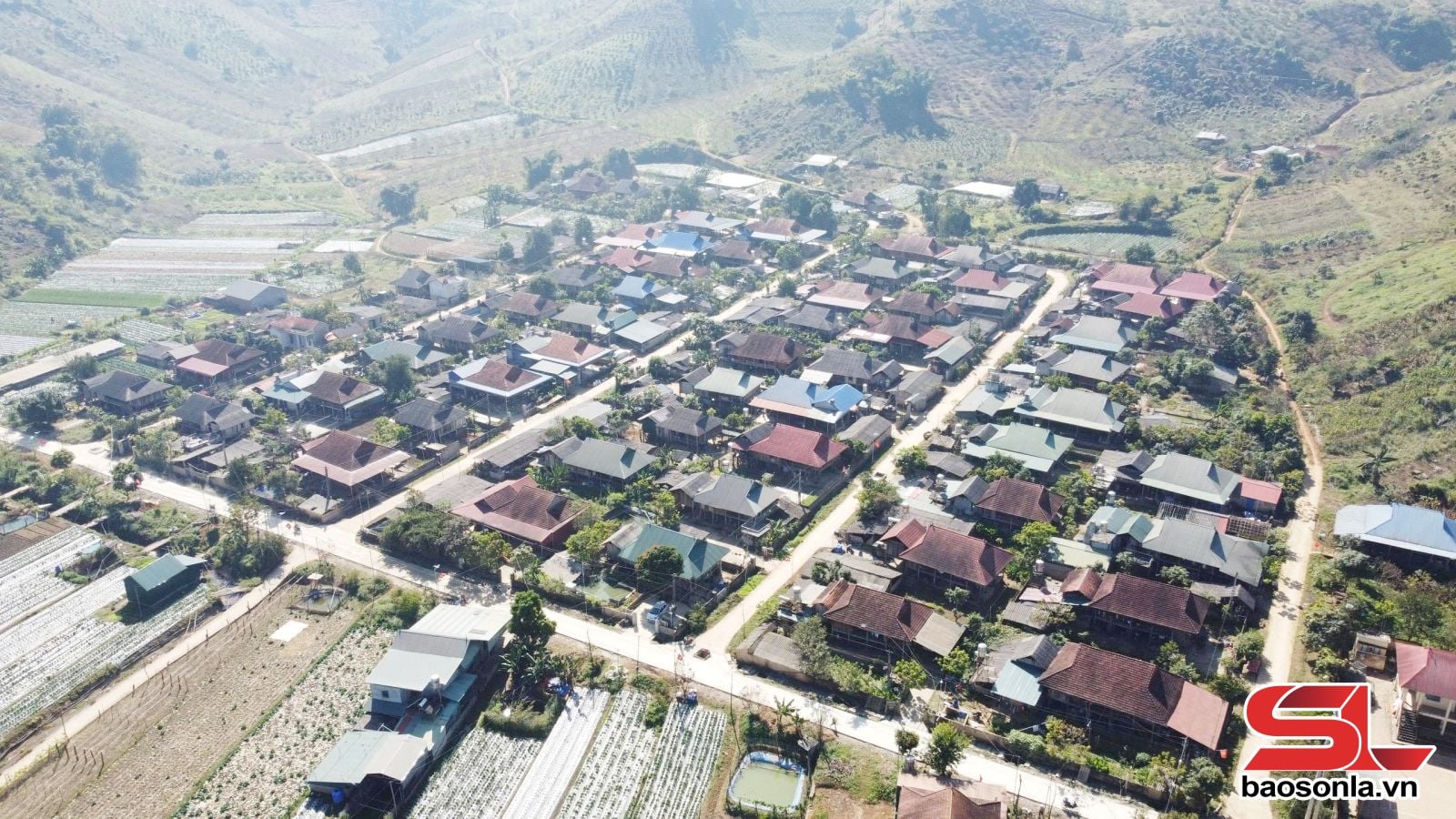
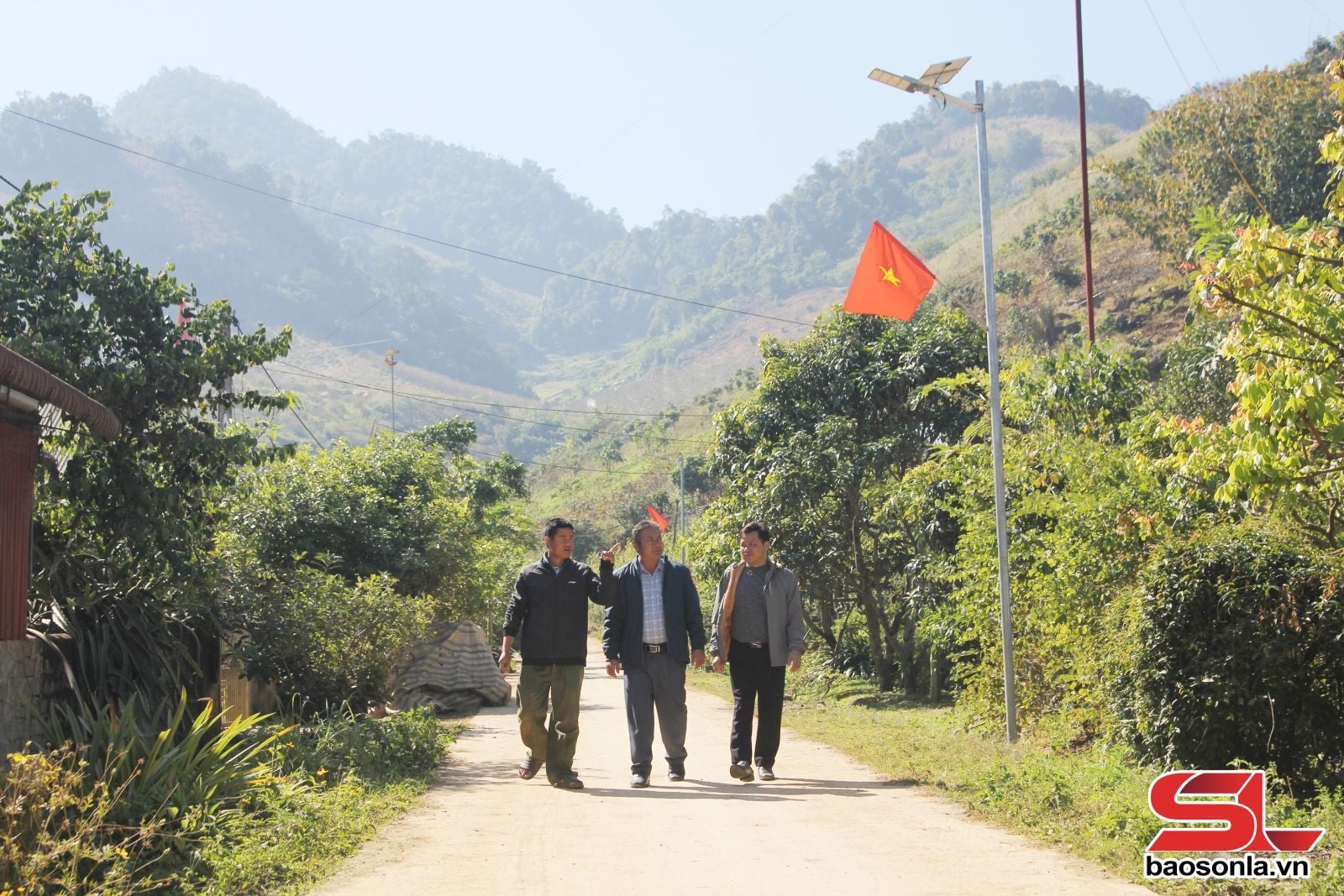
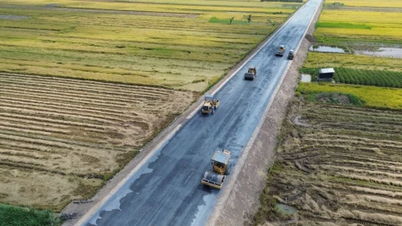
Long Phieng commune currently covers an area of 147.8 km², with over 11,100 inhabitants across 19 villages. Among them, Quynh Phieng is the only village that has achieved the new rural standard. The village has 71 households and 312 inhabitants, mainly of the Thai ethnic group. Welcoming us at the community center, Mr. Lo Van Hoan, Party Secretary and Head of Quynh Phieng village, proudly pointed to the smooth, concrete-paved internal village road, stretching from the residential area to the production areas and equipped with a lighting system. He happily said: "The government provided materials, and the villagers contributed their labor. To date, 100% of the internal village roads have been concreted and have lighting systems. With good roads, cars can reach the village, making it easier for people to sell their agricultural products, and everyone is delighted."
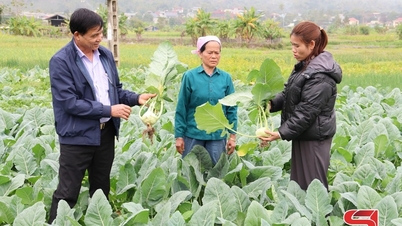
In 2007, after relocating to the Quynh Phieng resettlement area, the villagers relied solely on corn and cassava crops. However, they have now diversified their crops, developed sustainable economic models, and raised their average income to 47 million VND per person per year. Quynh Phieng now has 55 hectares of agricultural land, mainly used for growing vegetables, strawberries, and longan. Following Mr. Hoan, we visited the family of Mr. Dang Van Tuan, one of the pioneers in introducing strawberries to the village. Mr. Tuan shared: "Recognizing that the soil and climate here are quite similar to Moc Chau, in 2020, I decided to convert 1 hectare of land previously used for corn cultivation to strawberry farming. I applied techniques such as raised beds, an automatic irrigation system, organic fertilizers combined with microbial fertilizers, and used netting to protect against harsh rain and sun." Thanks to proper care, the family's strawberry garden yields 2.5-3.5 kg of fruit per plant per season, selling for 70-200 thousand VND per kg, bringing in an income of over 500 million VND per year.
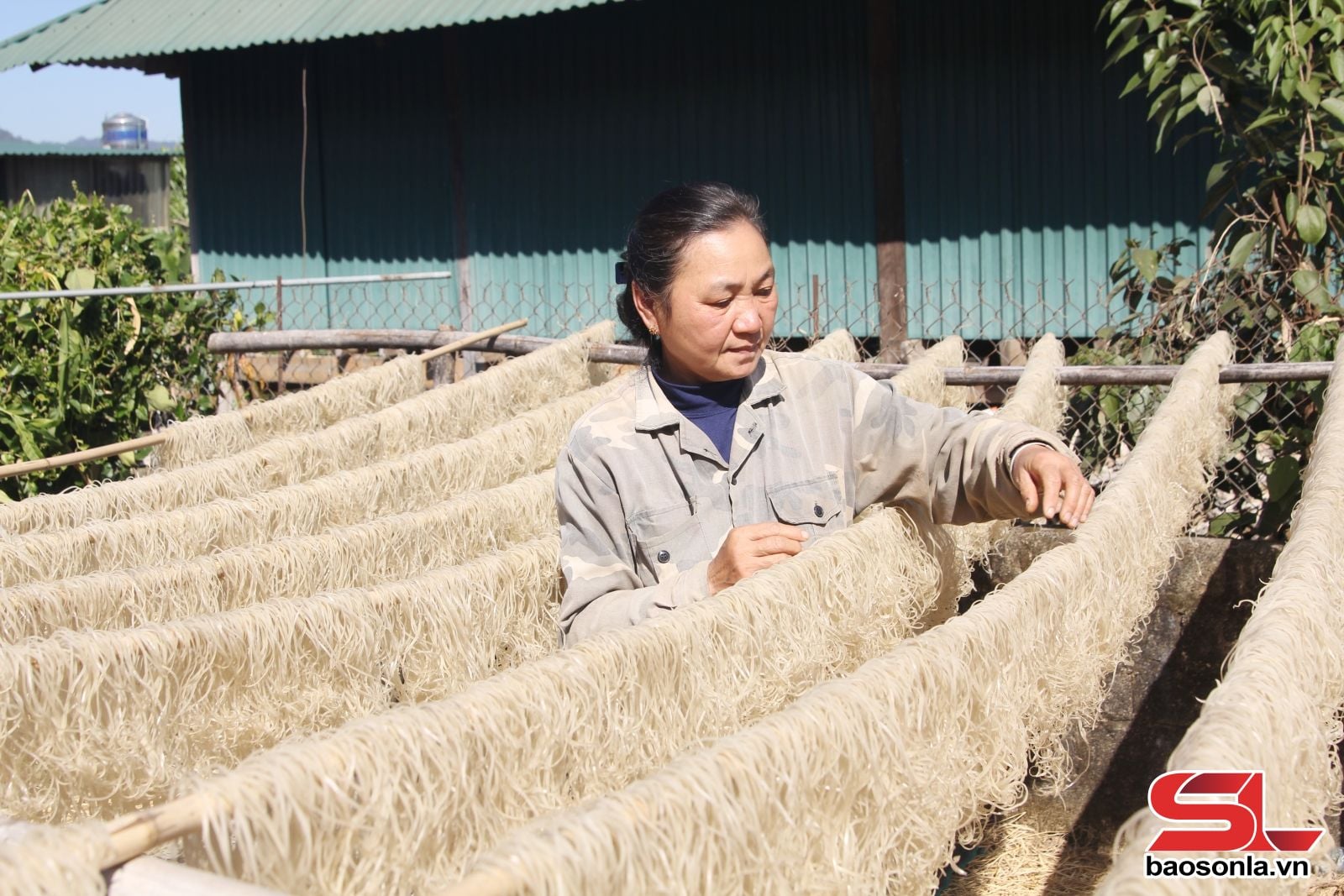
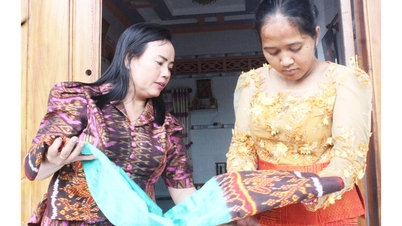
Making cassava vermicelli is a traditional craft dating back to their old hometown of Pá Ma Pha Khinh commune (formerly Quỳnh Nhai district). Even after moving to Lóng Phiêng, the villagers have maintained this traditional craft. In recent years, Quỳnh Phiêng cassava vermicelli has become well-known and popular, leading to increased demand. As a result, the villagers have shifted to large-scale production for commercial purposes, boosting their family income. Visiting the family of Ms. Điêu Thị Nam, one of the pioneering households in investing in machinery and equipment to improve cassava vermicelli production, she shared: "Fresh cassava tubers only sell for 1,000-2,000 VND/kg, a low value, and the income is negligible. In 2015, my family decided to switch to making vermicelli to increase the value of our agricultural product and create a more stable source of income. On average, 10 kg of cassava tubers produce 1 kg of vermicelli." With the current selling price of 65-70 thousand VND/kg, my family earns over 100 million VND per year.
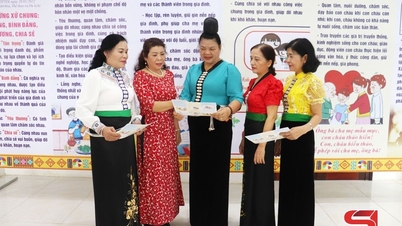
Not only has the economy developed, but the cultural life of the people in Quynh Phieng has also improved significantly. Currently, the entire village has more than 1.2 km of flower-lined roads connecting residential areas and 5 exemplary models of clean houses and beautiful gardens. Many households have renovated their overgrown gardens, built green fences, creating neat and clean living spaces. Ms. Dieu Thi Mau, Head of the Women's Association in the village, said: "Every weekend, the women take turns cleaning and caring for the flower-lined roads, and encourage households to maintain a clean environment. These small but continuous actions help make the village bright, green, and clean. At the same time, they contribute to raising community awareness of environmental protection and the spirit of solidarity among the people."
Mr. Lu Van Chung, Chairman of the People's Committee of Long Phieng commune, informed: In the coming time, the commune will guide and support Quynh Phieng village to expand its vegetable growing area; invest in technology for processing cassava vermicelli so that the product meets the commune's OCOP standards. At the same time, it aims to develop experiential tourism, exploiting the landscape and characteristic agricultural models of the village.
We left Quynh Phieng with admiration for a resilient resettled community that knows how to utilize its resources and advantages to thrive. The changes here are evident in every road, every house, and in the way each resident thinks and acts, making Quynh Phieng a shining example in the border commune of Long Phieng.
Source: https://baosonla.vn/xa-hoi/ve-quynh-phieng-pK0zanGvR.html










![[Photo] Da Nang: Mountainous commune adorned with flags and flowers, ready for election day.](https://vphoto.vietnam.vn/thumb/1200x675/vietnam/resource/IMAGE/2026/03/10/1773113803384_ndo_br_9-jpg.webp)



































Comment (0)