


Magnificent natural beauty intertwined with historical landscapes.
The Pac Bo National Special Historical Site, located in Truong Ha commune, Cao Bang province, lies quietly on the Vietnam-China border, about 50km from Cao Bang city along Provincial Road 203. It marks Kilometer 0 of the historic Ho Chi Minh Trail. Locally, Pac Bo means "source" or "headwater"—a simple yet evocative name symbolizing the beginning and enduring flow of the nation's history. More than just the "headwaters" of a stream, Pac Bo is also considered the "headwaters" of the Vietnamese revolution.
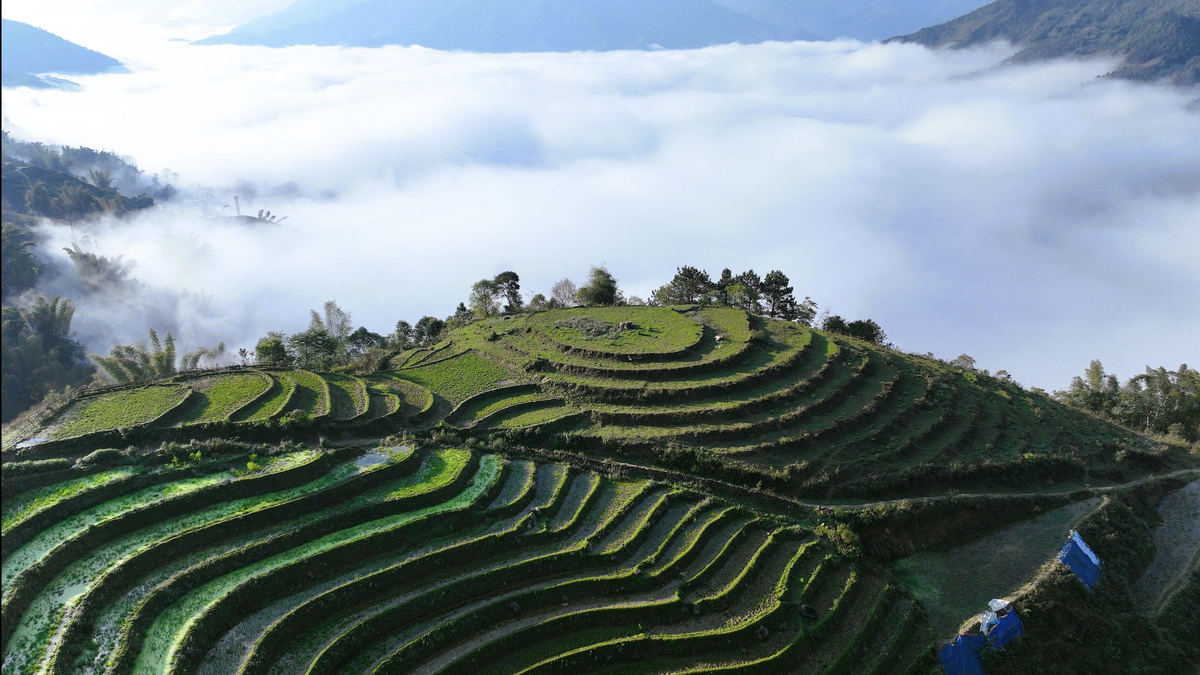
Having witnessed significant milestones over the years, this place still preserves almost intact the relics and imprints of the revolution and of President Ho Chi Minh. Pac Bo impresses those who set foot here for the first time with its many rugged mountain ranges, waterfalls that seem to beckon and soothe, and lush green bamboo groves that cover the entire area. The historical site not only preserves landmarks such as Coc Bo Cave, Lung Lan Cave, Nguom Vai Cave, Lenin Stream, and the stone table where President Ho Chi Minh worked, but also creates a harmonious landscape with majestic natural beauty, stretching out like a painting.
Heading back to the mountainous region of Cao Bang , visitors can not only immerse themselves in the pristine and majestic natural scenery but also experience the historical and cultural values hidden within this land.
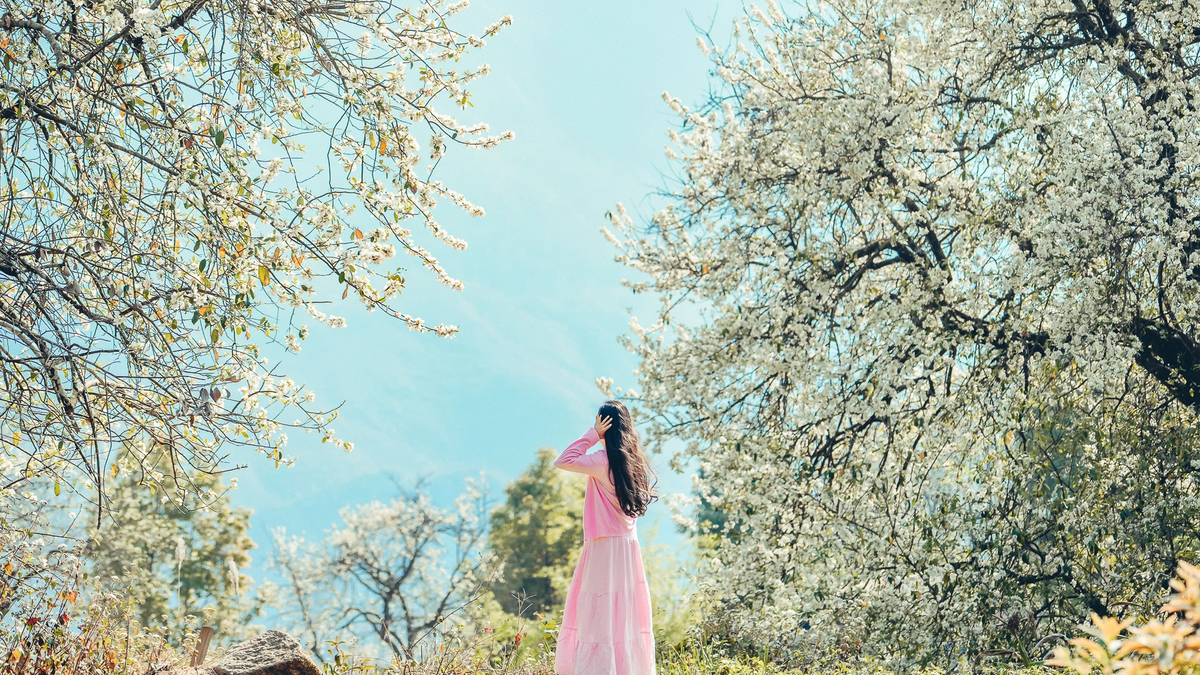
Amidst the springtime hues blending with the white blossoms of apricot and plum trees, evoking memories of the moments when President Ho Chi Minh returned to his beloved homeland after years of wandering in search of a way to save the country, the poet To Huu once wrote: "The President has returned here, O Fatherland! We cherish this land warmed by His presence. For thirty years, his feet never rested, and only now has he arrived."
In the spring of 1941, after a long and arduous journey abroad, Uncle Ho returned to his homeland, setting foot on the soil of his country at milestone 108. It was here that he chose Coc Bo cave as his residence and workplace, beside a clear stream and secluded mountains. Despite the extreme hardships, Uncle Ho remained calm and optimistic, dedicating his heart and soul to leading the Vietnamese revolution and defining the path to national independence. From then on, Pac Bo became more than just a place name; it became the starting point for a historical turning point in our country's revolution.
During this period, Uncle Ho used the name Gia Thu, which became the place he chose to live and work in during his early years after returning to his homeland. Amidst the deep mountains and forests, this space was both simple and humble, quietly marking a special historical stage of the Vietnamese revolution.
Standing before the small Coc Bo cave, looking at the stone table where Uncle Ho once worked, visitors cannot help but be moved. Amidst the deep, dark mountains and forests, Uncle Ho made crucial decisions that laid the foundation for the victory of the August Revolution in 1945. His simplicity in life, his harmony with nature and the people, makes everyone respect him even more. In Pac Bo, the image of a great leader appears so close, simple yet noble.
Standing before Coc Bo Cave, one cannot help but be moved and admire President Ho Chi Minh's simple yet magnificent lifestyle. It was in this deep, overgrown cave that he was sheltered during the arduous and challenging days of leading the revolution. Despite the extremely limited material resources, he maintained an optimistic spirit and unwavering faith in the inevitable victory of the revolution. This inspiration was expressed in his poem "Impromptu Poem at Pac Bo" with its simple yet profound verses: "Early morning by the stream, evening in the cave / Corn porridge and bamboo shoots always ready / On a precarious stone table, writing the history of the Party / A revolutionary life is truly glorious."

Closely associated with the Pac Bo historical site, the Pac Bo Special National Historical Site Exhibition House is built on a large, flat piece of land, with a towering mountain behind it, surrounded by lush green trees. It preserves precious images and historical documents about President Ho Chi Minh and the revolutionary events of the early period when he returned to the country to lead the revolution.
Visiting the Pac Bo National Special Historical Site, tourist Nguyen Thi Phuong (Chuong My, Hanoi ) emotionally shared: “Visiting the historical site helped me understand more about the life and revolutionary career of President Ho Chi Minh, our beloved leader, the father of the nation who dedicated and sacrificed his entire life for the people, for the country, and for the happiness of the people.”
From the historic Pac Bo to the aspiration for progress.
In early 1941, leader Nguyen Ai Quoc and five comrades returned to Vietnam and stayed at the house of Mr. Ly Quoc Sung, later moving to Coc Bo cave, Lung Lan cave, and Khuoi Nam hut. Here, from May 10th to 19th, 1941, the 8th Central Committee Conference of the Party took place. The conference clearly assessed the domestic and international situation, decided to establish the Viet Minh Front, build revolutionary base areas, develop guerrilla warfare, and launch armed uprisings to seize power throughout the country.
On December 22, 1944, in the Tran Hung Dao forest, the Vietnam Propaganda and Liberation Army was established, consisting of 34 soldiers, under the command of Comrade Vo Nguyen Giap.
During this period, Uncle Ho compiled many documents such as: Guerrilla Warfare Techniques, Party Regulations, Women's National Salvation, Elderly National Salvation, Youth National Salvation, and especially the letter "A Call to the People" (June 6, 1941), urging the entire nation to unite against the common enemy: French colonialists, Japanese fascists, and Vietnamese traitors, in order to win independence and freedom.
From Pac Bo of yesteryear, He led the revolutionary struggle for national liberation to success, giving birth to the Democratic Republic of Vietnam. Pac Bo is associated with the name of leader Nguyen Ai Quoc - Uncle Ho, a brilliant leader, a hero of the national liberation struggle, a world cultural figure, becoming a source of national pride and faith, opening the Ho Chi Minh era for humanity to shine brightly in the future.

In early spring, Pac Bo dons a new, more spacious appearance, yet retains its inherent tranquility and peacefulness. The Lenin stream remains clear, and the Karl Marx mountain still stands tall, silently witnessing the heroic years of history. Each step a visitor takes is a return to the roots of the revolution, to listen to history, and to understand more deeply the value of independence and freedom that generations of ancestors sacrificed their sweat and blood for.
A visit to Pac Bo in the early days of spring is not just a sightseeing trip, but also an opportunity for each person to reflect and examine themselves. Before that sacred space, each person becomes more aware of their responsibility in preserving and promoting the achievements of the revolution. Studying and following the thoughts, ethics, and style of Ho Chi Minh is not something distant, but begins with a simple lifestyle, a spirit of dedication, and a desire to serve the Fatherland.
Leaving Pac Bo, the spirit of spring still permeates the mountains and forests of Cao Bang, but perhaps the most profound impression is one of pride and gratitude. Pac Bo – the place where President Ho Chi Minh first stopped after 30 years of wandering abroad – remains a sacred symbol of the will, faith, and aspiration for independence of the Vietnamese people, so that with each spring, people's hearts are strengthened on the path that President Ho Chi Minh chose.
On January 28, 1941, leader Nguyen Ai Quoc returned to his homeland after 30 years of wandering in search of a way to save the country. Passing through milestone 108 in the remote border region of Cao Bang, this outstanding communist soldier carried with him not only Marxism-Leninism and the experience of world revolutions, but also a burning desire for independence and a brilliant strategic vision.
According to Associate Professor Dr. Lam Ba Nam, former Vice Rector of the University of Social Sciences and Humanities, Vietnam National University, Hanoi, and President of the Vietnam Association of Ethnology and Anthropology, the return of leader Nguyen Ai Quoc to Cao Bang was of great historical significance, creating a decisive turning point for the Vietnamese revolution. This can be said to be an event that opened a new phase in the history of the Vietnamese revolution. It was a period when the entire nation, under his direct leadership, began preparing to rise up and regain national independence.
The 85th anniversary of President Ho Chi Minh's return to Vietnam (January 28, 1941 - January 28, 2026) is an opportunity for the entire Party and people to reflect on the great significance of this historical event and the immense values of Ho Chi Minh's thought that continue to illuminate the path of national development in the new era - the era of national progress.
Source: https://baophapluat.vn/ve-tham-pac-bo-ngay-dau-xuan.html
![[Photo] General Secretary To Lam working with the Central Inspection Committee](https://vphoto.vietnam.vn/thumb/1200x675/vietnam/resource/IMAGE/2026/03/05/1772718314670_a1-bnd-8682-5192-jpg.webp)
![[Photo] Prime Minister Pham Minh Chinh receives the Minister of Emergency Situations of the Russian Federation.](https://vphoto.vietnam.vn/thumb/1200x675/vietnam/resource/IMAGE/2026/03/05/1772712011395_ndo_br_thiet-ke-chua-co-ten-76-png.webp)






























































Comment (0)