

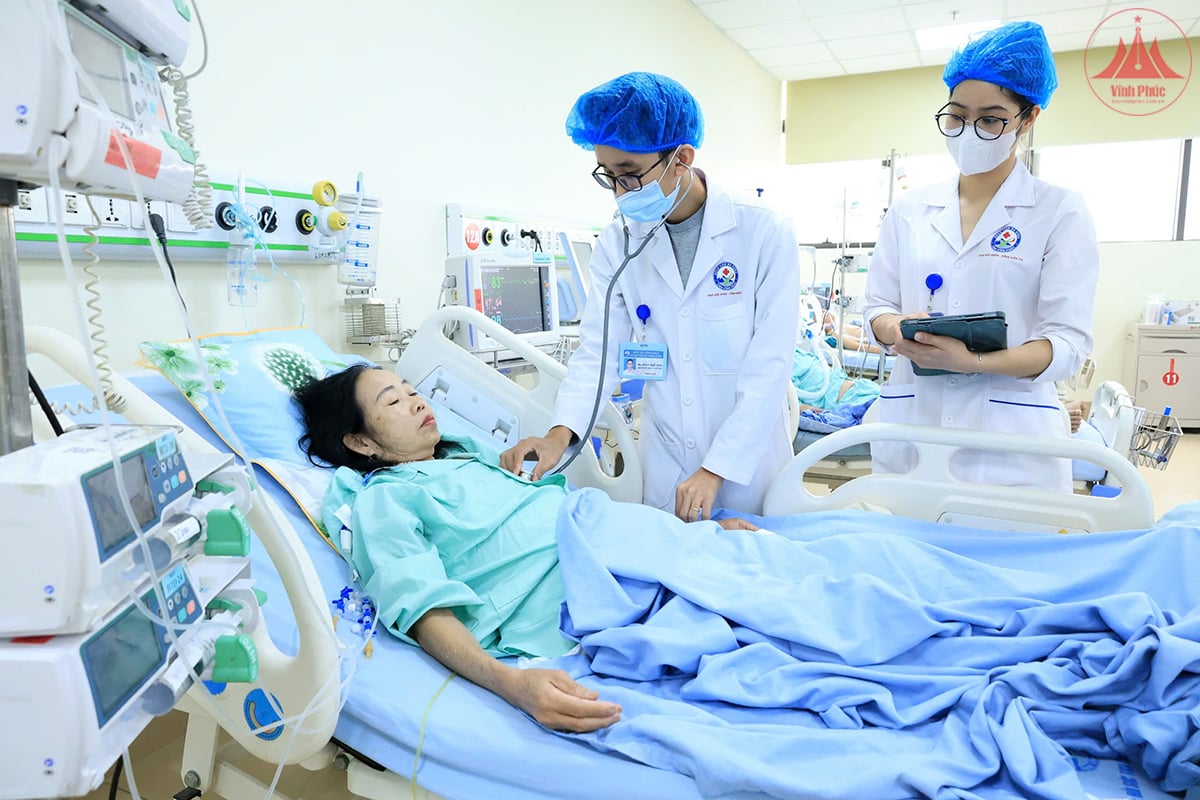
As one of the pioneering units in digital transformation in the healthcare sector, since 2022, the Provincial General Hospital has been piloting electronic medical records in some departments and wards, and expanding it throughout the entire hospital from 2023.
Currently, the hospital uses and stores electronic medical records instead of paper medical records, stores and transmits medical images instead of printing films, and stores test results instead of printing on paper.
The software and information technology systems at the Provincial General Hospital are seamlessly and synchronously connected across all stages, from patient reception and management, laboratory management, and medical decision support to pharmaceutical management and financial accounting. This eliminates the need for patients to store or carry numerous paper documents when seeking medical treatment, shortening the time required in all stages and processes of medical examination and treatment.
For healthcare professionals, electronic medical records save time and effort in handling administrative procedures, reduce errors in medical records, improve management efficiency, reform the medical examination and treatment process, and minimize the use of paper documents.
All patient information during the examination and treatment process, including image data and test results, is stored on the system, allowing doctors to access medical records quickly and comprehensively to provide appropriate and timely treatment.
Observations at the X-ray area of the Provincial General Hospital show that, thanks to the application of technology, patients no longer have to wait as long for their results as before.
Mr. Nguyen Van Hai, a patient who came for a check-up, said: “Previously, besides waiting for the X-ray, we also had to wait to receive the results, so we wasted quite a lot of time. Now, the images are automatically saved to a QR code, so doctors can view the patient's X-ray images and read the results from the examination room. When I go for follow-up appointments, I only need to bring the QR code; I don't have to worry about storing or carrying many files and documents like before.”
Similarly, at the Provincial Obstetrics and Pediatrics Hospital, the implementation of electronic medical records has helped to digitize all medical examination and treatment processes. All health information and medical history of patients are stored on the system, contributing to shortening the time for examination and treatment.
Ms. Nguyen Thi Huong from Khai Quang ward (Vinh Yen) said: “I chose the Provincial Obstetrics and Pediatrics Hospital for my prenatal checkups and also registered to give birth there because the hospital is a reputable and reliable healthcare provider in the fields of obstetrics and pediatrics. Furthermore, each time I go for a checkup, I don't need to keep ultrasound images or test results because all my medical records are stored in the hospital's software system.”
With the goal of continuously improving the quality of service to the people, the provincial health sector has strived to promote the application of information technology, digital transformation, and invest in facilities, equipment, and information technology infrastructure to support professional activities in a smart and modern direction.
Currently, 100% of the province's medical facilities have applied information technology to reduce waiting times and facilitate access to medical services for the public; 100% of medical facilities have implemented medical examinations and treatment using chip-embedded citizen ID cards and electronic payment of medical service costs; 100% of provincial and district-level medical units have deployed hospital management software and established data connections to facilitate the settlement and payment of medical insurance costs.
The province's healthcare system is always interconnected and integrated, ensuring timely professional support from provincial hospitals to district-level health centers and commune-level health stations. In addition, units have established online connections for professional development training, hands-on technology transfer, and remote consultations with central-level experts to handle difficult cases.
Along with efforts to implement electronic medical records, the electronic health record system is one of the important steps in the digital transformation of the healthcare industry. The system not only manages individual health but also integrates medical examination and treatment data with the electronic health record application used by citizens, providing doctors with comprehensive information about each patient's medical history, optimally supporting diagnosis and treatment.
All medical examination and treatment data at healthcare facilities is linked to the electronic health record system, creating a centralized and unified database. To date, more than 96% of the population – 1.2 million people – have had their personal health records created.
Building on the achievements, the provincial health sector continues to promote digital transformation in conjunction with administrative reform, aiming to build a modern, high-quality, equitable, efficient, and internationally integrated provincial health system; creating favorable conditions for people to access quality health services; and improving the effectiveness of healthcare and public health protection in the new context.
Le Mo
Source: http://baovinhphuc.com.vn/Multimedia/Images/Id/126511/Vi-loi-ich-nguoi-benh


![[Photo] President Luong Cuong receives Speaker of the Jordanian House of Representatives Mazen Turki El Qadi](/_next/image?url=https%3A%2F%2Fvphoto.vietnam.vn%2Fthumb%2F1200x675%2Fvietnam%2Fresource%2FIMAGE%2F2026%2F02%2F03%2F1770112220330_ndo_br_1-3704-jpg.webp&w=3840&q=75)


![[Photo] Prime Minister Pham Minh Chinh receives Philipp Rösler, Chairman of the Switzerland-Vietnam Economic Forum.](/_next/image?url=https%3A%2F%2Fvphoto.vietnam.vn%2Fthumb%2F402x226%2Fvietnam%2Fresource%2FIMAGE%2F2026%2F02%2F03%2F1770121222295_ndo_br_dsc-8709-jpg.webp&w=3840&q=75)


Comment (0)