Have you ever promised yourself, "I'll seriously diet starting tomorrow," only to find yourself unconsciously ordering a bubble tea with lots of toppings after a stressful meeting with your boss? Have you ever opened the refrigerator in the middle of the night when you weren't really hungry, just to find something sweet, creamy, crunchy, or spicy? It might not be your stomach that needs food, but your brain that needs soothing.
- What does emotional eating mean?
- Distinguishing between "physiological hunger" and "psychological hunger"
- Excess fat is sometimes a "symptom," not the root cause.
- Why is it so hard to stop eating junk food?
- HALT Technique: Pause for 5 seconds before eating.
- Craving replacement chart with zero-calorie self-soothing methods.
- 7-Day Plan to Overcome Emotional Eating
Emotional eating is not a sign of weakness. It's a very common coping mechanism when people are stressed, lonely, bored, angry, or exhausted.
The problem is that if food becomes the only "tranquilizer," excess fat will only be the tip of the iceberg. The real problem lies in unnamed emotions.
What does emotional eating mean?
Emotional eating is when you eat not because your body needs energy, but because your mind needs a pleasant feeling.
A pastry after a bad workday can provide comfort. A bag of snacks when you're lonely can ease the emptiness for a few minutes. A cup of bubble tea after being scolded can give your brain an instant reward.
This mechanism involves the brain's reward system. Foods high in sugar, salt, and fat often stimulate feelings of pleasure quickly. The brain learns: "When I'm sad, eating this will make me feel better." The next time stress strikes, the body automatically seeks out that food again.
This is why many people don't lose the battle with weight because of a lack of nutritional knowledge. They lose because they're using food to address a problem that isn't in their stomach.

Many people turn to bubble tea, pastries, or snacks after a stressful day not because they are actually hungry, but because their brains need a sense of calm.
Distinguishing between "physiological hunger" and "psychological hunger"
The most important thing to overcome emotional eating is knowing what kind of hunger you're experiencing.
| Physiological hunger | Psychological hunger |
|---|---|
| Come slowly | It came unexpectedly. |
| You can eat many different dishes. | I only crave one specific dish. |
| I felt full and satisfied after eating. | It's easy to feel guilty after eating. |
| There are bodily signals: stomach rumbling, fatigue, low energy. | Often appears after stress, boredom, or loneliness. |
| We can wait a little longer. | It felt very urgent, I had to eat right away. |
| Stop when you're full. | It's easy to overeat even when you're full. |
For example, if you're genuinely hungry, a meal with meat, vegetables, and soup might satisfy you. But if all you want is a glass of bubble tea, a slice of cake, a packet of snacks, or some fried food after being stressed, that's most likely psychological hunger.
Excess fat is sometimes a "symptom," not the root cause.
Many obese people live with persistent feelings of shame. They are criticized for being lazy, gluttonous, and undisciplined. This makes them even more ashamed, more self-blaming, and more likely to turn to food for comfort. The cycle continues.
Stress increases the need for quick rewards. Lack of sleep makes the body crave sweets and carbohydrates more quickly. Loneliness makes people more prone to mindless eating. Prolonged fatigue reduces self-control.
Therefore, a weight loss plan that consists solely of "fasting, cutting carbohydrates, and drinking juice" usually fails. It doesn't address the reason why you eat when you're not hungry. It only makes you hungrier, more stressed, and more prone to outbursts.
To achieve sustainable weight loss, you need to replace the question "Why am I so weak?" with the question "What am I trying to soothe with food?".
Why is it so hard to stop eating junk food?
It's no coincidence that many snacks are so addictive that you can't stop after just one bite.
The food industry understands exactly what the brain likes. Many ultra-processed products have their sugar, salt, fat, crispness, aroma, and aftertaste finely tuned to create maximum taste pleasure. This concept is often referred to as the "bliss point," which can be understood as the point of ecstatic taste.
When a dish reaches this point, it's not just delicious. It makes your brain crave more.
That's why:


- The more you eat of snacks, the more you crave them.
- The sweeter and creamier the milk tea, the harder it is to give up.
- Cookies, potato chips, and fried chicken can easily lead you to overeat.
- Ultra-processed foods are often easier to eat quickly than real food.
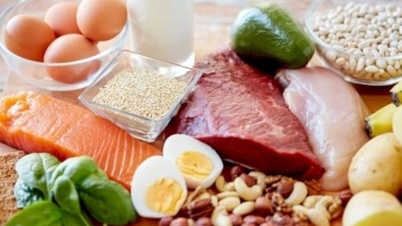
Natural foods often have clearer stop signals. For example, eating sweet potatoes, eggs, fish, vegetables, rice, beans, or whole fruits requires the body to chew, digest, and receive satiety signals. Meanwhile, ultra-processed foods are often soft, crunchy, strongly flavored, low in fiber, easy to swallow, and easy to overeat.
In other words, you're not just fighting the craving. You're fighting a food system designed to make the craving stronger.
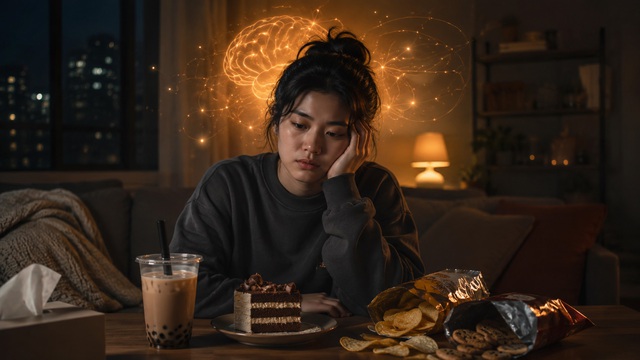
The HALT technique helps identify emotional hunger by asking yourself whether you are hungry, angry, lonely, or tired before eating.
HALT Technique: Pause for 5 seconds before eating.
Before eating what you call "sinful," pause for five seconds and ask yourself:
H – Hungry: Am I really hungry?
A – Angry: Am I angry?
L – Lonely: Am I lonely?
T – Tired: Am I tired?
If the answer is genuine hunger, then eat a decent meal.
If the answer is anger, loneliness, or fatigue, food may not be what you really need.
Craving replacement chart with zero-calorie self-soothing methods.
| Genuine emotions | What do you usually like to eat? | The alternative is possible. |
| Angry | Spicy, crispy, and salty | Take a brisk 10-minute walk and write down what's bothering you. |
| Lonely | Sweets, milk tea | Call a relative, text a friend. |
| Tired | Fatty foods, coffee with milk | Take a short nap of 15-20 minutes, then take a warm bath. |
| Boredom | Snacks, cookies | Clear the table, listen to podcasts, go outside and get some fresh air. |
| Stress | Eating continuously | Practice 4-7-8 breathing, stretch, and keep a journal. |
The goal isn't to forbid yourself from eating your favorite foods. The goal is to prevent emotions from driving your entire eating behavior.
7-Day Plan to Overcome Emotional Eating
Day 1: Keep a craving journal.
No need to change anything right away. Just write it down:
- What are you craving?
- What time of day do you crave it?
- What were you feeling before?
- Are you really hungry?
- How do you feel after eating?
After a few days, you'll see the "common denominator" of the cravings.
Day 2: Eat all main meals.
Emotional eating is even worse if you're both stressed and genuinely hungry. Make sure each meal includes:
- Protein: eggs, fish, lean meat, beans, plain yogurt.
- Fiber: whole vegetables, roots, and fruits.
- Good sources of carbohydrates: rice (in moderation), potatoes, oats, whole grains.
- Good fats: fatty fish, avocados, nuts, olive oil.
Day 3: Do not eat directly from the large bag.
If you want a snack, take a small portion and put it in a bowl. Don't hold the whole big bag in front of the screen. Eating from a large bag impairs the brain's ability to measure the amount you've eaten.
Day 4: Create an “emotional rescue box”
Prepare some non-food options:
- A small notebook.
- Earphone.
- Here is a list of 3 people you can call.
- Essential oils or hot, unsweetened tea.
- Walking shoes.
- A lightweight book.
When a craving strikes, use this box before ordering food.
Day 5: Clean up the environment



Don't expect the will to win 24/7. Help it fight less.
- Don't keep sweets on your desk.
- Don't keep snacks in your bedroom.
- Turn off food delivery apps at night.
- Prepare some fruit, plain yogurt, and a sufficient amount of nuts.
Day 6: Practice naming your emotions.
Instead of saying "I'm craving bubble tea," try saying:
- I'm stressed.
- I'm sad.
- I felt abandoned.
- I'm tired.
- I need a break.
When emotions are given names, they often become less frightening.
Day 7: Allow yourself to eat mindfully.
Absolute prohibition can easily lead to chaos. If you truly want to eat a favorite food, eat it mindfully:
- Sit down.
- Don't eat while using your phone.
- Eat slowly.
- Taste it.
- Stop when you've had enough.
Eating a piece of cake calmly is completely different from eating an entire box of cake in a guilty conscience.
Safety advice/notes
Emotional eating is a common coping mechanism, but if you frequently overeat, eat excessively in short periods, feel ashamed, need to hide it from others, or resort to self-harming behaviors like inducing vomiting, using laxatives, or extreme fasting afterward, you should seek help from a psychologist, nutritionist, or mental health professional. Weight loss shouldn't begin with body hatred. It should begin with understanding what your body is trying to protect you from.
Repeated weight loss failures don't necessarily mean you lack willpower. Perhaps you've been using food as a way to cope with stress, loneliness, boredom, or prolonged fatigue. In that case, excess fat isn't just a calorie issue; it's a signal that your body and mind need a different kind of care.
When you learn to distinguish between physiological and psychological hunger, understand the matrix of ultra-processed foods, and apply the HALT technique, your weight loss journey will be less arduous. You don't need to torture yourself to change. You need to listen to yourself better.
Source: https://suckhoedoisong.vn/vi-sao-stress-lai-them-do-ngot-169260615160229431.htm



![[Image] Ho Chi Minh City: Ma Lang area, Chicken-Rice Market about to change its appearance](https://vphoto.vietnam.vn/thumb/1200x675/vietnam/resource/IMAGE/2026/06/25/1782377698627_ndo_br_m1-jpg.webp)































![[Image] Schools organize meetings and introduce teaching models to students admitted to grade 10.](https://vphoto.vietnam.vn/thumb/1200x675/vietnam/resource/IMAGE/2026/06/25/1782368077271_ndo_br_z7970052192242-1ec8daeb77a6eed1a4e9f58c564ddd3e-jpg.webp)