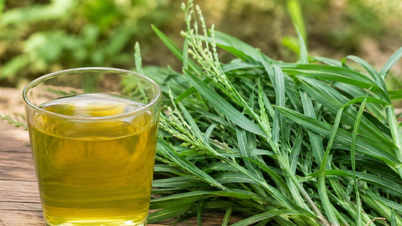
The juice of Eleusine indica is commonly consumed by people during the summer . Eleusine indica is a plant belonging to the grass family, often growing along roadsides, field edges, vacant lots, or dry, barren areas. Due to its vigorous growth, many consider it a difficult weed to eradicate in agricultural production.
- 1. Centella asiatica tea cools the body and quenches thirst.
- 2. Helps reduce fever.
- 3. Supports diuresis and eliminates fluids from the body.
- 4. Hair care support from Centella asiatica extract
- 5. Potential antioxidant and antibacterial properties from modern research.
In traditional medicine, Cynodon dactylon is known as wild chicken grass, scutellaria baicalensis, or heart-cooling grass; it has a sweet, slightly bitter taste and a cooling nature; it enters the liver meridian, promotes blood circulation, nourishes qi, acts as a diuretic, detoxifies, cools the liver, and enhances vitality; it is used in cases of weakness, abdominal distension, urinary retention, rheumatism, malaria, fever, liver heat, high blood pressure, encephalitis, meningitis, urinary tract infections, boils, etc.
Today, water infused with Centella asiatica is still widely used as a herbal drink, especially during the summer.
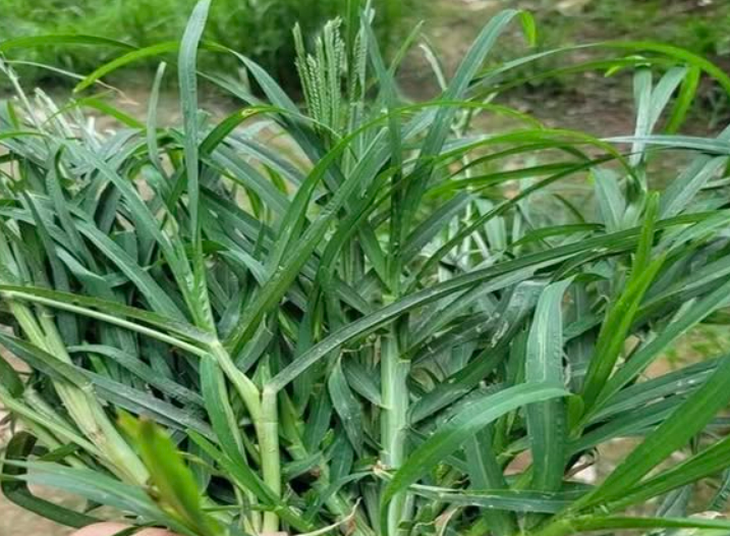
Image of Centella asiatica (Gotu Kola).
1. Centella asiatica tea cools the body and quenches thirst.
According to traditional medicine, Centella asiatica (Gotu Kola) has cooling properties, helping to soothe internal heat and support the body's balance in hot weather. Many families often boil Centella asiatica to make a tea-like herbal drink to quench thirst. In folk medicine, Centella asiatica is also combined with other familiar herbs such as Centella asiatica, Plantago major, Houttuynia cordata, or Imperata cylindrica root to enhance its heat-clearing effects.
2. Helps reduce fever.
One of the common applications of Centella asiatica is in decoctions used to help people with colds and fevers. According to folk experience, when symptoms such as mild fever, fatigue, or heatstroke appear, people often use Centella asiatica combined with Houttuynia cordata or Houttuynia cordata to make a drink.
Some studies suggest that Centella asiatica contains flavonoids and antioxidant compounds with certain biological activity. However, there is currently insufficient clinical evidence to confirm that Centella asiatica can treat infectious diseases or replace fever-reducing medication.


![[Video] Exploring the interior of Bach Mai Hospital's Ninh Binh branch](https://vphoto.vietnam.vn/thumb/192x108/vietnam/resource/IMAGE/2026/06/26/1782432918694_bach-mai-jpg.webp)
Experts advise that if a high fever persists or there are any unusual symptoms, patients should seek medical attention at a healthcare facility instead of relying solely on folk remedies.
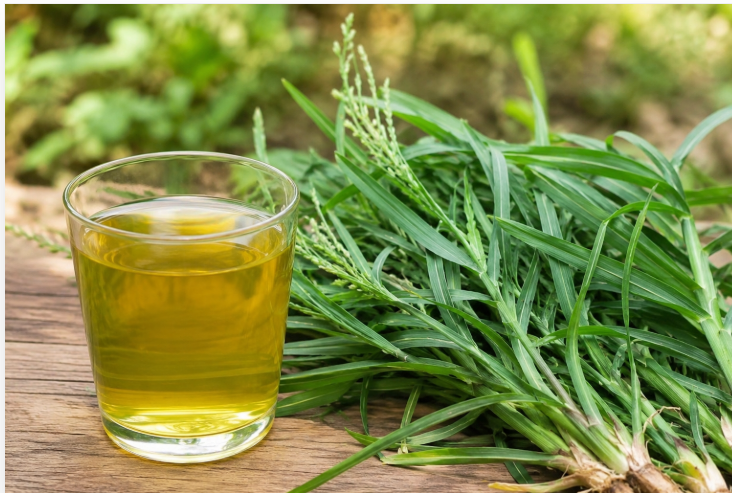
Water from the water spinach plant.
3. Supports diuresis and eliminates fluids from the body.
According to traditional medicine, Centella asiatica has a mild diuretic effect. Thanks to this property, Centella asiatica juice is often used in remedies to help people with symptoms of internal heat, infrequent urination, or a feeling of heat accumulation in the body.
Increasing fluid intake combined with the mild diuretic effect of the herbal remedy may help facilitate the elimination of metabolic waste products. However, individuals with kidney disease or those undergoing treatment for chronic conditions should consult their doctor before regular use.
4. Hair care support from Centella asiatica extract
Besides being consumed orally, Centella asiatica is also used in traditional folk remedies for hair care. Many people combine Centella asiatica with grapefruit peel, soapberry, or basil to make a hair wash. According to folk experience, this method helps cleanse the scalp and reduce hair breakage and loss. In addition, some traditional remedies combine Centella asiatica with Rehmannia glutinosa, Eucommia ulmoides, or mulberry to support hair health from within.
However, there are currently no high-quality clinical studies proving that Centella asiatica extract can turn gray hair back to black or effectively treat conditions that cause hair loss.
5. Potential antioxidant and antibacterial properties from modern research.
Several studies in recent years have shown that Centella asiatica contains many bioactive compounds such as flavonoids, alkaloids, and polyphenols. These compounds have been noted to have antioxidant properties and exhibit antibacterial activity under laboratory conditions. This provides a basis for scientists to continue researching the potential applications of this medicinal plant in the future.



However, most current studies are still at the experimental stage. Therefore, more human studies are needed to accurately assess the effectiveness and safety of long-term use.
To ensure safety, residents should note:
- Only harvest grass in clean areas, avoiding areas where pesticides have been sprayed or near sources of pollution.
- Wash thoroughly before use.
- Do not misuse or use as a substitute for prescribed medication.
- Pregnant women, people with chronic illnesses, or those taking medication should consult a healthcare professional before regular use.
- Discontinue use if any unusual symptoms appear.
Readers are invited to read more:
Source: https://suckhoedoisong.vn/nuoc-co-man-trau-co-tac-dung-gi-169260626075924168.htm








































![[Image] Ho Chi Minh City: Ma Lang area, Chicken-Rice Market about to change its appearance](https://vphoto.vietnam.vn/thumb/1200x675/vietnam/resource/IMAGE/2026/06/25/1782377698627_ndo_br_m1-jpg.webp)