

Atopic dermatitis is a skin condition that develops when the body comes into contact with harmful allergens from the environment. It is the immune system's reaction to external agents. Upon contact with an irritant, the body reacts with inflammatory skin manifestations such as itching, redness, rashes, or hives, often in dense clusters.
- 1. Causes of atopic dermatitis
- 2. Symptoms of atopic dermatitis
- 3. Effective treatment for atopic dermatitis
- 4. What foods should be avoided if you have atopic dermatitis?
- 5. Preventing recurrent atopic dermatitis.
1. Causes of atopic dermatitis
Atopic dermatitis can occur at any age and in both sexes. The disease is often persistent, complex, and stems from various factors, including both intrinsic causes and external environmental influences.
- Genetic factors: Numerous studies have shown a strong link between atopic dermatitis and genetics. Children whose parents have had the condition have approximately a 25% higher risk of developing atopic dermatitis.
- Unpredictable weather changes: This is a common cause of seasonal atopic dermatitis. Changes in weather increase allergens and create favorable conditions for bacteria to thrive.
- Gender: Women are at a higher risk of developing the disease than men.
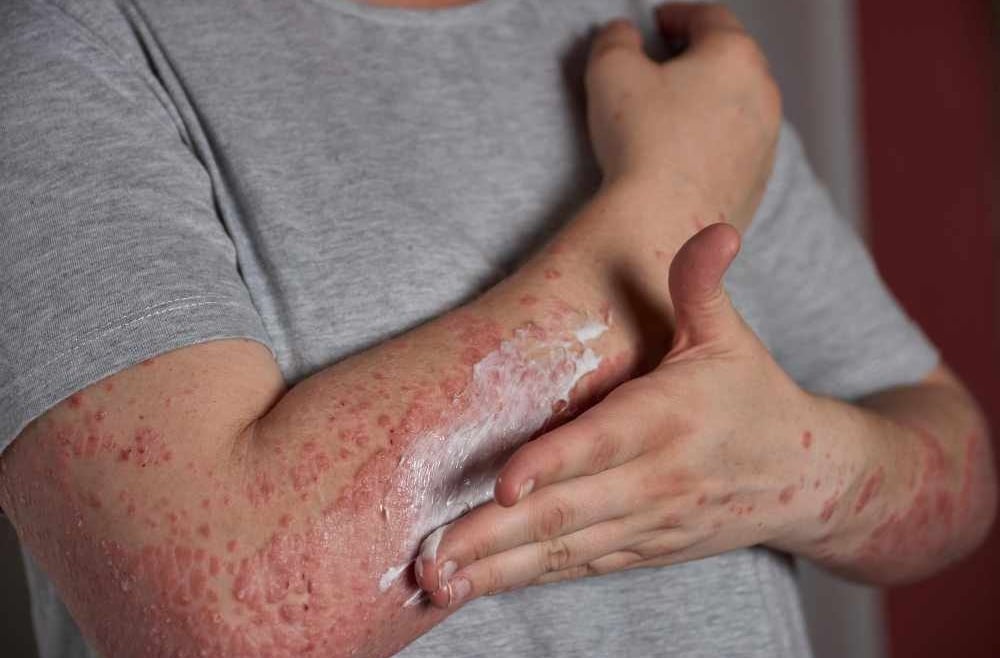
Atopic dermatitis is a skin condition that develops when the body comes into contact with harmful allergens from the environment.
- Age: Atopic dermatitis in young children tends to flare up more severely when the mother gives birth at an older age.
- Diet: Many people have restrictive or nutrient-deficient diets, leading to dehydration and dry, rough skin, which reduces the amount of ceramide – the skin's natural moisturizing component. This can easily lead to atopic dermatitis.
- Allergic predisposition: Allergies to food, chemicals, cosmetics, etc., can lead to atopic dermatitis.
- Unhealthy lifestyle habits: Staying up late and prolonged insomnia weaken the immune system, leading to atopic dermatitis.
- Other causes include: allergies to weather changes, animal dander, chemicals, cosmetics, etc.
2. Symptoms of atopic dermatitis
The most common initial symptoms of atopic dermatitis are itching and redness of the skin. Later, the skin may become rough, flaky, and inflamed. These symptoms often appear on the backs of the arms, elbows, knees, cheeks, and scalp.
In addition, people with atopic dermatitis may experience the following symptoms:
- Dark or reddish-gray patches of skin appear.
- Small blisters may appear, which may ooze fluid when they burst (a warning sign of infection).
- Dry, flaky, or blistered skin.
- Severe cases may be accompanied by loss of appetite, fever, fatigue, and malaise.
3. Effective treatment for atopic dermatitis
Atopic dermatitis is a difficult condition to control due to the presence of numerous allergens in the air, environment, and food. Treatment methods depend on the cause of the disease and the extent of skin damage.
Patients should see a dermatologist as soon as symptoms appear to prevent the disease from progressing and becoming more difficult to treat later. Medication and treatment regimens must be followed strictly as prescribed by the doctor.
Besides medication, patients can support skin care by using natural ingredients such as betel leaves, green tea, starfruit leaves, etc., washing them thoroughly and boiling them in water to use as a bath or wash for the affected skin area.
4. What foods should be avoided if you have atopic dermatitis?
Diet and lifestyle have a significant impact on the skin's recovery process. People with atopic dermatitis should take note:
- Limit your intake of spicy, greasy, fried, and heavily seasoned foods.
- Avoid excessive consumption of alcohol, alcoholic beverages, and stimulants, as these can impair liver and kidney function and lead to the accumulation of toxins in the body.
- Animal milk (cow, goat, sheep, etc.) should be replaced with plant-based milks from walnuts, black sesame seeds, soybeans, corn, etc.
- Limit exposure to chemicals, solvents, detergents, perfumes, cosmetics, or skincare products containing ingredients that may cause irritation.
- Avoid excessive consumption of coffee and alcohol, and manage prolonged stress.
In addition, it is necessary to: Increase fiber intake in daily meals; supplement with vitamins A, D, C, and zinc to help regenerate skin cells, heal injuries, and reduce scarring; and drink enough water every day, about 2-2.5 liters depending on weather conditions and physical condition.
5. Preventing recurrent atopic dermatitis.
Atopic dermatitis can recur at any time if not properly cared for. Therefore, proactive prevention plays a crucial role in long-term disease control.
- Maintain daily personal hygiene by using warm water, but avoid showering for too long (ideally 10-15 minutes).
- Wear loose-fitting, breathable clothing made of absorbent material.
- Avoid scratching or rubbing the affected area vigorously.
- Keep your living environment clean and well-ventilated.
- Get enough sleep to boost your immune system.
- Avoid contact with strong cleaning chemicals such as soap, dishwashing liquid, floor cleaner, etc.
- Maintain a suitable exercise routine and avoid prolonged contact of sweat with the inflamed skin area.
Source: https://suckhoedoisong.vn/viem-da-di-ung-kieng-gi-169260122163702133.htm


![[Photo] Standing Committee member of the Party Central Committee Tran Cam Tu presents the Decision appointing the Secretary of the Party Committee of the Ho Chi Minh National Academy of Politics.](/_next/image?url=https%3A%2F%2Fvphoto.vietnam.vn%2Fthumb%2F1200x675%2Fvietnam%2Fresource%2FIMAGE%2F2026%2F02%2F02%2F1770039902160_le-cong-bo-bt-hvctqg-11-7880-jpg.webp&w=3840&q=75)


![OCOP during Tet season: [Part 3] Ultra-thin rice paper takes off.](/_next/image?url=https%3A%2F%2Fvphoto.vietnam.vn%2Fthumb%2F402x226%2Fvietnam%2Fresource%2FIMAGE%2F2026%2F01%2F28%2F1769562783429_004-194121_651-081010.jpeg&w=3840&q=75)



Comment (0)