

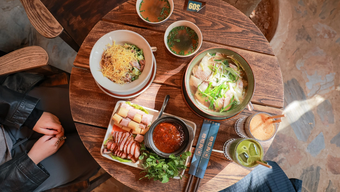
- The unique longevity noodles of the Chinese people.
- Unlocking the tourism potential of traditional Chinese pastries.
- The Chinese custom of worshipping the Door God.
According to the lunar calendar, this year's Winter Solstice falls on Sunday, December 21st (corresponding to the 2nd day of the 11th lunar month of the Year of the Snake). Since ancient times, the custom of celebrating the Winter Solstice has been a unique cultural tradition of the Chinese people and was brought to Vietnam by the Chinese community during their migration and cultural exchange.
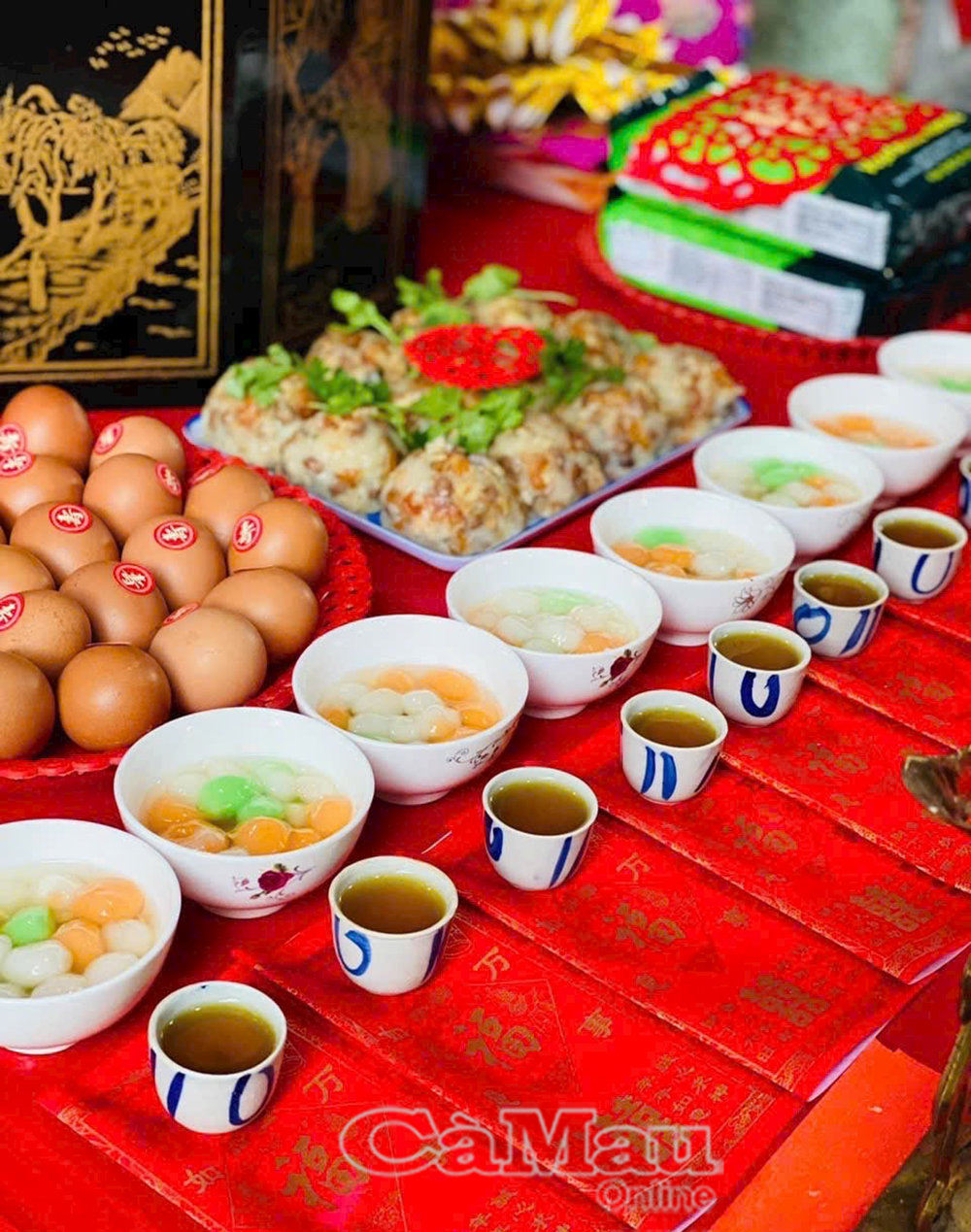 Che Y (small glutinous rice balls) are only offered to ancestors on the winter solstice. Photo: FAMILY
While a year is traditionally divided into four seasons and twelve months, in ancient Chinese philosophy, time was divided into 24 solar terms, each lasting approximately 15 days, marking the transition between seasons and changes in climate. Winter alone had five solar terms: Minor Snow, Major Snow, Winter Solstice, Minor Cold, and Major Cold, each reflecting the distinct characteristics of winter weather.
The "winter solstice" is understood as the peak of winter, but not the coldest time of year. Rather, it marks an astronomical milestone when the Earth revolves around the Sun. On the winter solstice, the Northern Hemisphere experiences short days and long nights, while the Southern Hemisphere experiences the opposite. This unique characteristic has given rise to many folk customs associated with the winter solstice celebration.
Traditionally, the Chinese often cook glutinous rice balls in sweet soup at night to offer as a sacrifice during the Winter Solstice, to distinguish it from New Year's Eve of the Lunar New Year. The day before the Winter Solstice is also called "Thiem Tue" or "A Tue," meaning that although the year hasn't ended yet, they are already celebrating another year. Therefore, the Winter Solstice is also seen as an occasion to bid farewell to the old year and welcome the new year earlier than the Lunar New Year.
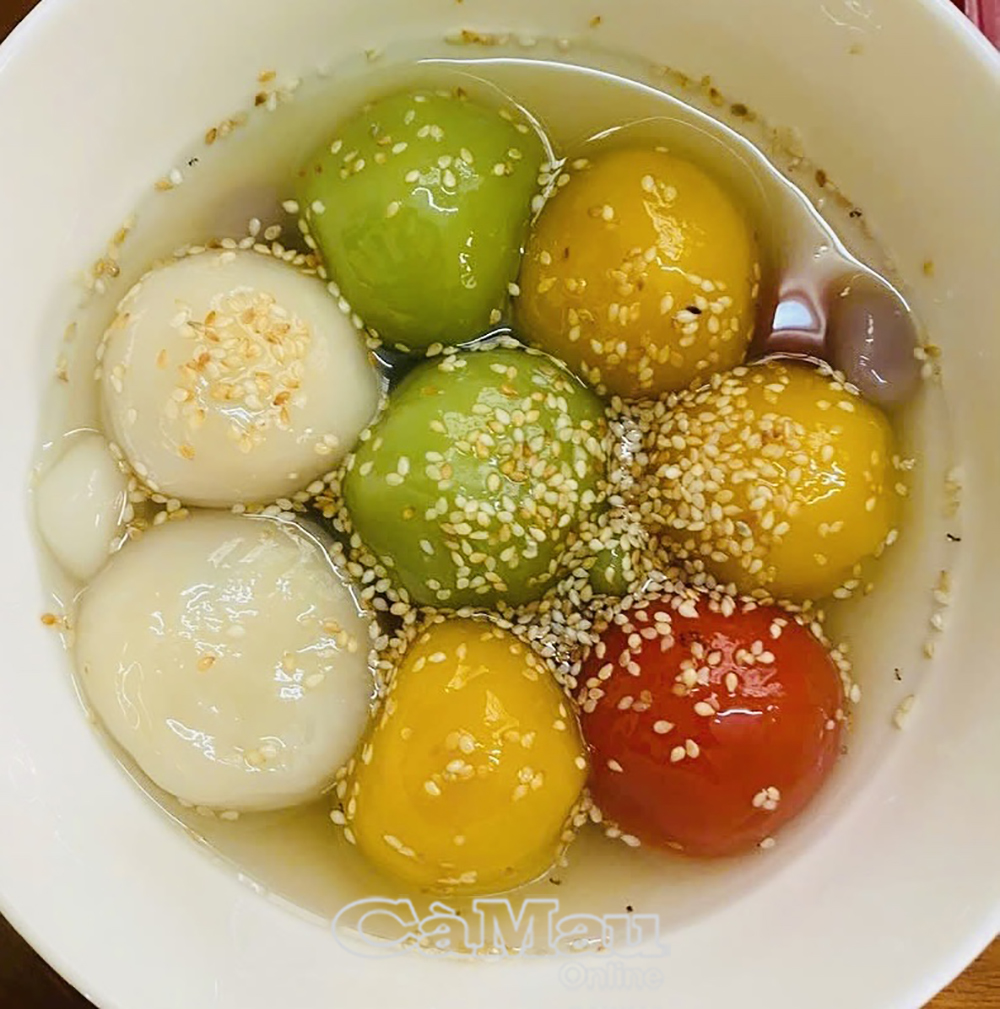 Floating rice dumplings symbolize fulfillment. Photo: FAMILY
With that same meaning, the Winter Solstice has become a festival of reunion, an occasion for those working far from home to return and gather with their families. On this day, glutinous rice balls in sweet soup are not only a traditional dish but also carry auspicious cultural symbols. According to the yin-yang philosophy, glutinous rice balls in sweet soup are usually eaten in pairs, symbolizing togetherness, completeness, and fulfillment.
In particular, in the Teochew dialect, the word "y" means complete, so glutinous rice balls in sweet soup are also associated with the blessing ritual in wedding ceremonies. According to custom, the bride and groom feed each other glutinous rice balls in sweet soup, wishing for a happy and lasting married life.
Originating from the meaning of fulfillment, in addition to the large glutinous rice balls, the Chinese also make small pink or red balls, called small glutinous rice dumplings. These dumplings are not only used for ancestor worship but are also strung onto incense sticks placed in front of doors, pasted onto rice jars, water containers, livestock pens, and even planted in fields, with the hope that life will always be abundant, prosperous, and that everything will be auspicious and fulfilling.
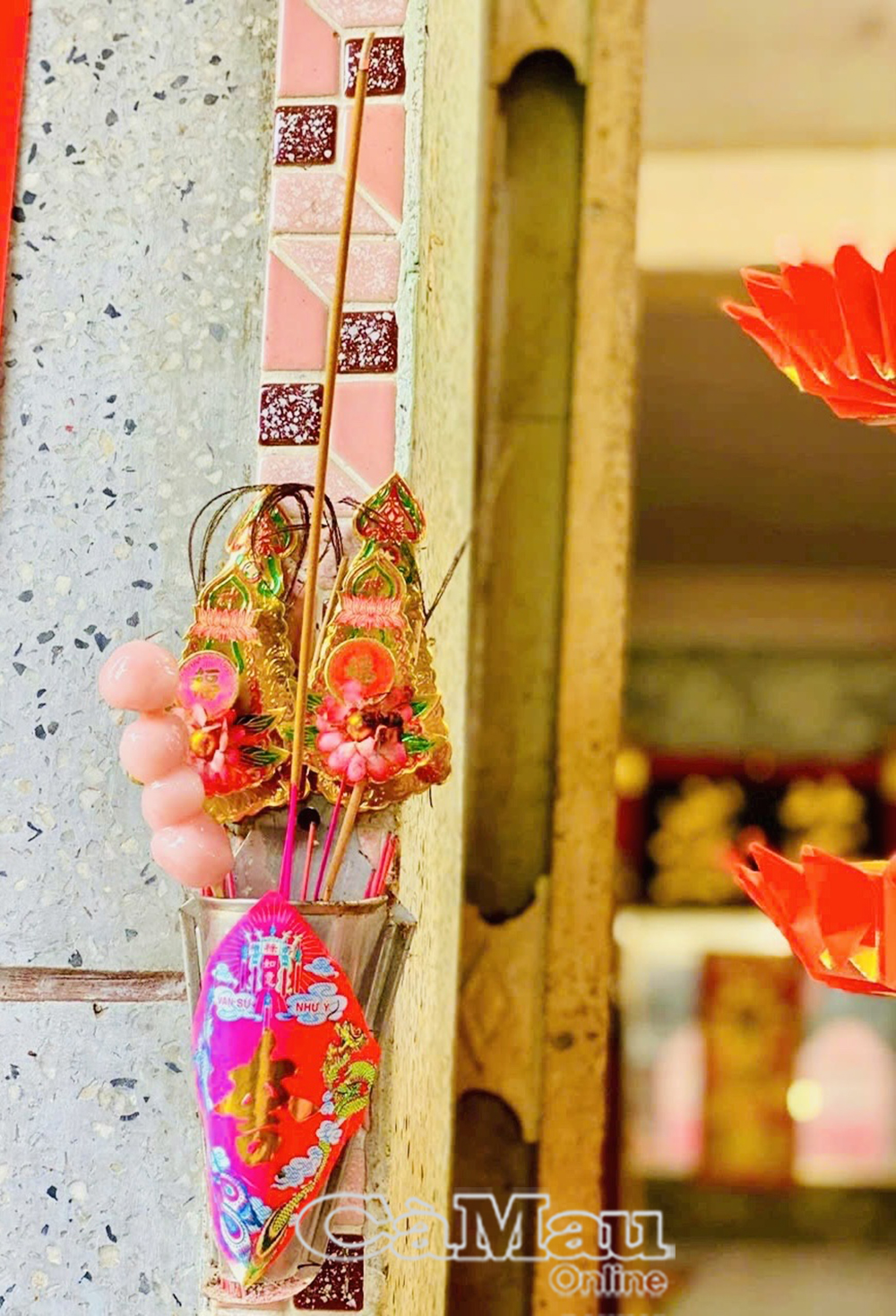 Small glutinous rice balls are strung onto incense sticks and placed on either side of the main gate in front of a Chinese house. Photo: FAMILY
The Winter Solstice, or the Reunion Festival, is truly a beautiful custom rich in humanistic values, reflecting the aspiration for happiness and the bonding of family and community. In the chilly weather of the year-end, the image of generations gathering around the fire, making rice cakes, cooking sweet soup, and enjoying a reunion meal has created a warm and enduring beauty in the cultural life of the Chinese community.
Lam Hy
Source: https://baocamau.vn/vien-man-cat-tuong-cung-tet-dong-chi-a124796.html


![[Photo] Prime Minister Pham Minh Chinh presides over the conference announcing the establishment of the International Finance Centre in Vietnam.](/_next/image?url=https%3A%2F%2Fvphoto.vietnam.vn%2Fthumb%2F1200x675%2Fvietnam%2Fresource%2FIMAGE%2F2025%2F12%2F21%2F1766309817714_ndo_br_dsc-3400-jpg.webp&w=3840&q=75)


![[Photo] Prime Minister Pham Minh Chinh presides over a meeting on private sector economic development.](/_next/image?url=https%3A%2F%2Fvphoto.vietnam.vn%2Fthumb%2F1200x675%2Fvietnam%2Fresource%2FIMAGE%2F2025%2F12%2F20%2F1766237501876_thiet-ke-chua-co-ten-40-png.webp&w=3840&q=75)






































Comment (0)