

Enhancing the effectiveness of Party building work.
On the afternoon of June 24, 2025, the 15th Party Congress of the Vietnam Institute of Nuclear Energy for the 2025-2030 term was held in Hanoi. Comrade Le Xuan Dinh, Member of the Standing Committee of the Party Committee and Deputy Minister of Science and Technology, attended and delivered a keynote address at the conference.
The Party Congress of the Vietnam Institute of Nuclear Energy for the 2025-2030 term is of special importance. This is an opportunity for the entire Party Committee to objectively and comprehensively review and evaluate the achievements of the past term, and to clearly define the direction, goals, and tasks for the new term. At the same time, it will select and elect a Party Committee Executive Board for the 2025-2030 term with sufficient qualities, capabilities, and prestige to lead and successfully implement the Resolution of the Congress.
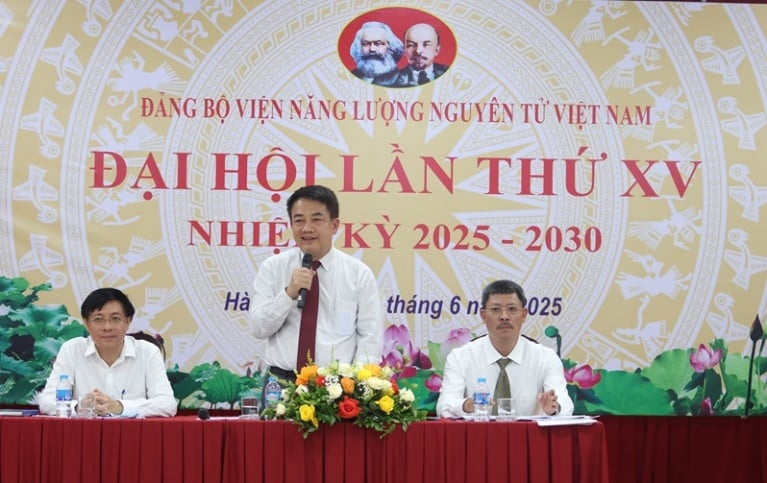
Presidium of the Congress.
Presenting the Political Report at the Congress, Comrade Tran Chi Thanh - Secretary of the Party Committee and Director of the Vietnam Institute of Nuclear Energy - stated that during the past term, the Institute's Party Committee had successfully completed its assigned tasks, maintained internal unity, and effectively promoted its leadership role in carrying out professional tasks and Party building work.
Party committees at all levels have proactively reformed their leadership methods, fostered a sense of responsibility, strengthened ideological work, and contributed to internal stability. Party building work has achieved many positive results, especially in the following areas: organizational work, inspection and supervision, resolution study, moral training, and improving the quality of branch meetings.
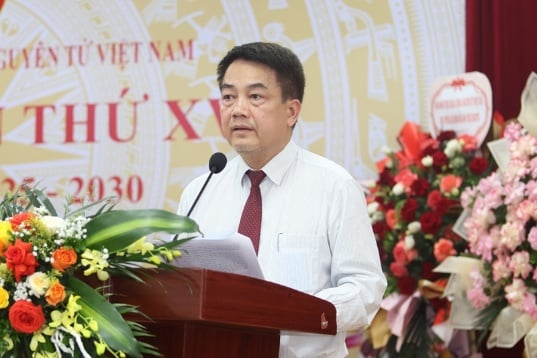
Comrade Tran Chi Thanh - Secretary of the Party Committee and Director of the Vietnam Institute of Nuclear Energy - presented the political report.
Internal unity continues to be strengthened, especially within Party committees at all levels, playing a crucial role in directing the implementation of political tasks. Party membership development has seen many positive changes, particularly among young cadres. Approximately 80% of Party organizations within the Institute have implemented the unification of Party and Government leadership positions, contributing to improved management and operational efficiency.
Mass organizations such as the Trade Union, the Youth Union, and the Veterans Association operate effectively, contributing to strengthening national unity, promoting emulation movements, monitoring, and mobilizing the masses to actively participate in building the unit.
Building a strong team - Creating a foundation for sustainable development.
During the 2025-2030 term, the Party Committee of the Vietnam Institute of Nuclear Energy has identified key objectives and tasks aimed at improving the efficiency of professional work, building a strong Party organization, and developing high-quality human resources to meet the requirements of sustainable development of the nuclear energy sector.
The Institute aims to effectively implement national, ministerial, and institutional-level programs, projects, and initiatives linked to the sustainable development goals of the nuclear energy sector. Priority areas include: healthcare, industry, agriculture , environment, and radiation safety.
The institute also focuses on improving the quality of scientific research by promoting international publications, registering intellectual property, transferring technology, and commercializing research products. Alongside this, it aims to develop modern technical infrastructure, master technology, and be ready to participate in future nuclear power programs.
One of the key solutions is to develop a plan for training specialized personnel in accordance with the Nuclear Energy Application Development Strategy, preparing resources for key projects in the 2025-2030 period. The Institute will continue to improve the research ordering mechanism, identify and assign scientific tasks that closely match practical needs, and coordinate with businesses to bring research results into application.
Regarding political, ideological, and moral education for cadres and Party members, the Institute's Party Committee continues to strictly implement the Party's Directives and Resolutions, especially Resolution No. 4 of the Central Committee (12th and 13th terms) on Party building and rectification. The focus is on strengthening political, ideological, moral, and Ho Chi Minh-style education, creating positive changes in the awareness and actions of cadres and Party members.
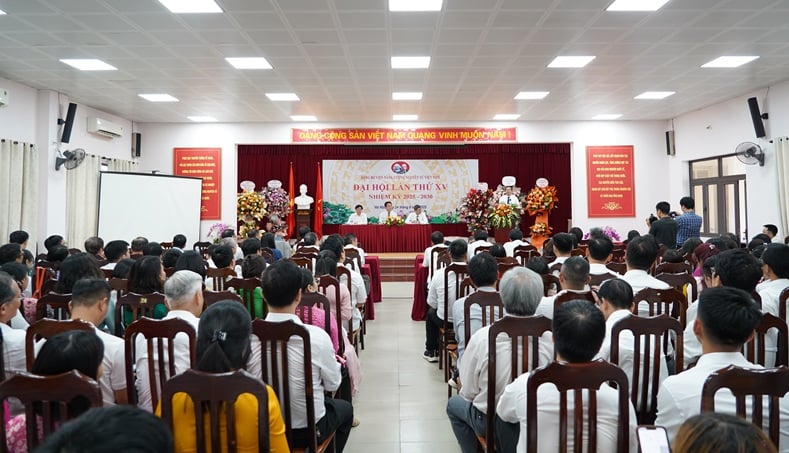
Overview of the Congress.
Each party member will make a commitment to cultivating ethical conduct and enhancing personal responsibility. The Party branch is responsible for monitoring and evaluating the results of implementation periodically. Regular monitoring of cadres' thoughts and feelings will be carried out, contributing to maintaining internal unity.
To innovate organizational and personnel management and enhance leadership effectiveness, the Institute continues to focus on planning, training, and developing its staff, especially young staff and scientific management personnel. Staff evaluation will be reformed to prioritize professional competence, political integrity, and work efficiency. The goal is to build a leadership and management team at all levels with strong character, in-depth expertise, and a high sense of responsibility.
The Institute's Party Committee is committed to consistently implementing the principle of democratic centralism in Party organization and activities. Inspection, supervision, and self-criticism will be carried out seriously and effectively. At the same time, the quality of regular and thematic Party branch meetings will be improved, and the recruitment of new Party members, especially among young scientific staff, will be promoted.
Strengthening mass mobilization work and the close relationship between the Party and cadres, officials, and workers aims to leverage collective strength in fulfilling political tasks.
Regarding the role of mass organizations in building a dynamic and creative work environment, organizations such as the Trade Union, the Youth Union, and the Veterans Association will continue to be oriented towards activities linked to professional tasks and caring for the material and spiritual well-being of cadres and members. Mass organizations at all levels will promote their role in social supervision and criticism, contributing to building a democratic, disciplined, and creative work environment.
The political report clearly states that the Institute has set the following targets for the 2025-2030 term: 100% of cadres and Party members will fully study and understand the resolutions and directives of the Party; recruit 30-35 new Party members, prioritizing young cadres and scientific staff; achieve a minimum of 90 international publications per year, increasing the number of recognized inventions and useful solutions; 100% of Party branches will successfully complete their tasks, with at least 20% achieving outstanding performance; 100% of grassroots Party organizations will meet the standards of being clean and strong, with 15% meeting the standards of being exemplary; and ensure improved income, material and spiritual well-being for all cadres and staff of the Institute.
Defining our mission in the new context
In his directive speech at the Congress, Deputy Minister Le Xuan Dinh requested that Party committees and leaders of the Institute uphold a high sense of responsibility and exemplary conduct, create breakthroughs in innovative thinking, determine political determination, and resolutely implement major orientations, creating a new momentum for the entire sector.
The Institute needs to reaffirm its role as a leading research and development center in Vietnam and the ASEAN region for nuclear technology and nuclear energy, gradually expanding its reach internationally. At the same time, it should focus on mastering core and strategic technologies, especially in research that creates high added value from uranium, rare earth elements, and products with significant socio-economic impact.
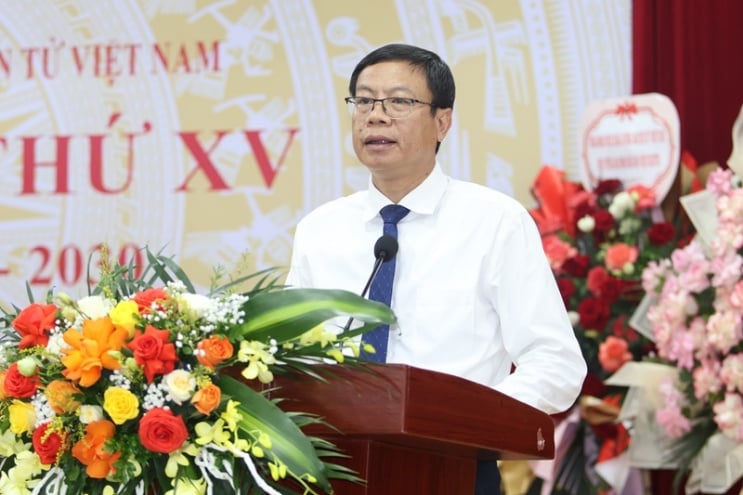
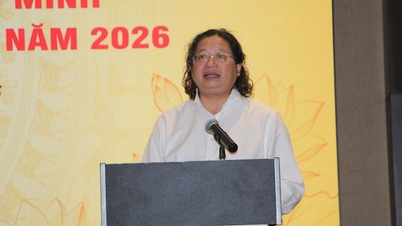
Deputy Minister of Science and Technology Le Xuan Dinh delivered a speech at the Congress.
The Deputy Minister particularly emphasized encouraging breakthrough research and a willingness to take risks in science and technology; strengthening international cooperation to attract technology, capital, and high-quality human resources; and connecting businesses to accelerate the application of research results into practice.
The institute needs to promote the commercialization of research products, technology transfer, and flexible operation under a self-reliant model equivalent to a business. Along with this, it needs to improve its organizational structure, develop a team of leading experts, and enhance its research, training, and technical support capabilities for the entire country.
The Deputy Minister proposed continuing to develop the facility in Da Nang into a leading nuclear energy research and application center in the Central region, following international research and development models. At the same time, key laboratories such as the Da Lat nuclear reactor and other technical facilities should be upgraded to meet international standards.
In terms of strategic direction, the Institute needs to focus on researching, designing, and mastering the technology of new generation reactors, such as the 10MW reactor at the Nuclear Science and Technology Research Center in Dong Nai, and developing small-capacity modular reactor (SMR) models to serve future clean energy needs.
The institute is also tasked with completing and operating the national environmental radiation monitoring and warning network, and researching the expansion of the network to align with the nuclear power development roadmap.
The Deputy Minister affirmed that the Institute needs to play a leading role in developing national policies and standards on nuclear energy, linked to the goals of sustainable development and green growth, aiming to contribute 10-20% of the total national electricity production from nuclear sources.
Another important task is to promote comprehensive digital transformation in management, from research and development to finance, administration, and support for state management in the field of nuclear energy, ensuring efficiency, transparency, and optimal resource utilization.
In addition, the Institute needs to strengthen communication and raise public awareness about the role, applications, and potential of nuclear energy, creating consensus in research and implementation of nuclear projects.
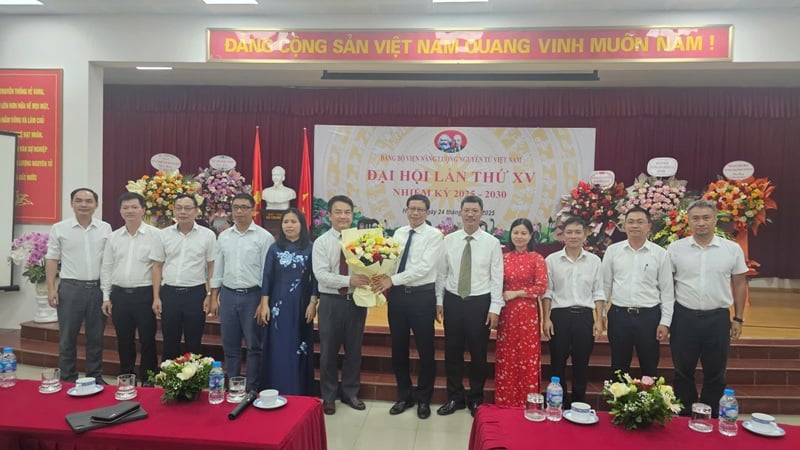
The Executive Committee of the Party Committee of the Vietnam Institute of Nuclear Energy for the term 2025-2030 has been introduced.
Regarding Party building work, the Deputy Minister requested the Institute's Party Committee to continue consolidating a strong Party organization, enhancing the leadership capacity and fighting strength of the grassroots organization, and improving the quality of Party members. Particular attention should be paid to developing new Party members from among intellectuals and young cadres with good qualities, capabilities, and a spirit of dedication.
The Deputy Minister emphasized the need to promote the exemplary role of officials and Party members, especially those in leadership positions; strengthen close ties with the masses; and build unity, cohesion, and positive influence throughout the Institute.
Finally, the Institute needs to seriously implement the Party's regulations and State laws on preventing and combating corruption and negative practices; at the same time, it should continue to streamline its organizational structure to ensure efficient and effective operation, in line with the development requirements of the new era.
Source: https://mst.gov.vn/vien-nang-luong-nguyen-tu-viet-nam-can-tao-dot-pha-tu-duy-lam-chu-cong-nghe-chien-luoc-197250625062340102.htm


![[Photo] Prime Minister Pham Minh Chinh presides over the conference announcing the establishment of the International Finance Centre in Vietnam.](/_next/image?url=https%3A%2F%2Fvphoto.vietnam.vn%2Fthumb%2F1200x675%2Fvietnam%2Fresource%2FIMAGE%2F2025%2F12%2F21%2F1766309817714_ndo_br_dsc-3400-jpg.webp&w=3840&q=75)

![[Photo] Prime Minister Pham Minh Chinh presides over a meeting on private sector economic development.](/_next/image?url=https%3A%2F%2Fvphoto.vietnam.vn%2Fthumb%2F1200x675%2Fvietnam%2Fresource%2FIMAGE%2F2025%2F12%2F20%2F1766237501876_thiet-ke-chua-co-ten-40-png.webp&w=3840&q=75)



















































Comment (0)