

A place where literature questions itself.
If we had to point to a spiritual starting point for Writing & Reading, it wouldn't be the substantial body of criticism, poetry, short stories, and novellas that follows, but rather the "Editor's Letter" placed at the beginning of each issue. There, poet Nguyen Quang Thieu – Director and Editor-in-Chief of the Vietnam Writers Association Publishing House, the person who initiated and is responsible for the publication – doesn't write the "Editor's Letter" as a typical introduction to the publication, but rather undertakes a different task: to re-examine the fundamental questions about literature and reading.
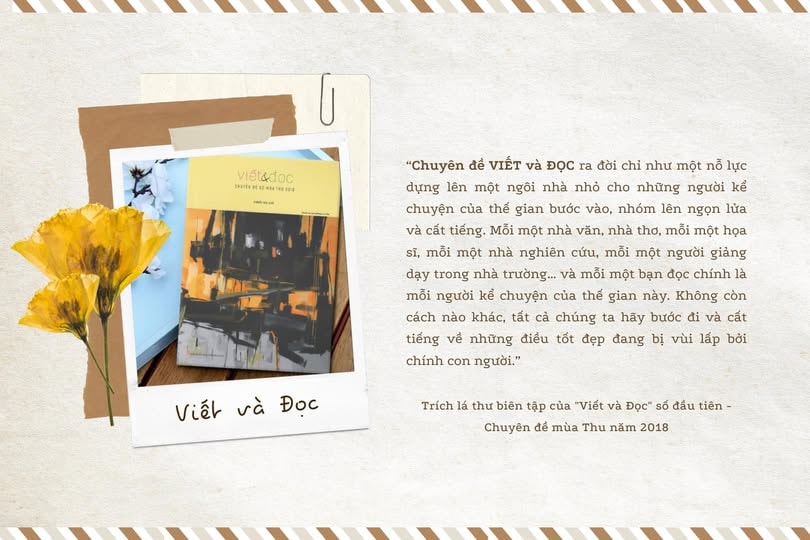
Let's recall "The Storytellers of the World" - "Editorial Letter" published in the first issue of Writing & Reading in 2018. Years have passed, and what is noticeable is not the staleness of the text, but the feeling that it still speaks to the burning issues of the present.
Poet Nguyen Quang Thieu begins with a cinematic narrative – a seemingly distant detail that quickly draws the reader back to the heart of human life: the never-ending struggle between good and evil, between light and darkness. There, "storytellers" are placed in a special position; they are not merely creators of art but those who keep "the Earth's axis rotating." Literature, in this perspective, is no longer a mere intellectual pastime or professional activity, but becomes a condition for humanity's existence.
“ Storytellers are not allowed to be silent or to run away. Even if there is only one storyteller left in the world, that person must still walk day after day in this chaotic and indifferent ‘human world ’ to tell beautiful stories… Tell stories even if there is only one listener left in this world, and then that person will tell another, and another. Stories filled with the beauty of life will quietly spread… The Writing & Reading special feature was created as an effort to build a small house for the storytellers of the world to enter, to light the fire and raise their voices. Every writer, poet, painter, researcher, teacher in schools… and every reader is a storyteller of this world.”
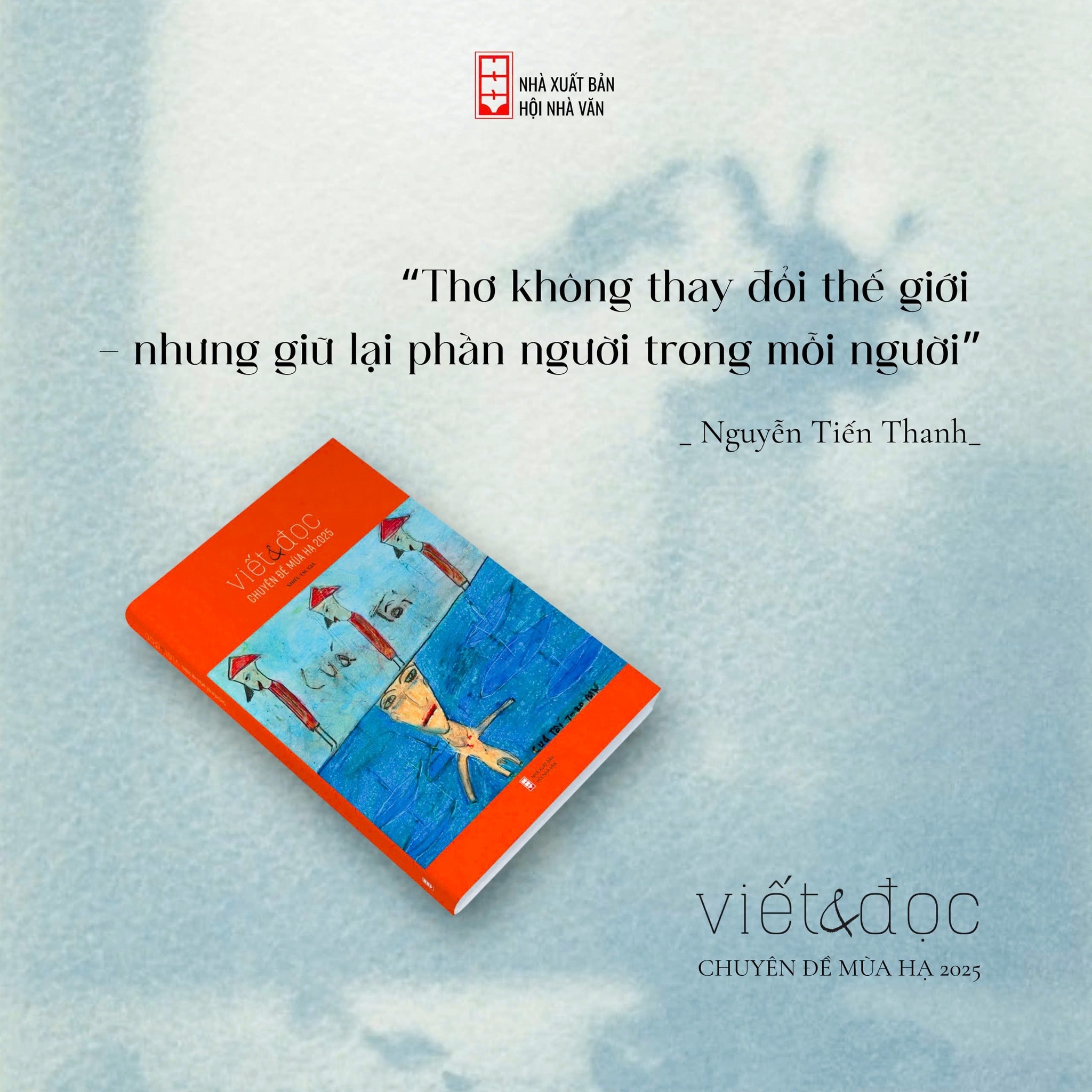
The "editorial letters" of Writing & Reading are usually short, but readers rarely find them easy to read in the conventional sense. They don't provide information, aren't informative, and certainly don't have a "directive" tone. They are reflective texts where the writer engages in self-dialogue and invites the reader to participate in that dialogue. Poet Nguyen Quang Thieu often begins with very real observations, relatable stories, and from there opens up profound thoughts about the writer's responsibility, the reader's loneliness, and the era in which we live.
It's worth noting that the tone in the "Editor's Letter" is neither accusatory nor pessimistic. It's the voice of someone who has traveled far enough in their creative journey to understand that literature cannot save the world, but it can keep people from losing their ability to think and feel. It is this restraint that gives weight to the opening pages of each issue of *Writing & Reading*, forcing readers to pause, to question how they are writing, how they are reading, and why literature is still needed in this life.
Many readers confess that they were drawn to Writing & Reading by the allure of the "Editor's Letters." Like a spiritual essay written seasonally, it remains true to the view that literature only has meaning when placed within the serious relationship between writing, reading, and thinking. And it is from this core idea that the entire structure of the publication unfolds.
A space that doesn't cater to complacency.
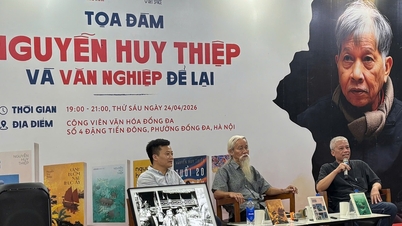
Stepping out of the "Editor's Letter," readers enter the world of Writing & Reading – a space that is far from easy to navigate. Through its publishing seasons, Writing & Reading has created a space where voices from many generations, cultural backgrounds, and creative styles coexist without suppressing or attacking each other. There, one can find established names in contemporary literary history such as Nguyen Ngoc, Nguyen Khoa Diem, Nguyen Huy Thiep, Le Dat…, while still making room for young writers and new voices not yet confined by established titles or preconceived notions.
New voices are placed alongside established names, not according to a "prioritization" logic, but rather a dialogue-based approach. This organizational structure shows that the editorial board does not seek easy consensus, but embraces polyphony – a necessary condition to prevent literary life from falling into a state of self-repetition and isolation.
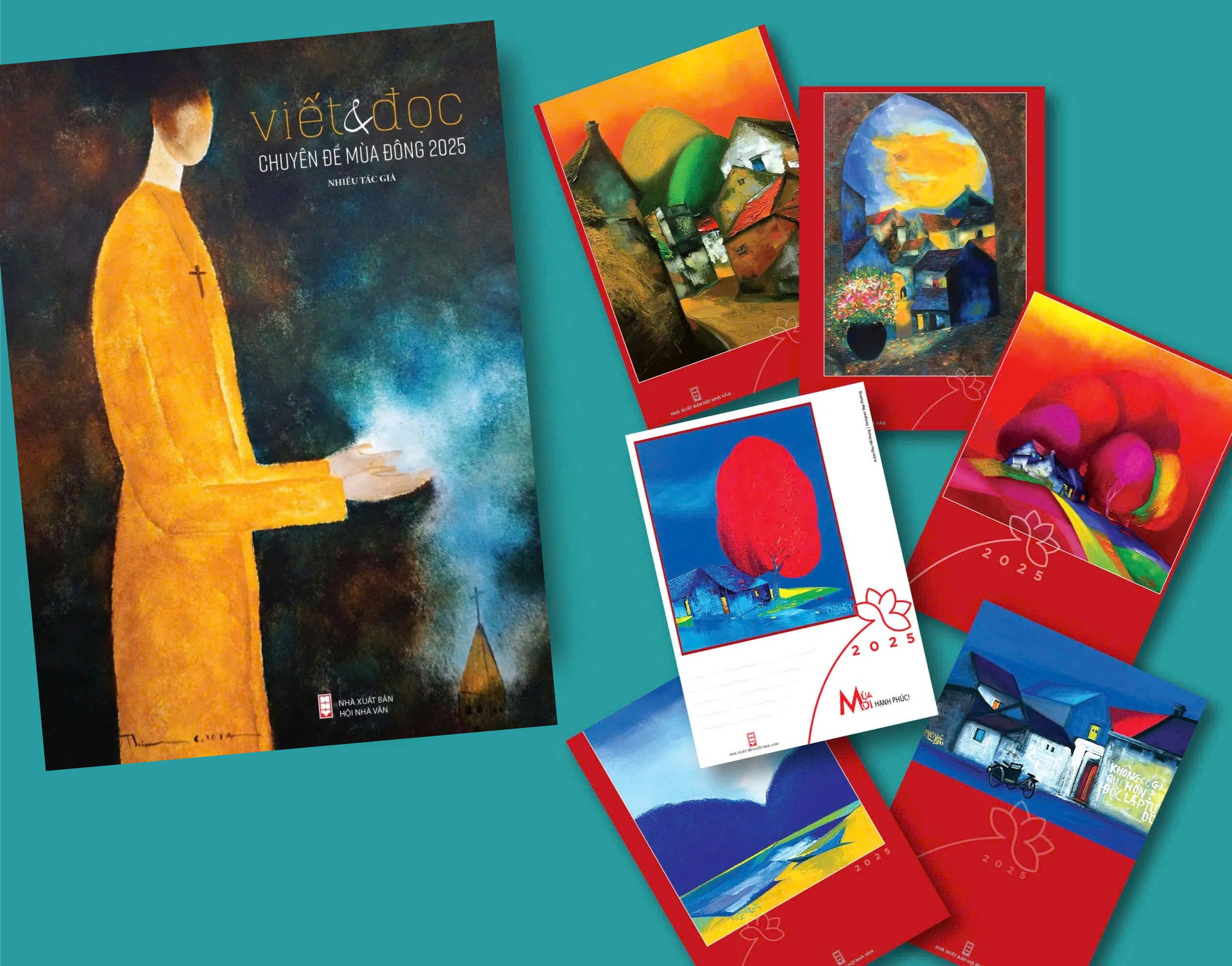
Numerous writers and readers on social media are sharing their thoughts on the special Winter 2025 issue of *Writing & Reading*, featuring outstanding short stories, poems, and literary criticism. Among these, the short stories by Phát Dương, Nguyễn Vĩnh Nguyên, and Trịnh Thanh Nhã are particularly surprising; the 48 pages of poetry by Nguyễn Khoa Điềm, Lê Minh Hà, Đặng Huy Giang, Đoàn Tuấn, Đỗ Thượng Thế, and Trần Lê Khánh are deeply moving; and the literary and artistic criticism by Lê Hồ Quang and Nguyễn Thanh Sơn is full of insightful reflections.
The short stories selected for publication are often not easy to read in a purely entertaining sense, but they possess a lasting evocative power. From the absurdist experiments and dark humor of young authors to the mature, contemplative short stories of writers who have experienced many ups and downs in life, *Writing & Reading* creates a multifaceted prose landscape where the new is not given preferential treatment, and experience is not treated as a "privilege."
Poetry in *Writing & Reading* also clearly demonstrates a rigorous selection process. Instead of chasing superficial novelty or attention-grabbing trends, the poetry here leans towards profound contemplation. The poems of Nguyen Khoa Diem, with their tone having calmed after years of intense activity, reveal a poet who continues to engage in self-dialogue and dialogue with his time. Alongside him is the poetry of Le Minh Ha – poetry that doesn't seek to be charming or seductive, but accepts "old age" and bitterness as a state of existence for an experienced woman. The parallel presence of such poetic voices shows that *Writing & Reading* doesn't seek to define poetry, but allows it to reveal the diverse possibilities of language and life experiences.
If prose and poetry define the creative landscape, then research, criticism, and translation form the academic backbone of Writing & Reading. This publication rarely shyes away from lengthy, complex articles that require readers to possess a wealth of knowledge and patience. The studies of scholars like Lã Nguyên, with his comparative East-West perspective and high level of generalization, or the elaborate critiques of Lê Hồ Quang, demonstrate that Writing & Reading does not view criticism as an "attachment" to creative writing, but rather as an equal intellectual activity capable of broadening the scope of literary reception.
It is the very presence of such authors and works that gives Writing & Reading its weight. This is not a publication to skim through a few pages and then put on the shelf, but a place where readers can return, reread, and each time discover a new layer of meaning. From familiar names to new faces, Writing & Reading silently affirms that serious literature still has writers, and equally important, readers willing to follow it to the end.
If we compare Writing & Reading with traditional literary publications that have been familiar in publishing for decades, the differences become quite clear. Most previous literary magazines were organized according to a logical publication system, while Writing & Reading proactively creates a field of thought where writing and reading are treated as equals. Instead of viewing each issue as a collection of articles, Writing & Reading organizes its content in a suggestive way, like links in a continuous chain of thought. Readers, therefore, not only read for information but are also guided to reread, cross-read, and read in the context of the connections between texts.
Another important difference lies in pace and ambition. While many traditional literary publications are forced to follow a regular release schedule, pressured by information and updates, Writing & Reading embraces a slower pace, publishing seasonally, treating each issue as a relatively complete intellectual whole. This slowness is not an avoidance of current events, but a way of resisting superficiality – a conscious choice to keep literature from being reduced to immediate reactions.
Therefore, Writing & Reading does not replace traditional literary publications, but it adds to literary life another form of existence: the existence of a publication of reflection, where value lies in its ability to create a lasting dialogue between the writer, the reader, and the text itself. In this parallel, Writing & Reading shows that literature can still find a suitable form to exist rigorously amidst an increasingly facile world.
Source: https://baonghean.vn/viet-amp-doc-mot-an-pham-dac-biet-10319400.html









































![[Video] Sunset at Lap An Lagoon – Where the sun sets over the fishing nets](https://vphoto.vietnam.vn/thumb/1200x675/vietnam/resource/IMAGE/2026/05/31/1780192137701_beach-landscape-sea-water-nature-grass-745871-pxhere-com.jpeg)

























Comment (0)