

With Chat GPT, writing a poem, short story, play, or novel is not overly complicated. Although no competition or newspaper has yet advised authors against using AI, most editors and readers are wary of writing that smells of formulas and AI language. Certainly, this technology is not just a story for 2025; it will have many more consequences in the future if each author does not cultivate their own emotions and individuality in their work.
Writer Ta Duy Anh (born in 1959) argues that the human brain has approximately 85 billion neurons. Successfully decoding it would take millions or billions of years, meaning it's virtually impossible. This is the basis for optimists' disbelief that robots can usurp human power.
Meanwhile, writer Van Thanh Le (born in 1986) asserts that true creators will always strive for literature in its truest sense, where only genuine emotions like "each person is a world unto themselves " are accepted, emotions that no technology can replicate, ensuring that the work always bears the mark of individual creativity.
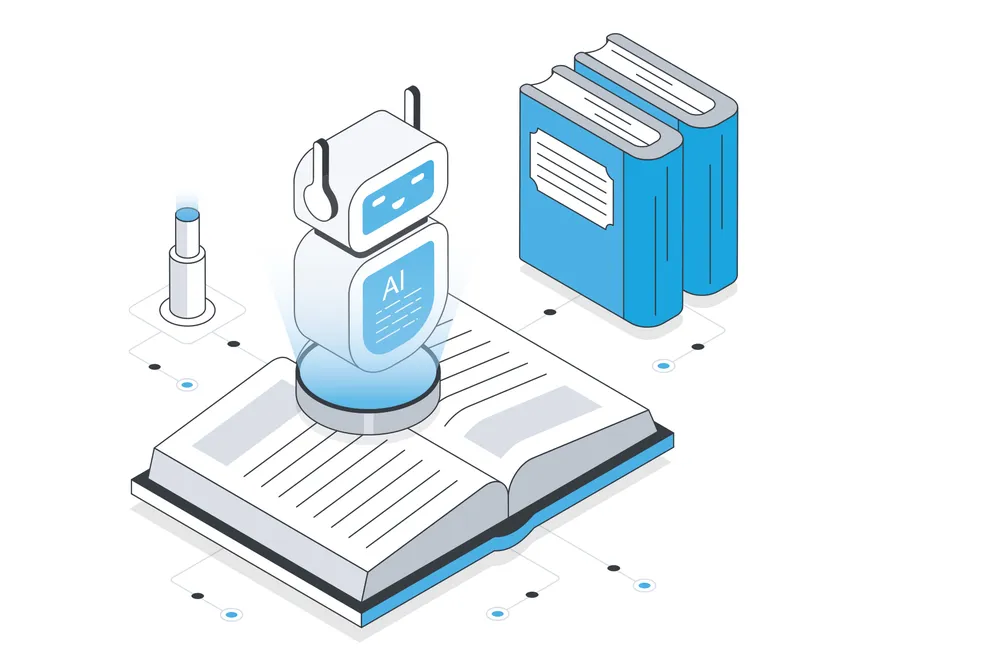
Previously, many people used AI to assist with writing, with software like Sudowrite, Jasper, or Writesonic. But Chat GPT is now at a more refined level, with some even suggesting that it's possible to "borrow" Chat GPT to write for you.
Writer Y Ban expressed: “Social media is heavily influencing reading and writing, easily tempting those who want to write quickly and become famous fast. Wanting to write quickly without having had time to live, experience, or deeply think, they turn to Google or ChatGPT. With data, even the most brilliant minds can rely on AI. However, no AI can replace the thoughts and feelings, the things that belong to the heart.”
In America a few decades ago, the public was wary of the encroachment of machines into the field of literature. Since 1984, the poetry collection "The Policeman's Beard Is Half-Constructed," by author Racter, sparked a heated debate. The rhyming lines, such as "I need electricity / I need it more than I need lamb or pork or cabbage or cucumber / I need it to dream," were extremely unusual and captivating, but few accepted them as poetry. Because Racter wasn't a real author; it was the name of a computer program.
Compared to Rater, Chat GPT is a thousand times more advanced. However, can Chat GPT produce truly convincing poetry? Even humans cannot clearly define the fixed form of poetry, so algorithms cannot bridge the gap between poets and machines. Even if programmers "implant" rules for poetry, Chat GPT cannot "generate" verses that truly reflect the essence of a poet.
For a long time, computer experts have used poetry as a criterion to define the different stages of AI development. Of course, randomly mixing existing data is not literary creation, much less poetry. AI might defeat a world champion chess player, but it can hardly subdue a poet who consciously dedicates to life the poignant reflections of their own joys and sorrows. Poetry is not the art of precision, following a fixed order. Therefore, GPT chat is merely a soulless patchwork.
Chat GPT produces captivating phrases at lightning speed, but it doesn't put an end to the role of a creator. It's merely a mischievous wordsmith, incapable of thoughtful reflection; it only synthesizes and reasons differently from humans, completely unlike humans. The value of the work lies in the deepest human consciousness, suffering or joy, separation or reunion, even misfortune has many facets, which Chat GPT cannot comprehend or replace.
Artificial intelligence continues to advance in natural language, but literary works created by AI have yet to prove their persuasive power. Every day, algorithms are upgraded, striving for a kind of "perfection," which in reality only surprises, not moves. After all, how can any algorithm program human emotions?
Vietnamese writers have diverse opinions about technology, but what about writers in other countries? The famous Chinese writer Liu Zhenyun has many works translated into Vietnamese, such as "Yellow Flowers of My Homeland," "I Am Liu the Leap," and "Mobile Phone." During a reader interaction in Ho Chi Minh City at the end of October 2025, he shared that someone had used AI to simulate his writing style, characteristics, and creative approach to produce a work.
"It's possible to emulate my previous works, but it's impossible to ask AI to create my next work. Because that work is in my head, and AI can't be in my head to know what I'll do next," said writer Liu Zhenyun.
According to him, everything is changing very rapidly, and the advancement of artificial intelligence is an inevitable law of development of the times. However, some things change very slowly, for example, more than 2,000 years ago and now, the human soul remains quite similar, because it relates to humanity, soul, and emotions.
“In the digital age, perhaps each of us needs to understand that the core of artistic creation is humanity and affirm the role of the artist as the ‘powerful’ force in creation. Machine-based algorithms can only copy and rework existing human ideas; they cannot create works that contain new inspiration, ideas, reflection, humanity, and the result of diligent effort. Therefore, true creation belongs only to humanity,” emphasized writer Luu Chan Van.
Source: https://www.sggp.org.vn/ai-co-lam-e-ngai-gioi-van-chuong-post838197.html


![[Image] Nearly 125,000 Hanoi students completed the Literature exam for the 10th grade entrance exam.](https://vphoto.vietnam.vn/thumb/1200x675/vietnam/resource/IMAGE/2026/05/30/1780117233041_ndo_br_thiet-ke-chua-co-ten-2-png.webp)





































































Comment (0)