

According to a new report by Jones Lang LaSalle (JLL) Vietnam titled “From Vision to Action: Accelerating the Greening of Vietnam’s Industry,” the drivers of industrial market development, demographic advantages, and ongoing green initiatives will act as catalysts for the green transformation of this sector.
Vietnam's initiatives and role in the green transformation.
During the period 2010-2023, foreign direct investment (FDI) in Vietnam achieved a compound annual growth rate (CAGR) of 10%, higher than the average of 7.6% for countries in the ASEAN region.

The above indicators demonstrate Vietnam's attractiveness to foreign investors, especially in the context of countries and businesses increasingly focusing on sustainability in their business operations. One of the key factors driving FDI into Vietnam is the government's strong commitment to transforming the economy towards sustainability, including a commitment to achieving net-zero emissions by 2050.
Specifically, the Vietnamese government is currently promoting the use of renewable energy, improving energy efficiency, and developing electric transport. These efforts not only help reduce carbon emissions but also create a favorable investment environment for sustainably-oriented businesses. Simultaneously, focusing on developing renewable energy sources such as wind and solar power is helping Vietnam gradually assert its position in the region and globally .
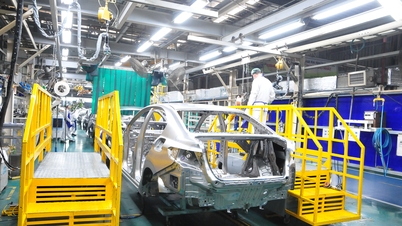
Notably, according to the U.S. Green Building Council, the industrial sector is leading the way in achieving green building certifications, with over 70% of LEED-certified projects in 2023 belonging to the industrial building category. This demonstrates Vietnam's emerging position as a pioneer in the green transformation of its industrial sector, playing a crucial role in shaping a sustainable future.
The development of Vietnam's industrial market is driven not only by economic factors but also by initiatives and policies aimed at improving resource efficiency, minimizing negative environmental impacts, and creating conditions for sustainable development. Two key factors supporting this process are the strong growth of FDI and the development of eco-industrial parks.
It is evident that Government Decree 35/2022/ND-CP has laid the foundation for the implementation of eco-industrial parks, aiming to minimize environmental impact and optimize resource utilization. Pilot projects such as Amata City Bien Hoa and Deep C Industrial Park are prime examples of the success of this model.
Eco-industrial parks not only focus on improving energy efficiency but also aim for waste recycling and the use of renewable energy. These are crucial steps in reducing greenhouse gas emissions and protecting the environment. Furthermore, the development of these industrial parks also brings significant economic benefits to businesses, helping them reduce production costs and enhance their competitiveness in the international market.
Furthermore, eco-industrial parks play a crucial role in fostering innovation and creativity within the industry. By encouraging the adoption of green technologies and sustainable solutions, these parks are creating a favorable environment for the development of startups and small and medium-sized enterprises (SMEs).
This not only helps to enhance the competitiveness of domestic businesses but also contributes to attracting more investment from international investors, especially those interested in ESG (Environmental, Social and Governance) factors.
Driving forces for industrial market development.
It can be said that the Vietnamese industrial market is undergoing a period of remarkable development, driven by a series of strategic factors and unique competitive advantages. Amidst a rapidly shifting global economy, Vietnam is emerging as a bright spot in industrial development, particularly with its green transformation trends and increased sustainability efforts.

Ms. Trang Le, Senior Director of Research and Consulting at JLL Vietnam, commented: “The Vietnamese industrial market is at a critical juncture where adopting sustainable solutions is not only a mandatory requirement but also a strategic advantage. We firmly believe that all stakeholders striving to drive sustainable change and seize opportunities in Vietnam’s industrial market will also see the business advantages of green initiatives. Accordingly, JLL is ready to collaborate to accelerate this transformation.”
According to forecasts, Vietnam's exports are expected to achieve a compound annual growth rate (CAGR) of 6.8% during the period 2024-2030, while domestic consumption is also expected to grow by 6.1% during the same period. These figures not only reflect the strength of the Vietnamese economy but also highlight the role of exports as a key driver of economic development. The e-commerce sector, one of the fastest-growing sectors in the region, has seen strong growth with a CAGR of 33.8% from 2019 to 2023, becoming a crucial factor in driving demand for infrastructure such as warehouses and data centers.
One of the key factors attracting investment in Vietnam's supply chain and industrial manufacturing is its highly educated workforce. With 87% of the working-age population holding a degree, Vietnam ranks second in Southeast Asia in terms of the proportion of skilled labor. This is a significant competitive advantage, especially as foreign businesses increasingly seek locations with lower costs while maintaining high production quality.
Furthermore, the average wage for manufacturing workers in Vietnam is only about 34% of that in China, which allows Vietnam to effectively leverage the "China +1" strategy, a strategy many businesses are adopting to diversify production and supply chain risks.
Currently, Vietnam has a total of 40,505 hectares of industrial land spread across both the North and South, providing a significant land supply to meet future production and supply chain expansion needs. Meanwhile, the strong presence of institutional investors in recent years has made Vietnam's industrial and supply chain market one of the fastest-growing in the region. This not only helps improve market stability and standardization but also enhances transparency, a crucial factor in attracting foreign investment.
The market for pre-built factories and warehouses is also experiencing interesting fluctuations. While the pre-built factory market continues to show sustained performance amidst a volatile global economy, the pre-built warehouse market is stabilizing after a period of strong growth. This is supported by growth in the manufacturing sector and storage demand from manufacturing industries, as well as increased domestic consumption.
As the industrial sector and supply chains continue to develop, Vietnam is also witnessing increasing interest in new potential assets such as data centers and cold storage facilities. Data centers are becoming an integral part of the green transformation strategy, as they help manage energy more efficiently and minimize environmental impact. Cold storage, a critical element in the food and pharmaceutical supply chains, is also emerging as a bright spot amid rising demand for storing and transporting temperature-sensitive products.
These trends not only promote sustainable development but also contribute to enhancing Vietnam's position as an attractive investment destination. The Vietnamese government's investment incentive policies, along with the expansion of industrial infrastructure, are creating a favorable environment for foreign investors. By leveraging local partnerships and adhering to legal regulations, investors can participate in Vietnam's industrial market and contribute to the economy's growth.
Source


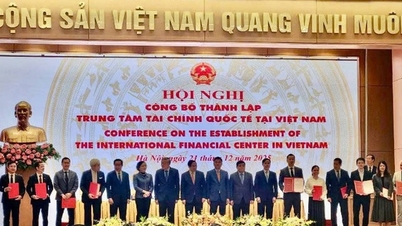
![[Photo] Prime Minister Pham Minh Chinh presides over the conference announcing the establishment of the International Finance Centre in Vietnam.](/_next/image?url=https%3A%2F%2Fvphoto.vietnam.vn%2Fthumb%2F1200x675%2Fvietnam%2Fresource%2FIMAGE%2F2025%2F12%2F21%2F1766309817714_ndo_br_dsc-3400-jpg.webp&w=3840&q=75)
![[Photo] Prime Minister Pham Minh Chinh presides over a meeting on private sector economic development.](/_next/image?url=https%3A%2F%2Fvphoto.vietnam.vn%2Fthumb%2F1200x675%2Fvietnam%2Fresource%2FIMAGE%2F2025%2F12%2F20%2F1766237501876_thiet-ke-chua-co-ten-40-png.webp&w=3840&q=75)






![[Photo] Prime Minister Pham Minh Chinh presides over the conference announcing the establishment of the International Finance Centre in Vietnam.](https://vphoto.vietnam.vn/thumb/402x226/vietnam/resource/IMAGE/2025/12/21/1766309817714_ndo_br_dsc-3400-jpg.webp)







































































Comment (0)