

New law, old information.
After the Law on Entry, Exit, Transit, and Residence of Foreigners in Vietnam officially came into effect on August 15th, allowing the extension of the electronic visa (e-visa) validity period from 30 to 90 days, Trish Thompson (80 years old, American) decided to book her flight to Vietnam on August 30th. Having traveled between the US and Vietnam continuously since 2005, Trish is very familiar with the e-visa application process and has many close Vietnamese friends who regularly update her on new regulations and policies to facilitate her travel. However, due to the pandemic, this was her first return to Vietnam since 2019.
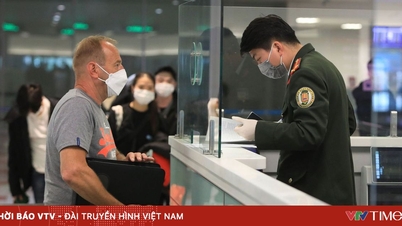
Guided to a new link for foreigners to submit electronic visa applications, based on information from the Ministry of Public Security , Ms. Trish was confused when the website still displayed that Vietnamese electronic visas are only valid for a maximum of 30 days and allow single entry. Despite searching extensively, she could not find an option to apply for a 90-day visa with unlimited entry and exit, and without needing to apply for a new visa, as stated in the newly implemented regulations.
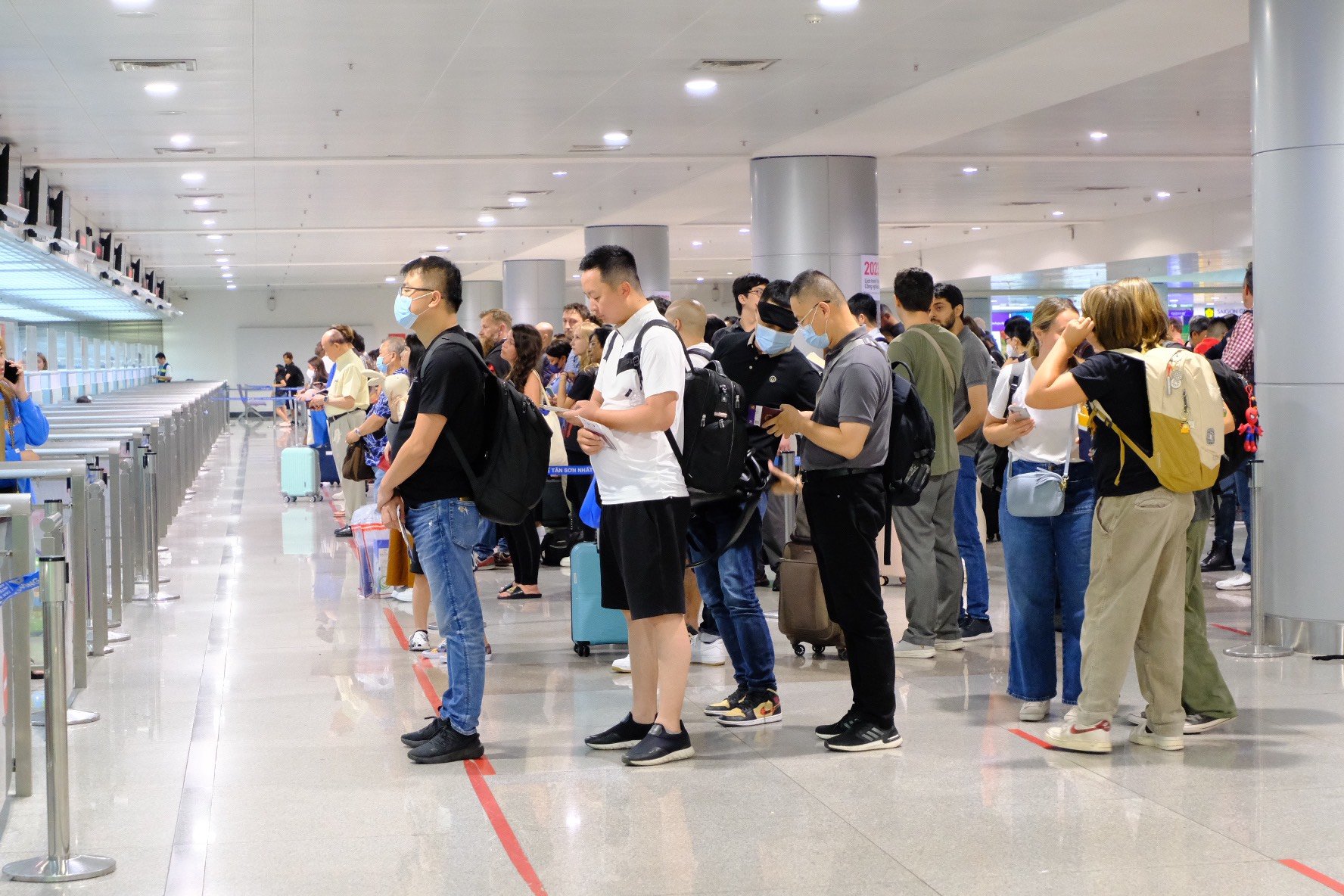
The new visa policy is not yet ready to attract international tourists to Vietnam.
"The application process has also changed significantly compared to before the pandemic. I had to call relatives in Vietnam to help me complete each section in detail, asking for guidance whenever I encountered difficulties. I was informed that the new visa policy had been approved by the Vietnamese government in June and would take effect on August 15th, so instead of traveling in early August as planned, I postponed it to August 30th, but unexpectedly, I still haven't been able to apply. Since I've already bought my plane ticket, I have to accept the 30-day single-entry visa and hope that the new policy will apply next time. The problem is that just yesterday (August 20th), a friend of mine in the US was able to apply for a 45-day visa, using the same website I used. Because the Vietnamese application process doesn't track the processing time, I don't know what stage my application is at now, whether I should reapply, or why some people can get their visas processed while others can't…," she said. Trish raised a series of questions.
A survey on the website evisa.xuatnhapcanh.gov.vn yesterday afternoon (August 22nd) confirmed Ms. Trish Thompson's feedback that the system still displays the information "Vietnamese e-visa is valid for a maximum of 30 days, single entry". The sections for applying for a 90-day multiple-entry visa and the list of citizens of countries unilaterally exempted from Vietnamese visa requirements, who are granted temporary residence for 45 days (previously 15 days) under the new law, have not been updated at all.
While processing e-visa applications for several tour groups preparing to enter Vietnam, the director of a large travel agency in Ho Chi Minh City also reported that the processing speed of Vietnam's e-visa application website was slow, frequently inaccessible, and did not provide a date for visa issuance, preventing customers from proactively planning their itineraries. Furthermore, because they had anticipated the policy delay, businesses had only announced the new policy and proactively developed longer tour programs to inform customers, rather than immediately implementing detailed plans.
"It's always been like this; from the time a policy is issued until it's implemented, it can take several months to stabilize. The policy was passed in June and is effective from August 15th, but the guidance conference for localities and businesses wasn't held until the morning of August 15th. How can we dare to accept customers applying the new policy immediately? Bringing customers in and then encountering all sorts of difficulties is very troublesome. The government needs to seriously review the gap between policy and implementation. Ideally, from the moment the National Assembly passed the law, ministries and agencies should have prepared guiding decrees and circulars, synchronized with the infrastructure and technology systems. They should be ready as needed. We can't keep making businesses tell customers to 'ask on TV/in the newspapers' as is currently the case," this businessman said angrily.
The loss is not just the company's reputation.
Closely monitoring every development in visa policy, Dr. Luong Hoai Nam, a member of the National Tourism Advisory Board (TAB), commented: The current situation of inconsistent policy and implementation greatly affects Vietnam's ability to attract tourists. Businesses have been very proactive in informing partners and customers about new policies to attract as many tourists as possible. However, when the law comes into effect but cannot be implemented in practice, businesses will lose credibility.
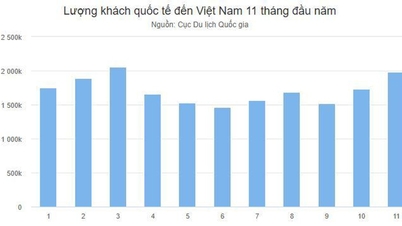
Further analyzing the market, Mr. Luong Hoai Nam commented: Despite significant efforts, the recovery in international tourist numbers has only reached about 60% of the pre-pandemic level. Before the pandemic, we had many large markets that brought in a "huge" source of tourists, such as China, Japan, South Korea, Russia, France, and the United States. Among these, the Chinese market was highly anticipated, but to date, it has remained largely untapped. The European tourist market is also struggling to grow strongly due to the impact of the Russia-Ukraine conflict, along with the economic crisis, inflation, and social instability… Tourism businesses are still facing difficulties, and airlines are struggling even more, incurring increasingly heavy losses.
On the other hand, after the Covid-19 pandemic, tourists' travel behavior has changed significantly. Large tour groups are no longer common; instead, there is a growing trend of small groups of family, friends, or independent travelers. For these groups, visa policies are even more important because tour groups have their visa applications handled by the travel company, while individual travelers must handle the procedures themselves.
Based on specific objectives, appropriate mechanisms and policies should be enacted to facilitate each component of the tourism industry. If policies continue to be based on a "request-and-answer" approach, with solutions only addressing issues as is currently the case, businesses will be passive, customers will be passive, and the entire tourism industry will remain perpetually in a state of stagnation.
Mr. Nguyen Quoc Ky, Chairman of the Board of Directors of Vietravel Group
"For them, the easier a destination is to travel to and the more lenient the policies, the more they will prioritize choosing it. Therefore, open visa policies and quick, simple procedures, which have always been important, are now even more decisive. Visa policies must be implemented as soon as possible, creating opportunities to attract tourists from as many markets as possible," emphasized Dr. Luong Hoai Nam.
Chairman of Vietravel Group, Nguyen Quoc Ky, also expressed regret that the tourism industry continues to miss many opportunities to recover after the pandemic, simply because of the delays and inconsistencies in policies. Despite being open for a year and a half, most businesses still have to rely on themselves in promoting and selling products in foreign markets. This work is very costly, but tourism businesses have almost no access to capital from banks. The largest source of tourists for Vietnam, South Korea, is almost completely neglected; no one can monitor the source of tourists, whether the businesses bringing tourists pay taxes, and how much tax they pay to the Vietnamese government…
Therefore, in addition to urgently promoting a synchronized technology network with the new visa policy, Mr. Nguyen Quoc Ky suggested that the Government needs to conduct a comprehensive assessment of the positioning of the tourism industry. This includes determining the role of tourism in the economic recovery component. Key performance indicators (KPIs) must be set: for the economy to rebound by a certain percentage, tourism growth, visitor numbers, the number of accommodation establishments that need to be operational, and the number of jobs created by tourism must be determined.
Source link


![[Image] "Journey of Hope" promotes the organ and tissue donation movement in Vietnam.](https://vphoto.vietnam.vn/thumb/1200x675/vietnam/resource/IMAGE/2026/05/20/1779294400833_1-8910-jpg.webp)








































































Comment (0)