

Among the crowds heading up the mountain to the Phin Ho night market, Ms. Bui Thi Thanh Hai (a tourist from Hanoi ) expressed great delight. Along with the vibrant colors of the ethnic minority costumes and the unique local specialties, what surprised and delighted Ms. Hai the most were the horses. “I always thought that you could only experience riding horses in Da Lat or Bac Ha (Lao Cai). But when I saw them at the Phin Ho market, I was incredibly surprised. It offered a very special experience that you wouldn't find at markets in the lowlands!” – Ms. Hai shared.
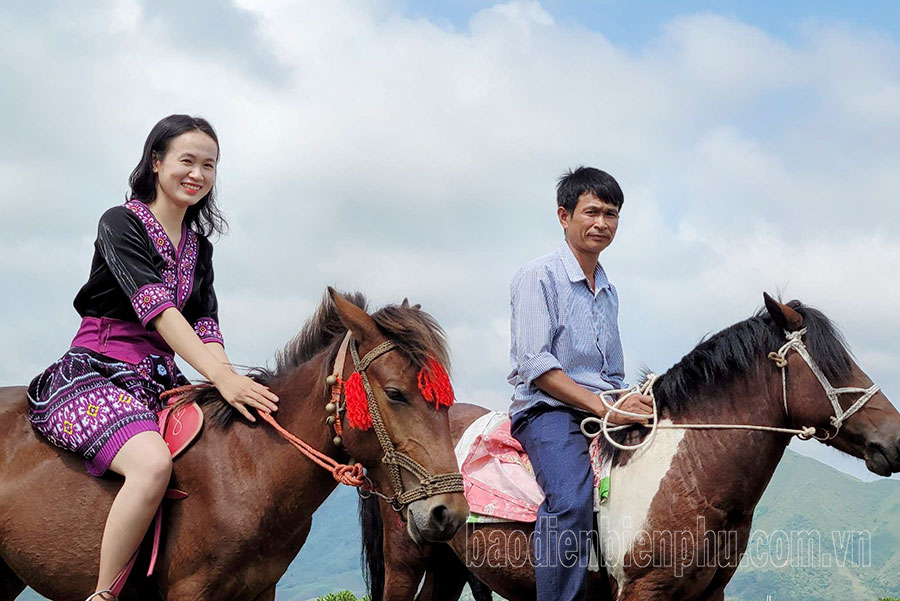
Not only do the horses at the market impress visitors from afar, but they also bring many surprises to the local people themselves. Having visited many markets in the province and district before, this was the first time Ms. Nguyen Thi Minh, a resident of Phin Ho commune, had the opportunity to take photos with horses at the Phin Ho market, and she was very excited. She shared: “My son loves the experience of riding horses, and I took many beautiful photos with the horses. When I shared those pictures on Facebook, many friends inquired and promised to definitely come here. I feel truly proud!”
The first horses to appear at the Phin Ho market belonged to the family of Mr. Chao Suong Venh from De Tinh 2 village. According to Mr. Venh, his family had raised horses for many years, but only maintained 2-3 horses. Recently, after watching video clips on social media about horseback riding and photo opportunities with horses, he immediately thought about learning and starting a business in this area. Later, Mr. Venh began training and taming the horses to become comfortable around people. Seeing the Phin Ho market open, Mr. Venh saw this as a great opportunity to try his hand at it.
“I cleaned the horse thoroughly and decorated its reins beautifully. The first time I brought the horse to the market, it attracted a lot of attention. At first, some children were scared, but then most people seemed to enjoy it. Everyone wanted to take pictures with the horse, and many even tried riding it. I charged each customer 20,000 dong, and I earned several hundred thousand dong on the first day!” - said Mr. Vềnh.
After the initial successful trial, Mr. Vềnh went back to further train his horses to better serve tourists. Several other horse-raising households in the area followed suit. As a result, the sight of these "service" horses became more common at each subsequent market day. To attract more customers, some households even brought traditional ethnic costumes and accessories for rent. However, because the service wasn't yet professional and the horses were newly tamed and not yet accustomed to people, they sometimes became agitated when there were too many customers. To ensure the safety of tourists, according to a local leader, this service is now restricted and strictly managed. Each business providing this service must assign someone to supervise, assist tourists, and promptly handle any unforeseen situations.
New development direction
According to many elderly people in Phin Ho, horse breeding is not a new profession. Historically, the roads in this area were rough and steep, winding along mountain slopes. To meet the transportation needs of the people, who lacked the means to buy motorbikes and other motorized vehicles, horses were the primary choice. Over time, as life improved and motorbikes became more common and essential, the number of horses dwindled, with only a few families still raising one or two horses.
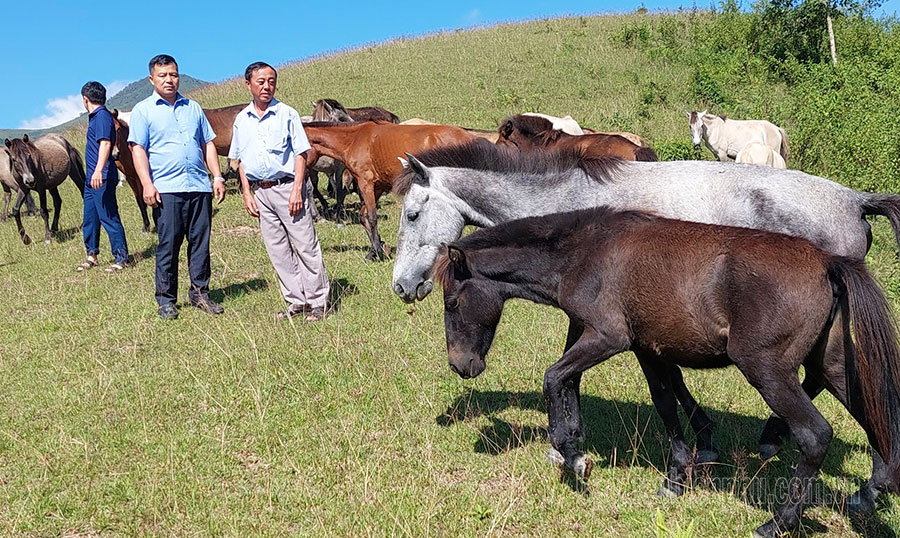
As someone with a knack for animal husbandry, when he saw the rolling hills covered in fertile green grass, Mr. Ho Chu Thao of De Tinh 2 village immediately thought of raising horses. Starting by going from household to household in the village and commune to inquire about buying local breed horses, Mr. Thao encountered much criticism from his relatives and neighbors. "People whispered to each other, saying I was being reckless. They asked if I dared to borrow money from the bank to raise horses, and if it didn't work out, how would I repay it? They said it was just a few horses for the experiment. I reassured them, saying I had researched it thoroughly, that horses are easy to care for, and that there were vast grasslands here, plenty of space for grazing!" - Mr. Thao confided.
In just one year, the horses had grown strong and healthy, further strengthening Mr. Thao's belief in success. When he first bought them, the foals weighed about 20kg, but after only about two months, they weighed 50-60kg each. They ate all day, their main food being various kinds of grass. Although they are hoofed animals like buffalo and cows, horses rarely get foot-and-mouth disease or other epidemics. After two years, Mr. Thao's herd had grown to over 30 horses. Elderly farmers near Mr. Thao's farm were curious and then interested in following his example. "Mr. Thao was too daring, but when the horses grew big and people came to the farm to buy them, I knew he was right. I saw on TV that white horses could be used to make medicinal paste, which fetches even higher prices, so I bought four to raise. They're all grown up now!" shared Mr. Ho Senh Rem from De Tinh 2 village.
Mr. Giàng A Kỷ, Chairman of the Farmers' Association of Phìn Hồ commune, was very impressed with Mr. Thào's horse breeding model. After visiting and thoroughly researching the model, in 2022 the commune's Farmers' Association mobilized the establishment of a horse breeding model in two villages: Đệ Tinh 2 and Đề Pua, with 14 participating households. The initial number of breeding horses was 140. Each household received training from the district's Farmers' Association on breeding techniques, care, and disease prevention and treatment for horses. To date, the herd has increased to 160 horses. According to calculations, with a selling price ranging from 30 to 50 million VND per horse, the average income of each participating household this year is estimated at approximately 300 million VND. “Currently, the demand for horse breeding in the commune is starting to increase. After a review, over 130 households have registered. According to the national target program implementation plan, the government will allocate funds to continue supporting each household with one breeding horse to develop horse breeding!” - Mr. Ky said.
Besides raising horses for commercial purposes, many households in Phin Ho are now interested in learning about and researching tourism models related to horses in other localities, such as horse racing, horseback riding, and horse-drawn carriage rides. By linking these with community-based tourism products, it is hoped that this will be a new and promising direction, attracting many tourists to Phin Ho.
Source
![[Photo] General Secretary To Lam receives President of the European Council Antonio Costa](/_next/image?url=https%3A%2F%2Fvphoto.vietnam.vn%2Fthumb%2F1200x675%2Fvietnam%2Fresource%2FIMAGE%2F2026%2F01%2F29%2F1769697816651_a1-bnd-5216-9741-jpg.webp&w=3840&q=75)


![OCOP during Tet season: [Part 3] Ultra-thin rice paper takes off.](/_next/image?url=https%3A%2F%2Fvphoto.vietnam.vn%2Fthumb%2F402x226%2Fvietnam%2Fresource%2FIMAGE%2F2026%2F01%2F28%2F1769562783429_004-194121_651-081010.jpeg&w=3840&q=75)


![OCOP during Tet season: [Part 2] Hoa Thanh incense village glows red.](/_next/image?url=https%3A%2F%2Fvphoto.vietnam.vn%2Fthumb%2F402x226%2Fvietnam%2Fresource%2FIMAGE%2F2026%2F01%2F27%2F1769480573807_505139049_683408031333867_2820052735775418136_n-180643_808-092229.jpeg&w=3840&q=75)
![OCOP during Tet season: [Part 1] Ba Den custard apples in their 'golden season'](/_next/image?url=https%3A%2F%2Fvphoto.vietnam.vn%2Fthumb%2F402x226%2Fvietnam%2Fresource%2FIMAGE%2F2026%2F01%2F26%2F1769417540049_03-174213_554-154843.jpeg&w=3840&q=75)



Comment (0)