Strengths
While in other localities, glutinous rice is usually sown and cultivated during the main cropping season because it suits the time of year and primarily serves the Lunar New Year market, in Ai Quoc ward, this rice variety is also sown and cultivated in the spring. Farmers here prefer glutinous rice because of the favorable growing conditions. Many households also initially chose regular rice, but after a few seasons, they switched back to glutinous rice and have stuck with it because they find it more suitable.
Ms. Pham Thi Thoa's family in Dong Linh residential area has consistently cultivated over 5 sao (approximately 0.5 hectares) of glutinous rice over two seasons. According to Ms. Thoa, local people have a long-standing tradition of growing glutinous rice. Glutinous rice is selective about soil conditions, easily affected by weather, and has a lower yield, but its quality makes it a preferred choice for farmers. "This spring rice crop, despite unfavorable weather and prolonged high temperatures causing the rice to ripen earlier, the glutinous rice yield remained stable. My family harvested over 1 ton of fresh paddy, most of which was sold to traders right at the field," Ms. Thoa said happily.
Ms. Tran Thi Thu's family in Hoang Xa 1 residential area cultivates over one acre of glutinous rice. This has been a stable source of income for her family for many years. Ms. Thu said: "Glutinous rice only yields a little over 2 quintals per sao (approximately 1000 square meters), and even less for specialty varieties, only 1.7-1.8 quintals per sao, but in return, it provides high economic efficiency. Moreover, glutinous rice tends to hold its price better and is less volatile than regular rice. In the spring season, we cultivate NV1 glutinous rice, which is easy to sell and commonly used for making cakes. In the autumn season, we mainly produce the specialty 'Nếp Cái Hoa Vàng' glutinous rice variety to serve the market during the Lunar New Year."



Ai Quoc Ward is a suburban area in the western part of Hai Phong city. Over the years, despite the development of industry and commercial services, local farmers have remained committed to their fields, never leaving land fallow. Furthermore, the area has developed a distinctive agricultural product: glutinous rice.
Increase production value
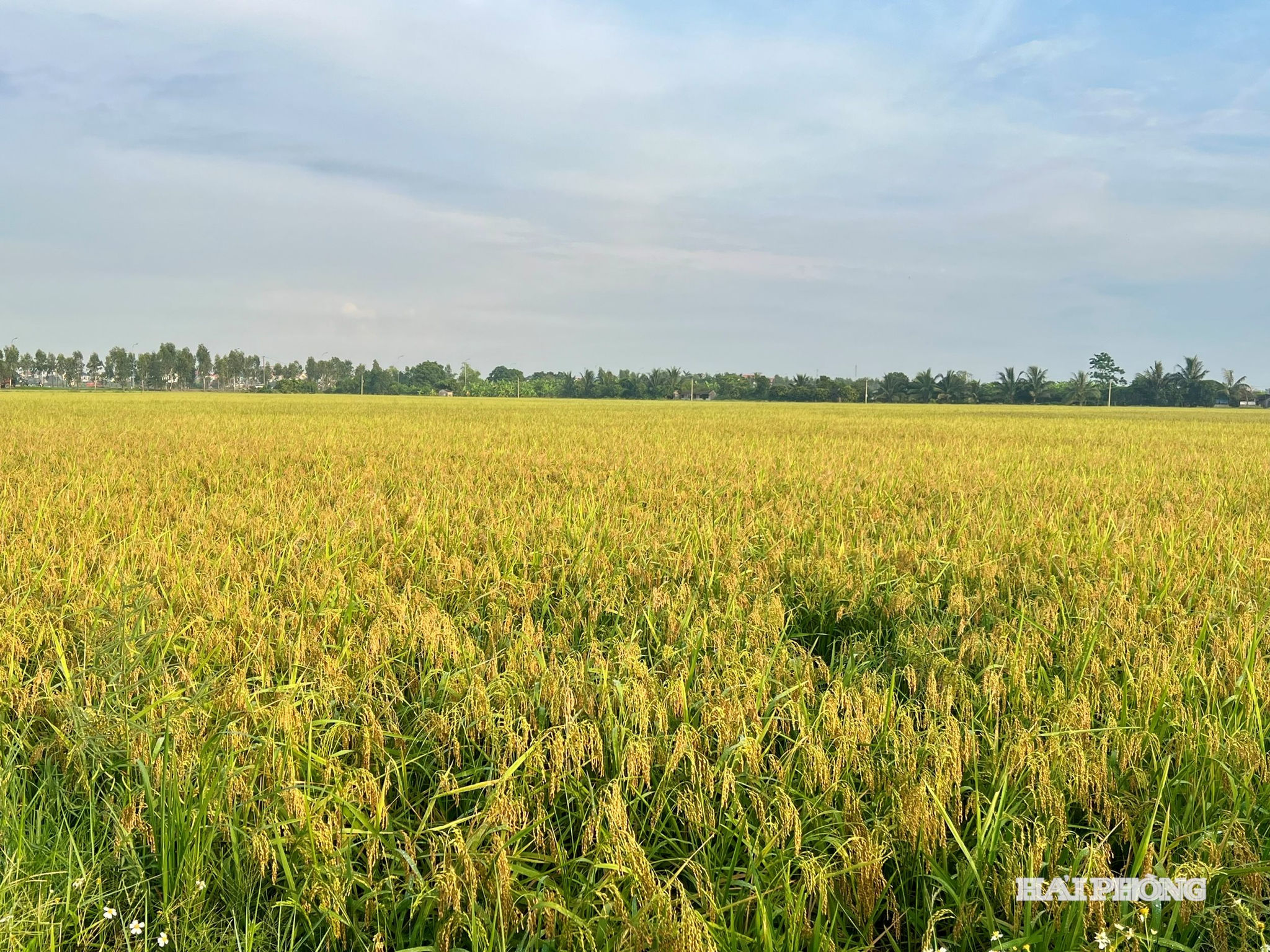
Cultivating glutinous rice is a long-standing farming practice of farmers in Ai Quoc ward. Currently, the ward cultivates over 700 hectares of rice per season, with glutinous rice accounting for more than 80% of the area. Recently, instead of cultivating based on experience and habit as before, under the guidance of the local government, farmers have organized production systematically to increase the value of their crops.
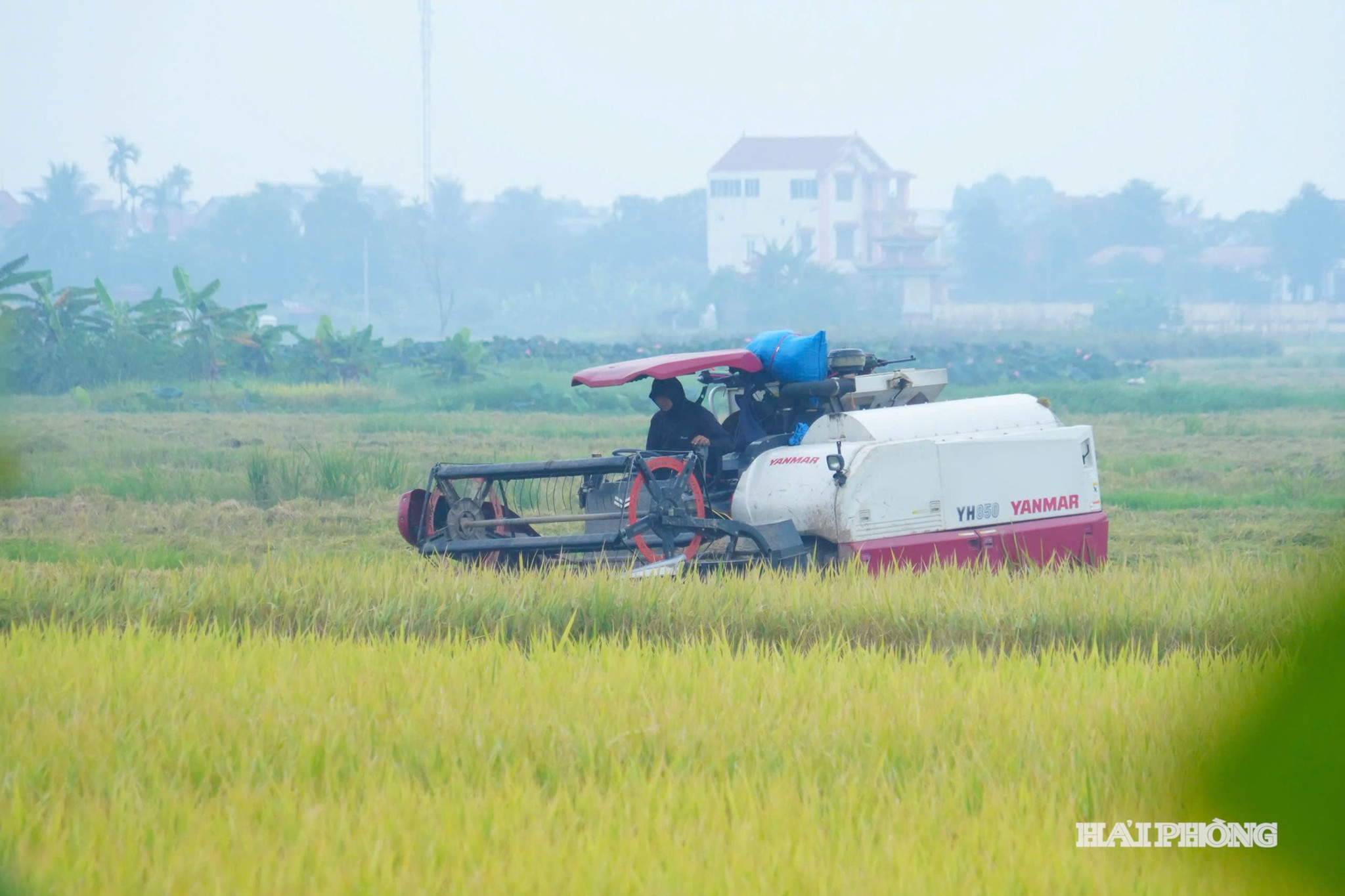
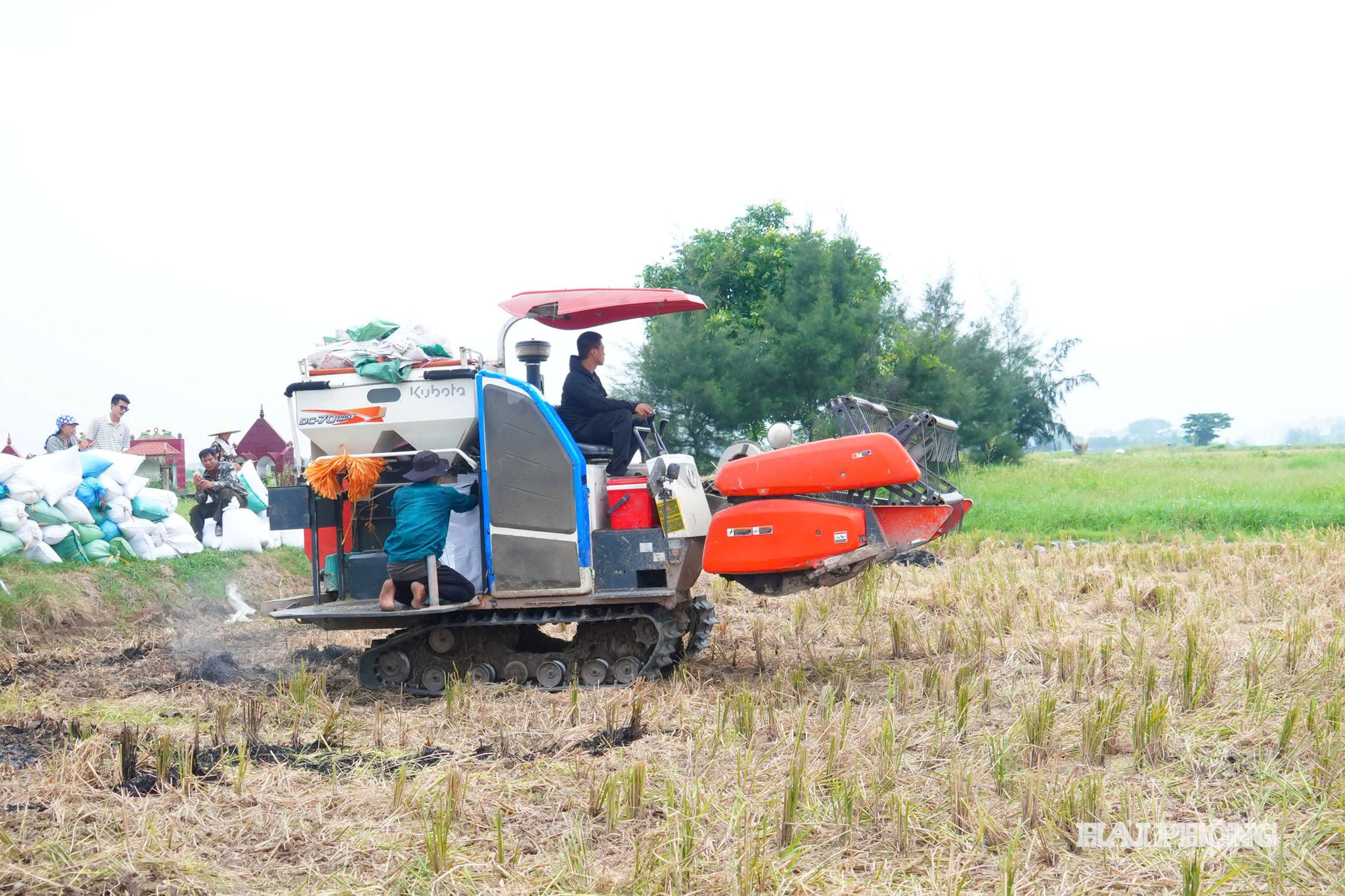
Previously, farmers in Ai Quoc ward cultivated glutinous rice in a fragmented and small-scale manner, often saving their own seeds and using medicinal seedlings, resulting in laborious care and low product quality. In response to this, the local authorities have established concentrated farming areas of 5 hectares or more to promote "one area, one variety, one time" production. Simultaneously, they have increased mechanization to reduce input costs and gradually change farmers' farming habits. Farmers in these concentrated areas receive technology transfer and partial support with agricultural supplies. Calculations show that concentrated cultivation saves 15-20% of production costs while yielding 10-15% higher productivity compared to large-scale production. Furthermore, the price of fresh glutinous rice is usually 15-20% higher than regular rice, allowing farmers to earn a profit of approximately 20-25 million VND/hectare/season.
Ms. Nguyen Thi Lan from Hoang Xa 1 residential area said: “Since participating in the concentrated glutinous rice cultivation area, I find production is no longer as difficult as before. We have reduced labor and saved on input costs. Moreover, the rice grows uniformly, resulting in higher yields and better quality.”


According to Mr. Nguyen Tuan Anh, Vice Chairman of the Farmers' Association of Ai Quoc Ward, the traditional cultivation of glutinous rice has facilitated the formation of concentrated farming areas. This helps farmers to cooperate in order to produce in a systematic and synchronized manner. The local authorities are also planning and developing solutions to enhance the economic value of glutinous rice per unit area, especially as agricultural land is decreasing in suburban areas.
NGUYEN MOSource: https://baohaiphong.vn/vua-lua-nep-ven-do-545811.html
![[Photo] General Secretary and President To Lam attends the 13th National Congress of the Ho Chi Minh Communist Youth Union](https://vphoto.vietnam.vn/thumb/1200x675/vietnam/resource/IMAGE/2026/06/25/1782356968989_ndo_br_1-jpg.webp)


























![[Photo] General Secretary and President To Lam attends the Central Public Security Party Committee Conference](https://vphoto.vietnam.vn/thumb/1200x675/vietnam/resource/IMAGE/2026/06/24/1782302063612_a1-bnd-9302-9166-jpg.webp)