

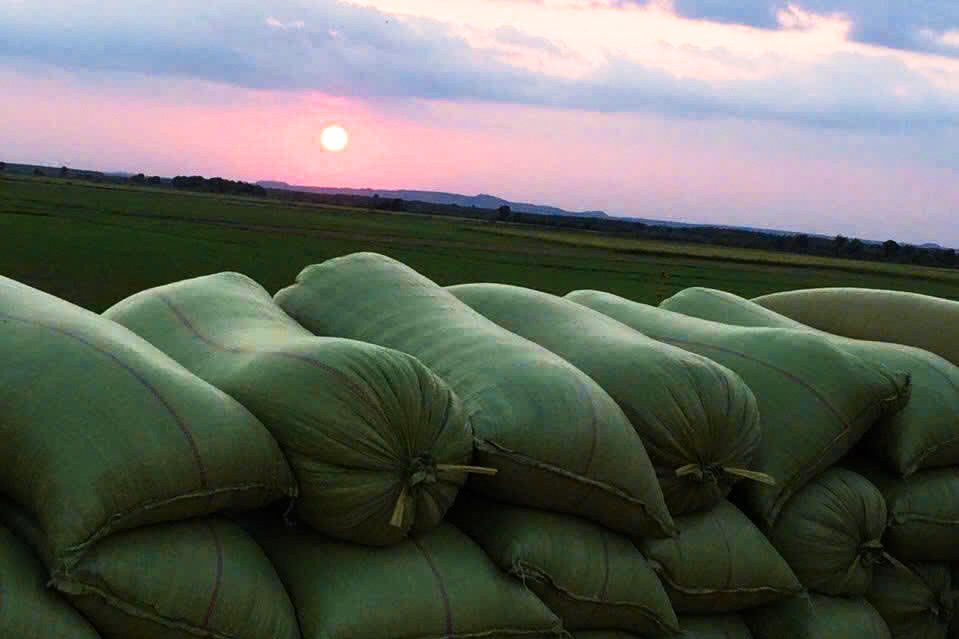
Bustling harvest season
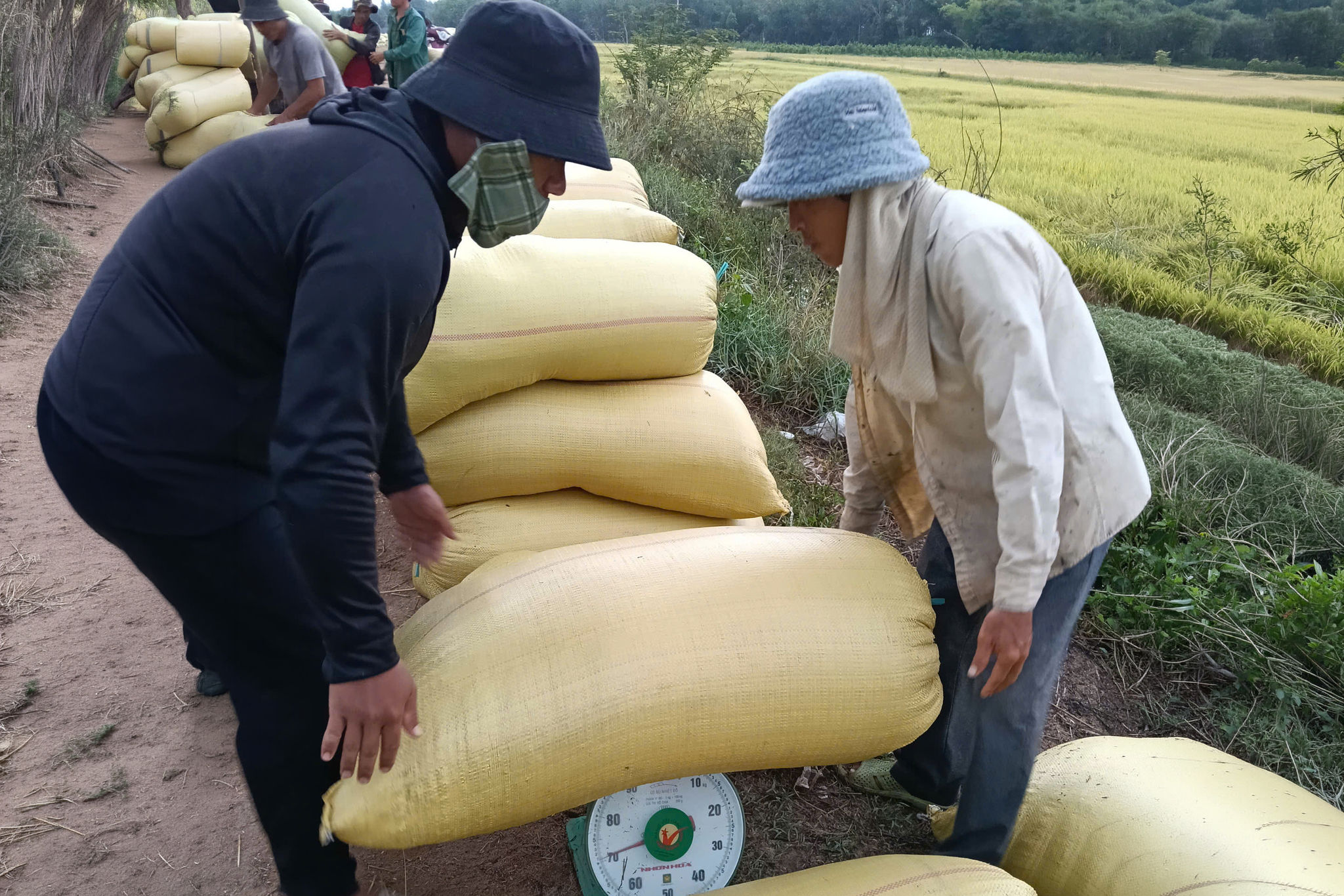
- How many tons is that, Binh?
- Over 110 tons.
- Much higher than last year.
- It's several tons heavier... How much is yours?
- Approximately 35 tons of sticky rice were left over.
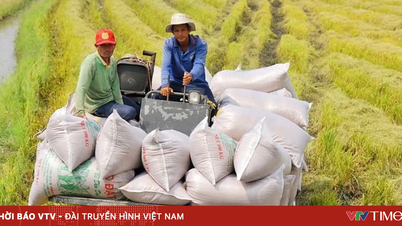
This is a conversation between two farmers, Dang Van Ve and Dang Van Binh, after they had just weighed their rice to sell to the cooperative. On the large rice field near the Duc Tai pumping station (Hoai Duc district), dozens of combine harvesters were busy harvesting glutinous rice in the fields. On the banks of the La Nga River, at the roadside, the rice buyers, equipped with weighing and testing tools, were bustling about, exchanging and trading. Many tractors were lined up waiting for the rice to be weighed and transported to the warehouse, creating a lively and bustling scene with questions about whether the rice was grade 1 or grade 2, how much profit they would make, and so on.
“How was the harvest this season, sir?” I asked Mr. Ve. “The yield was good, but the profit is down by almost two-thirds compared to the previous season. Look: Fertilizer prices increased by 200,000 VND/bag, diesel fuel prices increased, so the price of harvesting machines also increased from 1.6 million VND to 2 million VND. Other production supplies also increased, so the estimated investment for this year's winter-spring crop increased by 2.7 million VND/ha. Meanwhile, the price of glutinous rice last year was 7,800-10,000 VND/kg, but this year it's only 5,900-6,300 VND/kg, so the profit has dropped significantly…” As soon as Mr. Ve finished speaking, Mr. Binh added: “Well, sir, in this context, making a profit of 15-17 million VND/ha for glutinous rice like we did is already the best we can do. Farmers who grow regular rice usually only break even, or at best, their profit is only about a quarter of ours, so we're happy with that…”
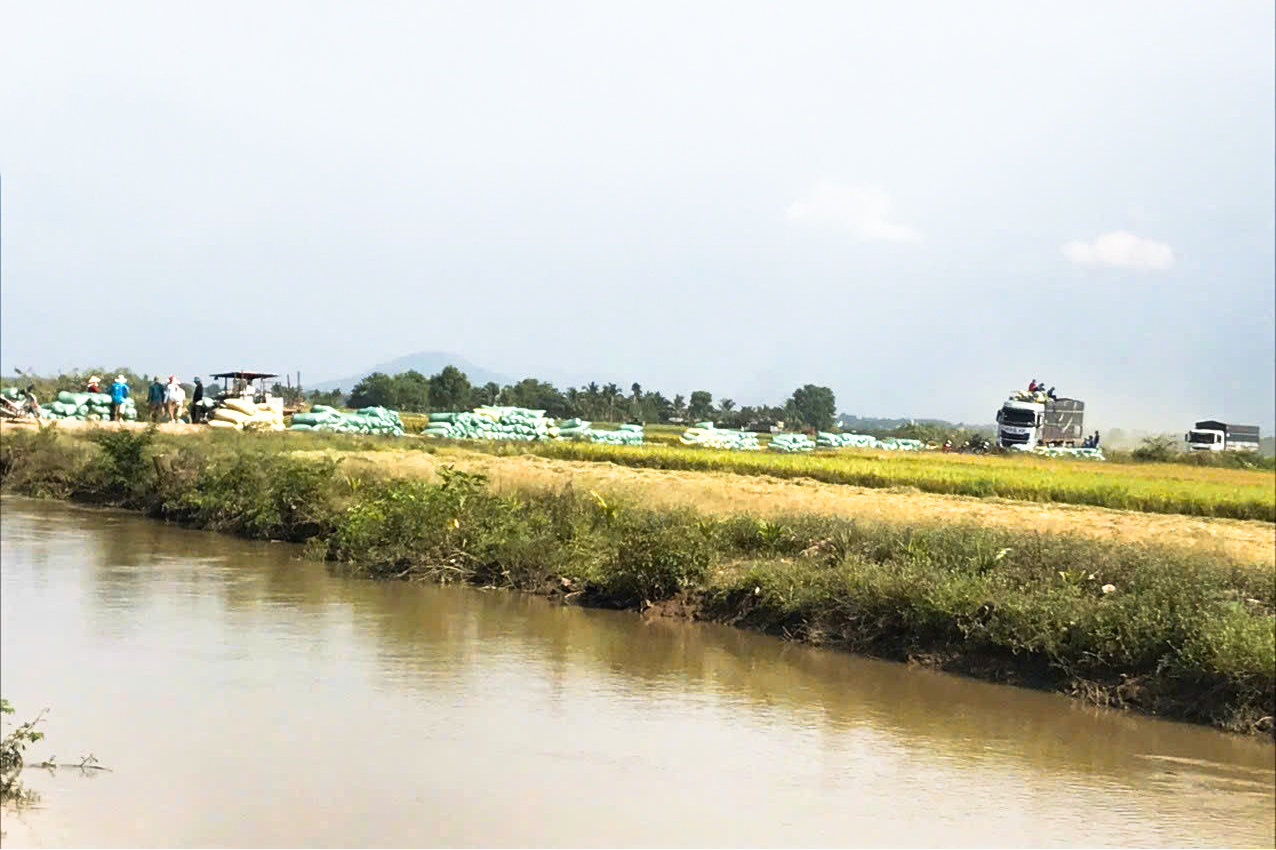
Mr. Binh cultivates 15 hectares of IR 4625 glutinous rice. He and Mr. Ve signed a comprehensive contract with the Cong Thanh Duc Linh Cooperative, covering everything from seed supply and production processes to guaranteed product purchase at market prices. In previous years, with high rice prices, it was normal for his 15 hectares to yield a profit of 200-250 million VND per crop. This winter-spring crop, he earned nearly 150 million VND in profit...
A "pillar of support" for farmers.
The stories of Mr. Ve and Mr. Binh reminded me of the ordinary rice farmers, those without associations or contracts, in the communes from Tanh Linh to Dong Kho and extending to Nghi Duc commune. Now, with these low rice prices, the atmosphere of the harvest season along the La Nga River has become subdued, even though the cultivated area stretches from Tanh Linh through Dong Kho, Nam Thanh, Duc Linh, and Hoai Duc to 25,000 hectares. Most ordinary rice farmers are complaining because this year's winter-spring crop is unprofitable.
Mr. Nguyen Luc from Nghi Duc commune, who just harvested 1.5 hectares of rice, said that the investment cost for producing 1 hectare of rice this season is about 30 million VND, including seeds, fertilizers, pesticides, land preparation, and harvesting. With the current rice price of 5,000 - 5,300 VND/kg, breaking even is considered lucky, while those who are skilled and achieve yields of over 8 tons/ha will only make a meager profit...
From Tanh Linh commune to Hoai Duc commune, along the La Nga River, is considered the rice granary of the province. The La Nga plain area has a large concentration of rice cultivation due to its high yield and quality. Rice in this region is produced three or more times a year. The rice-growing area has a long history, leading to the establishment of many agricultural cooperatives to meet production needs, such as: Duc Binh Agricultural Service Cooperative (Dong Kho commune), Gia An Agricultural Service Cooperative, Tanh Linh Xanh Cooperative, Lac Thanh Agricultural Service Cooperative, Duc Thuan Agricultural Service Cooperative, Da Kao Cooperative (Tanh Linh commune), Agricultural Service Cooperatives 1 and 2 (Bac Ruong commune)...
Mr. Luu Duc Loi, Vice Chairman of the People's Committee of Bac Ruong commune, said: "Currently, not only Bac Ruong commune but also neighboring communes mainly rely on agricultural production. Therefore, farmers are greatly affected when the prices of input materials such as fertilizers, pesticides, seeds, etc., continuously increase, making production costs for farmers increasingly high. Meanwhile, for small-scale rice producers who do not participate in cooperatives, the output price often decreases, is unstable, and depends heavily on traders, making them vulnerable to price manipulation, leading to low production efficiency and unreliable income..."
In reality, many farmers do not participate in cooperatives to link production of high-quality rice and glutinous rice varieties to meet domestic and export market demands, resulting in unstable production and low profits. Conversely, participation in organized production, as demonstrated by Mr. Ve, Mr. Binh, and hundreds of other households, has proven to be highly effective.
Joining a cooperative provides a solid "support system" for rice farmers, especially the glutinous rice production model of the Cong Thanh Duc Linh Cooperative. Farmers are organized to produce in a concentrated and synchronized manner, applying advanced techniques and reducing input costs. More importantly, the cooperative acts as a liaison with businesses to guarantee product sales, helping farmers have a stable market and higher prices compared to individual production, thus preventing price manipulation.
Ms. Dang Thi My Duyen, Deputy Director of Cong Thanh Duc Linh Cooperative, said that in addition to its members, the cooperative has signed contracts with approximately 350 farmers in three communes of Duc Linh, Nam Thanh, and Hoai Duc to produce over 600 hectares of various types of rice and glutinous rice such as IR 4625 glutinous rice, Northern glutinous rice, round-grain glutinous rice, etc., for domestic consumption and export. The glutinous rice is produced three times a year, and the cooperative purchases an average of 11,000 tons of glutinous rice annually.
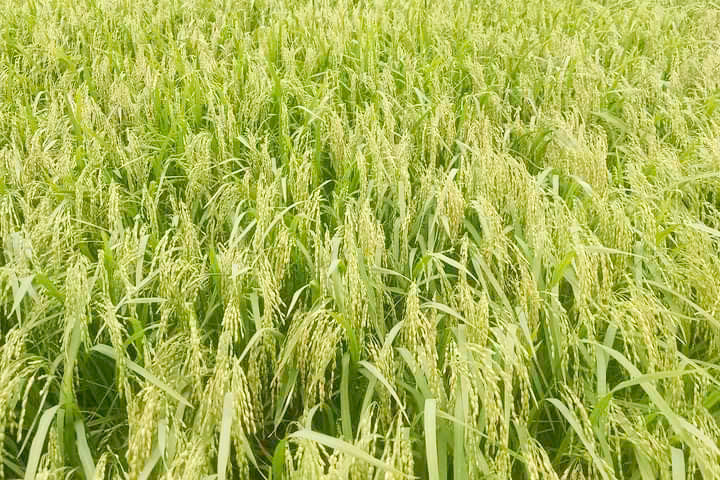
The La Ngà River flows like a silk ribbon across thousands of hectares of rice paddies that have been cultivated along its banks for decades. Rice prices fluctuate, but these riverside fields mostly yield bountiful harvests, serving as the province's rice granary...
Source: https://baolamdong.vn/mua-lua-chin-ven-song-la-nga-440899.html




![[Photo] National Assembly Chairman Tran Thanh Man working with the Standing Committee of the Law and Justice Committee](https://vphoto.vietnam.vn/thumb/1200x675/vietnam/resource/IMAGE/2026/05/21/1779378929214_ndo_br_1-4610-jpg.webp)
![[Photo] General Secretary and President To Lam presides over a working session with the Central Policy and Strategy Committee on the development of the materials industry.](https://vphoto.vietnam.vn/thumb/1200x675/vietnam/resource/IMAGE/2026/05/21/1779359935432_a3-bnd-3129-1412-jpg.webp)


































































Comment (0)