


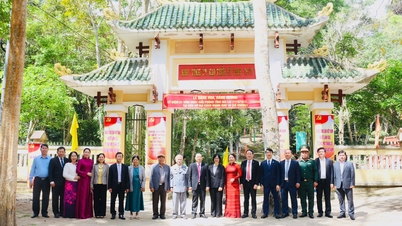
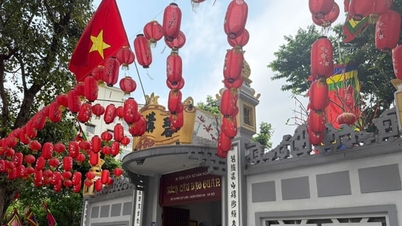
More than just a sacred place of worship, Khenh communal house in Thuong Coc commune is the cultural center of the Muong Khenh community, where the Spring festival takes place with many unique rituals, attracting numerous tourists to experience and explore .

The Khenh communal house is closely associated with Khu Khenh mountain – a scenic spot deeply marked by the culture, history, and spirituality of the ancient Muong Khenh. In the spiritual life of the Muong people, Khu Khenh has long been considered one of the sacred mountains, a place where the spiritual energy of heaven and earth converges, associated with many legends, historical accounts, and unique folk religious practices.

According to legend, Khênh communal house worships Mr. Chưởng Tín, Mrs. Triệu Ân, and other generals who contributed to repelling foreign invaders and protecting the Mường land. In addition, the communal house also worships Mr. Hiển and Mr. Hiệu – guardian deities revered by the people of Mường Khênh for their virtue, loyalty, and sacred protection of the villagers.
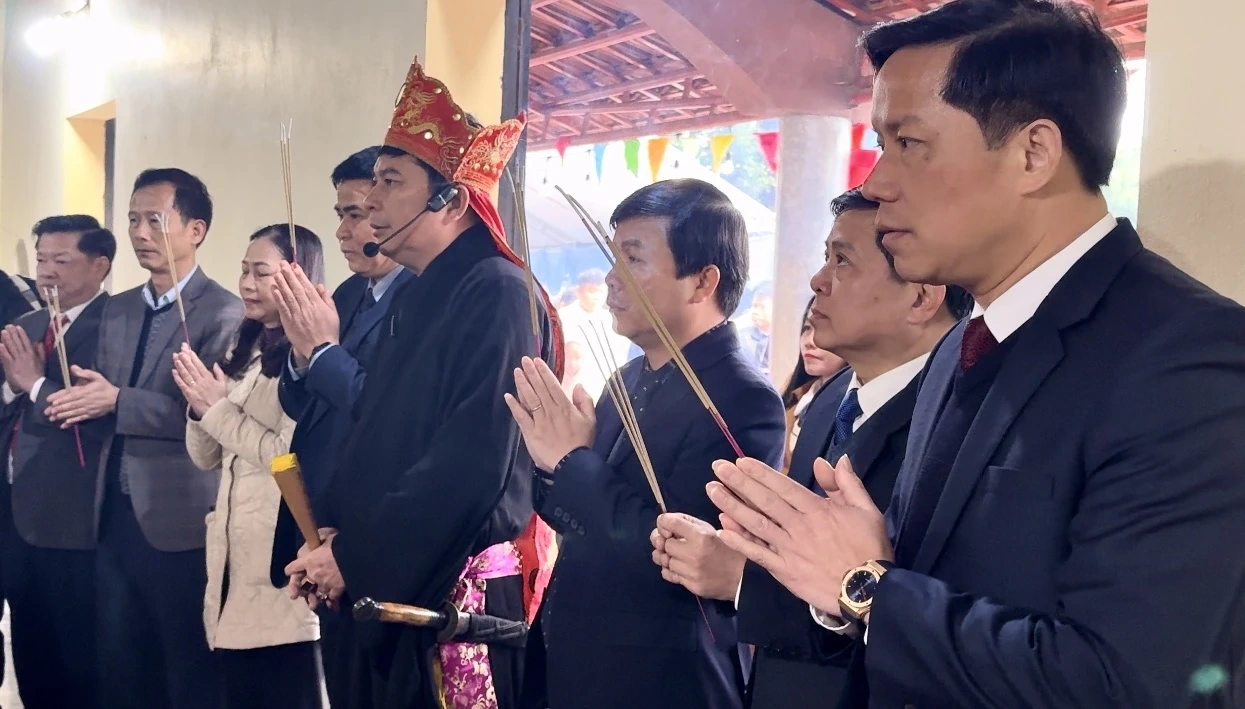
Over time and due to historical changes, the festival activities at Khenh communal house were neglected and interrupted for many years. In 2018, in response to the people's wishes, the festival was restored with many traditional rituals revived. In 2020, Khenh communal house was recognized as a provincial-level historical and cultural relic, affirming its value in the community's cultural life.

Associated with Khenh communal house is a cultural space encompassing the communal courtyard, the Dạ Há statue, the communal well, the shrine, and a magnificent complex of caves within Khụ Khênh mountain. These caves are considered to have archaeological value belonging to the Hòa Bình culture. All of this creates a unique cultural, spiritual, and ecological complex, holding significant potential for local tourism development.


Held over three days (January 12th, 13th, and 14th), the Khênh communal house festival embodies the spirit of a spring festival, with aspirations for national peace and prosperity, favorable weather, abundant harvests, peaceful villages, and good health for all. The ceremonial part is conducted solemnly according to traditional rituals, while the festive part is lively with many unique folk cultural activities.
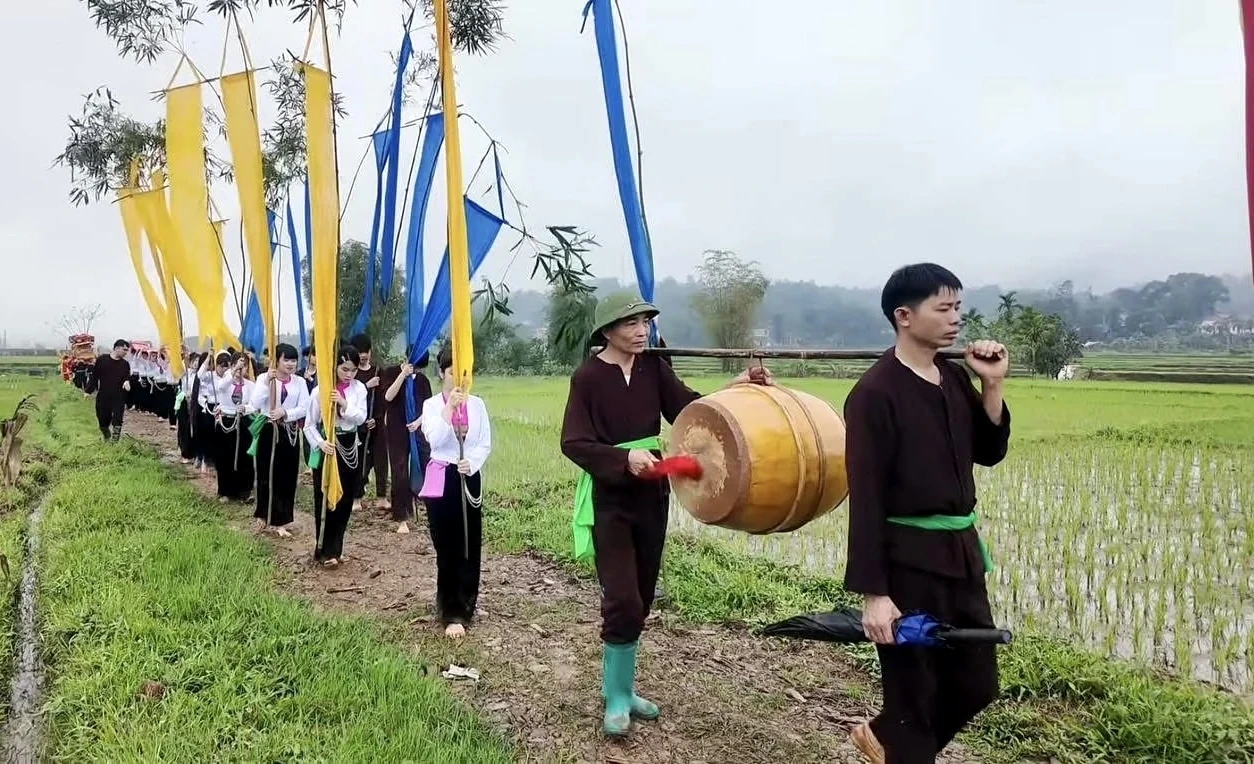
According to People's Artisan Bui Van Minh from Man Bui hamlet, Thuong Coc commune, the Khenh communal house festival, also known as the "Khenh communal house pull festival," stands out with many unique rituals, creating a special attraction for tourists.
On the very first day of the festival, visitors can witness the "Procession of Rice Blossoms and Fruits" ritual (procession of the spirit of rice) - a characteristic agricultural belief of the Muong people. The ritual expresses appreciation for the fruits of labor, thanks to the gods and guardian spirits for blessing the bountiful harvest, and a prayer for a prosperous and comfortable life.
Precisely at midnight on the 13th day of the first lunar month, the "Watering the Village Well" ceremony takes place. From the sound of the drum signaling the watering, the local people stay up all night preparing offerings, slaughtering buffaloes, chickens, and ducks, cooking, and arranging the offerings so that the main festival day can begin the following morning.

On the main day of the festival, the people and tourists offer incense to commemorate the merits of those who fought to protect the Muong land and those who pioneered rice cultivation and established Muong Khenh. At the Khenh communal house cultural space, the ritual of bestowing auspicious rice grains for the New Year takes place. According to folk belief, whoever receives these auspicious rice grains will have good fortune, prosperous business, and good health in the new year.
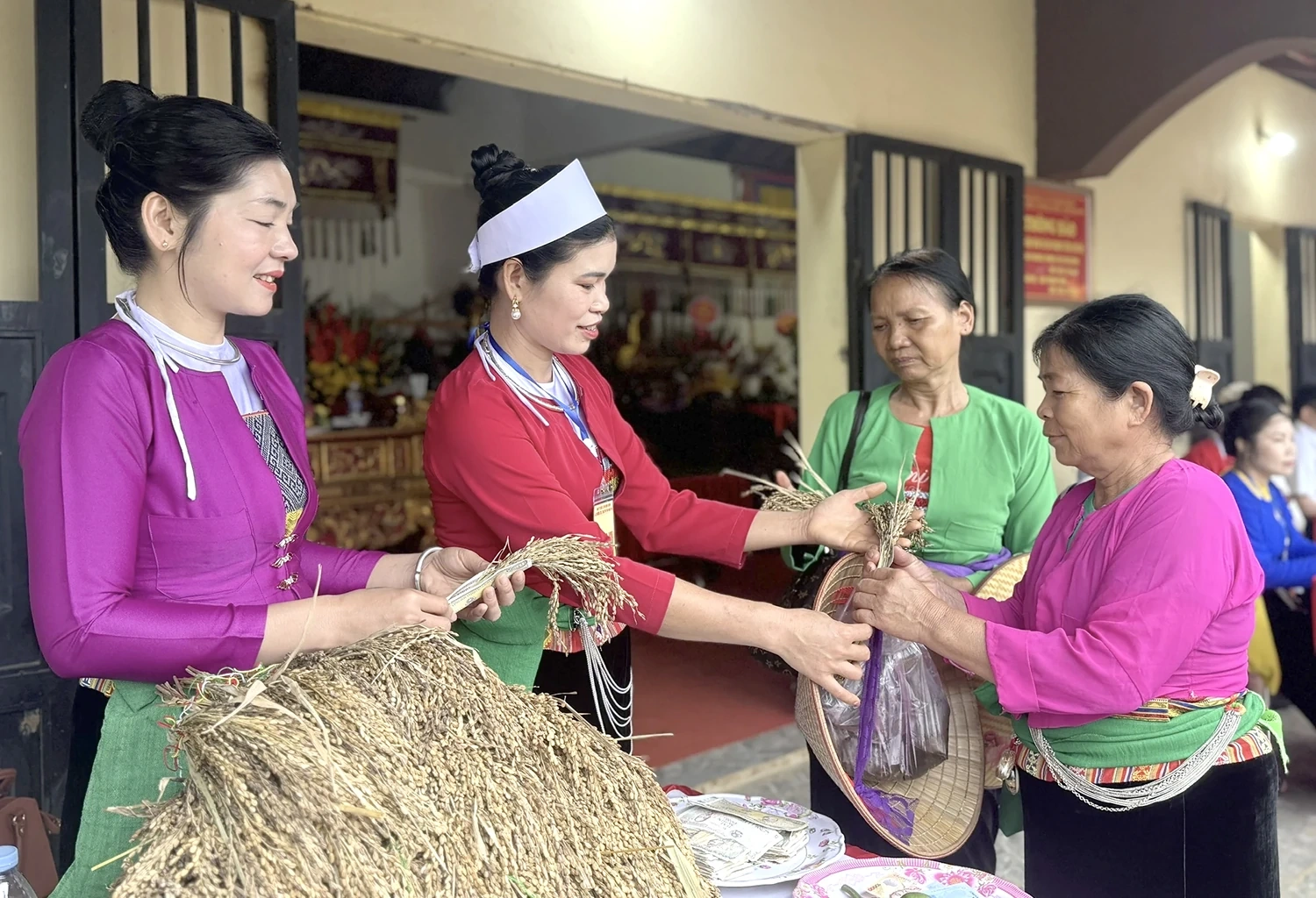
The first rice stalks of spring symbolize the wish to bring good fortune and health to everyone and every household.
Next is the "Bird Prayer" ceremony - a ritual with profound humanistic significance, demonstrating an awareness of protecting the ecological environment and bird species in nature. According to the Muong people's belief, the birds will return to help farmers eliminate pests and protect their crops.
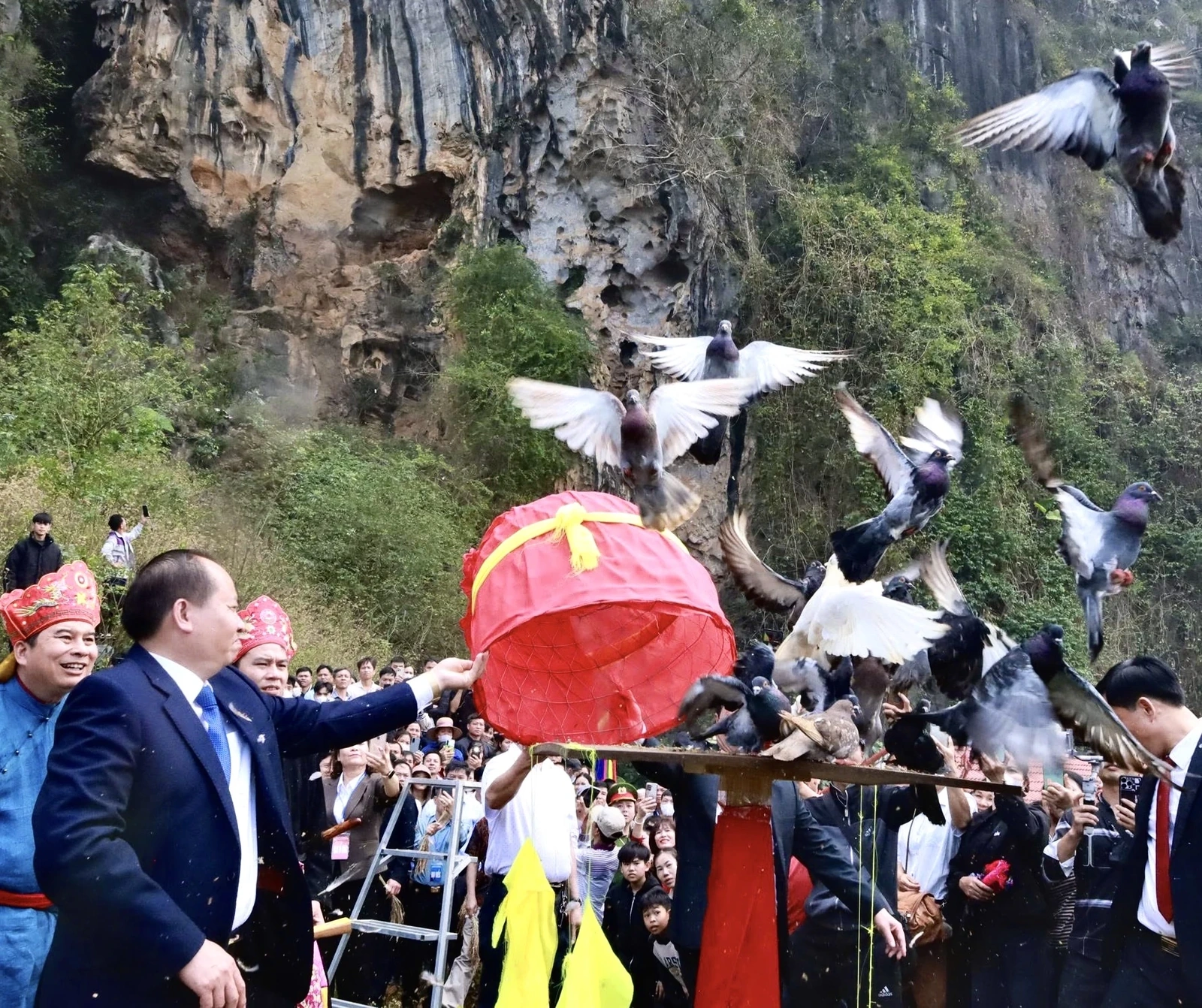
Bird-praying ritual
Another unique ritual is the "Rotating the Dạ Há Statue" ceremony at the Dạ Há temple. According to Mường folk beliefs, the world has four cardinal directions and twelve intermediate directions, and each year certain unfavorable directions may appear. The ritual of rotating the statue aims to point Dạ Há towards the unfavorable direction to ward off evil and pray for a peaceful life.
In addition, there is a ritual of cutting down the lamp-carrying tree to ward off invaders, reenacting the image of Mr. Chưởng Tín and Mrs. Triệu Ân fighting invaders to defend the Mường land, demonstrating the spirit of unity and the will of our ancestors to protect their homeland.
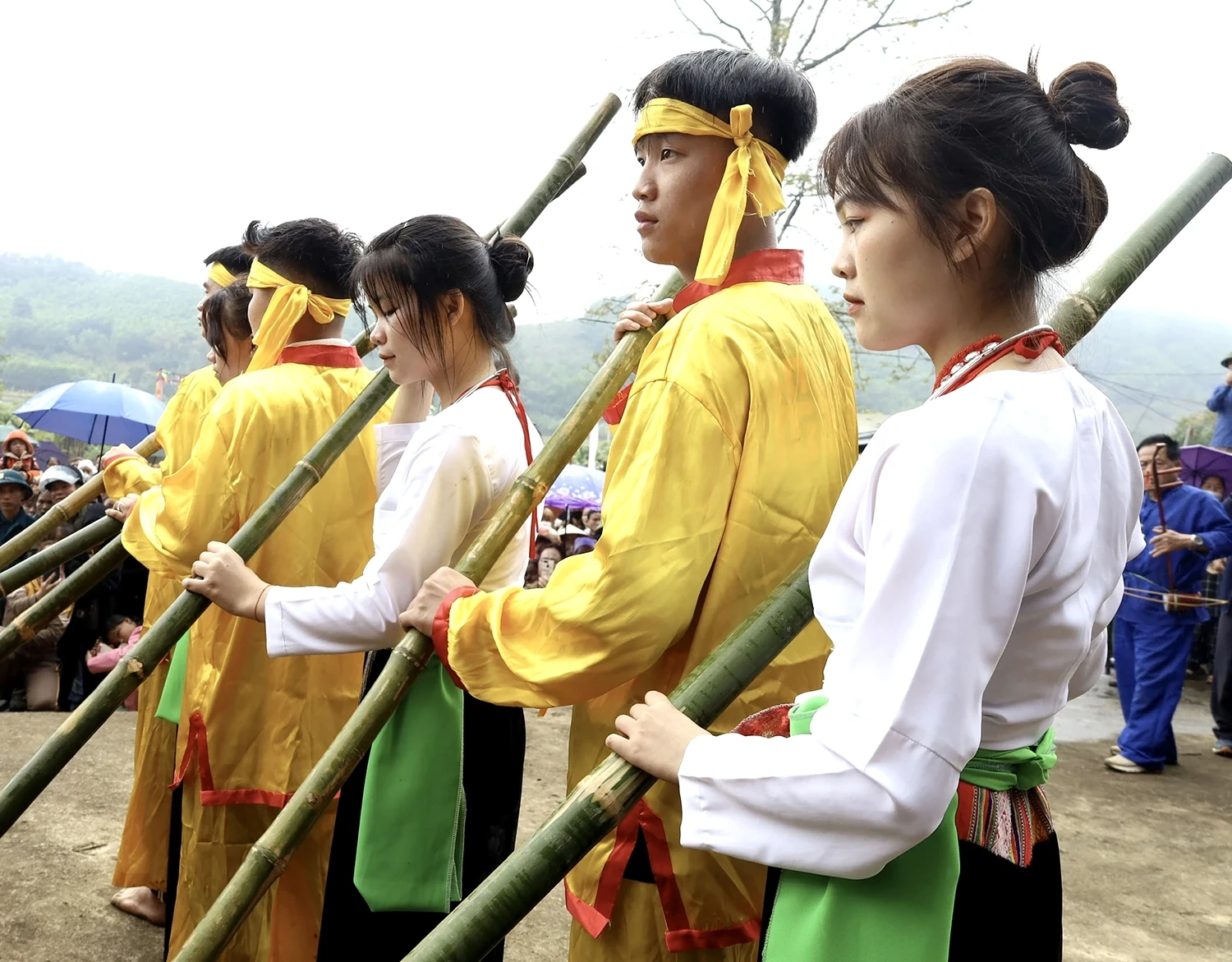
Young men and women are chosen to perform the rituals.
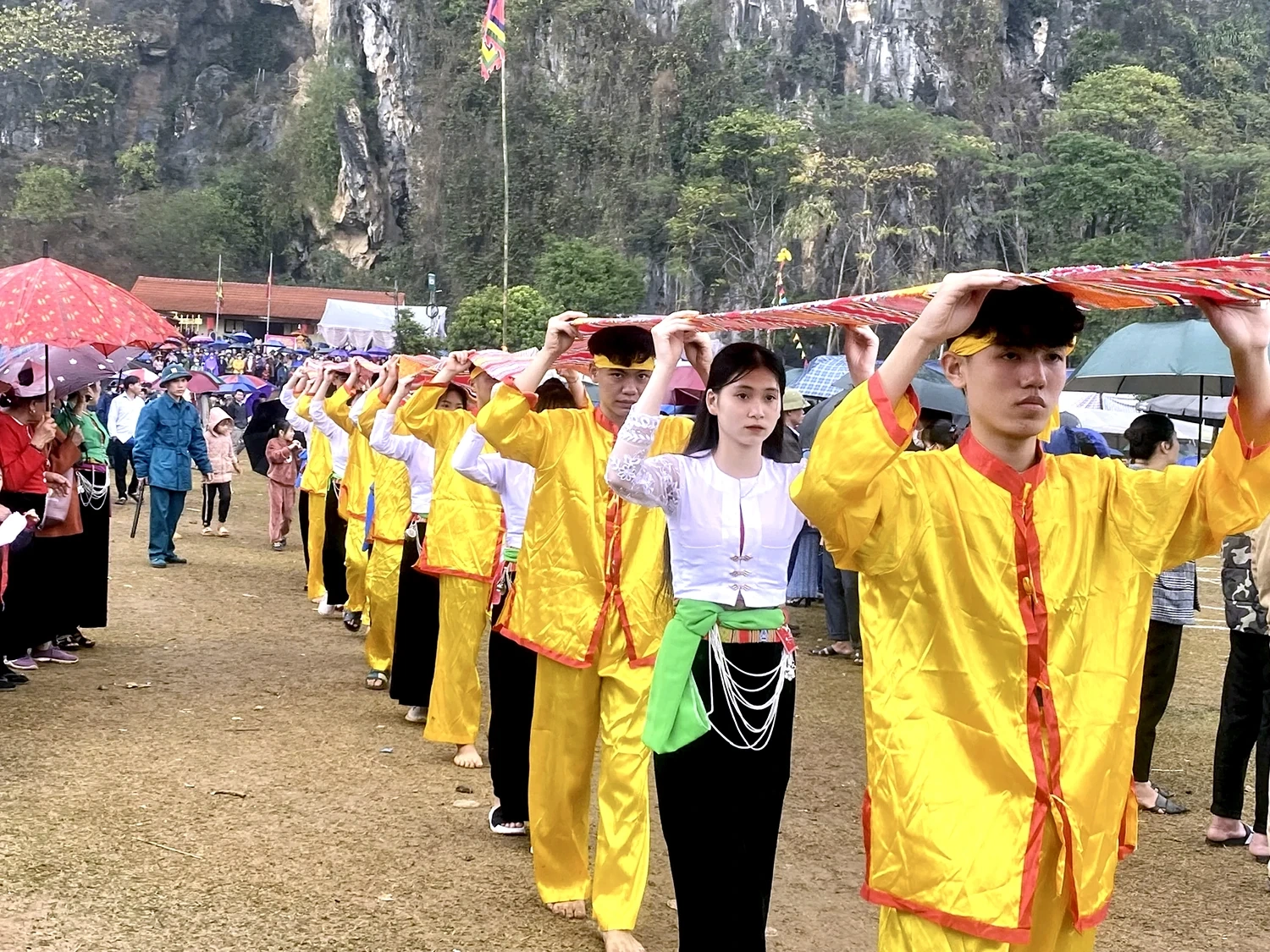
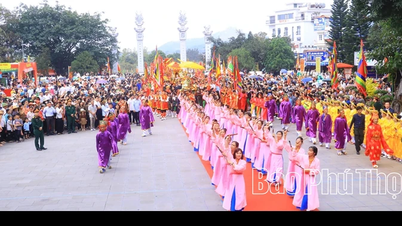
In particular, the "Pulling the Procession" ritual, with the participation of young men and women in traditional costumes, creates a vibrant and unique atmosphere. The procession forms two opposing rows, shoulder to shoulder, holding rolls of cloth and moving in the shape of the characters "peace and protection," expressing the wish for peace and protection from heaven and earth.
Additionally, there is the "Drum-Beating" ritual, aimed at warding off storms and lightning, and praying for favorable weather.

Many unique rituals were reenacted, reflecting the festive spirit of the early spring.
After the "Offering of Rice Wine" ceremony – a ritual signifying communication between humans and spirits – the shaman will perform the ritual of tying threads around everyone's wrists to bestow blessings. From here, the ceremonial part ends, giving way to the festive part with many lively cultural activities, sports, and folk games.

Comrade Bui Van Duong, Chairman of the People's Committee of Thuong Coc commune, said: "Every spring, Khenh communal house joyfully holds its festival. This is not only an occasion for the people to respectfully offer their ancestors characteristic products of their homeland, but also an opportunity for descendants from within and outside the locality to gather and strengthen solidarity. At the same time, the festival contributes to educating the tradition of 'drinking water, remembering the source,' fostering national pride and the awareness of preserving the Muong cultural identity."
Content and photos: Bui Minh
Source: https://baophutho.vn/vui-keo-hoi-dinh-khenh-249940.htm
![[Photo] Prime Minister Pham Minh Chinh presides over meetings of the Government Standing Committee to discuss several important issues.](https://vphoto.vietnam.vn/thumb/1200x675/vietnam/resource/IMAGE/2026/03/16/1773674631996_ndo_br_img-5789-jpg.webp)





![[Photo] Prime Minister Pham Minh Chinh holds a phone call with Angolan President João Manuel Gonçalves Lourenço](https://vphoto.vietnam.vn/thumb/1200x675/vietnam/resource/IMAGE/2026/03/16/1773674632171_ndo_br_dsc-4772-jpg.webp)




























Comment (0)