Taking off from fertile ground
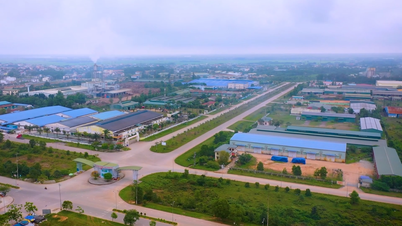
VNG Group Joint Stock Company is considered a symbol of adaptability and technological takeoff since 2004, initially known as Vinagame. It was Vietnam's first technology "unicorn" (valued at $1 billion or more). Founder Le Hong Minh chose Ho Chi Minh City to start his business due to the city's dynamic and ever-evolving nature. In 2014, VNG was valued at $1 billion by the World Startup Report. By 2019, this figure had increased to $2.2 billion. The influence of the current VNG Campus extends beyond a corporate headquarters; it is expected to transform the Tan Thuan Export Processing Zone (Ho Chi Minh City) into a high-value technology park, moving away from its previous purely industrial manufacturing role.
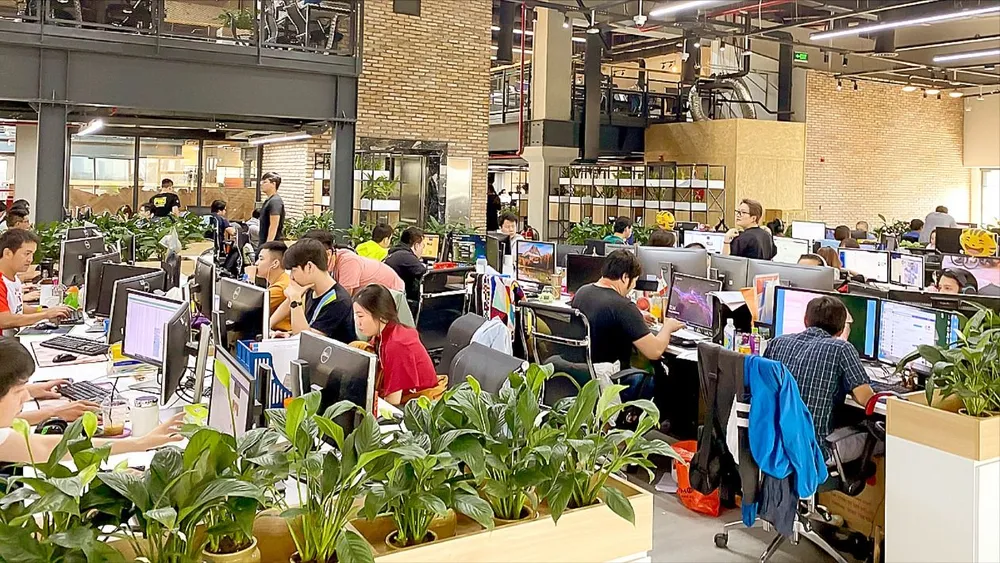
While VNG represents the traditional gaming generation, Sky Mavis, founded by Mr. Nguyen Thanh Trung, is a testament to the power of new technology: Blockchain. In just over three years of operation, Sky Mavis reached a valuation of $3 billion in 2021, becoming the most valuable "unicorn" in Vietnam. Sky Mavis has integrated Blockchain into everyday life, generating millions of dollars in transaction value each month. Similarly, MoMo, an AI-powered financial assistant for Vietnamese people, has risen to prominence. Starting as a simple e-wallet application, MoMo has made a leap to become a technology "unicorn" through its strategy of "democratizing" financial services. At the end of 2024, MoMo announced a rebranding as an "AI-powered financial assistant." By integrating over 100 AI algorithms, MoMo acts as a "sleepless bodyguard," protecting finances 24/7 and helping tens of millions of Vietnamese people access investment and credit in the most convenient way.
The ecosystem is growing stronger.
The emergence of "unicorns" is not accidental, but the result of a sustainably nurtured innovation ecosystem. Ho Chi Minh City currently has the largest startup ecosystem in the country, accounting for nearly 50% of startups in Vietnam. According to the Ho Chi Minh City Department of Science and Technology, the city's global startup ecosystem in 2026 marked a historic milestone when it was ranked 98th in the world for the first time in the StartupBlink ranking, achieving its goal of entering the top 100 four years ahead of schedule. In particular, in the Blockchain field, the city proudly ranks in the top 30 globally and 2nd in Southeast Asia. This attractiveness stems from abundant resources and a deep network of connections. The city currently concentrates approximately 40% of digital technology businesses, 15% of science and technology businesses, and numerous organizations supporting startups.
To pave the way for startups to "venture into the global market," Ho Chi Minh City has proactively promoted connections with international "giants" such as NVIDIA, Qualcomm, Mitsubishi, and strategic partners from the United States, South Korea, and Singapore . Furthermore, the city has selected over 600 innovative projects and trained over 3,000 trainees, creating a large digital workforce ready for the intellectual competition. Simultaneously, Ho Chi Minh City's technology market operates according to market mechanisms. According to the Ho Chi Minh City Department of Science and Technology, the new version of the technology exchange platform currently connects nearly 25,000 technologies and equipment and over 1,100 consulting experts. In the first six months of 2026 alone, the platform recorded 30 technology transfer contracts totaling VND 26.7 billion, demonstrating the effectiveness of integrating technology into production to create real value.
Construction through controlled experimentation


With the expectation of more technology "unicorns" emerging and aiming for 10 "unicorns" by 2030, Ho Chi Minh City is aggressively implementing unprecedented pilot mechanisms. This involves establishing controlled testing mechanisms (sandboxes) tailored to the city's specific characteristics and future technologies.
A prime example of this is the "Made in Vietnam" unmanned aerial vehicle (UAV) products of Real-Time Robotics Vietnam Joint Stock Company (RtR). Currently, nearly 100% of the company's products are exported to the US and European markets for defense, security, and power generation. Through various working programs, Mr. Luong Viet Quoc, founder and CEO of RtR, openly expresses his ambition for the company to be valued at over $1 billion before 2029. RtR has received priority support from the leaders of Ho Chi Minh City as well as the Ministry of Science and Technology to realize the city's aspiration of having another "unicorn".
The city has also pioneered the testing of new technologies such as UAVs and autonomous vehicles at the Quang Trung High-Tech Park and Software Park. The launch of the Can Gio - Vung Tau UAV delivery route and the use of UAVs for monitoring protected forests have opened up avenues for low-level economic development and modern logistics. These management experiences are crucial preparatory steps before the widespread deployment of these technologies.
To foster the growth of startups, Ho Chi Minh City has established a city-level venture capital fund with an initial charter capital of 500 billion VND, aiming to reach 5,000 billion VND by 2030. Simultaneously, projects to build internationally accredited research centers (CoEs) and a network of world-class innovation centers are being accelerated to attract global experts and master strategic technologies such as microchips, semiconductors, biotechnology, and large-scale artificial intelligence.
Faced with new technological trends and positive developments, Ho Chi Minh City possesses all the necessary elements to anticipate the emergence of a new generation of "unicorns." The city not only boasts impressive infrastructure, capital, and rankings, but more importantly, a new management mindset: a constructive approach through a sandbox for innovation.
Comrade NGUYEN MANH CUONG, Alternate Member of the Central Committee of the Communist Party of Vietnam, Vice Chairman of the People's Committee of Ho Chi Minh City:

Ho Chi Minh City has identified the crucial task of disseminating technology business development models to other localities, contributing to the construction of a synchronized innovation ecosystem nationwide. With a sandbox mechanism (controlled testing), the city is rapidly completing the legal framework and developing regulations for controlled testing of new technologies, especially low-level economies and unmanned aerial vehicles (UAVs). Regarding strategic technology infrastructure, the city is accelerating the implementation of the Ho Chi Minh City High-Tech Park expansion project; putting into operation a national-level shared microchip and semiconductor laboratory system at the Vietnam National University Ho Chi Minh City; developing a Biotechnology Center approaching international standards; and providing technical consulting to soon deploy super-scale AI data centers. Following this, a network of interconnected sandboxes between Ho Chi Minh City and other localities will be formed, creating conditions for new technologies to be tested, evaluated, and scaled up.


* Dr. Tran Quy, Director of the Vietnam Institute for Digital Economic Development:
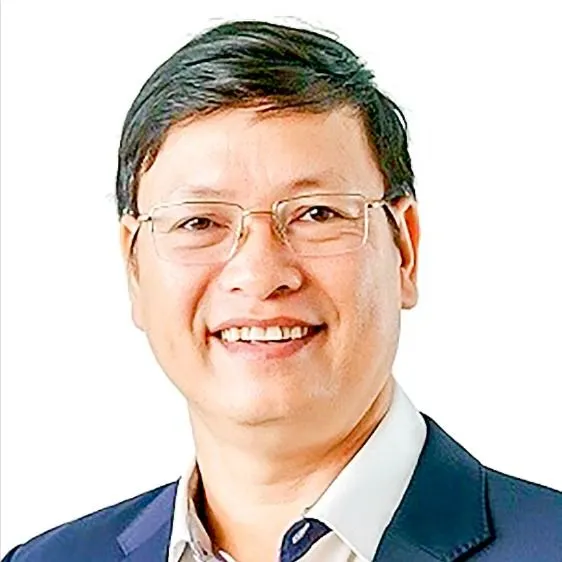
The goal of having the digital economy account for 30% of GRDP by 2030 is entirely achievable, given that Ho Chi Minh City has established a growth pillar based on science and technology. By synchronously combining digital government, digital infrastructure, and specific mechanisms, Ho Chi Minh City is not only building a robust ecosystem but also creating an environment that nurtures startups capable of expanding globally.
Source: https://www.sggp.org.vn/vung-dat-cua-nhung-ky-lan-cong-nghe-post860247.html