RESOLUTION PAVING THE WAY FOR HO CHI MINH CITY'S DEVELOPMENT
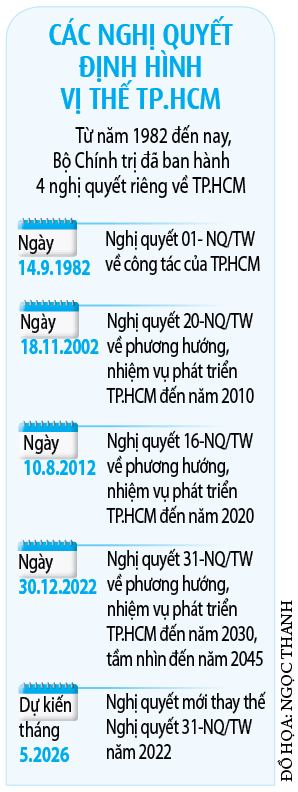
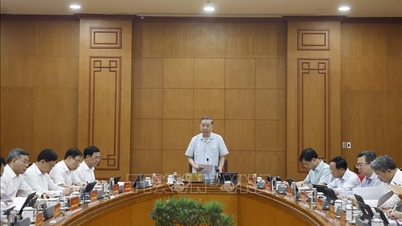
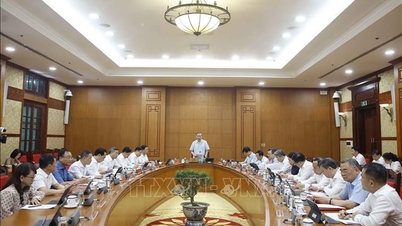
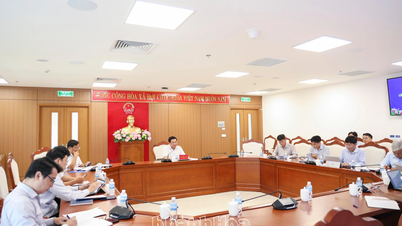
At a meeting with the Standing Committee of the Ho Chi Minh City Party Committee on April 27, General Secretary and President To Lam emphasized that in May 2026, the Politburo will issue a new resolution on the development of Ho Chi Minh City in the new space after its merger with Binh Duong and Ba Ria-Vung Tau provinces. Looking back from 1982 to the present, the Politburo has issued four resolutions on the development of Ho Chi Minh City, demonstrating special attention to this economic powerhouse and major center in many aspects of the country. The new resolution will be an important political basis for the development of a law on Special Cities, the first law specifically for a city that is not the national capital.
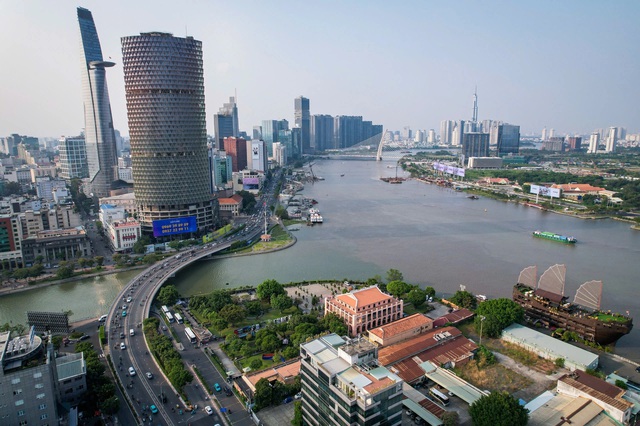
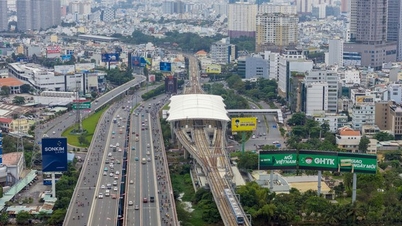
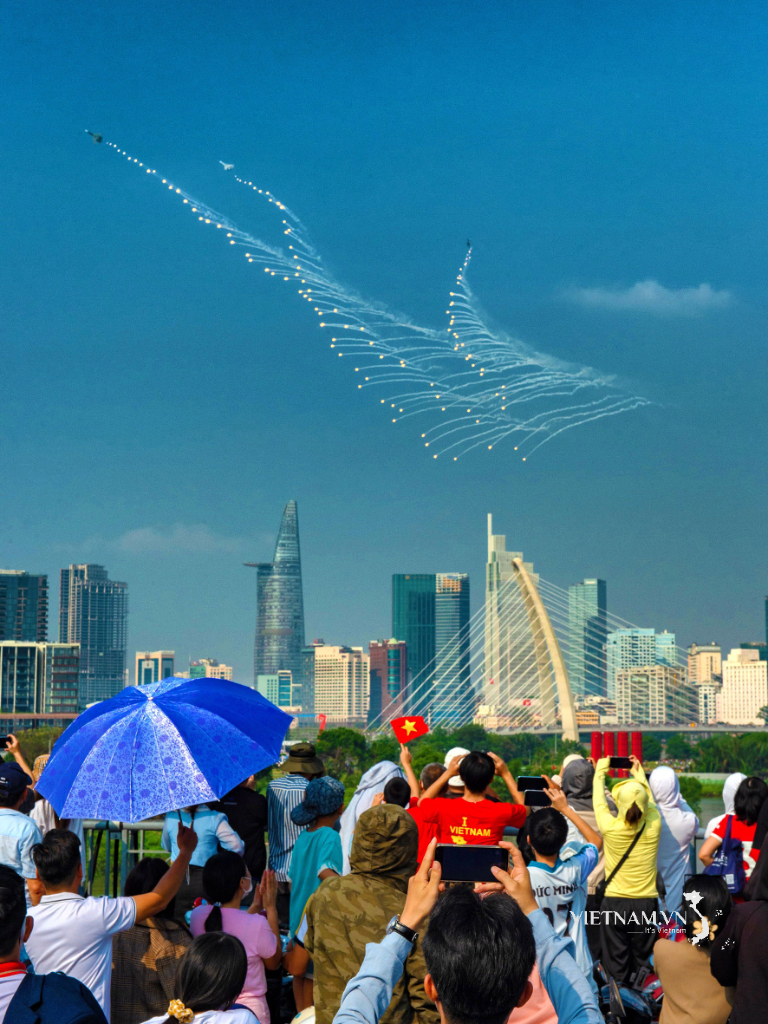
The Politburo is expected to issue a new resolution on the development of Ho Chi Minh City in May 2026.
PHOTO: NHAT THINH
General Secretary and President To Lam requested that the new resolution on the development of Ho Chi Minh City and the Law on Special Cities accurately reflect the city's position, stature, and mission, create breakthroughs in institutions and governance, enhance financial autonomy, allow for the experimentation of new institutions, and design policies suitable to the specific characteristics of a megacity . These measures will pave the way for Ho Chi Minh City's strong development in the coming period.
Furthermore, the General Secretary and President requested Ho Chi Minh City to more thoroughly concretize the Central Committee's strategic resolutions to suit practical realities and create new development models. Specifically, the resolution on science and technology must focus on the innovation ecosystem, high-tech industries, urban data, digital government, artificial intelligence, and semiconductors. The resolution on international integration must be linked to an international financial center, free trade zones, seaports, and international services.
Regarding the resolution on lawmaking and implementation, the General Secretary and President emphasized the need for concretization in the Law on Special Urban Areas and the reform of administrative procedures, decentralization, and delegation of power in a substantive manner. As for the resolution on the private economy, it must transform the people's aspirations for wealth creation into reality, promote free enterprise, encourage household businesses to develop into enterprises, small and medium-sized enterprises to become large enterprises, and give rise to more technology-based enterprises. "Ho Chi Minh City must take the lead in transforming the Central Committee's strategic resolutions into vibrant practice, avoiding a situation where the writings are good and the words are good but the actions are poor," the General Secretary and President demanded.
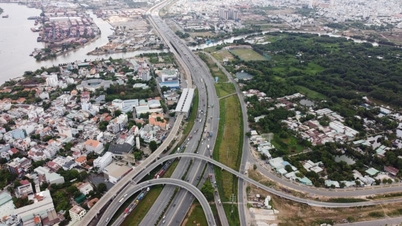
With its new scale, new resources, and new internal strengths combined from the three growth poles, Ho Chi Minh City needs new, integrated mechanisms and institutions that ensure harmonious development between the regions.
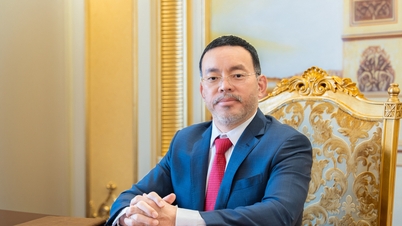
Associate Professor Dr. Vu Tuan Hung, Director of the Institute of Social Sciences of the Southern Region
A DETAILED ROADMAP, QUANTIFYING RESULTS
Speaking with a reporter from Thanh Nien Newspaper , Associate Professor Dr. Vu Tuan Hung, Director of the Southern Region Institute of Social Sciences ( thuộc the Vietnam Academy of Social Sciences), assessed that the Politburo's resolution plays a very important role in shaping and guiding the long-term development of a locality and a sector. The issuance of the new resolution on the development of Ho Chi Minh City in May 2026 demonstrates the urgency and special attention of the Politburo, General Secretary, and President To Lam to the development of the megacity of Ho Chi Minh City.
According to Associate Professor Vu Tuan Hung, after expanding its administrative boundaries, Ho Chi Minh City became a megacity with over 14 million inhabitants, a scale among the top in Southeast Asia and Asia, thus requiring a commensurate institutional framework. Although the National Assembly has granted Ho Chi Minh City special mechanisms, these are still limited to the old city limits. "With its new scale, new resources, and the combined internal strength of the three growth poles, Ho Chi Minh City needs new, integrated mechanisms and institutions that ensure harmonious development between the different regions," Professor Hung added.
According to Associate Professor Vu Tuan Hung, the new resolution on the development of Ho Chi Minh City should establish a strategic, long-term vision and usher in a new era for the locality. Despite the strategic vision, Ho Chi Minh City also needs to define a roadmap with specific timelines for implementation and quantify the results. Accordingly, Ho Chi Minh City could choose milestones such as the 100th anniversary of the founding of the Party, the 100th anniversary of the founding of the nation, and the 100th anniversary of national reunification, corresponding to 2030, 2045, and 2075. "Having a vision will then determine the institutional, social, and other resources needed for implementation," Associate Professor Vu Tuan Hung added.
As a locality with vibrant practices and outstanding conditions, Associate Professor Dr. Vu Tuan Hung believes that the new resolution could consider integrating strategic resolutions of the Central Committee, ensuring comprehensive development in infrastructure, economy, culture, and other social issues. The most crucial aspect is that the resolution must create a new institutional framework with superior mechanisms, specifically codified in the Law on Special Urban Areas.
INSTITUTIONAL INVESTMENT
Following the Politburo's approval of the new resolution on the development of Ho Chi Minh City, the Ho Chi Minh City People's Committee organized a workshop to gather expert opinions on mechanisms and policies. Many experts and scientists believe that before introducing specific mechanisms, Ho Chi Minh City needs to redefine its position in the new era.
Associate Professor Dr. Do Phu Tran Tinh, Director of the Institute for Policy Development at the Vietnam National University Ho Chi Minh City ( thuộc Trường ĐH Kinh tế - Luật, VNU-HCM), recommends that Ho Chi Minh City should be organized as a center for coordinating strategic resources of the region and the nation. When the economic scale reaches a large threshold, the driving force for growth no longer comes from expanding inputs but depends on the efficient allocation and reallocation of resources.
On the other hand, Ho Chi Minh City's development space is closely linked to the Southeast region and the Mekong Delta, forming a substantive linkage mechanism between the center, satellite cities, and economic corridors, thereby overcoming the dispersion and localization of resources. Associate Professor Dr. Do Phu Tran Tinh assessed that improving the efficiency of resource coordination will directly increase productivity and create new growth momentum in a situation where the scale has reached its limit. This expert also suggested that Ho Chi Minh City should establish itself as a hub for international integration and a key national positioning point in the global economic space.
Meanwhile, Dr. Huynh The Du, from the Fulbright School of Public Policy and Management in Vietnam, assessed that Ho Chi Minh City is facing many challenges that are limited by the current institutional framework, which has not kept pace with the scale, function, and development requirements of a national central urban area. In the context of a shifting North-South growth dynamic structure and increasingly fierce regional competition, continuing to maintain a "leveling" institutional approach will diminish Ho Chi Minh City's ability to effectively exploit its potential.
According to Dr. Huynh The Du, the Law on Special Urban Areas for Ho Chi Minh City should be approached as an institutional investment for national growth. A specific legal framework will enable Ho Chi Minh City to experiment with financial and market policies, develop an international financial center, upgrade value chains and business ecosystems, and amplify spillover effects at the regional and national levels.
Source: https://thanhnien.vn/xac-lap-tam-voc-moi-cho-sieu-do-thi-tphcm-185260428185228862.htm












































































Comment (0)