While many consumers remain cautious about this change, some manufacturers have prepared well in advance. With its DM-i Super Hybrid platform, BYD possesses numerous technical solutions developed to adapt to biofuels, from high-compression engines to specialized corrosion-resistant materials. These are also factors that help this technology confidently enter the E10 gasoline era.

BYD's DM-i Super Hybrid is fully compatible with E10 gasoline.
PHOTO: BYD
The secret to perfect engine adaptation.
To understand why DM-i Super Hybrid technology is considered highly compatible with E10 gasoline, three core factors need to be examined: compression ratio, operating cycle, and engine material system.
Most notably, the engine boasts a compression ratio of up to 15.5:1 – one of the top figures on the market today. In traditional internal combustion engines, high compression ratios often carry the risk of knocking, affecting performance and durability. However, this is where E10 gasoline can excel thanks to its higher octane rating compared to regular gasoline, allowing the fuel to withstand greater pressure before spontaneous combustion.
This combination helps the DM-i Super Hybrid engine optimize combustion, more efficiently harnessing energy from fuel and improving thermal efficiency. As a result, the powertrain not only maintains powerful performance but also contributes to optimized fuel consumption during use.

DM-i Super Hybrid technology is fully compatible with E10 gasoline.
PHOTO: BYD
The second factor lies in the Atkinson cycle – the core operating principle of the DM-i Super Hybrid engine. Compared to the traditional Otto cycle, Atkinson optimizes combustion by extending the expansion stroke, thereby reducing energy losses and improving thermal efficiency. This not only contributes to fuel savings but also helps the engine maintain smoother operation and more stable temperature control under various operating conditions.

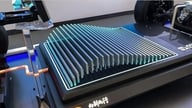

The final factor, and the one most important to many users when discussing E10 gasoline, is its corrosion resistance. Because ethanol is hygroscopic, the fuel system needs to be designed with suitable materials to ensure durability during long-term use. On the DM-i Super Hybrid platform, BYD has applied materials with high chemical resistance and corrosion resistance to components that frequently come into contact with the fuel, such as fuel lines, injectors, and seals.
The combination of the high-performance Atkinson cycle and specialized materials not only enables the DM-i Super Hybrid to operate efficiently with E10 gasoline but also provides the necessary durability and stability for users in the long term.
Commitment to transparency from the manufacturer.
According to a representative from BYD Vietnam, models using DM-i Super Hybrid technology, such as the BYD Seal 5, BYD Sealion 6, and BYD M9, manufactured from May 2026 onwards will be affixed with a certification sticker indicating compatibility with E10 bioethanol fuel right from the factory. This is considered a proactive step to help consumers easily identify products that meet the technical standards for this new fuel type.
More than just an identifying mark, the E10 certification sticker reflects BYD's thorough preparation process, from product research and development and real-world testing to the manufacturing process. Through this, the company continues to affirm its commitment to anticipating new fuel trends and supporting consumers in their transition to sustainable transportation solutions.

Fuel efficiency label on the BYD M9 model
PHOTO: BYD
Although DM-i Super Hybrid technology has been optimized to efficiently utilize E10 gasoline, proper usage habits remain crucial in maximizing the advantages of this new fuel. Users should choose reputable fuel sources, avoid storing fuel for extended periods in the tank, and perform regular maintenance as recommended by the manufacturer.
With preparation from both manufacturers and users, the transition to E10 biofuel can proceed more smoothly, contributing to the goal of green transportation and sustainable development in the future.

BYD's new energy vehicle customers can rest assured with the use of biofuel.
PHOTO: BYD



The widespread adoption of E10 biofuel is seen as an inevitable step in the development of green transportation and emission reduction. In this context, technological platforms developed to adapt to this new generation fuel will offer significant advantages to users. With its high-compression engine, high-efficiency Atkinson cycle, and specialized corrosion-resistant materials, the DM-i Super Hybrid technology demonstrates readiness for the E10 trend and affirms BYD's research and development capabilities in the field of new energy vehicles.
Alongside product refinement, BYD Vietnam continues to enhance the ownership experience through after-sales policies. From June 1st, 2026, newly delivered all-electric vehicles (EVs) will undergo their first scheduled maintenance at 20,000 km or 12 months (whichever comes first), instead of the previous 5,000 km or 3-month intervals. This adjustment is implemented according to BYD's technical standards, optimizing usage time, reducing unnecessary maintenance frequency, and providing greater convenience for customers, while still ensuring vehicle performance and safety.
All BYD vehicles in Vietnam are covered by a 6-year or 150,000 km warranty (whichever comes first), along with a warranty on the battery, electric motor, and motor controller for up to 8 years or 160,000 km. Customers can find more information at www.byd.com/vn or contact the hotline at 1900 866 688.
Source: https://thanhnien.vn/xang-e10-len-ngoi-xe-byd-co-gi-de-tu-tin-185260616161049157.htm










































![[Image] Ho Chi Minh City: Ma Lang area, Chicken-Rice Market about to change its appearance](https://vphoto.vietnam.vn/thumb/1200x675/vietnam/resource/IMAGE/2026/06/25/1782377698627_ndo_br_m1-jpg.webp)