From "Popular Education" to Digital Skills
In his keynote address at the 11th National Congress of the Vietnam Fatherland Front, for the 2026-2031 term, General Secretary and President To Lam emphasized: “In the new era, national unity is not only a spiritual tradition but also a driving force for national development.” To maximize this capacity, digital transformation is a crucial lever, contributing to unleashing creativity and fostering broad social consensus.
The General Secretary and President emphasized: "Digital transformation must create new methods for the Fatherland Front to be closer to the people, to listen to the people more broadly, to respond to the people more quickly, and to monitor the resolution of people's requests more transparently."
All programs and movements of the Front must stem from the needs, aspirations, and legitimate interests of the people; the people must be at the center and be the subject of the reform process.
The Vietnam Fatherland Front Committee and political and social organizations in the province have concretized these directives through the "Popular Education Movement". The effectiveness of the Fatherland Front's work is not measured by the number of meetings or documents, but by the trust and satisfaction of the people.
 |
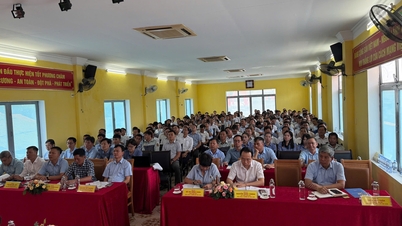
| Training session on implementing the Digital Front model for residential areas - Photo: CC |


Implementing Plan No. 07-KH/TU of the Provincial Party Committee's Standing Committee, the "Digital Literacy Movement" has created a new impetus over the past year, shifting strongly from mere initiation to concrete and in-depth implementation. The entire system organized over 120 propaganda and training sessions, attracting over 6,500 cadres, union members, and citizens. The Provincial Front's website published over 645 news articles and produced more than 20 videos using artificial intelligence (AI) to disseminate digital knowledge in a vivid and intuitive way.
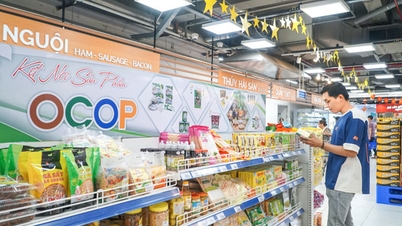
The movement has spread widely through innovative "hands-on" models, specifically: The "Digital Ambassador" model, which builds a network of mentors and learners, has been implemented in 42 out of 78 communes and wards, helping people master technology at the grassroots level. The "Digital Market - Digital Rural Area" model has brought the digital economy to remote areas, narrowing the gap between rural and urban areas, bringing goods and agricultural products closer to people through online markets, and making cashless payments more common.
The "Digital Youth Volunteer" campaign, with its spirit of "going door to door," has enabled young people to access smartphones with integrated electronic health records through the VNeID application, allowing them to use online public services. The "Digital Family" model ensures that at least one member of each household is proficient in basic digital services to guide family members, creating a foundation for a sustainable digital learning society.
Many effective models
During the implementation process, many practical and effective models have emerged, such as: the Vietnam Fatherland Front Committees of Kim Dien and Nam Gianh communes with the "Electronic Fatherland Front Handbook" model, digitizing propaganda materials and sharing them through residential area Zalo groups, contributing to saving printing costs and improving people's access to information. The Vietnam Fatherland Front Committees of Tan Thanh, Ai Tu, and Tuyen Hoa communes integrated digital transformation content into residential area activities, branch meetings, and youth union meetings; combined this with direct guidance for people to use online public services and digital applications.
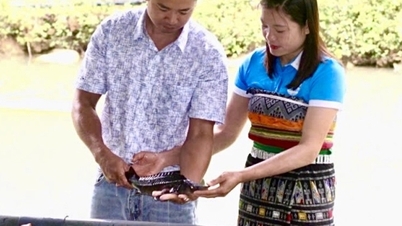
The Vietnam Fatherland Front Committee of Minh Hoa commune has implemented an "Online Market" model, contributing to promoting local agricultural products, supporting people in selling their products, and gradually changing traditional buying and selling habits. The Vietnam Fatherland Front Committees of Dong Ha and Dong Son wards have developed QR codes to collect and understand the situation of the people in the digital environment. The Women's Union of Dong Thuan ward has a model where women help each other with digital skills; Nam Dong Ha and Dong Hoi wards have launched a model of women with digital markets, focusing on digital transformation and entrepreneurship to create livelihoods for women.
The deployment of these models to residential areas has yielded positive results, contributing to the strong spread of digital transformation within the community, gradually removing technological barriers, and transforming seemingly complex digital concepts into practical skills. As a result, people are increasingly mastering digital tools to improve their quality of life and the efficiency of their production and business activities.


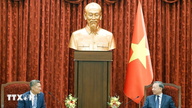
With its streamlined and efficient electronic operating system, the Fatherland Front is able to promptly grasp the thoughts and aspirations of the people and respond to their suggestions quickly, transparently, and effectively.
Cong Cuong
Source: https://baoquangtri.vn/chinh-polit/202606/xay-dung-mat-tran-hien-dai-65a253d/


![[Image] Ho Chi Minh City: Ma Lang area, Chicken-Rice Market about to change its appearance](https://vphoto.vietnam.vn/thumb/1200x675/vietnam/resource/IMAGE/2026/06/25/1782377698627_ndo_br_m1-jpg.webp)




























![[Image] Schools organize meetings and introduce teaching models to students admitted to grade 10.](https://vphoto.vietnam.vn/thumb/1200x675/vietnam/resource/IMAGE/2026/06/25/1782368077271_ndo_br_z7970052192242-1ec8daeb77a6eed1a4e9f58c564ddd3e-jpg.webp)