

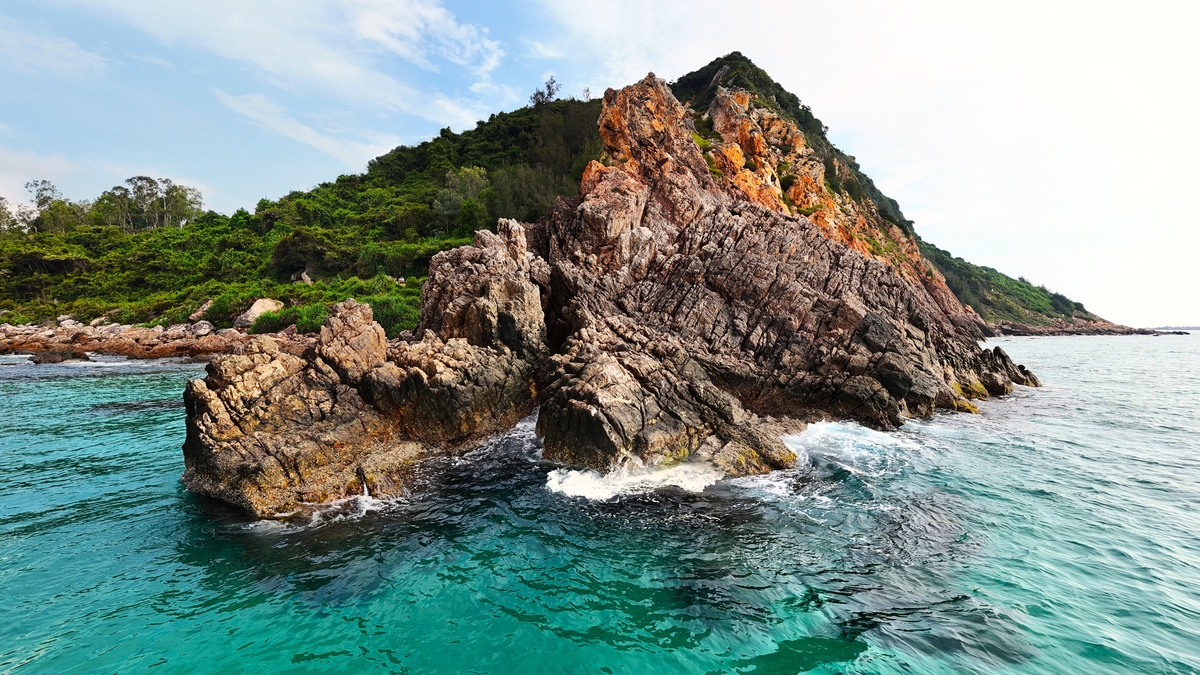
Today, Dak Lak province boasts both a windswept plateau of red basalt soil and a 189-kilometer-long coastline with many beautiful coves and bays, creating a sustainable marine and forest development environment.
Tourism is often called the "smokeless industry," but in reality, it's not entirely "clean." According to the World Travel and Tourism Council (WTTC), in 2024, the industry contributed approximately US$11.1 trillion to global GDP, equivalent to about 10% of the world's gross domestic product, and created over 348 million jobs. This impressive figure demonstrates the immense power of tourism in socio-economic development. However, along with this prosperity comes a significant downside. The tourism industry is estimated to be responsible for about 8% of global greenhouse gas emissions, and plastic waste generated at many destinations has increased by 35% in just a decade.
In Vietnam, tourism contributes over 7% of GDP and creates approximately 5.96 million jobs, a clear testament to the industry's widespread impact and socio-economic role. However, it has also caused many localities such as Sa Pa, Ha Long, Da Lat, coastlines, and oceans to suffer from overcrowding, pollution, and environmental degradation.
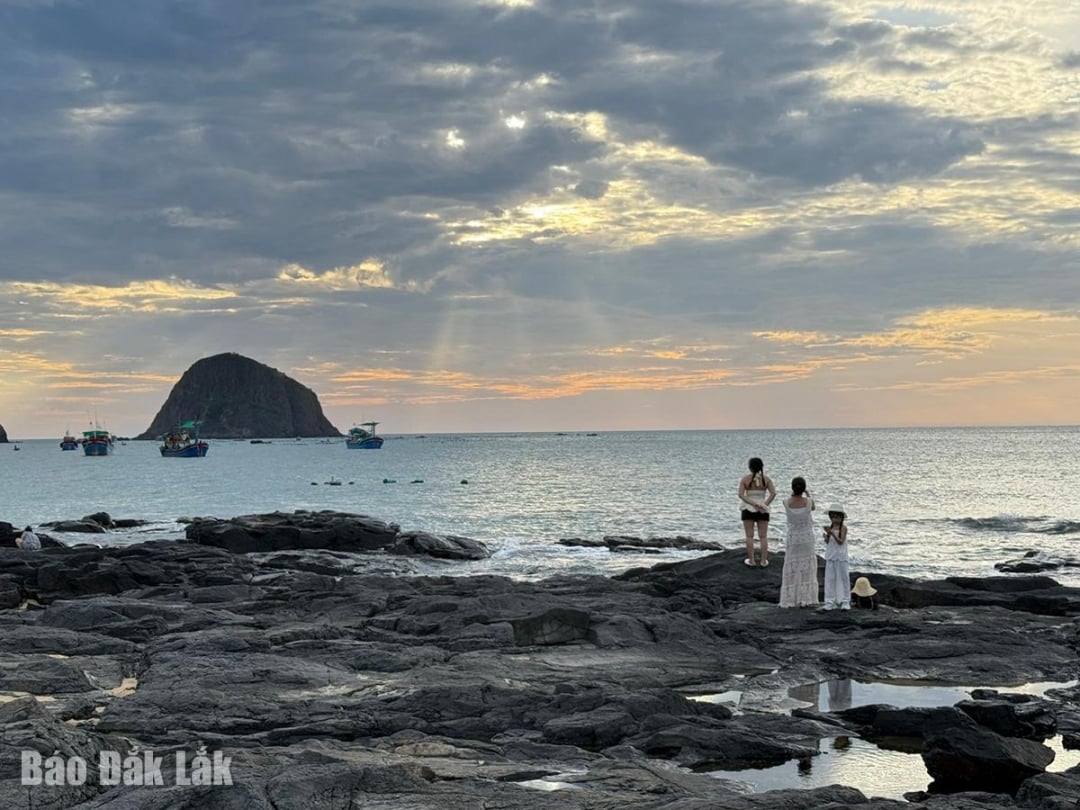 |
| Tourists visit Hon Yen, a national scenic spot in eastern Dak Lak. |
Faced with these challenges, green tourism has emerged as an inevitable trend. From Europe to Asia, many countries have adopted it as a guiding principle for restructuring the industry. Many countries around the world are implementing policies to reduce emissions from tourism activities. For example, Japan has developed green hotels, using up to 90% renewable energy. Thailand has built famous eco-tourism programs in Chiang Mai and Phuket, helping to reduce energy consumption in the hotel industry by up to 30%. Large hotel and resort corporations worldwide have also committed to halving plastic waste by 2030. These steps show that green tourism is no longer just a slogan, but has become an international standard.
| Dak Lak is considered a "gold mine" of eco-tourism, a magnificent symphony of blue sea waves and cascading waterfalls, along with a rich and distinctive local culture. |
In Vietnam, efforts in this field are beginning to yield results. The Vietnam National Administration of Tourism reports that the number of tourists choosing eco-tourism products is increasing by approximately 15% annually, with revenue from green tourism reaching about 20% of the total industry revenue. Around 60% of travel businesses have adopted sustainable models, while 70% of hotels with 3 stars or more have implemented energy-saving measures and reduced plastic waste. Many localities have successfully established their brands, such as Hoi An with its "Plastic-Free City" model, Da Lat with its "Green and Sustainable Tourism" program, and national parks like Phong Nha-Ke Bang, Cat Tien, and Con Dao, where tourist numbers are steadily growing thanks to ecological development.
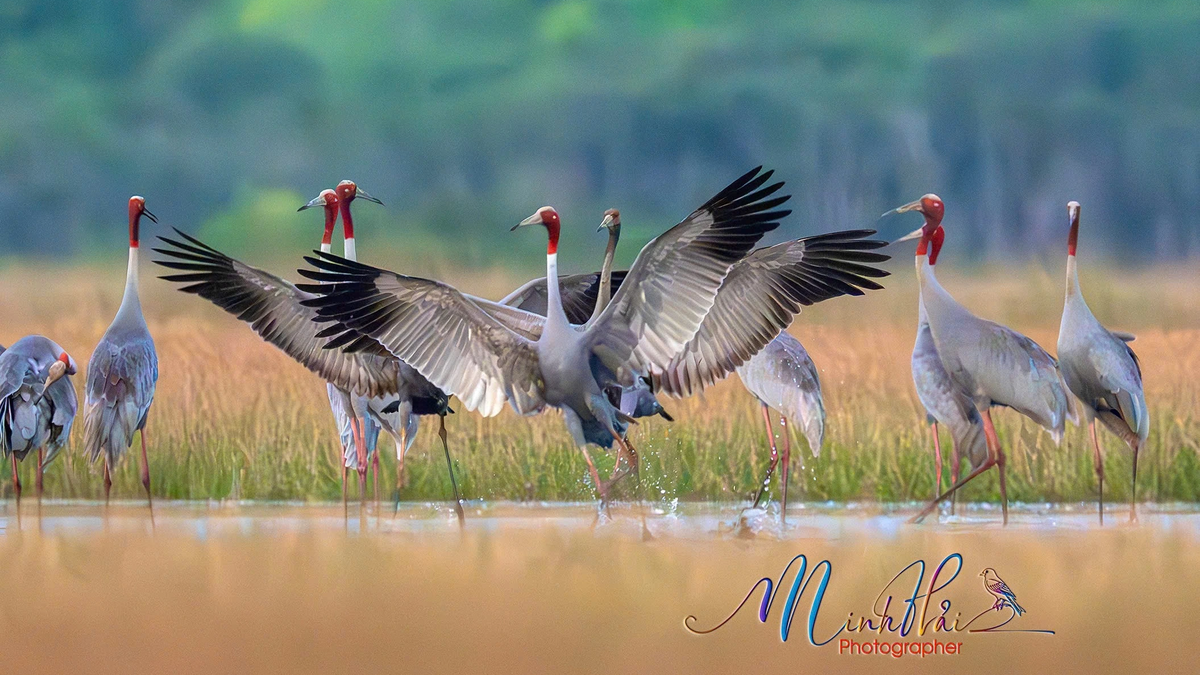
In that context, Dak Lak is considered a "gold mine" of ecotourism. Located in the heart of the Central-Western Highlands coastal region, the province boasts Yok Don National Park, covering over 115,000 hectares, the only place in Vietnam where wild elephants still live, along with many rare animals such as gaur and langurs; and Ea So Nature Reserve, covering over 26,848 hectares… The forests of Lak Lake, Dray Nur and Dray Sap waterfalls, and endless stretches of coffee plantations create a unique tourism resource. Combined with the eastern coastal region, now merged with the long, pristine (189 km) coastline, Dak Lak province is a magnificent symphony of blue sea waves and cascading waterfalls, along with a rich and distinctive local culture. In the past, international visitors often likened the old Dak Lak to "the green gateway of the Central Highlands," but today, Dak Lak also has the added advantage of being "the gateway to the East Sea."
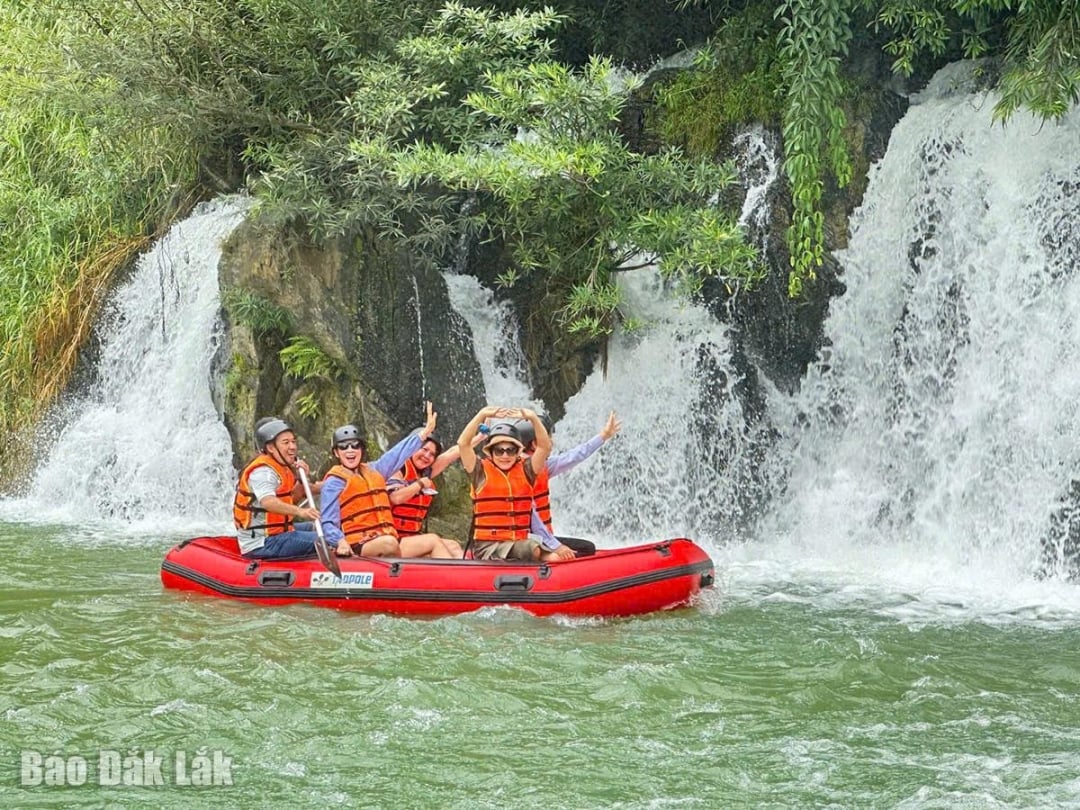 |
| Dray Nur Waterfall - an attractive destination for eco-tourism in the province. |
According to Tran Hong Tien, Director of the Department of Culture, Sports and Tourism of Dak Lak, before the merger of Phu Yen and Dak Lak, both provinces identified tourism as a key economic sector, with a focus on developing green tourism and ecotourism as important pillars. The goal was to develop sustainable tourism in a professional, civilized, modern, and internationally integrated manner; closely linked to the preservation and promotion of cultural and ecological values, aiming for economic development while ensuring social, national defense and security, cultural, and environmental objectives.
During the period 2021-2025, the average number of tourists visiting the province (Phu Yen and Dak Lak (formerly)) is expected to reach approximately 4.08 million visitors per year, with total tourism revenue of about 6,463 billion VND per year.
The draft Political Report to the 18th Provincial Party Congress, term 2025-2030, identifies the following priorities: Focusing investment on developing tourism into a key economic sector, with a synchronous and modern tourism infrastructure and service system. Strongly developing key tourism products with advantages such as marine and forest ecotourism in national parks, nature reserves, bays, and islands; beach and forest resort tourism; developing community-based, agricultural, and rural tourism products; experiencing traditional crafts; and tourism visiting cultural, historical, revolutionary relics, scenic spots, spiritual sites, and festivals. Prioritizing attracting investment to form several tourism areas that create national and international highlights in Xuan Dai Bay, Ganh Da Dia, and Vung Ro Bay; upgrading the infrastructure of Yok Don National Park; and developing the Lak Lake area and Van Hoa plateau into national tourism areas. Attracting investment in large-scale entertainment and resort complexes, including the development of golf courses in accordance with the provincial plan.
Furthermore, culture and people are particularly important, if not decisive, factors for tourism development. Therefore, the draft political report also emphasizes: Comprehensive human development in Dak Lak is linked to building and developing digital citizens and human resources, equipping people with the necessary knowledge and skills to effectively participate in the digital economy and digital society. Digital skills should be popularized among the people to build an inclusive and comprehensive digital society. Attention should be paid to attracting investment and developing the regional sports complex; effectively implementing the Geopark Project towards UNESCO Global Geopark status; and focusing leadership and guidance on completing the planning, restoration, and preservation of historical relics…
Source: https://baodaklak.vn/du-lich/202508/xay-dung-thuong-hieu-du-lich-xanh-b6102f8/

















![[Photo] Prime Minister Pham Minh Chinh receives the Chinese Ambassador to Vietnam](https://vphoto.vietnam.vn/thumb/1200x675/vietnam/resource/IMAGE/2026/04/05/1775397481797_ndo_br_dsc-5512-jpg.webp)
















































Comment (0)