

Xuan Lap commune (Tho Xuan district), a land of "spiritual and talented people," is not only the birthplace of the national hero Emperor Le Dai Hành and many other virtuous figures, but also a land rich in historical traditions with cultural and spiritual landmarks and traditional festivals that have been preserved and promoted by the people for centuries.

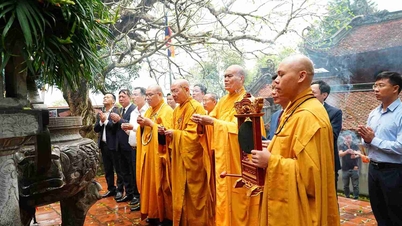
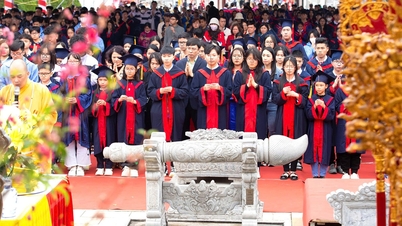
In late April, we had the opportunity to visit Xuan Lap commune amidst the vibrant and enthusiastic atmosphere as the people prepared to welcome a major event: the 2023 Le Hoan Temple Festival, commemorating the 1018th anniversary of the death of the national hero Emperor Le Dai Hành, and the recognition of the commune as a National Intangible Cultural Heritage site. Leading us on a tour of several historical and cultural relics in the area, Mr. Tong Canh Tien, Vice Chairman of the People's Committee of Xuan Lap commune, excitedly shared: Xuan Lap is a lowland commune in the northern part of Tho Xuan district. Located between the Chu River (Luong Giang) flowing to the south, the Cau Chay River to the east, and a road network connecting Yen Dinh to the north, Thieu Hoa to the east, and Dong Son to the south... these are all vital routes linking the commune with many areas in the province and the country. It is this very important historical exchange that has made this place a "sacred land." The current Xuan Lap commune was formed from four traditional Vietnamese villages and has a very long history of development. From a single unit, Ke Sap - Trung Lap village (an ancient Vietnamese village) during the time of the Hung Kings' founding of the nation, approximately 2,000 years ago, the villages of Xuan Lap were formed and established in the 10th century, creating stable administrative units that remain to this day.
A land blessed with "spiritual significance" will inevitably produce "outstanding individuals." Alongside the nation's history, the land of Xuan Lap has been the birthplace of many historical figures who made significant contributions to the nation's struggle for independence and national defense. Among them is the national hero Emperor Le Dai Hành, a prime example of talent and virtue, who made immense contributions to the struggle against foreign invaders, the unification of the nation, and the establishment of national order in its early stages. He brilliantly accomplished a pivotal task in the 10th century, ushering in a new era and leading our nation to a new, more glorious and brilliant path. Another example is Tong Van Man, who contributed to devising strategies and plans that helped Le Hoan understand the internal affairs of the Song dynasty, devising correct strategies and tactics to strike at the enemy's weaknesses. Then there was Hoang Van Luyen, a man of exceptional intelligence, strategic thinking, and talent, who achieved many meritorious deeds and was granted titles by the imperial court such as Deputy Commander-in-Chief, Director of Military Affairs of the Four Divine Guards, and Marquis of Cam Nghia...
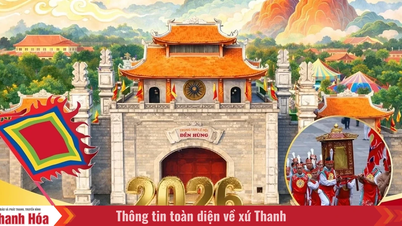
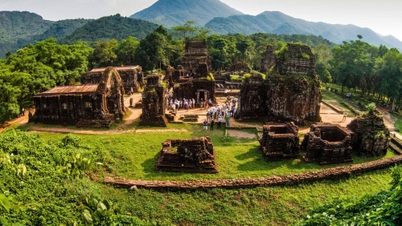
Despite the passage of centuries, the land of Xuan Lap today still preserves many unique cultural and spiritual structures, serving as vivid evidence of the cultural depth of this region. Most notably, there is the Le Hoan Temple, built by the people to commemorate the contributions of Emperor Le Dai Hanh. This structure was classified as a Special National Monument in 2018 and still retains many distinctive architectural features as well as traditional art and aesthetics from the 17th century; the Mausoleum of the Queen Mother of the Early Le Dynasty, where the Empress Dowager of the Early Le Dynasty rests; the Mausoleum of the Royal Father of the Early Le Dynasty, where the Royal Father of the Early Le Dynasty rests; and the Phu Xa village communal house, where the village's tutelary deity Kim Ngo is worshipped, along with King Le Trang Tong and other distinguished officials and scholars who contributed to the village's history.
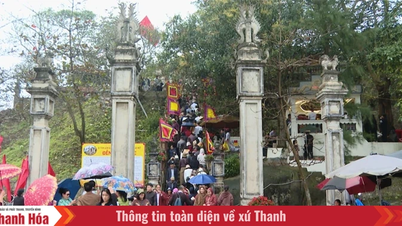
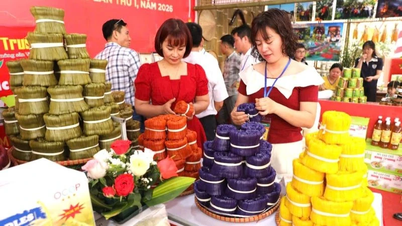
Along with unique cultural and spiritual sites, the people here also preserve a treasure trove of intangible cultural heritage with many festivals, folk legends, and traditional customs. Most notably, the Le Hoan Temple Festival, held annually in the third lunar month, attracts a large number of people from the region to offer incense and pay respects to their ancestors. In parallel, there are many traditional customs such as the custom of pounding rice to make cốm (a type of Vietnamese rice cake) and the custom of offering sticky rice cakes during the three days of Tet (Lunar New Year). Every year in the ninth lunar month, the villagers of Trung Lap make cốm to offer at the temple dedicated to the king. On the third day of Tet, only sticky rice cakes are offered at the Le Hoan Temple; the custom of compressed sticky rice and rice cakes wrapped in leaves are also indispensable for families in Trung Lap village during holidays or when welcoming distinguished guests. The custom of compressed sticky rice commemorates the ancient story of the king leading his army to war, where a single meal of rice was enough to last all day because of the rice he carried with him. In Trung Lap village, every girl knows how to make rice flour cakes wrapped in leaves. Today, the craft of making these cakes not only serves the local community but has also developed into a lucrative profession. These rice flour cakes are now sold throughout the country and are very popular with consumers.
It can be seen that, from ancient times to the present day, Xuan Lap has always been known as a land of "good fortune" and "harmony," so despite having gone through the ups and downs of history and the harshness of nature, generations of descendants here have resolutely united to overcome all difficulties and challenges, working, fighting, and innovating tirelessly to build their homeland into a more prosperous and beautiful place every day.
Nguyen Dat
(This article uses material from the book "Geography of Xuan Lap Commune").
Source


















































Comment (0)