



Springtime in a New Land
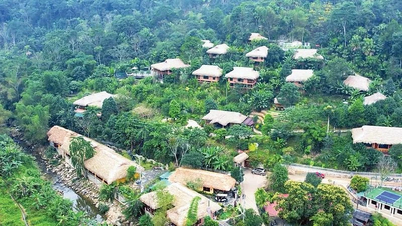
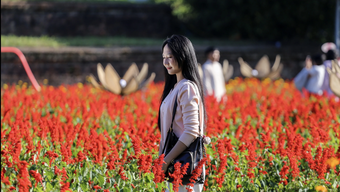
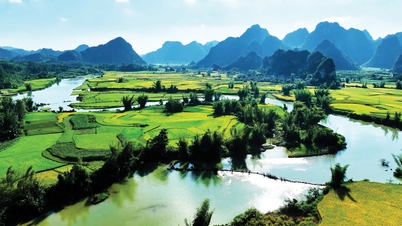
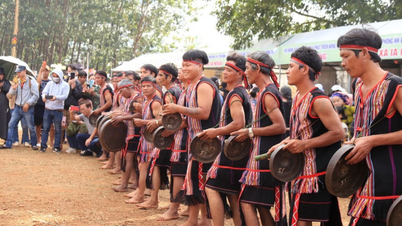
In recent days, for the first time on the grassy hills of Slam Chiêm grassland in Hiep Luc commune, houses built with locally sourced materials and artistically designed have appeared. The small grassland and grassy hills seem to brighten up, dispelling the harsh winter chill of this highland region. A giant "Slam Chiêm" sign erected in the center of the grassland attracts all eyes. This is the first time the Slam Chiêm spring festival has been held, and a new artificial football field has appeared, "inaugurated" by H'Mông ethnic women with a lively match filled with laughter.
Slam Chiêm is no stranger to young people who enjoy exploration and adventure, and backpackers, due to its unique and mystical scenery amidst the mountains. However, it has never been systematically developed for tourism, partly because of its remoteness and partly because the former Hiep Luc commune was impoverished. Under the name Hiep Luc, meaning cooperation and effort, Hiep Luc has undergone two mergers. The first was in 2020 when the two communes of Huong Ne and Lang Ngam merged to form Hiep Luc. The second was in June 2025, when the former Hiep Luc commune merged with Thuan Mang commune, retaining the meaningful name Hiep Luc.
The merger story not only helped Hiep Luc expand its area to double its size but also injected a new mindset into the commune's leadership and people: how to develop more strongly and on a larger scale in the new space. Slam Chiem grassland was chosen as the "opening shot" to promote tourism development in this area. According to the Chairman of the People's Committee of Hiep Luc commune, Nguyen Thai Hoang, the Resolution of the Commune Party Congress for the 2025-2030 term identifies the development of culture in conjunction with rural tourism. This year's spring festival, with the theme "Spring Comes to Slam Chiem Grassland," is a concrete step in implementing the resolution through the promotion and advertising of the homeland's image and natural beauty, creating a foundation for tourism development and contributing to honoring the national cultural identity.
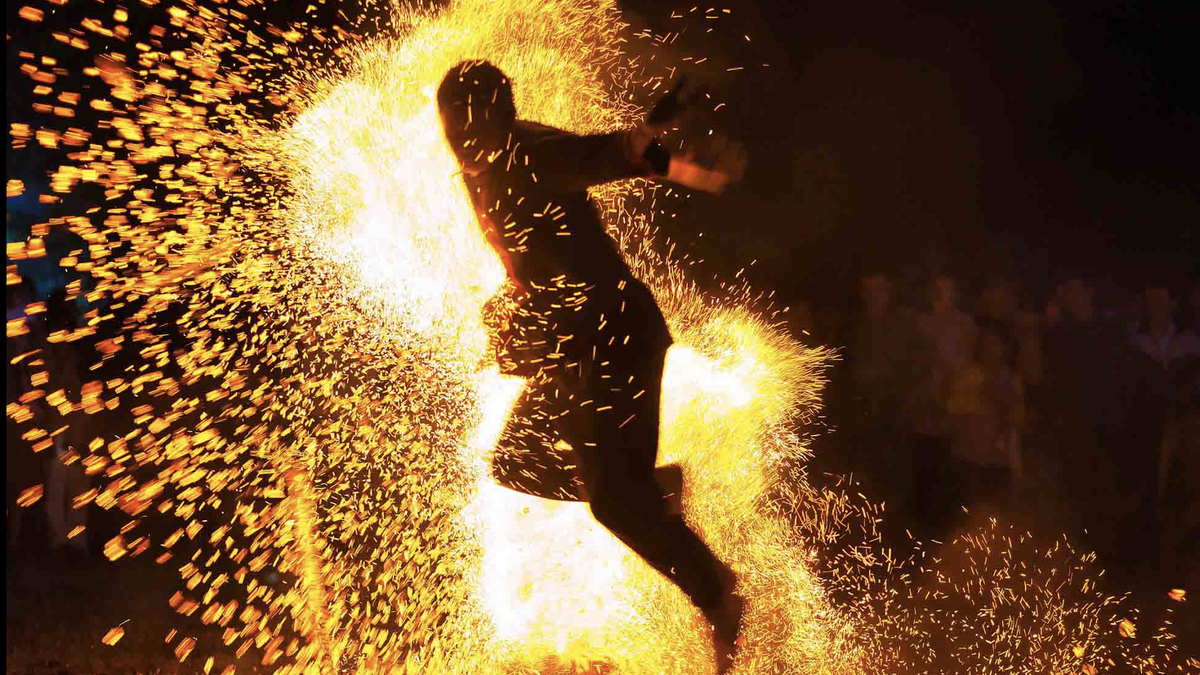
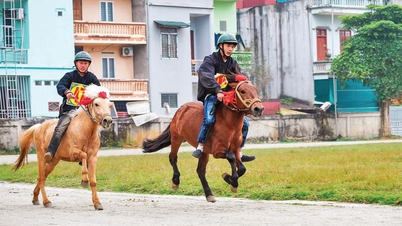
A stroll through the communes in the northern part of Thai Nguyen these days reveals an atmosphere of excitement and enthusiasm as numerous spring festivals are being organized in the newly merged communes. According to Duong Hong Sinh, head of Khuoi Noc village in Van Lang commune, Khuoi Noc has always maintained the tradition of organizing spring festivals with many activities such as bullfighting, throwing the "con" (a traditional game), and catching fish in rice fields. This year, they are continuing to organize a larger-scale spring festival, in line with the merger of the three old communes into the new Van Lang commune, ensuring safety, health, and cost-effectiveness.
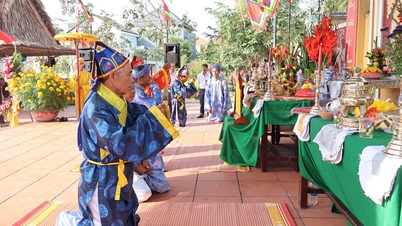
Following the merger, Van Lang established the Van Lang Specialty Club, organizing exchanges and reenactments of the folk art of Quan Lang singing, a unique cultural feature in the traditional wedding ceremony of the Tay people. The melodies are performed by guests and members in their native languages, through call-and-response singing during the process of asking for the bride's hand and escorting the bride between the two sides: the Quan Lang (representing the groom's family) and the Pa Me (representing the bride's family). In the current context, where Quan Lang singing is gradually fading away, organizing and reenacting this ceremony not only enriches the cultural activities of the club but also preserves and maintains traditional cultural values, contributing to the conservation of the Tay people's folk cultural heritage.
The newly established Van Lang commune possesses a rich and unique cultural identity of various ethnic groups, offering significant potential for the development of community-based tourism in the future. Simultaneously, the local authorities have a policy of encouraging and supporting the preservation, safeguarding, and promotion of these cultural values.
The government is making a concerted effort.
Following the merger, Thanh Mai commune, once in a disadvantaged position, has become a destination for the development of supporting industries. These days, contractors are accelerating progress on the Cho Moi- Bac Kan expressway construction site. With the project traversing the entire area, Thanh Mai is strategically located for transportation connections to major industrial zones; benefiting from the interchange at Km18+000, connecting the commune to the Thanh Mai, Thanh Van, and Cho Moi 4 industrial clusters.
With compensation for land clearance, people now have the funds to build new houses and shop for Tet (Lunar New Year). Above all, these advantages will bring sustainable and long-lasting prosperity. According to the Chairman of the People's Committee of Ha Duc Duc Commune, in the coming time, Thanh Mai will organize activities to attract investment into industrial zones and clusters; upgrade the transportation system connecting key routes; and issue mechanisms and policies to attract investment in the development of supporting industries, making a practical contribution to the industrialization and modernization of Thai Nguyen province.
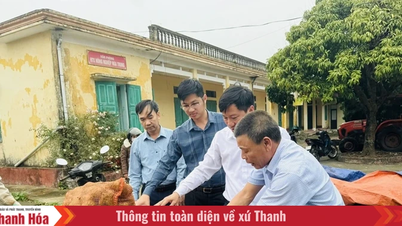
Thai Nguyen province currently has 77 communes, including 34 particularly disadvantaged communes, with many remote and isolated villages and hamlets. In the days leading up to Tet (Lunar New Year), undeterred by long distances and hardships, provincial leaders, departments, agencies, local organizations, and philanthropists visited villages and hamlets to distribute Tet gifts to poor households and families receiving social welfare benefits; each household received at least 600,000 VND to celebrate Tet and enjoy the Spring Festival; totaling over 20 billion VND. Many creative and meaningful forms of encouragement were also implemented by the communes, such as Sang Moc commune, which distributed Tet gifts to 90 households who voluntarily registered and had recently escaped poverty.
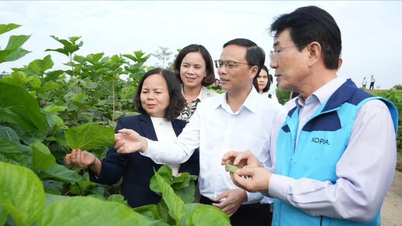
In the new year of the Horse (Bính Ngọ), people in the province's communes received good news when the Provincial Party Committee issued the Project on Investment in Infrastructure for Difficult and Extremely Difficult Communes and the Project on Comprehensive Rural Development of the Province, with a total investment of over 41,000 billion VND. Accordingly, communes will receive investment in infrastructure development including transportation, irrigation and clean water, electricity, education, health, grassroots culture, trade, information and communication, digital transformation, and the environment. Rural areas will be comprehensively developed in the direction of "ecological agriculture, modern rural areas, and civilized farmers". By 2030, the value of products obtained from more than 1 hectare of cultivated land will reach 150 million VND; the total value obtained from tea cultivation will reach over 25,000 billion VND; there will be 675 OCOP products; and 95% of communes will meet the standards of new rural areas...
According to Thai Nguyen Provincial Party Secretary Trinh Xuan Truong, the project demonstrates the political determination of the Provincial Party Committee to ensure social equity, narrow the development gap between mountainous and urban areas, and aim for the goal of "leaving no one behind." It also aims to improve the skills and capabilities of workers, create jobs, and enhance the quality of life for people in rural areas.
Source: https://nhandan.vn/xuan-moi-tren-xa-moi-post945286.html











































Comment (0)