

Trang Bang rice paper is bustling with activity in the spring.
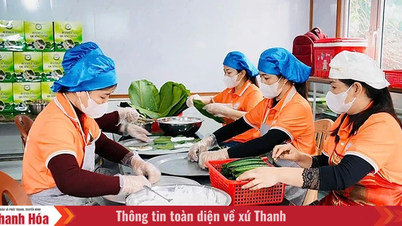
While the morning mist still lingers, the ovens in Trang Bang Rice Paper Village (Trang Bang Ward) are already ablaze. The early morning mist mingles with the warm smoke from the ovens, creating a unique aroma that heralds the arrival of spring. And in the days leading up to Tet (Lunar New Year), the village becomes even more bustling. Trucks carrying rice, charcoal, and bamboo frames come and go continuously; finished rice paper is neatly stacked, waiting to be packaged and sent to market. In the small kitchen, the hands of the workers rhythmically scoop batter, spread the rice paper, remove it from the molds, and arrange it to dry on bamboo frames.

Artisan Trinh Thi Kim Yen, who has been involved in the rice paper making profession for over 30 years, said: "Near Tet (Lunar New Year), on average, I make more than 500 sheets of rice paper per day, and sometimes I have to work through the night to keep up with orders."
According to some skilled artisans, rice paper must be thinly made and properly exposed to dew to ensure it is soft, pliable, and fragrant with the aroma of fresh rice. "The rice must be the right kind, the flour mixed just right, and the rice paper making process must be timed according to the weather. In cold weather with a lot of dew, the rice paper must be thicker," shared artisan Pham Thi Duong, who has over 40 years of experience in the craft.
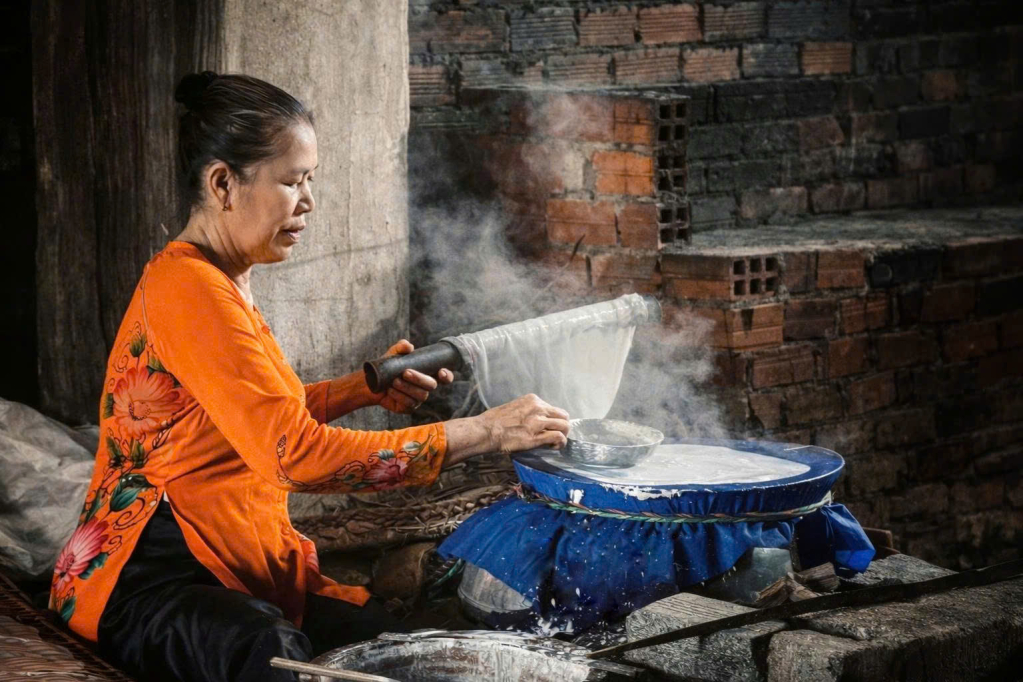
Trang Bang rice paper, especially sun-dried rice paper, has transcended the boundaries of a simple folk dish, becoming a culinary symbol of Tay Ninh. The craft of making sun-dried Trang Bang rice paper was also recognized as a National Intangible Cultural Heritage in 2016, and currently about 20 households still maintain this traditional craft.
The Trang Bang sun-dried rice paper making festival is held every two years, contributing to the preservation and dissemination of heritage values. Along with this, many local support policies, from OCOP (One Commune One Product) programs and brand building to connecting consumption and guiding the development of craft village tourism , are further boosting the sun-dried rice paper making craft.
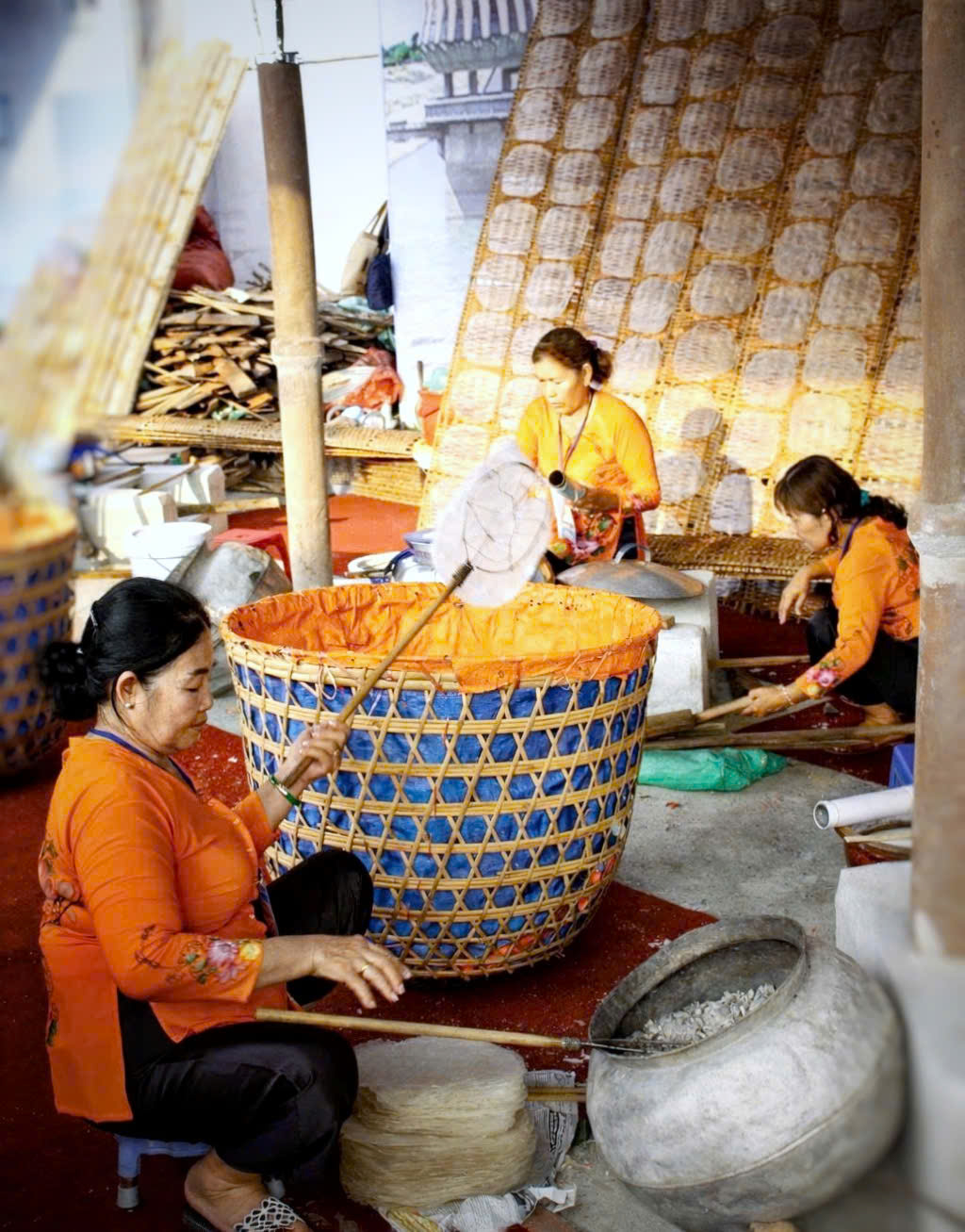
The widespread popularity of this traditional dish has made Trang Bang sun-dried rice paper a distinctive flavor of Tet (Lunar New Year) for many families. As a result, every spring, rice paper factories have to increase production to meet customer demand. Although it's more work than usual, for those in the trade, it's a joy to see the traditional Tet flavors of their hometown preserved and shared.
“It’s tiring but rewarding because my craft is appreciated and the products I make are trusted. To reduce hardship and increase productivity, many establishments have proactively introduced machinery into auxiliary processes, but still maintain the manual rice paper making step – the ‘soul’ that creates the unique flavor,” said artisan Pham Thi Duong.
"Trang Bang sun-dried rice paper has become a distinctive flavor in many families' Tet celebrations." |
The rhythm of spring drums - the soul of the homeland resonates forever.
Nestled beside the tranquil Vam Co Tay River, Binh An Drum-Making Village (Tan Tru Commune) enters spring with its own unique rhythm. During Tet (Lunar New Year), the demand for drums for festivals, temples, pagodas, lion dances, and schools increases significantly. Every courtyard becomes a small workshop. Wood is turned into round shapes, buffalo hide is meticulously processed, and stretched evenly to create a deep, powerful, and resonant sound.
To create a high-quality drum, the craftsman must go through a series of rigorous steps requiring extensive experience, patience, and "trade secrets," from selecting and drying the wood to stretching the skin and tuning the drum.
Established in 1842, and having weathered many ups and downs, Binh An Drum-Making Village has persistently maintained its traditional craft, with more than a dozen households still involved. For them, spring is not only a season of prosperity but also a time to preserve the "soul of the drum"—a sound closely associated with festivals, village communal houses, and schools.
Carefully inspecting each drum surface before handing it over to customers, Mr. Nguyen Van An (Artisan Tu An), who has been in the craft for over 40 years, said: "Making drums is not just for selling, but also about preserving the soul of our homeland."
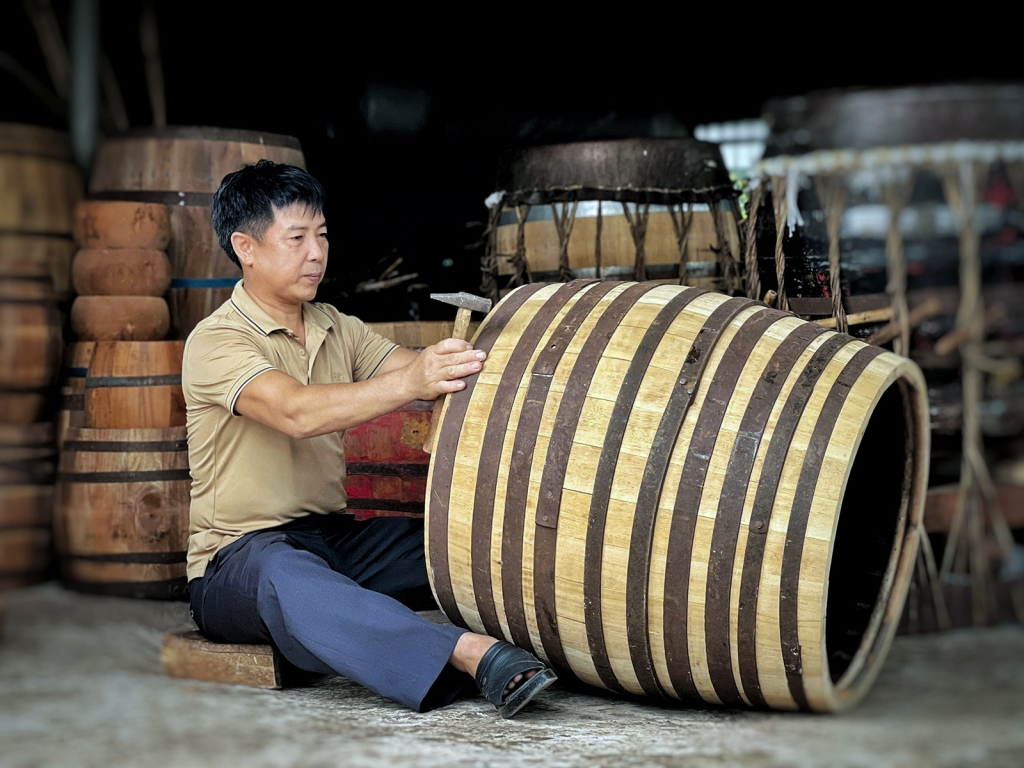
Recognized as a National Intangible Cultural Heritage by the Ministry of Culture, Sports and Tourism (June 2025), the Binh An handcrafted drum continues to affirm its unique value. Each drumbeat of the spring festival not only marks the beginning of the festivities but also awakens memories of our roots, extending the stream of traditional culture.
Artisan Tu An shared: “The sound of the drum is not just for listening, but also for feeling. If done carelessly, the drum won't produce the desired sound, and players will notice immediately. Connecting drum-making with cultural activities, festivals, art performances, and experiential tourism is the way to give this traditional craft more room to develop.”

Each traditional craft village is a layer of cultural sediment, a crystallization of the wisdom, skill, and perseverance of many generations. As long as diligent hands continue to preserve the craft, and the spirit of the homeland is nurtured, traditional cultural values will continue to spread, becoming a solid foundation for development today and in the future.
"Each drumbeat of spring not only marks the beginning of the festival but also awakens memories of our roots, extending the stream of traditional culture." |
Source: https://baotayninh.vn/xuan-ve-lua-nghe-them-am-137798.html
![[Photo] Memorable moments at the 10th Vietnam-China Border Defense Friendship Exchange](https://vphoto.vietnam.vn/thumb/1200x675/vietnam/resource/IMAGE/2026/03/20/1773986226876_giao-luu-bien-gioi-vntq-lan-10-ben-tq-9737-4225-jpg.webp)





































































Comment (0)