

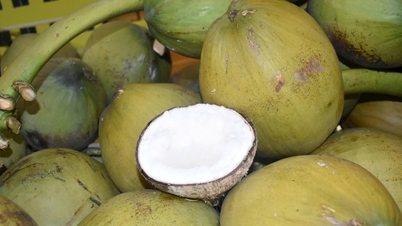
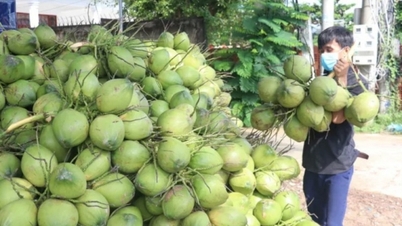
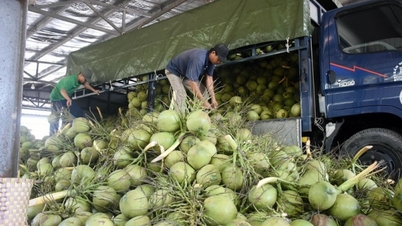
According to customs data, fresh coconut exports reached $390 million by the end of last year, a 61% increase compared to the same period.
Overall, exports of coconut products reached nearly $1.1 billion, an increase of over 20% compared to 2023. This marks the first time in 14 years that coconuts have generated billion-dollar export revenue for Vietnam.
According to the Ministry of Agriculture and Rural Development, the country currently has 200,000 hectares of coconut plantations, producing 2 million tons per year. One-third of the area meets organic standards according to US and European standards, mainly in Central Vietnam and the Mekong Delta. Ben Tre Siamese coconuts have been granted geographical indication status, with 133 planting area codes and over 8,300 hectares dedicated to export.
With over 600 coconut processing and manufacturing businesses, Vietnam's coconut industry has a competitive advantage in the international market. Vietnam ranks 4th in coconut exports in the Asia-Pacific region and 5th in the world .
China is the main export market, accounting for 25% of Vietnam's coconut export value. The signing of the Protocol on Official Import between the two countries in August 2024 opens up great opportunities for this fruit. Vietnam is currently the third largest supplier of coconuts to China, with over 20% market share in that country.
Besides China, thanks to its price advantage and sweet, refreshing taste, Vietnamese coconuts are popular in many markets such as the EU, the US, Canada, and South Korea.
However, the coconut processing industry faces the risk of raw material shortages. Despite investments in numerous factories in Ben Tre , the supply of coconuts remains insufficient. According to the Vietnam Coconut Association, coconut prices once dropped to a record low of 1,000 VND per fruit, causing farmers to hesitate in expanding their cultivation areas and processing businesses to operate at a reduced capacity.
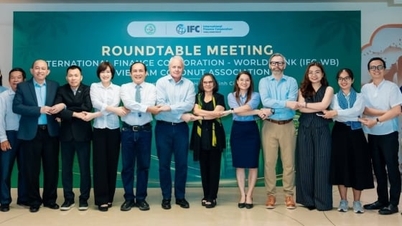
Mr. Cao Ba Dang Khoa, Secretary General of the Vietnam Coconut Association, said that many fresh coconut orders could not be exported on time due to a lack of packaging codes and unstable raw material sources from the third and fourth quarters of 2024 to the present. Raw material prices have escalated as Thailand, India, and the Middle East increased imports, making it difficult for domestic factories to compete in procurement. In addition, the expansion of Chinese processing plants has driven up coconut prices. Farmers benefit, but processing businesses face difficulties.
He suggested that authorities should discuss with China to have them grant more coconut growing area codes to Vietnam. In addition, the government needs to implement reasonable tax policies to enhance the competitiveness of the coconut industry.
Also concerned about the decline in both the quality and quantity of raw materials, Mr. Nguyen Van Phuong, Director of Phuong Nam Coconut Company, called on businesses to cooperate in building a sustainable value chain from cultivation and processing to consumption to ensure the long-term development of the coconut industry.
Source




![[Image] National Assembly discusses the implementation of the socio-economic development plan.](https://vphoto.vietnam.vn/thumb/1200x675/vietnam/resource/IMAGE/2026/04/20/1776696707422_ndo_br_img-20260420-185419-jpg.webp)
![[Photo] General Secretary and President To Lam meets with National Assembly delegates from ethnic minorities.](https://vphoto.vietnam.vn/thumb/1200x675/vietnam/resource/IMAGE/2026/04/20/1776696701056_a1-bnd-8331-3342-jpg.webp)
















































































Comment (0)