

From just $180 million in export revenue in 2010, coconut exports reached over $900 million in 2023 and are expected to surpass $1 billion in 2024.
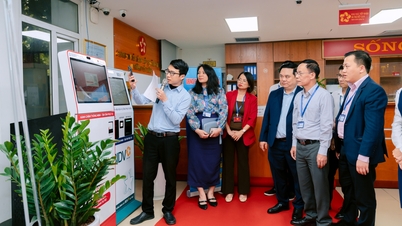
This information was presented at the forum "Connecting Coconut Production and Consumption" organized by the Vietnam Agriculture Newspaper in collaboration with the Department of Quality, Processing and Market Development, the Department of Science, Technology and Environment (Ministry of Agriculture and Rural Development) and other relevant agencies and units on the morning of December 13th in Ben Tre .
China is currently a very important market for coconuts.
Coconut is one of the six key industrial crops included in the Project for the Development of Key Industrial Crops until 2030, issued by the Ministry of Agriculture and Rural Development under Decision No. 431/QD-BNN-TT in 2024. The project aims for a coconut cultivation area of approximately 195,000 - 210,000 hectares by 2030; with the Mekong Delta region accounting for 170,000 - 175,000 hectares, the South Central Coast region 16,000 - 20,000 hectares, and the remaining 9,000 - 15,000 hectares planted in the North Central and Southeast regions.
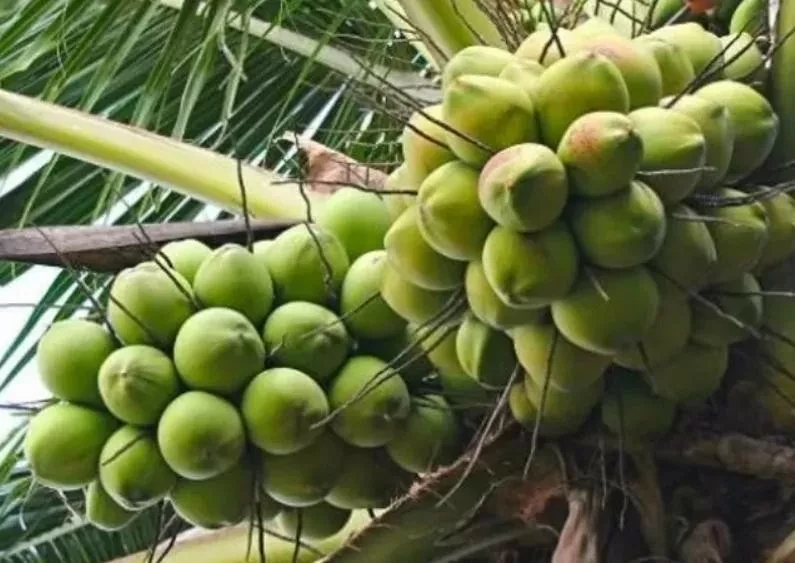
According to Ms. Nguyen Thi Thanh Thuy, Director of the Department of Science, Technology and Environment (Ministry of Agriculture and Rural Development), Vietnamese coconuts are currently becoming a high-value export item. Processed coconut products have great potential to increase the value of the coconut tree and boost people's income. Statistics show that 30% of coconut growing areas have been certified as meeting VietGAP standards, and another 30% have been granted planting area codes.
Currently, Vietnam's coconut industry, with an area of nearly 200,000 hectares, is becoming one of the key economic sectors in the central coastal provinces and the Mekong Delta. From a modest figure of only 180 million USD in export value... export In 2010, the coconut industry experienced strong growth, reaching over $900 million in 2023 and is expected to surpass $1 billion in 2024.
Positive developments such as the US and Europe's acceptance of Vietnamese coconuts, along with ongoing negotiations with China regarding official export channels, have created a strong foundation for market expansion and sustainable development of the coconut industry.
Specifically for The Chinese market is a very important market for coconuts, consuming 4 billion coconuts annually, including about 2.6 billion fresh ones... While demand is high, China's production capacity is limited, creating an opportunity for Vietnamese coconuts.
Recently, the Vietnamese Ministry of Agriculture and Rural Development and the General Administration of Customs of China signed a protocol allowing the official export of fresh coconuts to China. This is a significant milestone, opening up tremendous opportunities for Vietnamese fresh coconuts to conquer the market of over a billion people.
Commenting on the opportunities and challenges in this market, Mr. Nguyen Phong Phu - Technical Director of Vina T&T Group - assessed that the Chinese market offers many great opportunities for Vietnamese coconut exports, but also harbors many potential challenges.
On the positive side, China is a large market with high demand for coconut products, especially fresh coconuts, coconut water, coconut oil, and processed coconut products. Its geographical proximity gives Vietnam a competitive advantage in transportation costs compared to competitors from Southeast Asia and Africa. Furthermore, free trade agreements between ASEAN and China facilitate reduced tariffs and increased trade. Vietnam is a major coconut producer, particularly in Ben Tre and the Mekong Delta provinces, ensuring a stable supply to the market.
However, representatives from Vina T&T Group also stated that exporting coconuts to China faces many difficulties. China is increasingly raising its standards for plant quarantine, quality, and food safety. Fierce competition from other coconut-producing countries such as Thailand and Indonesia requires businesses to improve their products and maintain reasonable prices.
Chinese companies are hiring small workshops to package goods for export. These workshops do not guarantee food safety and lack proper packaging facility codes, yet they still export goods to China and other markets, negatively impacting companies that have invested properly and have all the necessary paperwork and procedures for export.
Furthermore, changes in import policies; transportation, storage, and logistics costs remain a challenge, especially for fresh coconuts which require careful preservation; and the heavy reliance on the Chinese market poses risks if that market changes suddenly. Therefore, optimizing quality, improving production capacity, and diversifying export markets are necessary to ensure sustainable development.
Things to note for businesses
Regarding businesses exporting coconuts and processed coconut products to the Chinese market, Mr. Ngo Xuan Nam, Deputy Director of the SPS Vietnam Office, recommended that exported fresh coconuts, including both green-shelled and peeled coconuts, must comply with phytosanitary regulations and food safety standards. Furthermore, coconut growing areas and packaging facilities must be registered with the Ministry of Agriculture and Rural Development and approved by the General Administration of Customs of China on the CIFER portal.
In addition to establishing a quality management system and For traceability, application of good agricultural practices and integrated pest management programs, businesses must take 2% of samples for testing before exporting. After 2 years, if no violations are found, the requirement will be reduced to 1%.
Regarding the Chinese market, Mr. Nam explained that China does not have a default MRL policy, nor does it apply standards from other markets or CODEX standards. Instead, they update regulations every two years and continuously add new MRLs. Exports of fresh coconuts to China in 2024 are expected to reach $250 million, accounting for 25% of the total export value of the entire industry. This is a market with great potential for the coconut industry.
Not only China, the Deputy Director of the SPS Office of Vietnam recommends that businesses pay attention to announcements from the EU market. In 2024, this market had three announcements changing the MRLs of active ingredients: Fenbuconazole, Penconazole, and Zoxamide. "Regardless of the market we export to, we must strictly comply with the requirements of that market." Mr. Nam emphasized.
Source






































































Comment (0)