

Pressure from traditional markets
At the rice export business conference held on December 10th in Ho Chi Minh City, Nguyen Anh Son, Director of the Import-Export Department ( Ministry of Industry and Trade ), stated that 2025 will be a challenging year for Vietnamese rice. Geopolitical instability, inflation (although decreasing) but still high, and the trend of tightening monetary policy in major economies have negatively impacted global consumer demand.
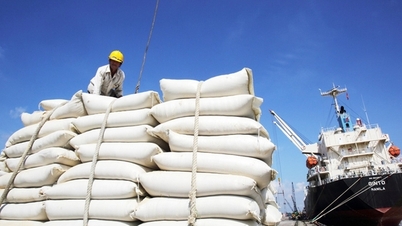
Preliminary statistics for the first 11 months of 2025 show that rice exports reached over 7.53 million tons, valued at over $3.85 billion. Compared to the same period in 2024 – a record year for rice exports – the volume of rice exports decreased by 10.9% and the value dropped sharply by 27.4%. The average export price also adjusted to $511.09 per ton.

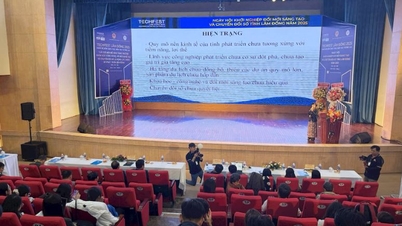
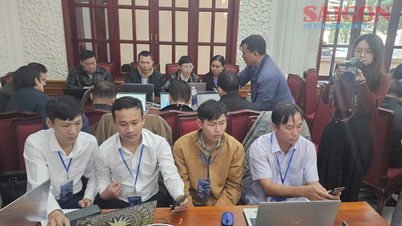
The rice export business conference was organized by the Ministry of Industry and Trade on October 12th in Ho Chi Minh City.
The main reason for this decline stems from a sudden drop in imports from traditional markets. Specifically, Indonesia saw a decrease of 96.38%, and Malaysia a decrease of 32.5%. However, a bright spot is the boom in new markets and the recovery of the Chinese market. Rice exports to Ghana increased by 52.64%, China by 165.14%, Senegal by 73 times, and notably Bangladesh by 238.48 times.
The structure of rice exports continues to shift positively, with high-quality white rice and fragrant rice accounting for 69% of total exports, affirming Vietnam's orientation towards increasing the value of rice grains.
Outlook for 2026
Regarding the outlook for 2026, Mr. Tran Quoc Toan – Deputy Director of the Import-Export Department – predicted that the market will show positive signs based on four main factors. Firstly, the return of the Philippines. This country is expected to resume imports from January 2026. Despite changes in taxes and regulations, this will still be a major driving force for Vietnamese rice exports.

Secondly, the recovery of traditional markets. China, Bangladesh, and the African region are showing signs of increased demand.
Thirdly, the impact of Free Trade Agreements (FTAs). Rice trade agreements are showing positive signs.
Fourth, Vietnamese rice is increasingly asserting its position thanks to its improved quality.
Regarding the supply side, representatives from the Department of Crop Production and Plant Protection stated that rice production in 2026 could reach approximately 43 million tons. Despite a decrease in planted area of about 0.2 million hectares, the agricultural sector is focusing on restoring production after natural disasters and ensuring a successful 2025-2026 Winter-Spring crop.
To realize the 2026 targets, delegates agreed that the rice industry needs to change its production and business mindset.
Mr. Le Thanh Tung – Vice Chairman and General Secretary of the Vietnam Rice Industry Association – proposed that rice should be considered a special commodity, ensuring both food security and effective export. This includes establishing stable raw material areas, ensuring traceability, and especially the participation of businesses in the "Sustainable Development of 1 Million Hectares of High-Quality, Low-Emission Rice Cultivation Linked to Green Growth in the Mekong Delta by 2030" project.
From a market perspective, Mr. Ngo Chung Khanh – Deputy Director of the Multilateral Trade Policy Department – pointed out the limitations of Vietnamese businesses in not fully utilizing the benefits from FTAs and not focusing on building their own brands in major markets. Therefore, a systematic strategy is needed, along with enhanced connectivity under the coordination of state agencies.
Meanwhile, the Vietnamese Trade Office in the Philippines warned that, despite information suggesting the Philippines will resume imports in January 2026, traders need to be cautious in contract negotiations, thoroughly research partners and payment practices to avoid risks. At the same time, Trade Offices in Australia, China, the EU, and other countries also noted that businesses need to strictly meet the new standards on food safety, sustainable development, and climate change mitigation that importing countries are establishing.
The Ministry of Industry and Trade affirmed that it will compile the recommendations to report to the Prime Minister, in order to promptly address difficulties and seize opportunities to ensure sustainable growth in rice exports in 2026.
Source: https://doanhnghiepvn.vn/kinh-te/ky-vong-xuat-khau-gao-dao-chieu-trong-nam-2026/20251210092714315

















































































Comment (0)