

Fed cuts interest rates for third time in a row
As expected by the market, after two days of meetings, early this morning Vietnam time, the Fed implemented a rate cut that was considered "hawkish" - both easing and issuing a cautious warning about future steps.
The Federal Open Market Committee announced a 0.25 percentage point cut, bringing the federal funds rate down to a range of 3.5% to 3.75%. According to the Committee, this third consecutive rate cut comes amid moderately expanding U.S. economic activity, slowing job growth, and a slight increase in the unemployment rate as of September.
Jerome Powell, Chairman of the Federal Reserve (Fed), stated: "With today's decision, we have lowered the policy interest rate by 0.25 percentage points in the last three meetings. Further normalization of this policy stance will help stabilize the labor market and allow inflation to continue its downward trend towards 2% after the impact of tariffs has passed."
While this move aligns with market expectations, the Fed has signaled that the path of monetary policy ahead remains uncertain. In its post-meeting statement, the agency emphasized it would "carefully assess data, outlook, and risks" before making further adjustments. This is a message that was also present late last year, signaling a pause in interest rate cuts for several months. The Fed is also currently lacking official economic data due to the prolonged US government shutdown.
In addition, the Fed will begin purchasing short-term US government bonds starting December 12th to manage market liquidity and ensure good control over policy interest rates. The first purchase will be approximately $40 billion, maintaining a high level for several months before gradually decreasing. Fed Chairman Jerome Powell emphasized that this operation is purely technical and will not affect monetary policy.
The Fed's assessment of the US economic outlook.
A key highlight of the Fed's year-end policy meeting will be its assessments and forecasts regarding the health of the world's number one economy, the United States .
The press conference unfolded in a manner befitting a year-long monetary policy meeting, with multiple perspectives and forecasts. Opportunities and challenges were intertwined. The Fed Chairman affirmed that the central bank remains committed to two goals: maximizing employment and keeping inflation stable. In the short term, inflation risks are leaning toward an upward trend. However, inflation has cooled from its peak earlier in the year, and most long-term inflation expectation indicators remain close to the 2% target. Therefore, the Fed Chairman was somewhat more optimistic about the baseline scenario: the impact of tariffs on inflation is only temporary, and the Fed assures that this price increase will not turn into sustained inflation.
However, with the recent weakening of employment, the balance of risks has shifted. The unemployment rate continues to inch up, reaching 4.4%. The pace of job creation has slowed significantly compared to the beginning of the year. This trend reflects weaker labor force growth due to reduced immigration and a declining labor participation rate, and weaker hiring demand. Overall, the available data suggests economic activity is growing at a moderate pace. US GDP is projected to grow 1.7% this year and 2.3% next year.
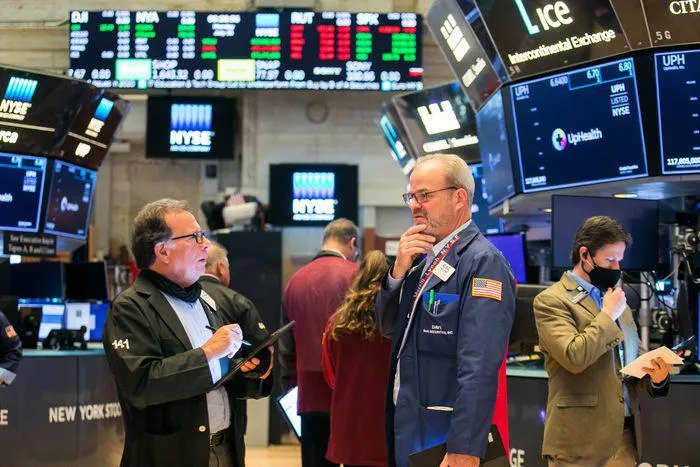
The assessments of the economic outlook, as well as the Fed's decision to lower interest rates, have been positively received by Wall Street investors.
US stocks surged after the Fed's decision.
Comments on the economic outlook, as well as the Fed's decision to lower interest rates, were positively received by Wall Street investors. All three major US stock indices recorded significant gains in last night's trading session (Vietnam time).
The Dow Jones Industrial Average led the market's gains with a rise of over 1%, while the S&P 500 and Nasdaq also followed suit. Despite cautious messages from Fed officials, the market expects the dovish monetary policy trend to continue. CME Group's Fedwatch tool shows investors believe there is a 68% chance the Fed will cut interest rates two or more times next year.
In the currency market, the US dollar index fell nearly 0.6% following the Fed's decision. US government bond yields also declined slightly after the Fed announced it would begin purchasing short-term bonds, expanding its balance sheet.
While the stock market seemed pleased with the Fed meeting's outcome, US President Donald Trump expected more. Speaking at a recent White House meeting, Trump stated that the Fed should have cut interest rates by at least 0.5 percentage points to support the economy. This expectation from President Trump will also significantly influence the Fed's interest rate outlook for next year, as the central bank may face changes in its top leadership, including the position of Fed Chairman Jerome Powell.
Another point of interest is the divergence of views among Fed officials. Of the 12 FOMC members participating in this vote, three opposed the 0.25 percentage point interest rate cut. This is unprecedented since 2019. Chicago Fed President Austan Goolsbee and Kansas Fed President Jeffrey Schmid wanted to keep interest rates unchanged, while Governor Stephen Miran favored a deeper cut of 0.5 percentage points.
CNBC headlined: "The Fed is at its most divided state in over six years," pointing out that, in addition to the three formal dissenting votes, there were four dissenting opinions from non-voting members, indicating deep divisions within the Fed.
The Fed's interest rate outlook for 2026
The question now is how these differences will affect the Fed's policy. This was also a concern for the press during the briefing. But the Fed Chairman took a different perspective, asserting that all members at the FOMC table agreed that inflation was high and needed to be brought down; the labor market had weakened with increasing risks. Following the briefing, the Fed's message regarding the differences lay in how each member assessed the importance of each risk and outlook.
Where does the greater risk lie? If we compare the four "dot plot" charts, corresponding to the four quarters of this year, we can clearly see the gap between interest rate forecasts widening and leaning towards lower rates. After cutting a total of 75 basis points, the Fed is now observing the impact of these rate cuts. Therefore, Powell asserted that the Fed is in a good position to wait and see how the economy develops. The Fed maintains its forecast of only one more cut in 2026 and another in 2027, bringing long-term interest rates to around 3%. Economic data in the coming months will be the deciding factor in determining the actual direction of monetary policy.
Source: https://vtv.vn/trien-vong-lai-suat-cua-fed-nam-2026-100251211102153496.htm




























































































Comment (0)