

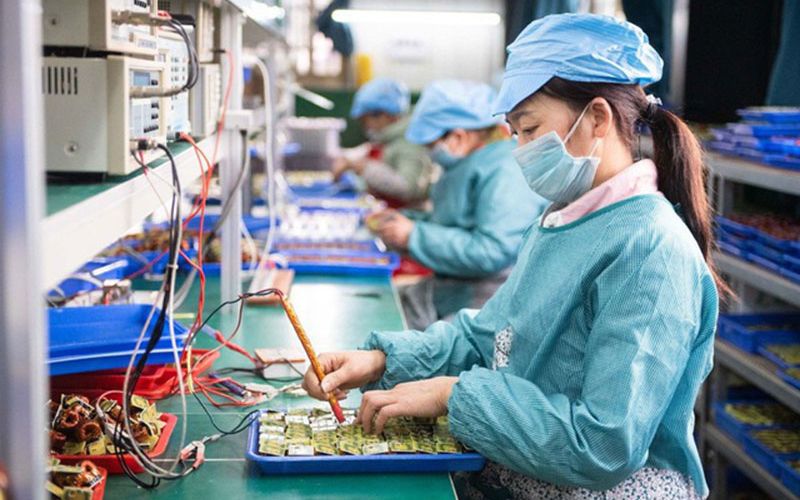
Reaching new milestones requires new foundations: Internal strength must go hand in hand with external forces.
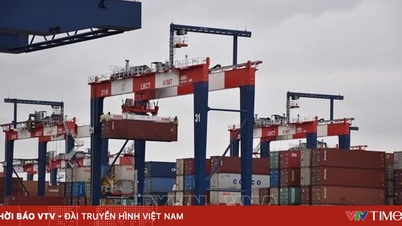
According to data released by the General Statistics Office and the General Department of Customs, Vietnam's export turnover in the first 11 months of 2025 reached US$430.14 billion, an increase of 16.1% compared to the same period and officially surpassing the record figure for the whole year of 2024. This achievement not only consolidates the impressive trade surplus of over US$20.5 billion but also serves as an important driving force for economic growth.
However, a closer examination of the structure reveals areas that require deeper analysis. The biggest problem lies in the growth structure itself. Export turnover from the domestic economic sector reached only $102.41 billion, a decrease of 1.7% compared to the same period last year, accounting for a mere 23.8% of total export turnover. Conversely, the foreign direct investment (FDI) sector achieved $327.73 billion, an increase of 23.1%, accounting for a staggering 76.2% of the country's total export turnover.

Exports from the foreign direct investment (FDI) sector reached $327.73 billion.
According to economic experts, the FDI sector imports raw materials and high-tech components, then uses Vietnamese labor and production costs to export finished products. This leads to a serious imbalance, with the majority of net profit and added value actually retained by foreign corporations, while domestic businesses only receive processing fees or simple service fees. Without changing this structure, the economy will maintain a growth model based on quantity rather than quality.
This imbalance, although it has persisted for many years, continues to demonstrate Vietnam's significant dependence on the production decisions and supply chains of FDI enterprises. Unless this issue is thoroughly addressed, export growth will always be driven by external factors, leaving the economy vulnerable to external shocks.
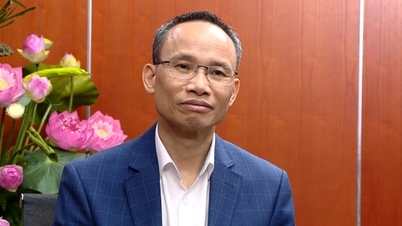
According to Mr. Tran Thanh Hai, Deputy Director of the Import-Export Department ( Ministry of Industry and Trade ), the fundamental direction is to increase the localization rate and enhance self-reliance in raw material sources. This is a strategic solution to balance the export structure and reduce dependence on foreign forces.
To elaborate on this strategic direction, Mr. Hai emphasized that increasing the localization rate is not just a technical goal, but an economic imperative to enhance resilience. This requires a synchronized shift from the Government in issuing preferential financial and land policies to encourage Vietnamese businesses to invest in supporting industries and research and development (R&D). Only when domestic businesses have the capacity to supply components and raw materials that meet international standards can they participate more deeply in the value chains of FDI corporations. The ultimate goal is to build a more independent production ecosystem, minimize the risk of supply chain disruptions from abroad, and ensure that more of the surplus value from each dollar of exports is retained domestically.
Furthermore, another noteworthy issue is the sharp increase in imports. Total import turnover for the first 11 months reached approximately $409 billion, an increase of 18.4% compared to the same period last year. Notably, the import groups with the strongest growth were computers, electronic products and components, up 39.1%, and machinery, equipment, tools and spare parts, up 23.9%.
These product groups are precisely the main inputs for the key export industries of the FDI sector. This demonstrates that while Vietnam's exports are growing strongly, this growth is largely driven by the "importing value and then exporting finished products" model. The actual profit and added value that Vietnamese domestic businesses retain on each dollar of export revenue remains modest.
Trade defense targets: Potential risks
With outstanding export growth to major markets like the United States, reaching $138.6 billion, Vietnam is increasingly vulnerable to trade defense investigations and anti-circumvention investigations. This is a serious obstacle that directly threatens the sustainability of export achievements in 2025.
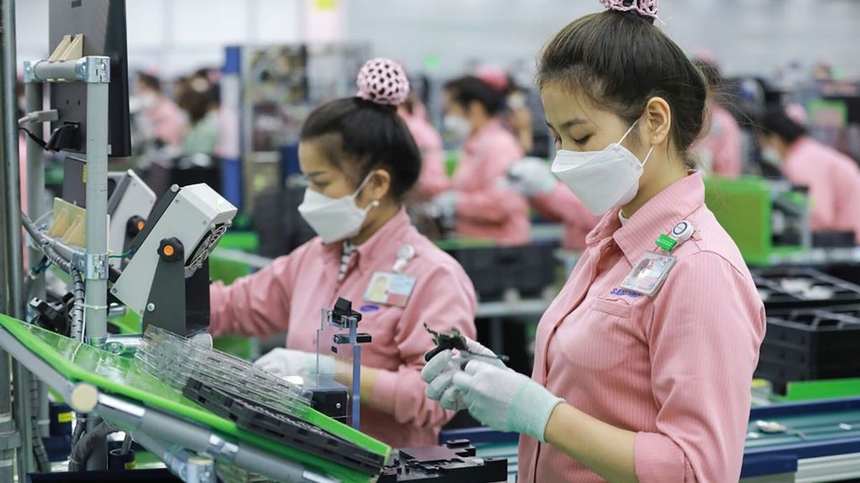
FDI companies import high-tech raw materials and components, then use Vietnamese labor and production costs to export finished products.
Key domestic businesses cannot simply stop at seeking outsourcing orders; they need to "think big" and invest in core technologies and supply chain linkages, technology transfer, and building a high-quality engineering team to produce input components that meet international standards.
In terms of linkages, it is necessary to break down the fragmented competition among businesses in the same industry. The government needs to create mechanisms to encourage the formation of large domestic supply chains capable of undertaking large-scale component supply contracts for both foreign direct investment (FDI) and export markets.
When key domestic businesses can become self-sufficient in supply and increase their technological content, the localization rate will increase, making it easier for Vietnamese goods to prove their origin and significantly reducing the risk of being subject to trade defense duties.
In fact, over the past period, economic experts and regulatory agencies have repeatedly warned about this risk. Just a few businesses committing origin fraud could lead to massive anti-dumping (AD) or countervailing duty (CVD) impositions on entire Vietnamese export sectors such as seafood, wood, steel, and textiles, immediately eroding their competitive advantage. The shrimp industry, for example, is currently subject to three types of taxes when exporting to the US.
To mitigate trade defense risks, Vietnamese businesses need a radical transformation. The head of the Trade Defense Department (Ministry of Industry and Trade) recommends that, in addition to increasing the localization rate to reduce dependence on imported raw materials and prove origin, businesses also need to build brands and strengthen standardized traceability capabilities. "Large export businesses must invest in early warning systems and strictly comply with international standards, especially ESG (Environmental, Social and Governance) standards. Meeting stringent requirements on emission reduction, labor, and transparency is not only a technical barrier but also a gateway for Vietnamese goods to continue to maintain a strong position in high-end markets," the head of the Trade Defense Department recommended.
Source: https://vtv.vn/xuat-khau-pha-ky-luc-tang-truong-cao-ap-luc-lon-100251209230401026.htm


![[Photo] Closing Ceremony of the 10th Session of the 15th National Assembly](/_next/image?url=https%3A%2F%2Fvphoto.vietnam.vn%2Fthumb%2F1200x675%2Fvietnam%2Fresource%2FIMAGE%2F2025%2F12%2F11%2F1765448959967_image-1437-jpg.webp&w=3840&q=75)







































![[OFFICIAL] MISA GROUP ANNOUNCES ITS PIONEERING BRAND POSITIONING IN BUILDING AGENTIC AI FOR BUSINESSES, HOUSEHOLDS, AND THE GOVERNMENT](https://vphoto.vietnam.vn/thumb/402x226/vietnam/resource/IMAGE/2025/12/11/1765444754256_agentic-ai_postfb-scaled.png)









































Comment (0)