

Compared to the same period last year, the price of fresh coconuts has increased by 110-120%, while the price of dried coconuts has increased by 150%. How will this sharp fluctuation in coconut prices affect export businesses?
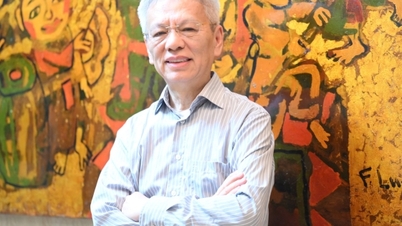
Mr. Cao Bá Đăng Khoa, Vice President and General Secretary of the Vietnam Coconut Association, had an exchange with a reporter from the Industry and Trade Newspaper regarding this issue.
Coconut prices have increased by 110-150% depending on the variety.
- The price of coconuts has increased significantly in the past few days. What is the reason for this, sir?
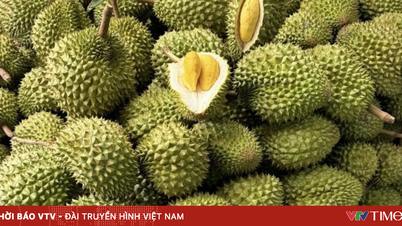
Mr. Cao Ba Dang Khoa: Currently, there are two types of raw coconuts in the industry. The first type is fresh coconuts (whole coconuts), whose price has increased by about 110-120% compared to the same period last year (purchased directly from the farm). This is due to the opening of export markets to China and the US. This has created a domino effect on many other markets; for example, when the US market opens, EU countries also open up, and many retailers are increasingly seeking Vietnamese coconuts. This shifts consumer demand, including that of Chinese consumers. Previously, they used coconuts from the Philippines and Thailand, but now they are trying Vietnamese coconuts and prioritizing them more.
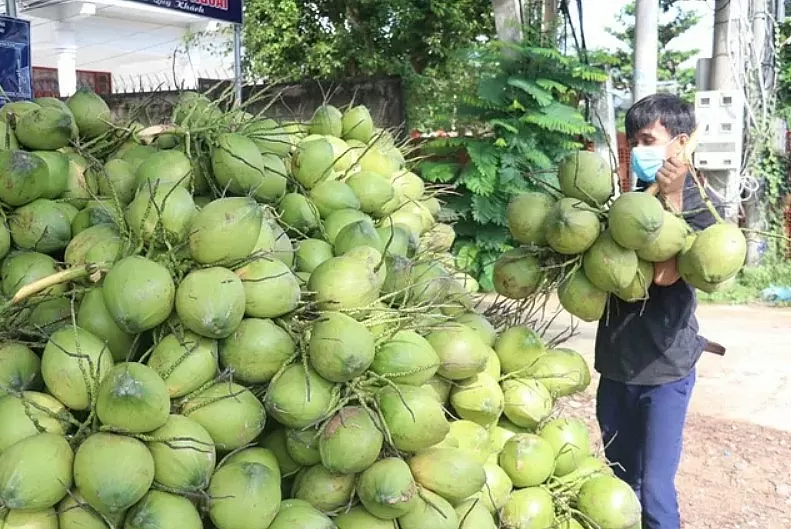 |
| In 2024, exports of fresh coconuts and coconut products reached nearly $1.1 billion, an increase of over 20% compared to 2023. |
The second type is dried coconut (raw coconut), whose price has increased by 150% compared to the same period last year. This type of coconut is used for further processing. The high price increase is due to several factors.
Firstly, in previous years, the price of raw coconuts was unstable, with bumper harvests leading to price drops, and the export market mainly consisted of raw coconuts, primarily through informal channels. However, this year, the price has increased sharply because many Chinese investors, instead of buying raw materials, have returned to investing in deep processing in Vietnam. They process coconut milk, frozen coconut water, and many other semi-raw material products, which are then exported to the Chinese market. Currently, Vietnam has about 16 foreign-owned factories and 35 Vietnamese factories processing raw coconut products.
Secondly , Indonesia – the world's largest coconut producer – recently began imposing tariffs on exported raw coconuts. According to the plan, they aim to ban the export of raw coconuts this year to prioritize domestic processing plants within Indonesia. This information has prompted investors in deep processing to shift their focus, seeking markets with potential and sustainable raw material sources, such as Vietnam and Thailand.
Currently, Vietnam still has open tax policies regarding the export of raw coconuts. Therefore, markets such as India, Pakistan, Sri Lanka, China, and most notably Thailand, purchase large quantities of raw coconuts from Vietnam.
The question is why a coconut-producing country like Thailand is increasing its purchase of raw coconuts from Vietnam? The reason is that over the past two years, the Thai coconut industry has been restructuring its crop production, reducing the cultivation of raw coconuts due to their long growing time (four years to bear fruit) and shifting to growing fresh coconuts, which bear fruit in about two and a half years. This shift to fresh coconut cultivation is aimed at competing with Vietnam.
The shortage of raw coconuts has forced factories in Thailand to increase imports of raw coconuts from Vietnam through unofficial channels. This makes it difficult for domestic factories to procure the coconuts and drives up the price of raw coconuts.
Domestic factories setting prices within a week will not be sensitive enough to keep up with traders. The production cost of their products is already set, so changing prices is not easy; it's a long process, and they need to adapt to improve their competitiveness in the international market. Farmers benefit first from the increase in coconut prices. However, deep processing plants are facing difficulties.
Support to enhance the competitiveness of the coconut industry.
- You just mentioned that after trying fresh coconuts from Vietnam, Chinese customers prefer them over fresh coconuts from the Philippines or Thailand. What are the reasons for this, sir?
Mr. Cao Bá Đăng Khoa: Vietnam's advantage is that its coconut varieties are purely natural, self-propagated and self-bred, not genetically modified or hybridized. Thailand is very strong in hybrid and genetically modified coconut varieties; therefore, they produce large coconuts with a lot of water, but the taste is not as fragrant and delicious as fresh Vietnamese coconuts.
 |
| Mr. Cao Bá Đăng Khoa, Vice President and General Secretary of the Vietnam Coconut Association |
Currently, global consumer demand is very high, and people will either avoid or limit the use of genetically modified or hybrid products.
The traditional coconut varieties of Vietnam and the Philippines are also different. The traditional Philippine coconut variety is a hybrid created from a raw material coconut variety to produce a short-grain coconut (for drinking). In Vietnam, however, the varieties are very distinct; raw material coconuts have very thick flesh and a high oil content. Drinking coconuts, on the other hand, have very thin flesh, or even no flesh at all. Drinking coconuts are also very diverse, with 16 different varieties.
On the downside, Vietnam currently lacks a regional plan for coconut cultivation. Anyone can plant whatever type of coconut they want, leading to inconsistent procurement. Meanwhile, exporting requires product uniformity, which weakens Vietnam's competitiveness.
- With the current high price of coconuts, how will this affect fresh coconut exporting businesses, and what kind of support is the association providing, sir?
Mr. Cao Ba Dang Khoa: With large coconut export orders, businesses are also very "anxious" due to the unstable supply of fresh coconut raw materials. Some places grow Siamese coconuts, some grow fire coconuts, and others grow pineapple coconuts, making exports difficult. Having 2-3 different types of coconuts in one export container results in different tastes, textures, and aromas, which reduces the competitiveness of Vietnamese fresh coconuts in the world market.
Investing in raw material areas independently requires a huge amount of capital, while partnering with farmers raises concerns about potential breaches of contract. Therefore, to enhance the competitiveness of the coconut industry, the Vietnam Coconut Association is coordinating with relevant parties to provide preferential credit packages and convenient services for farmers, cooperatives, purchasing centers, and the business community in the coconut industry and related sectors (over 600 businesses). The program is expected to be piloted in five provinces: Tien Giang, Ben Tre, Vinh Long , Tra Vinh, and Soc Trang, before being expanded to provinces in the Eastern, Western, and Central regions of Vietnam.
This aims to ensure a stable domestic supply of coconut raw materials for businesses involved in coconut production and processing. It also seeks to exploit potential raw material areas to guarantee stable livelihoods for coconut farmers nationwide. Furthermore, it leverages the potential value of traditional craft villages and cooperatives to act as a bridge for providing a stable supply of raw and semi-processed materials to manufacturing businesses. This contributes to maintaining raw material areas (with financial support from banks) and allows businesses to confidently produce high-value products. This will reduce the export of low-value raw materials and mitigate the problem of bumper harvests leading to price drops, or high prices coinciding with poor harvests.
Thank you, sir!
| Vietnam has approximately 25 provinces with coconut plantations, mainly concentrated in the Mekong Delta region. With a planted area of up to 200,000 hectares, Vietnam's coconut industry ranks 5th in the world in terms of area. In 2024, the total export value of the industry reached US$1.089 billion, with over 600 businesses involved in coconut production and trade. |
Source: https://congthuong.vn/gia-dua-tang-phi-ma-xuat-khau-co-chiu-anh-huong-379616.html











































![[Video] Sunset at Lap An Lagoon – Where the sun sets over the fishing nets](https://vphoto.vietnam.vn/thumb/1200x675/vietnam/resource/IMAGE/2026/05/31/1780192137701_beach-landscape-sea-water-nature-grass-745871-pxhere-com.jpeg)

































Comment (0)