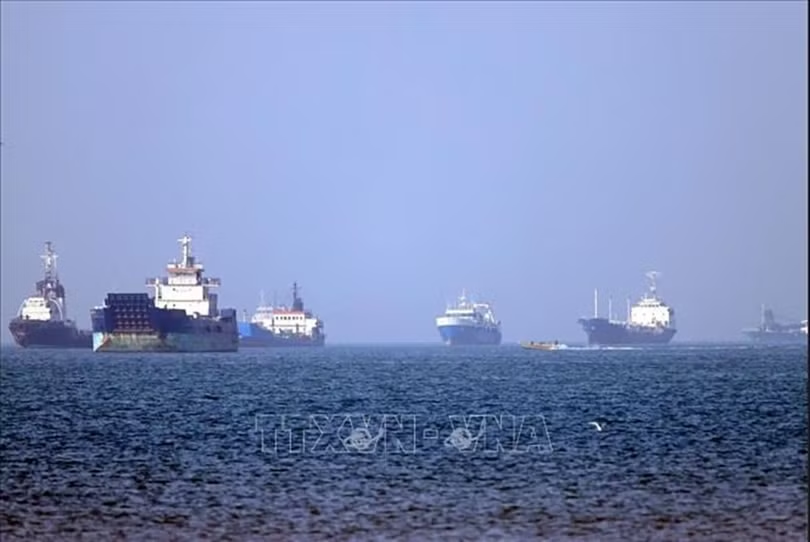
Although not a complete peace agreement, this deal opens the door to de-escalating tensions between Washington and Tehran and could have far-reaching impacts on the regional security environment, global energy markets, and the balance of power in the Middle East.
The released documents indicate that the two sides have reached significant consensus on core issues, ranging from a ceasefire and maritime security to Iran's nuclear program and a roadmap for easing economic sanctions. This reflects a shift from military confrontation to strategic competition management between two rivals who have been adversaries for over four decades.
Cooling down strategic hotspots
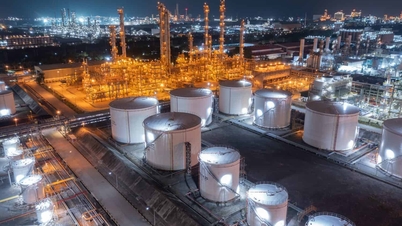
One of the most important aspects of the agreement concerns the Strait of Hormuz – a shipping lane that carries approximately 20% of the world's commercial oil. Under the published terms, Iran committed to fully reopening the Strait of Hormuz and ending all activities that obstruct navigation, while the US lifted sanctions and restrictions on Iranian commercial shipping.
Alongside this were commitments related to the nuclear program. Tehran accepted stricter international restrictions and oversight on its uranium enrichment activities, while Washington acknowledged Iran's right to maintain its civilian nuclear program. Some key components of the nuclear infrastructure could also be deactivated or dismantled according to a specific schedule.
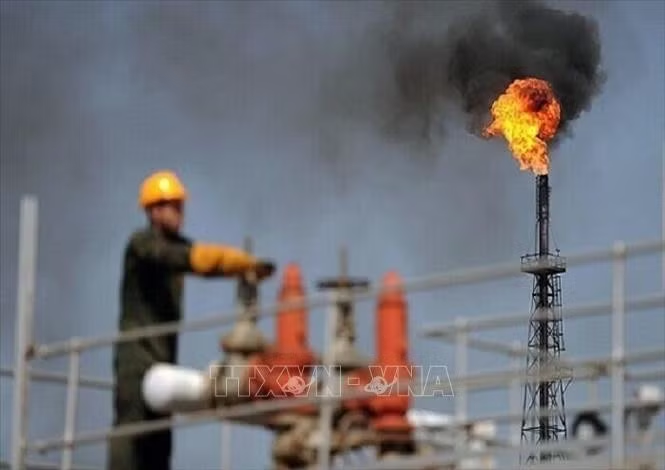
In return, the U.S. would gradually ease sanctions, allowing Iran to resume oil exports and access some of its frozen assets abroad, estimated at around $25 billion, while also facilitating its reintegration into some international trade activities.
Although the technical details still need to be finalized during the next 60 days of negotiations, the fact that the two sides have reached a consensus on issues that have been the main cause of confrontations for many years is seen as a significant step forward.
Calculations by the parties

The agreement reflects a shift in approach from both Washington and Tehran. For the US, the priority now appears to be no longer maximum pressure or pursuing fundamental changes in Iran, but rather focusing on preventing nuclear proliferation, ensuring freedom of navigation, and avoiding being drawn into another costly war in the Middle East. In the context of increasingly intense global strategic competition, a prolonged conflict with Iran would place a significant military, economic, and political burden on Washington.
The reality is that any full-scale conflict with Iran would entail enormous military, economic , and political costs for the United States. Given Iran's geostrategic location and its extensive network of allied forces across the region, a large-scale war risks becoming a protracted conflict, similar to what Washington experienced in Iraq and Afghanistan.
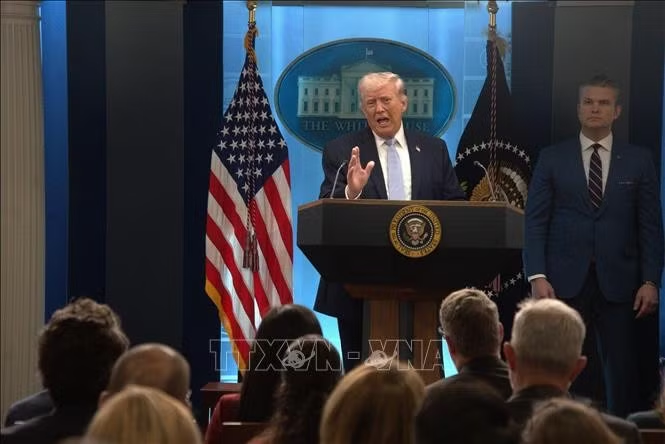
In this context, the Trump administration appears to have opted for a more pragmatic strategy: using military and economic pressure to force Iran back to the negotiating table, rather than pursuing a full-scale confrontation.
The agreement also brings several concrete benefits to the United States. Restoring normal operations in the Strait of Hormuz will help reduce pressure on energy prices, thereby supporting inflation control and domestic economic stability. At the same time, Washington can claim to have forced Iran to accept significant limitations on its nuclear program without launching a costly war.
From Iran's perspective, the agreement helps the country avoid the risk of large-scale military confrontation while opening up opportunities to alleviate economic pressure after years of sanctions. The gradual restoration of oil exports and reconnection with international trade is particularly important for the Iranian economy. More importantly, Tehran has maintained its principle of continuing its civilian nuclear program.
The agreement also reflects the growing divergence between the strategic interests of the United States and Israel. While Israel prioritizes the complete neutralization of Iran, the U.S. focuses on regional stability and minimizing risks to its economic and political interests. This gap suggests Washington is willing to limit some Israeli military actions if those actions risk disrupting the negotiation process with Tehran.
Opportunities and challenges
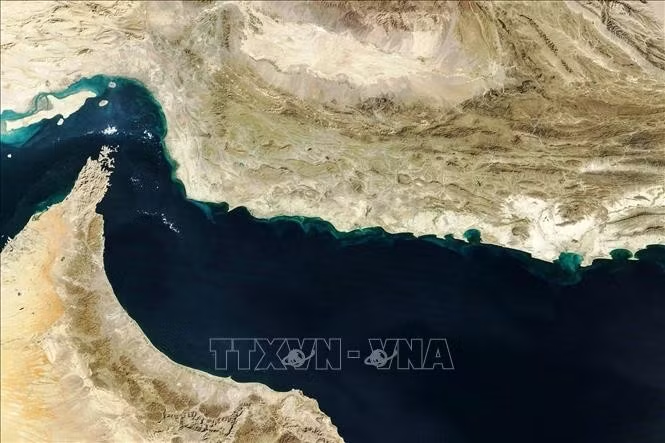
If successfully implemented, the US-Iran agreement could bring many benefits to the region. A reduced risk of war would create more favorable conditions for Gulf Arab states such as Saudi Arabia, the United Arab Emirates (UAE), Qatar, Bahrain, and Kuwait to focus on economic development and attracting investment. At the same time, Iran's gradual reintegration into the regional environment could provide further impetus to ongoing reconciliation processes between Tehran and Arab countries.
On a global scale, the most notable impact is the potential for stabilizing energy markets. Once the Strait of Hormuz returns to normal operation and oil supplies from Iran are restored, pressure on world oil prices could significantly decrease.

However, the road ahead remains fraught with obstacles. First, there is the issue of handling Iran's existing enriched uranium and the international monitoring mechanism. These are complex technical issues that could easily lead to disputes during negotiations. Second is the future of Iran's ballistic missile program.
The fact that this issue was not included in the agreement could become a source of new disagreements between Iran and the US and Israel. Thirdly, there is the role of armed groups such as Hezbollah, Hamas, and many others in the region. Even an unintended military incident could trigger a new cycle of retaliation, eroding trust between the parties.
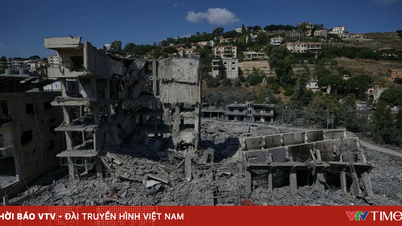
In particular, Israeli airstrikes targeting Hezbollah-linked targets in Lebanon demonstrate that the Middle East remains unstable. If clashes continue to escalate and provoke a reaction from Iran, the favorable environment for negotiations could quickly be destroyed.
The US-Iran agreement is not the solution to all of Middle Eastern problems, but it is an important step toward preventing the spread of conflict and creating an opportunity to establish a new balance in the region. The agreement can be seen as a pragmatic, calculated move by Iran and the US to secure their interests. The long-term prospects of this process will depend on the outcome of upcoming technical negotiations and the ability of the parties to uphold their commitments to the agreed-upon terms.
Source: https://baohatinh.vn/xung-dot-trung-dong-nuoc-co-thuc-dung-post312430.html


![[Image] Ho Chi Minh City: Ma Lang area, Chicken-Rice Market about to change its appearance](https://vphoto.vietnam.vn/thumb/1200x675/vietnam/resource/IMAGE/2026/06/25/1782377698627_ndo_br_m1-jpg.webp)
![[Image] Schools organize meetings and introduce teaching models to students admitted to grade 10.](https://vphoto.vietnam.vn/thumb/1200x675/vietnam/resource/IMAGE/2026/06/25/1782368077271_ndo_br_z7970052192242-1ec8daeb77a6eed1a4e9f58c564ddd3e-jpg.webp)

![[Photo] General Secretary and President To Lam receives Palestinian Ambassador Saadi Salama](https://vphoto.vietnam.vn/thumb/1200x675/vietnam/resource/IMAGE/2026/06/25/1782365384740_a1-bnd-9423-8322-jpg.webp)





























![[Infographic] Allowance levels for village and neighborhood officials after reorganization in Ha Tinh](https://vphoto.vietnam.vn/thumb/402x226/vietnam/resource/IMAGE/2026/06/26/1782428701331_fb_anh-dai-dien-infographic-khanh-phuong-1-png.webp)