

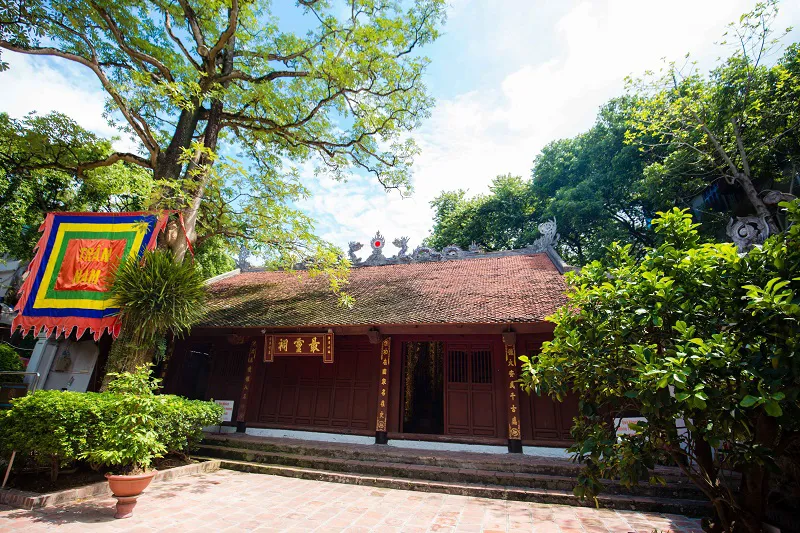
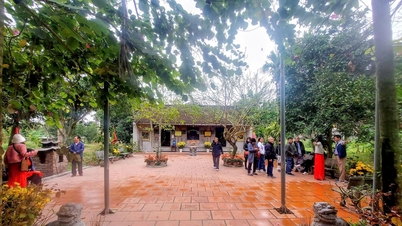
The tranquil space of Kim Lien Temple in Hanoi. Photo: Duy Khanh/ The Hanoi Times
Hanoi is taking a new step in bringing its heritage closer to the public with the launch of four pilot tourism routes supported by digital technology. Through an interactive mapping system, the H-Heritage mobile app and QR codes placed at key historical sites, the initiative aims to help residents and visitors experience the capital’s cultural legacy in more engaging, accessible ways.
The program, titled “Heritage Tourism Routes in Hanoi,” officially debuts on December 3 as part of the FEF-R Patrimoine project, funded by the French Ministry for Europe and Foreign Affairs and implemented in collaboration with Vietnamese partners. By combining international expertise with local cultural knowledge, the project highlights Hanoi’s commitment to modernizing how it presents its heritage.
These new routes are designed to guide travelers through four curated journeys reflecting the breadth of Hanoi’s spiritual, historical and artisanal traditions. Each itinerary allows visitors to explore the city’s layered cultural landscape and experience familiar sites through deeper storytelling and interactive tools.

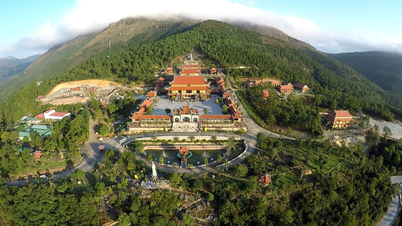
Tran Quoc Pagoda is the oldest pagoda in Hanoi, originally built in 541 during the Early Ly Dynasty. Photo: Thanh Hai/ The Hanoi Times
Hanoi’s need for such an initiative has become increasingly clear. As the city expands, its cultural landmarks often struggle for visibility amid dense, modern neighborhoods. Many historical sites remain under-protected, under-interpreted, or overshadowed by the city’s fast-paced development. The new heritage tourism routes provide a way to reconnect these cultural fragments and present them systematically to the public.
To bridge this gap, the program applies a multidisciplinary approach that blends academic research, student participation and digital technology. Field surveys, document analysis, architectural mapping and archival research were carried out to ensure each chosen site is presented accurately and meaningfully. Out of more than 100 surveyed locations, researchers selected 28 representative monuments and organized them into four thematic routes rooted in Vietnamese belief systems.
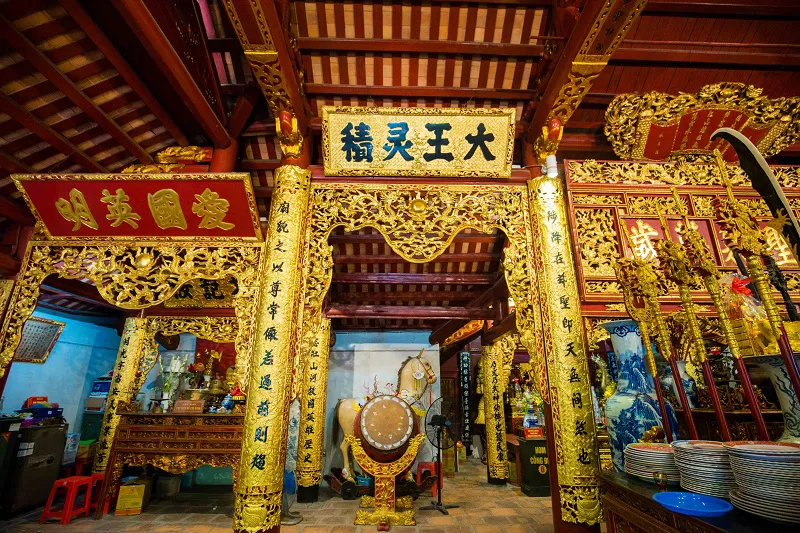
Kim Lien Temple was built to protect the north entrance of Thang Long citadel. Three other temples which guarded other three entrances are Quan Thanh Bach Ma and Voi Phuc temples. Kim Lien temple was built in the 16th – 17th century, later than the three others. Photo: Duy Khanh/ The Hanoi Times
Route 1: Thang Long Tu Tran – The Four Sacred Guardians
This route visits the four temples, include Bach Ma, Voi Phuc, Quan Thanh and Kim Lien that once guarded the cardinal entrances of the ancient Thang Long Citadel. Today, they remain essential markers of Hanoi’s spiritual geography.
Route 2: Mother Goddess Temples
The journey connects eight temples and palaces dedicated to Mother Goddess Lieu Hanh and other deities of the Tam Phu belief system, recognized by UNESCO as Intangible Cultural Heritage. The route highlights Vietnam’s vibrant spiritual practices blending ritual, music and dance.
Route 3: Craft Ancestor Communal Houses
This route explores communal houses in the Old Quarter honoring the founders of traditional crafts. Each site preserves stories of artisans whose skills helped shape Thang Long’s celebrated craft heritage.
Route 4: Pagodas of Hanoi
The final route introduces pagodas linked to the monk An Thien, a respected patriarch of Vietnamese Buddhism, offering visitors a quiet journey into the city’s religious history.
Throughout the research process, a unified methodology guided the team’s work, from photographing sites and collecting inscriptions to translating Han-Nom texts and documenting architecture through videos and maps. All materials have been digitized and integrated into a comprehensive electronic system.
The result is a set of heritage routes that can be explored both physically and digitally. Visitors can scan QR codes to access historical information, browse the H-Heritage app for maps and multimedia content, or dive deeper into cultural stories through online archives. The combination of on-site experience and digital interpretation allows heritage to feel more alive and intuitive.
Beyond serving domestic and international travelers, the routes also offer practical value for educators. Schools can incorporate them into extracurricular programs, giving students hands-on exposure to local culture and encouraging younger generations to understand and appreciate Hanoi’s heritage through interactive learning.
By weaving technology into tradition, Hanoi is not only preserving its cultural assets but also reimagining how they can be experienced. The Heritage Tourism Routes mark a promising step in making the capital’s rich past more accessible, engaging and meaningful for all who explore it.
By Cam Anh
Nguồn: http://sodulich.hanoi.gov.vn/new-tourism-routes-use-technology-to-showcase-hanois-cultural-heritage.html


![[Ảnh] Lễ diễu binh, diễu hành chào mừng 50 năm Quốc khánh Lào](/_next/image?url=https%3A%2F%2Fvphoto.vietnam.vn%2Fthumb%2F1200x675%2Fvietnam%2Fresource%2FIMAGE%2F2025%2F12%2F02%2F1764691918289_ndo_br_0-jpg.webp&w=3840&q=75)
















![[Ảnh] Chiêm bái pho tượng Tuyết Sơn – Báu vật gần 400 năm ở chùa Keo](/_next/image?url=https%3A%2F%2Fvphoto.vietnam.vn%2Fthumb%2F1200x675%2Fvietnam%2Fresource%2FIMAGE%2F2025%2F12%2F02%2F1764679323086_ndo_br_tempimageomw0hi-4884-jpg.webp&w=3840&q=75)



































































Bình luận (0)