

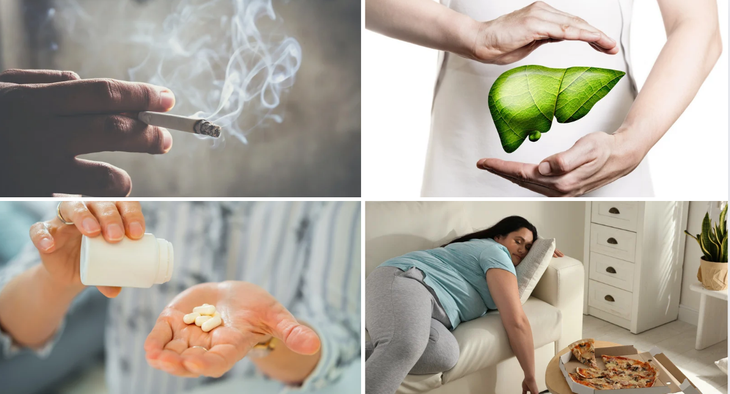
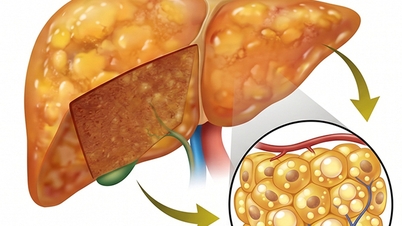
Despite its incredible ability to regenerate, the liver is not invulnerable. Many seemingly harmless daily habits can silently "erode" the liver, eventually leading to serious conditions such as cirrhosis or even liver failure. - Photo: AI
One dangerous aspect is that liver diseases often progress silently, with vague symptoms such as persistent fatigue and nausea. Only when the damage has become more severe do signs like jaundice (yellowing of the skin and eyes) become apparent.
Here are five common habits that may be silently harming your liver.
Excessive alcohol consumption
When it comes to liver disease, many people immediately think of alcohol, and this is not wrong. When you drink alcohol, the liver has to work to metabolize and eliminate it from the body. However, if you consume too much, the liver cannot process it quickly enough, causing harmful substances to accumulate and damage liver cells.
Alcoholic liver disease progresses through three stages: first, fatty liver disease, which is often asymptomatic and reversible if drinking stops. If drinking continues, alcoholic hepatitis develops, at which point the liver becomes inflamed and develops scarring. Finally, the damage progresses to permanent fibrosis, severely affecting liver function.
Even moderate alcohol consumption over a long period can be harmful, especially when combined with obesity or smoking. Experts recommend not drinking more than 14 units of alcohol per week (about 6 glasses of beer or 7 glasses of wine), and having at least a few alcohol-free days each week to allow the liver time to recover.
Unhealthy diet
Not drinking alcohol doesn't mean your liver is "safe and sound." A diet high in sugar, saturated fats, and processed foods can lead to metabolic fatty liver disease.
When too much fat accumulates in the liver, the organ's function decreases, making it more susceptible to inflammation, damage, and scarring. Overweight individuals, especially those with abdominal fat accumulation, are at a higher risk of developing MASLD. The disease is also associated with factors such as high blood pressure, diabetes, and high cholesterol.
Foods high in saturated fat (red meat, fried foods, fast food), sweets, and sugary drinks are the main culprits. A 2018 study showed that people who drink a lot of sugary drinks have a 40% higher risk of fatty liver disease compared to those who drink less.
Conversely, a balanced diet with green vegetables, fruits, whole grains, legumes, and fish can help reduce liver fat and improve other risk factors such as blood sugar and cholesterol.
Additionally, drinking enough water—about 8 glasses a day—also supports the liver in the detoxification process.
Painkiller abuse
Paracetamol (acetaminophen) is a common pain reliever, widely used to treat headaches, muscle aches, and fever. However, overdosing, even slightly exceeding the recommended dose, can cause serious liver damage.
During the metabolism of paracetamol, the liver produces a toxic byproduct called NAPQI. If an overdose occurs, the liver no longer has enough glutathione to neutralize NAPQI, leading to liver cell damage and even acute liver failure, which can be life-threatening.
It is especially dangerous to take paracetamol with alcohol, as alcohol reduces the liver's ability to break down toxins. Always adhere to the prescribed dosage and consult a doctor if you need to take the medication regularly.
Lack of physical activity
A sedentary lifestyle not only affects cardiovascular health but also poses a "silent threat" to the liver. Without exercise, the body is more prone to fat accumulation, reduced insulin sensitivity, and metabolic disorders. These are all factors that promote fatty liver disease.
Fortunately, regular exercise can improve liver function, even if you haven't lost weight. One study showed that after just 8 weeks of weight training, liver fat decreased by 13%. Walking briskly for 30 minutes a day, 5 times a week, also yields significant results.
Smoking
Smoking not only harms the lungs and heart but also damages the liver. Thousands of toxic chemicals in cigarette smoke increase the liver's detoxification burden, leading to oxidative stress—a condition where free radicals destroy liver cells and cause fibrosis.
Smoking also increases the risk of liver cancer due to the presence of carcinogens such as nitrosamines, vinyl chloride, and tar. According to statistics in the UK, approximately 20% of liver cancer cases are linked to smoking.
The liver is a resilient organ, but it's not invincible. Protecting your liver starts with simple habits:
Drink alcohol in moderation.
Quit smoking
Use medication as prescribed.
Balanced eating
Exercise regularly
Drink enough water every day.
If you notice unusual symptoms such as persistent fatigue, nausea, or jaundice (yellowing of the skin/eyes), don't ignore them. Early detection of liver problems will lead to more effective treatment.
Source: https://tuoitre.vn/5-thoi-quen-hang-ngay-am-tham-gay-hai-gan-20250622094024504.htm



![[Image] Shipbuilders exposed to steel and record-breaking heat.](https://vphoto.vietnam.vn/thumb/1200x675/vietnam/resource/IMAGE/2026/06/04/1780545781745_ndo_br_img-5402-4683-jpg.webp)



















































![[Video] Sunset at Lap An Lagoon – Where the sun sets over the fishing nets](https://vphoto.vietnam.vn/thumb/1200x675/vietnam/resource/IMAGE/2026/05/31/1780192137701_beach-landscape-sea-water-nature-grass-745871-pxhere-com.jpeg)






































Comment (0)